Introduction
TL;DR Every B2B company wants to reach the right business at the right time. Firmographic data makes that possible. It gives sales and marketing teams a clear picture of a company before the first conversation even starts.
Buyers expect relevant outreach today. A generic email rarely gets a reply anymore. Firmographic data gives teams the details they need to make every message feel specific and useful.
This blog explains what this data means, where it comes from, and how businesses use it every day. You will also find secondary keywords, real examples, and answers to common questions people ask about firmographic data.
Table of Contents
What Is Firmographic Data?
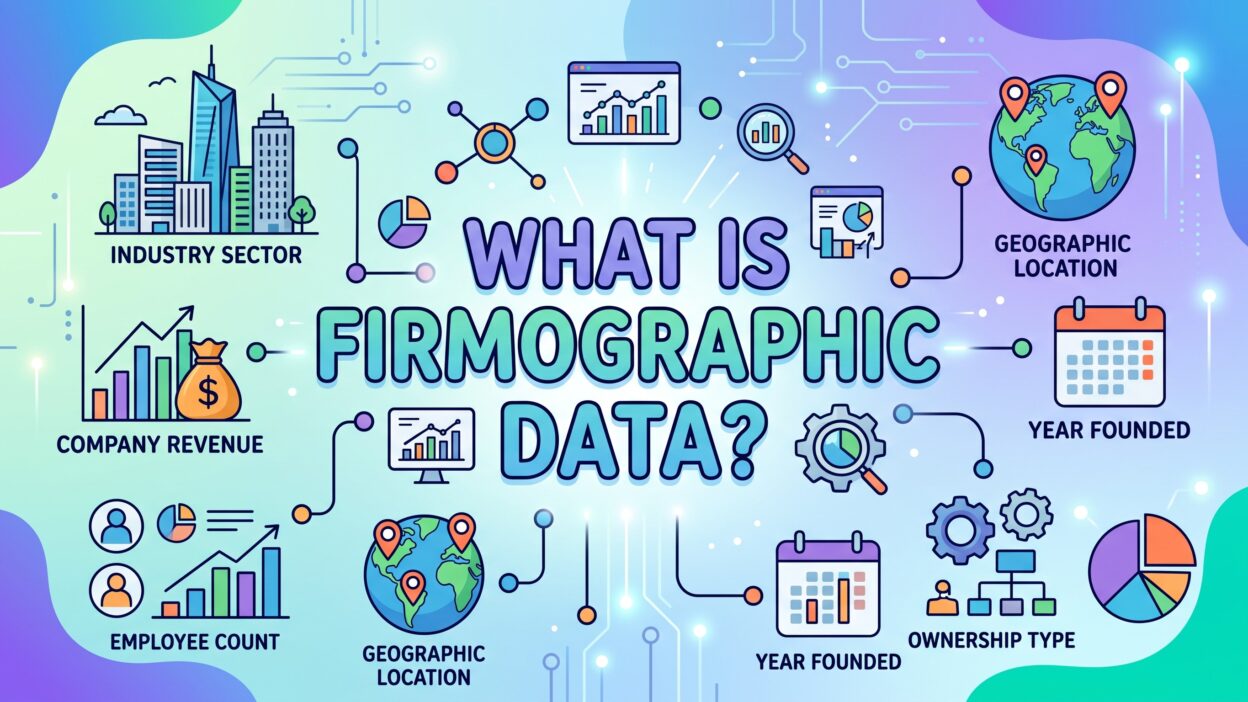
Firmographic data describes the traits of a company instead of a single person. It covers details like industry, revenue, employee count, and location. Sales teams use this information to understand who they are selling to before they pick up the phone.
Think of this data as the business version of demographic data. Demographic data describes a person. Firmographic data describes an organization. Both help teams target the right audience with the right message.
A simple example makes this clear. A demographic profile might describe a thirty-five-year-old marketing manager. A firmographic profile might describe a two-hundred-person software company based in Austin. Both profiles guide outreach, but they describe very different things.
Marketers sometimes call this information “company attributes” or “business attributes.” The name changes, but the purpose stays the same. Every version describes the organization itself, not the individual buyer inside it.
Why Firmographic Data Matters for Business Growth
Companies waste time and money chasing the wrong accounts. This data fixes that problem. It shows which companies actually fit a product or service before a rep spends hours on outreach.
Growth teams rely on company-level details to build focused lists. A software company selling to mid-size retailers does not want to call small law firms. This kind of data keeps every outreach effort pointed at the right target.
Revenue teams also use this information to set realistic goals. A team that knows its ideal customer profile can forecast pipeline more accurately. Clear company data removes much of the guesswork from quota planning.
Marketing leaders also use this data to justify budget. Showing which industries and company sizes convert best helps a team defend its spend to finance. Numbers built on real company profiles carry more weight than vague claims.
Firmographic Data vs Demographic Data
People often confuse these two terms. Demographic data covers traits like age, gender, and income. This data works well for consumer marketing, where the buyer is one person.
Firmographic data works differently. It covers company size, industry, and revenue instead of personal traits. B2B teams rely on this business-level information because they sell to organizations, not individuals.
A consumer brand selling shoes needs demographic data about shoppers. A software vendor selling to hospitals needs firmographic data about healthcare organizations. Understanding this difference helps teams choose the right data for the right strategy.
Key Types of Firmographic Data
This category of data includes several groups. Each group tells a different part of the company story. Strong sales and marketing teams track all of these together.
Company Size and Revenue
Company size usually means employee count. Revenue means how much money the company makes each year. These two numbers help teams understand buying power and budget.
A company with ten employees rarely buys the same product as one with ten thousand employees. This detail helps reps match their pitch to the actual size of the business. This match improves close rates across the board.
Revenue bands also help teams price their offers correctly. A small business might need a lighter package. A large enterprise might need a custom deal with extra support built in.
Industry and Sector
Industry tells a team what kind of business they are dealing with. A healthcare company has different needs than a construction company. This part of the company profile comes through industry codes and sector tags.
Marketing teams use industry data to craft messages that speak directly to real pain points. A message built for retail rarely works for manufacturing. Industry-specific data solves this mismatch and sharpens every campaign.
Sector detail also helps product teams prioritize features. A tool built for one industry might need extra compliance features for another. Knowing the industry mix inside a customer base guides real product decisions.
Location and Geography
Location shapes how a business operates. Time zones, local regulations, and regional demand all affect a sales strategy. This piece of company data includes headquarters location and regional offices.
Sales teams use location details to plan territories and schedule calls at the right time. A rep working East Coast hours needs to know if a prospect sits on the West Coast. Geographic data keeps outreach timely and relevant.
Location also shapes compliance needs. A company operating across several countries deals with different tax and privacy laws in each one. Sales and legal teams both lean on this geographic detail before closing a deal.
Company Age and Growth Stage
Company age tells a team whether they are talking to a startup or an established firm. Growth stage tells them whether the company is scaling fast or holding steady. This part of the profile tracks both details closely.
A five-year-old startup often needs different tools than a fifty-year-old enterprise. Growth stage data helps sales teams pitch the right solution at the right moment in a company’s journey.
A fast-growing startup might need scalable, flexible tools. A stable enterprise might value reliability over flashy features. Reading growth stage correctly helps a rep frame the same product in two very different ways.
Where Firmographic Data Comes From
This kind of data does not appear out of nowhere. Companies gather it from several trusted sources. Knowing these sources helps teams judge how reliable their firmographic data actually is.
Public Records and Government Filings
Government agencies keep records on registered businesses. These filings include company names, addresses, and sometimes revenue figures. Public records offer a solid starting point for building a company profile.
This information stays fairly accurate because businesses must update it by law. Teams often start their data collection here before adding more detail from other sources.
Some countries publish this information openly. Others require a paid request or a formal search. Teams working across borders need to learn each region’s rules before relying on public records alone.
Third-Party Data Providers
Many companies specialize in collecting and selling company data. These providers pull information from multiple sources and package it into clean databases. Sales teams buy access to these databases to save time.
Third-party providers update their records more often than most internal teams can manage alone. This speed makes them a popular choice for companies that need fresh, reliable company data at scale.
Pricing varies widely between providers. Some charge per record. Others charge a flat monthly fee for unlimited lookups. Teams should match the pricing model to how often they actually pull new records.
Company Websites and Social Profiles
Company websites reveal a lot about a business. About pages often list employee count, founding year, and service areas. Social profiles like LinkedIn show job titles, company size, and recent updates.
Teams scrape or manually review these sources to fill gaps in their data. This method takes more time but often catches details that formal databases miss.
Customer Surveys and Direct Input
Sometimes the best data comes straight from the source. Surveys and onboarding forms ask customers to share details about their company directly. This method produces highly accurate firmographic data.
Companies that collect this data during sign-up build stronger profiles from day one. Direct input also updates faster than data pulled from outside sources.
How Businesses Use Firmographic Data
Collecting this information means nothing without a clear use case. Companies apply firmographic data across several key business functions.
Lead Scoring and Qualification
Lead scoring ranks prospects based on how well they fit a target profile. Company-level data feeds directly into this process. A lead matching the ideal size and industry scores higher than one that does not fit.
Sales teams save hours by focusing only on leads that score well. This focus increases close rates and shortens the sales cycle overall.
A lead scoring model might add points for a company in the right industry. It might subtract points for a company far outside the target revenue range. This scoring keeps reps working the strongest opportunities first.
A well-built model updates itself as new deals close. Teams can see which company traits actually led to a sale and adjust the scoring weights over time. This feedback loop makes lead scoring smarter with every quarter.
Market Segmentation
Segmentation groups companies based on shared traits. This kind of business data makes that grouping precise and reliable. Teams can split their market by industry, size, or region within minutes.
This precision helps marketing teams send relevant messages to each group. A healthcare-focused campaign reaches only healthcare companies instead of everyone on a list.
Segmentation also helps sales leaders staff their teams correctly. A rep with deep healthcare knowledge should work healthcare accounts. Clear segments make this kind of specialized assignment simple to manage.
Account-Based Marketing
Account-based marketing targets specific high-value companies instead of a broad audience. Firmographic data identifies which accounts fit this high-value category. Teams build custom campaigns around these select companies.
This targeted approach often produces better returns than mass marketing. Company profile data acts as the foundation for choosing which accounts deserve this extra attention.
Sales Territory Planning
Sales leaders divide markets into territories based on geography and industry. This type of data supports that planning by showing where target companies actually sit. This information helps balance workload across a sales team fairly.
A well-planned territory keeps reps focused on realistic, reachable accounts. Strong company data removes the guesswork from this planning process.
Benefits of Using Firmographic Data
Companies that use this information well see clear advantages across sales and marketing. These benefits show up quickly once teams build strong data habits.
Better Targeting
Firmographic data helps teams focus on companies that actually fit their product. This focus reduces wasted outreach and improves overall campaign performance. Teams stop guessing and start targeting with real evidence.
A clear target profile built on solid company data saves both time and marketing budget. Every dollar spent goes toward companies with a real chance of converting.
Higher Conversion Rates
Prospects respond better to messages that fit their actual situation. This data lets teams tailor pitches based on company size, industry, and location. This tailored approach increases response and conversion rates.
A generic pitch rarely beats a message built around real company details. Firmographic data gives sales teams the details they need to stand out from competitors sending the same old script.
Smarter Resource Allocation
Sales and marketing budgets stretch further when teams know exactly who to target. This information helps leaders decide where to spend time, money, and staff. Smart allocation improves overall efficiency across the business.
Teams stop spreading resources thin across every possible lead. Strong company data narrows the focus to accounts that actually matter.
Challenges in Collecting Firmographic Data
This data brings real value, but collecting it comes with real challenges. Teams need to understand these obstacles before they build a data strategy.
Data Accuracy Issues
Company details change constantly. Employee counts shift. Revenue changes. Addresses update. Firmographic data can go stale fast if teams do not maintain it carefully.
Inaccurate data leads to wasted outreach and poor targeting decisions. Teams need a plan to check and refresh their records on a regular schedule.
A rep calling on outdated numbers might pitch the wrong package entirely. That mistake damages trust before a conversation even gets started.
Outdated Records
Old data creates confusion across sales and marketing teams. A company that once had fifty employees might now have five hundred. Company data pulled from years ago no longer reflects reality.
Teams need to set clear refresh cycles for their records. Quarterly reviews catch most major changes before they cause real problems.
Data Privacy and Compliance
Collecting company data comes with legal responsibility. Different regions enforce different privacy rules around business information. Teams must follow these rules closely when gathering firmographic data.
Ignoring compliance rules creates legal risk and damages trust with prospects. Strong data policies protect both the company and the people behind every business record.
Best Practices for Using Firmographic Data
Companies that succeed with this data follow a few consistent habits. These practices keep company information useful and accurate over time.
Combine with Behavioral Data
Firmographic data tells a team who a company is. Behavioral data tells them what that company does. Combining both creates a much sharper picture of buyer intent.
A large company visiting a pricing page multiple times signals real interest. Company profile data alone would miss that signal. Pairing the two data types produces stronger results for every campaign.
Update Records Regularly
This data needs constant care. Teams should set a clear schedule to check company details and remove outdated entries. This habit keeps every campaign built on solid, current information.
A simple monthly check often catches major shifts like mergers or leadership changes. Small, regular updates prevent large data problems later.
Use Reliable Data Sources
Not every data provider offers the same quality. Teams should test a few sources and compare accuracy before committing to one. Reliable firmographic data saves time and builds trust across the sales team.
A trusted source becomes the backbone of every targeting decision a company makes. Cutting corners here often costs more time later through bad leads and wasted outreach.
Train Teams on Proper Use
Good data means little if teams do not know how to use it. Sales and marketing staff need training on reading company profiles and applying them correctly. This training turns raw records into real strategy.
A rep who understands industry codes and revenue bands qualifies leads faster. Training closes the gap between having data and actually using it well.
Common Myths About Firmographic Data
A few myths confuse teams new to this topic. Clearing these up saves time and prevents bad strategy decisions.
Myth: Bigger Companies Always Mean Better Leads
Many teams assume a larger company automatically makes a better prospect. Size alone does not guarantee fit. A huge company outside the right industry often wastes more time than a smaller one that matches perfectly.
Myth: One Data Source Is Enough
Some teams trust a single provider and stop looking further. No single source captures every detail perfectly. Blending public records, third-party data, and direct customer input produces a far more complete picture.
Myth: This Data Never Needs Updates
Company details change constantly, even for stable businesses. Treating a dataset as permanent leads to stale targeting within months. Regular review keeps every record trustworthy.
Future of Firmographic Data
This field keeps evolving as technology improves. Companies that stay ahead of these changes will hold a real edge over slower competitors.
AI and Predictive Firmographics
Artificial intelligence now predicts company details instead of just recording them. Models can estimate a company’s likely revenue or growth stage based on limited public signals. This predictive layer fills gaps that traditional sources miss.
Sales teams using predictive firmographic data reach promising accounts earlier than competitors relying on static records. This early advantage often decides who wins a deal first.
Real-Time Data Enrichment
Static databases update on a schedule. Real-time enrichment updates the moment new information appears online. This speed keeps company data fresh without manual review.
Companies adopting real-time enrichment respond faster to market shifts. A prospect that suddenly grows or changes industry gets flagged immediately instead of months later.
Integration With Other Data Types
Firmographic data works best alongside other signals. Technographic data shows which tools a company uses. Intent data shows what a company researches online. Together, these layers build a complete account picture.
Teams blending these data types spot opportunities that a single dataset would miss entirely. This layered approach will likely become standard practice within a few years.
Frequently Asked Questions
What is firmographic data used for?
This data helps sales and marketing teams target the right companies. Teams use it for lead scoring, segmentation, account-based marketing, and territory planning.
What is the difference between firmographic and demographic data?
Demographic data describes individual people through traits like age and income. Firmographic data describes companies through traits like industry, size, and revenue.
Where can companies find accurate firmographic data?
Companies find this information through public records, third-party providers, company websites, and direct customer input. Combining multiple sources usually produces the most accurate picture.
How often should firmographic data get updated?
Most teams review their records monthly or quarterly. Fast-changing industries may need more frequent updates to stay accurate.
Can small businesses benefit from firmographic data?
Yes. Small businesses can use free or low-cost tools to gather basic company details. This data helps them target better even without a large budget.
Does firmographic data work for every industry?
This kind of data applies to almost every B2B industry. Software, manufacturing, healthcare, and finance companies all use it to identify strong-fit accounts.
What is the difference between firmographic and technographic data?
Firmographic data describes a company’s size, industry, and location. Technographic data describes the tools and software a company already uses. Many teams combine both for a fuller account picture.
Read More:-Dynamics 365 vs. SugarCRM: 2026 Comparison
Conclusion

Firmographic data gives sales and marketing teams a clear view of the companies they want to reach. This information covers size, industry, location, and growth stage, and it shapes smarter targeting decisions every day. Teams that collect and maintain strong company data close more deals with less wasted effort.
Building this kind of system takes ongoing care. Companies must choose reliable sources, update records often, and pair firmographic data with real behavior signals. Businesses that commit to strong data practices today will out-target and outsell competitors still working with guesswork tomorrow.