Introduction
TL;DR A great product means nothing if your page fails to convert visitors. This is where landing page marketing earns its place in every campaign. A strong landing page turns curious clicks into real leads.
This guide walks through the full process. You will learn how to build pages that convert, avoid common mistakes, and track results that matter. Every section includes practical steps you can use today.
Table of Contents
What Is Landing Page Marketing and Why It Works
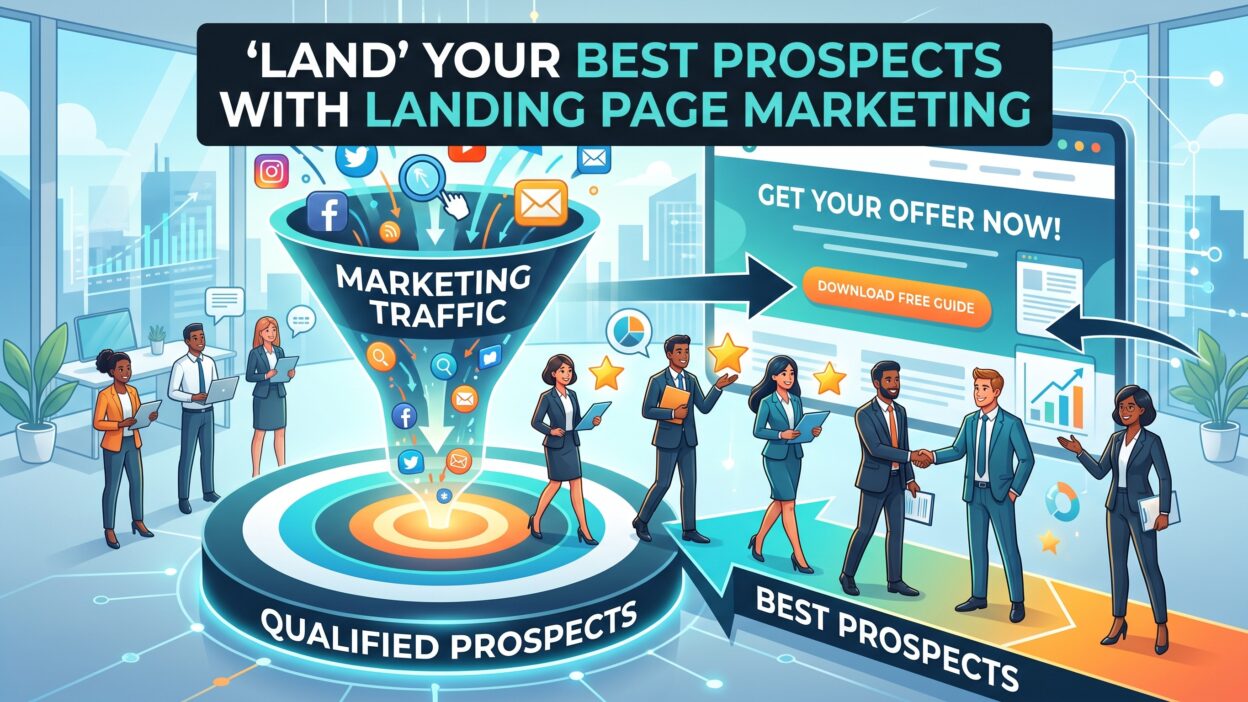
Landing page marketing means building standalone pages designed for one single goal. Unlike a homepage, a landing page removes distractions. It guides visitors toward one action: a signup, a purchase, or a demo request.
This approach works because focus drives conversions. A homepage links to ten different places. A visitor gets lost among menus and offers. A landing page strips this away and keeps attention on one message.
Paid campaigns benefit the most from landing page marketing. Send ad traffic to a generic homepage, and conversion rates drop fast. Send that same traffic to a page built around the ad message, and results improve within weeks.
Marketing teams that master landing page marketing see lower cost per lead and higher return on ad spend. The page becomes a bridge between curiosity and commitment, and that bridge needs careful construction.
Know Your Audience Before You Build a Page
Research Buyer Pain Points
Every successful page starts with research, not design. Talk to your sales team first. Ask which questions prospects raise most often during calls. These questions often reveal the exact pain points your page should address.
Read customer reviews and support tickets too. Real language from real customers works better than generic marketing copy. Borrow their words directly when you write your headline and body copy.
Build a Simple Buyer Profile
Write a short profile for your target visitor. Include their role, their biggest challenge, and what success looks like for them. Keep this profile in front of you while you build the page.
Skipping this step leads to generic pages that speak to no one in particular. Strong landing page marketing always starts with a clear picture of who lands on the page and why they came.
Write Headlines That Stop the Scroll
Your headline decides whether a visitor stays or leaves. Most people scan a page for three seconds before they decide. A weak headline loses them instantly.
Lead with a clear benefit, not a clever phrase. Tell visitors exactly what they gain by staying on the page. Avoid vague words like “innovative” or “revolutionary.” These words say nothing specific.
Test numbers in your headline where they fit naturally. A headline like “Cut Onboarding Time by 40%” beats a vague claim about efficiency. Specific numbers build instant credibility.
Keep your subheadline short too. Use it to expand on the main promise in one sentence. Strong headlines remain the single biggest lever in landing page marketing, since no other element gets read before it.
Keep Your Design Clean and Focused
Remove Navigation Menus
A landing page should never include a full navigation bar. Menus give visitors an exit before they even read your offer. Strip the header down to your logo alone.
Use White Space Wisely
Cramped pages feel overwhelming. Give your text and images room to breathe. White space guides the eye toward your call to action instead of competing elements.
Stick to One Visual Style
Pick one color palette and one font pairing. Consistency builds trust faster than flashy design choices. A cluttered page signals a rushed campaign, and visitors notice this within seconds.
Clean design supports every other element of landing page marketing. Even the best copy struggles to convert on a messy layout.
Craft a Call to Action That Converts
Your call to action deserves more thought than most teams give it. A vague button like “Submit” tells visitors nothing about what happens next. Replace it with action language tied to a clear benefit.
Try phrases like “Start My Free Trial” or “Get My Custom Quote.” These phrases speak directly to the visitor and describe the next step in plain terms.
Place your primary call to action above the fold. Repeat it again near the bottom of the page for visitors who scroll through your full pitch first. Use color contrast to make the button impossible to miss.
Avoid offering more than one competing action. A page with three different buttons confuses visitors and splits their attention. Focused landing page marketing keeps one clear path from headline to conversion.
Use Social Proof to Build Trust
Visitors trust other customers more than they trust your marketing copy. Add testimonials near your call to action. Choose quotes that mention specific results rather than generic praise.
Logos from known companies add instant credibility too. Place a small logo strip beneath your headline if your customer base includes recognizable brands. This reassures new visitors within seconds.
Case study snippets work well for longer pages. Share one short story about a customer who solved a real problem with your product. Keep this section brief and link to the full case study for interested readers.
Trust signals close the gap between interest and action. Strong landing page marketing always includes proof that your product delivers on its promise.
Optimize for Mobile Visitors
More than half of all web traffic now comes from mobile devices. A page that looks great on desktop can fail completely on a phone screen. Test every page on mobile before launch.
Shrink your forms for smaller screens. Long forms frustrate mobile users far more than desktop visitors. Cut every field that is not absolutely necessary for the first conversion step.
Make your call to action button large enough for a thumb tap. Small buttons cause missed clicks and lost conversions. Check your font size too, since tiny text forces visitors to zoom and pinch.
Mobile optimization is no longer optional in landing page marketing. Google also factors mobile experience into ad quality scores, so a poor mobile page raises your ad costs directly.
Speed Up Page Load Time
A slow page loses visitors before they see your offer. Studies consistently show that conversion rates drop sharply once load time passes three seconds. Speed matters as much as design.
Compress your images before upload. Large image files remain the most common cause of slow pages. Use modern formats that keep quality high while reducing file size.
Limit third-party scripts on your page. Chat widgets, tracking pixels, and popup tools all add load time. Keep only the scripts your campaign truly needs.
Test your page speed regularly using free online tools. A fast page supports every other effort within your landing page marketing strategy, since none of your copy matters if visitors leave before it loads.
A/B Test Everything
No landing page succeeds perfectly on the first attempt. Testing turns guesswork into data-backed decisions. Start with your headline, since it carries the biggest impact on conversion rates.
Test one element at a time. Changing your headline and your button color together makes it impossible to know which change caused the result. Isolate each variable for a clean read.
Run tests long enough to reach statistical significance. Ending a test after two days often produces misleading results. Give each version enough traffic before you declare a winner.
Document every test result, even the failed ones. Failed tests teach you just as much about your audience as successful ones. Consistent testing turns landing page marketing into a repeatable system instead of a one-time project.
Match Your Landing Page to Ad Intent
Message match remains one of the most overlooked parts of landing page marketing. If your ad promises a free guide, your landing page must deliver that exact guide. Any mismatch confuses visitors and kills conversions.
Use the same headline language across your ad and your landing page. This consistency reassures visitors that they landed in the right place. A jarring shift in tone or promise raises doubt within seconds.
Build separate landing pages for separate campaigns instead of sending all traffic to one generic page. Each audience segment deserves messaging tailored to their specific entry point.
This alignment also improves your ad platform quality scores. Google and Meta both reward tight message match with lower costs per click, which makes landing page marketing more efficient across your entire paid strategy.
Use Forms That Reduce Friction
Every extra form field reduces your conversion rate. Ask only for information you truly need at this stage of the relationship. Name and email cover most early-stage offers.
Save detailed questions for later steps in your funnel. A demo request can ask for more detail than a newsletter signup. Match your form length to the value of your offer.
Use inline validation so visitors know immediately if they made an error. Nothing frustrates a visitor more than submitting a form and receiving a vague error message after the fact.
Test single-step forms against multi-step forms for longer offers. Sometimes breaking a form into smaller steps increases completion rates, since each step feels less demanding than one long list of fields.
Track the Right Metrics
Conversion rate remains the core metric in landing page marketing. Calculate it by dividing total conversions by total visitors. Track this number for every page and every traffic source separately.
Bounce rate tells you if visitors leave without engaging at all. A high bounce rate often points to a mismatch between your ad and your page content. Review your message match if this number climbs.
Time on page offers another useful signal. Very short times suggest visitors leave before reading your offer. Very long times without conversion might mean your form or your call to action needs simplifying.
Review these metrics weekly during active campaigns. Consistent tracking turns landing page marketing into a data-driven discipline rather than a guessing game.
Avoid Common Landing Page Mistakes
Too many teams launch a page and never revisit it. Landing page marketing requires ongoing attention, not a one-time build. Review performance monthly and refresh outdated offers.
Avoid stock photography that feels generic. Visitors scroll past images that look like every other page online. Use real product screenshots or authentic team photos instead.
Do not bury your call to action below long blocks of text. Visitors should never need to scroll far to find their next step. Keep your primary offer visible early and often.
Watch for slow-loading forms and broken links too. A technical error at the final step wastes every dollar spent driving traffic to that page. Regular audits catch these issues before they cost you leads.
Frequently Asked Questions
What makes landing page marketing different from a regular website page?
A landing page focuses on one single goal, while a regular website page often links to many destinations. This focus removes distractions and improves conversion rates for specific campaigns.
How long should a landing page be?
Length depends on your offer. Simple offers like newsletter signups work well with short pages. Complex offers like enterprise software often need longer pages with more proof and detail.
How often should I update my landing pages?
Review your top-performing pages monthly. Update headlines, offers, and testimonials as your product and customer base evolve. Stale pages lose relevance and hurt conversion rates over time.
What tools help build landing pages without coding?
Popular tools include Unbounce, Instapage, and HubSpot. These platforms offer drag-and-drop builders along with built-in A/B testing features for ongoing optimization.
Can one landing page work for multiple ad campaigns?
It rarely works well. Each campaign carries a different message and audience. Building separate pages for separate campaigns keeps your landing page marketing aligned with visitor intent and improves conversion rates.
Read More:-Pipedrive PandaDoc Integration: Complete Guide [2026]
Conclusion

Landing page marketing turns scattered traffic into real business results. Every element matters, from your headline down to your form fields. Small changes often produce large gains in conversion rates.
Start with audience research, then build a focused page around one clear goal. Test constantly and track your metrics closely. Strong landing page marketing rewards teams that treat every page as a living project, not a finished product.
Your next campaign deserves a page built with intention. Apply these principles, measure your results, and refine your approach with each new test.