Introduction
Duplicate records slow down every business process they touch. Sales teams call the same lead twice. Marketing teams send the same email three times. Data deduplication solves this mess and gives every team one clean, reliable record to work with.
Data keeps growing every year across every department. More data means more chances for duplicates to creep in unnoticed. Companies that skip this practice end up drowning in messy records within a few short years.
This blog explains what data deduplication means, how it works, and why every growing company needs it. You will also find real use cases, common methods, and answers to the questions people ask most.
Table of Contents
What Is Data Deduplication?
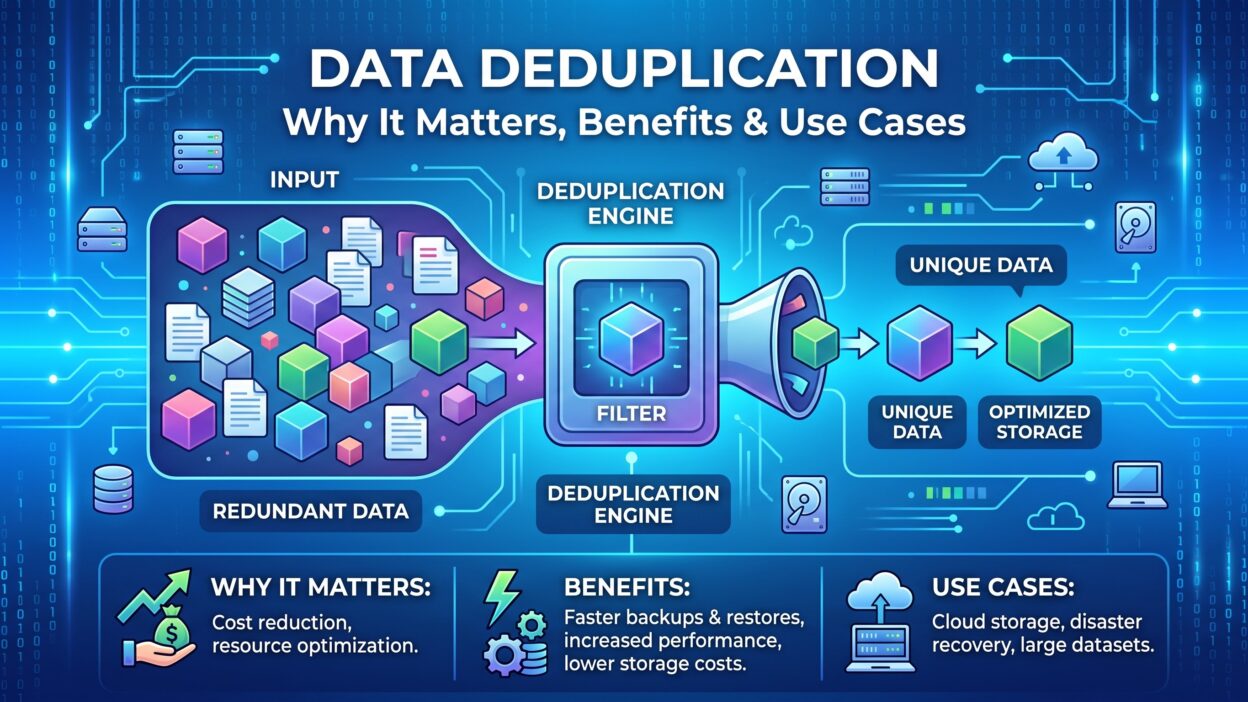
Data deduplication means finding and removing duplicate copies of the same information. A database might store one customer three times under slightly different spellings. This process finds those copies and merges them into one clean record.
Companies deal with duplicates in customer databases, backup storage, and marketing lists. Data deduplication applies across all of these areas, though the exact method changes based on the system involved.
A retail company might store the same customer under two email addresses after a name change. A hospital might store the same patient twice after a system migration. Both cases need the same basic fix, even though the industries look completely different.
How Data Deduplication Works
The process starts by comparing records against each other. A system looks for matching fields like name, email, or account number. When it finds a match, it merges the records or removes the extra copy.
Some systems use exact matching. Others use smarter logic that catches near-matches, like “Jon Smith” and “John Smith.” This smarter approach catches more duplicates than simple exact matching alone.
Most tools also assign a confidence score to each potential match. A high score means the system feels very sure two records represent the same person. A lower score often gets flagged for a human to review before any merge happens.
Data Deduplication vs Data Cleansing
People often mix up these two terms. Data cleansing fixes broader problems like typos, missing fields, and formatting errors. Data deduplication focuses specifically on finding and removing repeated records.
Both processes work well together. A clean dataset free of typos makes duplicate detection easier. Teams often run cleansing first, then apply deduplication to catch any remaining repeats.
Why Data Deduplication Matters
Duplicate records create real problems across a business. These problems grow bigger as a company scales and collects more data every day.
The Cost of Duplicate Data
Storage costs rise when the same file or record sits in a system multiple times. A company paying for cloud storage wastes money storing copies it does not need. Data deduplication cuts this waste immediately.
Duplicate records also cost time. Teams spend hours untangling which record holds the correct information. This wasted effort adds up fast across a large organization.
A support agent might spend ten extra minutes on a call just figuring out which of three duplicate profiles holds the real order history. Multiply that across hundreds of calls a week, and the lost time becomes a real budget problem.
Impact on Decision Making
Leaders trust reports built from clean data. Duplicate records skew these reports and create false trends. A company might think it has two thousand customers when it actually has half that number.
Strong data deduplication practices remove this risk. Reports built on clean records reflect real business performance instead of inflated or confusing numbers.
Impact on Customer Experience
Customers notice when a company treats them like a stranger twice. Duplicate records often mean a customer gets the same email twice or talks to two different reps about the same issue. This experience feels sloppy and unprofessional.
Data deduplication keeps every customer interaction connected to one clear history. Support teams see the full picture instead of a fragmented, confusing record.
Types of Data Deduplication
Different systems need different approaches to remove duplicates. Understanding these types helps teams choose the right method for their specific problem.
File-Level Deduplication
File-level deduplication looks at entire files and compares them against each other. If two files match exactly, the system keeps one copy and removes the rest. This method works well for backup systems storing repeated documents.
Companies backing up the same files daily often build up thousands of identical copies. File-level deduplication keeps storage costs low by catching these exact repeats quickly.
Block-Level Deduplication
Block-level deduplication looks deeper than the whole file. It breaks files into smaller chunks and compares those chunks instead. Two files might differ slightly but still share most of their content.
This method catches savings that file-level checks miss entirely. A slightly edited document still shares most of its blocks with the original version, and the system only stores the new, changed pieces.
Cloud backup providers rely heavily on this technique. Storing only the changed blocks across thousands of daily backups cuts storage needs dramatically compared to keeping full copies every time.
Record-Level Deduplication
Record-level deduplication works inside databases and spreadsheets. It compares individual records like customer profiles or transaction entries. This type matters most for CRM systems and marketing databases.
Sales and marketing teams rely heavily on this type of data deduplication. A clean customer database keeps every campaign and outreach effort accurate and effective.
Common Data Deduplication Methods
Companies use several techniques to find and remove duplicates. Each method fits different situations and different levels of data complexity.
Exact Match Deduplication
Exact match deduplication looks for records that match completely. Two entries with the exact same email address get flagged as duplicates. This method works fast and produces few errors.
The downside shows up with slight variations. A typo or extra space can hide a duplicate from an exact match system entirely.
Fuzzy Matching
Fuzzy matching catches duplicates that look similar but do not match exactly. This method spots misspellings, abbreviations, and formatting differences. A system using fuzzy logic might catch “Robert Jones” and “Rob Jones” as the same person.
Data deduplication tools that use fuzzy matching catch far more duplicates than exact match alone. This method takes more processing power but produces cleaner results overall.
Rule-Based Deduplication
Rule-based deduplication follows specific logic set by a team. A rule might say two records match if the email and phone number both match. Teams build these rules based on their own data patterns.
This method gives teams full control over how strict or loose the matching gets. Companies often start here before moving to more advanced techniques.
AI-Powered Deduplication
AI-powered systems learn from past matching decisions and improve over time. These systems catch complex duplicate patterns that rule-based systems often miss. Machine learning models study thousands of records and learn what a true match actually looks like.
Data deduplication powered by AI works especially well for massive datasets. Manual rules struggle to scale, but a trained model handles millions of records with steady accuracy.
These models also adapt over time. A system trained on one company’s naming patterns learns to spot that company’s specific quirks, like common nicknames or regional spelling differences. This adaptation improves match quality the longer the tool runs.
Benefits of Data Deduplication
Companies that invest in clean, deduplicated data see clear returns across several areas of the business.
Storage Savings
Removing duplicate files and records frees up storage space immediately. Companies paying for cloud storage see real cost reductions once deduplication runs regularly. This saving grows larger as a company collects more data over time.
A business storing terabytes of backup data can cut costs significantly through consistent deduplication practices.
Better Data Accuracy
Clean records give every team confidence in their numbers. Reports, dashboards, and forecasts all improve once duplicate entries disappear. Data deduplication removes the noise that hides real business trends.
Teams stop second-guessing their data once they trust the source behind it.
Faster Reporting and Analytics
Analysts spend less time cleaning data before they can even start their real work. Deduplicated data lets teams jump straight into analysis instead of manual cleanup. This speed helps companies react faster to market changes.
A report that once took two days to prepare might now take two hours once duplicate records stop clogging the pipeline.
Improved Compliance
Regulations often require companies to track customer data accurately. Duplicate records make this tracking harder and increase compliance risk. Data deduplication supports cleaner audits and simpler regulatory reporting.
Companies handling sensitive information, like healthcare or financial records, benefit heavily from strong deduplication practices.
Auditors often ask for a complete, accurate history of every customer interaction. Duplicate entries make that history harder to verify. Clean, deduplicated records give auditors a straightforward trail to follow without extra back-and-forth questions.
Common Use Cases for Data Deduplication
Different industries and teams apply data deduplication in different ways. These real examples show how the practice plays out across various business functions.
CRM and Sales Databases
Sales teams often import leads from multiple sources. These imports create duplicate contacts constantly. Data deduplication keeps the CRM clean, so reps do not waste time calling the same lead twice.
A clean CRM also improves lead scoring accuracy. Duplicate records confuse scoring models and produce misleading results.
Sales managers also rely on clean pipeline numbers to forecast revenue. Duplicate deals tied to the same account can make a quarter look stronger than it really is, leading to poor planning down the line.
Backup and Storage Systems
IT teams manage massive amounts of backup data every day. Data deduplication reduces the storage footprint of these backups significantly. Companies save real money on storage infrastructure once this practice runs consistently.
Backup deduplication also speeds up recovery time. Smaller, cleaner backup sets restore faster during an actual emergency.
Marketing Lists and Email Campaigns
Marketing teams often merge lists from different tools and events. These merged lists almost always contain duplicates. Data deduplication prevents the same customer from getting the same email multiple times.
This practice protects sender reputation too. Email providers flag accounts that send repeated messages to the same address as spam-like behavior.
A clean list also gives marketers more accurate open and click rates. Duplicate entries inflate these numbers and hide the real performance of a campaign.
Healthcare and Financial Records
Hospitals and banks manage sensitive records that must stay accurate at all times. A duplicate patient file can lead to serious errors in treatment or billing. Data deduplication in these industries protects both safety and compliance.
Financial firms use this practice to prevent duplicate transactions and keep audit trails clean and trustworthy.
How to Choose a Data Deduplication Tool
Picking the right tool depends on the size and type of data a company manages. A small business with a few thousand contacts needs something far simpler than an enterprise managing millions of records across five systems.
Matching the Tool to Data Volume
Small datasets work fine with basic spreadsheet formulas or simple software plugins. Large datasets need dedicated platforms built to handle heavy processing loads. Choosing a tool built for the wrong scale wastes both time and money.
Checking Integration With Existing Systems
A deduplication tool works best when it connects directly to a company’s CRM, email platform, or storage system. Manual exports and imports slow down the entire process and introduce new errors. Strong integration keeps the workflow smooth from start to finish.
Reviewing Matching Accuracy
Not every tool catches duplicates at the same rate. Some rely only on exact matches and miss common variations. Teams should test a tool against their own messy data before committing to a long-term contract.
Challenges in Data Deduplication
Removing duplicates sounds simple, but real-world data creates real obstacles along the way.
Handling Similar but Different Records
Some records look like duplicates but represent different people or items entirely. Two customers named “Michael Brown” living in different cities are not the same person. Aggressive deduplication rules risk merging records that should stay separate.
Teams need careful rules and human review to avoid this kind of costly mistake. A good process flags uncertain matches for manual review instead of merging automatically without any checks.
Industries like healthcare cannot afford this kind of mistake at all. Merging two different patients into one file risks real harm, so teams often build extra verification steps before any automatic merge happens.
Scaling Across Large Databases
Small datasets deduplicate quickly with simple tools. Large databases with millions of records need much more processing power and smarter matching logic. Data deduplication at scale requires strong infrastructure and careful planning.
Companies growing fast often outgrow their original deduplication setup within a year or two.
A tool that worked fine for fifty thousand records might slow to a crawl at five million. Planning for future growth early saves a painful migration to a new system later.
Maintaining Data After Deduplication
Deduplication is not a one-time fix. New duplicates creep back in as teams add fresh data every day. Companies need an ongoing process, not a single cleanup project.
Skipping this maintenance step lets old problems return within months.
Best Practices for Data Deduplication
Companies that succeed with this practice follow a few consistent habits.
Standardize Data Entry
Consistent formatting prevents many duplicates before they even happen. Setting rules for how names, phone numbers, and addresses get entered reduces future cleanup work. Data deduplication becomes far easier when the source data stays consistent from the start.
Simple dropdowns and input validation catch many errors before they enter the system at all.
Company-wide naming rules also help. A shared standard for how reps enter company names or job titles cuts down on the small variations that trigger false duplicates or, worse, hide real ones.
Automate the Process
Manual deduplication does not scale well. Companies should invest in tools that run this process automatically on a regular schedule. Automated systems catch new duplicates faster than any manual review ever could.
Automation also frees up staff time for higher-value work instead of manual record checking.
Schedule Regular Deduplication Checks
Setting a clear schedule keeps data quality steady over time. Weekly or monthly checks catch new duplicates before they spread across reports and campaigns. Data deduplication works best as a habit, not a one-time event.
Teams that skip regular checks often face a much bigger cleanup project later.
Future of Data Deduplication
Technology keeps improving how companies handle duplicate data. These changes will shape how teams approach this practice in the coming years.
AI and Machine Learning Improvements
AI models keep getting better at spotting subtle duplicate patterns humans might miss. These models learn from every correction a team makes, improving their accuracy over time. Data deduplication powered by smarter AI will catch more edge cases with less manual review.
Companies adopting these tools early will spend less time on manual cleanup than competitors relying on older methods.
Real-Time Deduplication
Older systems check for duplicates after data enters a database. Newer systems catch duplicates the moment someone enters new information. This real-time approach stops bad data before it ever spreads.
Data deduplication running in real time keeps every system clean without waiting for a scheduled batch job to catch up.
Sales teams benefit the most from this shift. A rep entering a new lead sees an instant warning if that contact already exists, instead of finding out weeks later during a messy cleanup project.
Frequently Asked Questions
What is data deduplication?
Data deduplication finds and removes duplicate copies of the same information across a database, file system, or backup storage. It keeps one clean, accurate record instead of several repeated copies.
Why does data deduplication matter for businesses?
Duplicate records waste storage space, confuse reports, and hurt customer experience. Removing these duplicates saves money and improves the accuracy of every business decision built on that data.
What is the difference between deduplication and data cleansing?
Data cleansing fixes broader issues like typos and missing fields. Data deduplication focuses specifically on identifying and removing repeated records within a dataset.
How often should companies run deduplication checks?
Most companies benefit from weekly or monthly checks. Fast-growing companies with constant new data intake may need more frequent reviews to stay clean.
Can small businesses benefit from data deduplication?
Yes. Even small customer lists and small backup systems build up duplicates over time. Simple, affordable tools help small businesses keep their data clean without a large budget.
Does data deduplication work the same way across every industry?
The core idea stays the same, but the approach changes based on the data type. Healthcare and finance often need stricter rules due to compliance requirements, while marketing teams can use looser matching for lists.
Should companies rely fully on automated deduplication tools?
Automation handles most of the work well, but human review still matters for uncertain matches. A blended approach catches more true duplicates while avoiding accidental merges of separate records.
Read More:-Web Form Optimization: How to Capture More (and Better) Leads
Conclusion

Data deduplication keeps a business running on clean, accurate information. This practice saves storage costs, sharpens reporting, and builds stronger customer relationships across every team. Companies that ignore duplicate records pay for that mistake through wasted budgets and confused decision making.
Building a strong deduplication habit takes the right tools and a consistent schedule. Teams that standardize their data entry and automate regular checks stay ahead of the problem instead of chasing it. Businesses that commit to data deduplication today will run leaner, faster, and smarter than competitors still buried under duplicate records.
Clean data touches every part of a business, from the first sales call to the final audit report. A small investment in this practice pays off across every team that touches company data.
Start with one system, build a steady habit, and expand from there. The results show up fast once duplicate records stop draining time and budget across the business.