Introduction
TL;DR Sales teams waste hours on leads that never close. A rep chases a name on a list. The name looks promising. The deal goes nowhere. This happens every single day in offices across the world. The fix is simple. You need to score prospects before you spend time on them. Scoring removes the guesswork. It replaces gut feeling with data. Reps stop chasing shadows. Instead, they chase real buyers with real budgets and real needs.
This guide walks you through a practical system to score prospects fast. You will learn the criteria that matter. You will learn how to build a scoring model in a few simple steps. You will also learn which tools save time and which mistakes waste it. By the end, your team will spend less time guessing and more time closing.
Selling smart starts with one habit. Score prospects early. Score them often. Keep the process simple enough that any rep can follow it in minutes.
Table of Contents
Why Sales Teams Struggle to Score Prospects Correctly
Many sales teams still rely on instinct. A rep feels good about a call. The rep marks the lead as hot. Weeks pass. The lead disappears. This pattern repeats across industries. Teams lose deals not because they lack leads. They lose deals because they fail to score prospects with any real method.
The Cost of Guesswork in Your Pipeline
Guesswork drains your pipeline of value. Reps spend hours on leads with zero buying intent. Meanwhile, strong prospects sit untouched. Revenue slips through the cracks. Forecasts become unreliable. Managers cannot trust the numbers reps report. A pipeline built on guesswork looks full but performs empty.
Common Signs Your Team Needs a Scoring System
A few warning signs point to a broken process. Reps argue over which leads matter most. Marketing sends leads that sales ignores. Deals stall at the same stage every quarter. Close rates stay flat despite more leads coming in. Each sign points to one root cause. Nobody has a clear way to score prospects. Without a system, every rep invents their own rules.
What Does It Mean to Score Prospects?
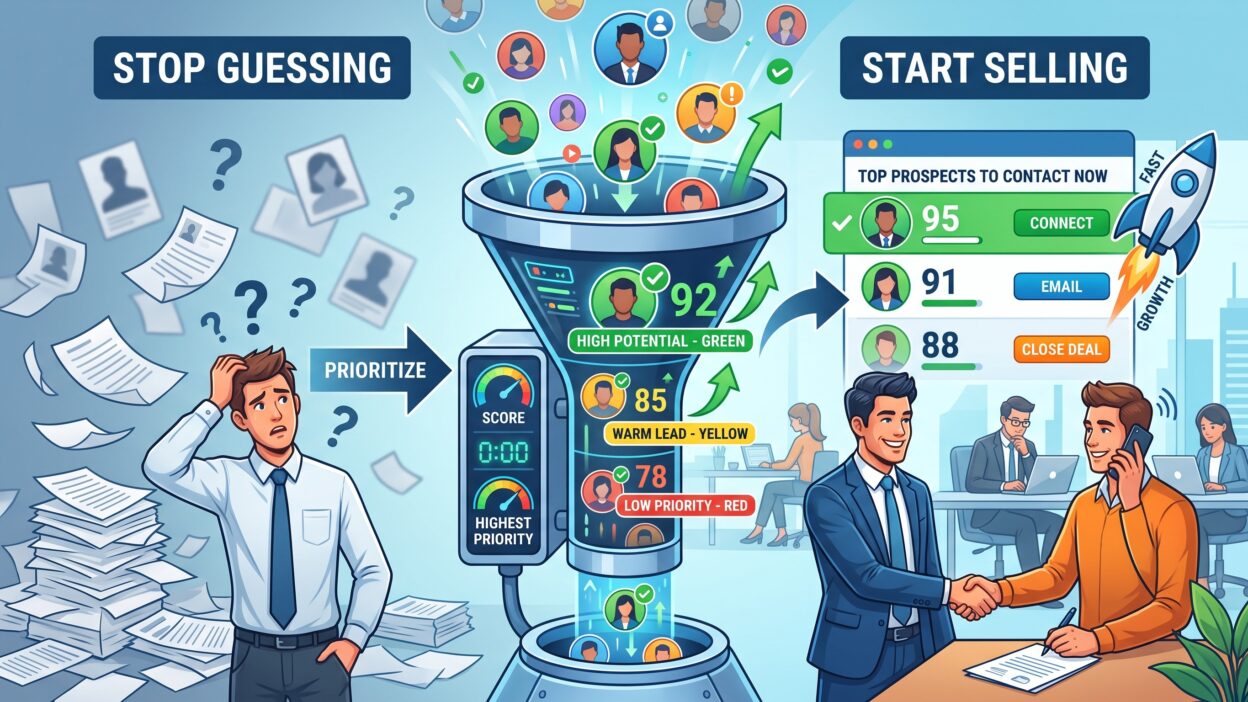
To score prospects means you assign a value to each lead based on fit and behavior. The value tells you how ready a buyer is. A high score signals urgency. A low score signals patience or disinterest. This number guides where reps spend their energy.
Scoring turns opinion into structure. It gives every lead a rank. Reps no longer wonder who to call first. The system tells them.
Lead Scoring vs Prospect Scoring
People often use these terms as one idea, but small differences exist. Lead scoring usually happens early. It looks at basic fit and initial interest. Prospect scoring happens later. It adds behavior over time and deeper engagement signals. Both processes share one goal. They help you score prospects accurately so your team focuses on the right accounts.
The Core Criteria Used to Score Prospects
A strong model rests on a few pillars. Each pillar adds a layer of insight. Together, they create a full picture of buyer readiness.
Demographic and Firmographic Fit
Fit comes first. Does this person match your ideal buyer? Job title matters. Company size matters. Industry matters. Budget authority matters most of all. A prospect with the right title at the right company scores higher than a random visitor. Firmographic data includes revenue, headcount, and location. These details tell you whether a company can even afford your product. You cannot score prospects well without this baseline layer.
Behavioral and Engagement Signals
Behavior reveals intent. A prospect who opens five emails shows more interest than one who opens none. A prospect who visits your pricing page twice signals urgency. Website visits, email opens, content downloads, and webinar attendance all carry weight. Each action earns points. The more active a prospect becomes, the higher their score climbs. This layer captures real-time interest, not just static fit.
Buyer Intent Data
Intent data adds a modern layer to any model. Third-party tools track search behavior across the web. A company searching competitor terms shows buying signals outside your own website. This data helps you score prospects even before they visit your site. Intent signals catch buyers early in their research phase. Sales teams that use this layer often reach prospects before competitors do.
Building a Simple Framework to Score Prospects Fast
You do not need complex software to start. A basic spreadsheet works for many teams. The goal stays simple. Build a framework that any rep can use without confusion.
Step One: Define Your Ideal Customer Profile
Start with your best customers. Look at accounts that closed fast and stayed loyal. List their traits. Note their industry, size, and role types. This profile becomes your baseline. Every new prospect gets compared against it. A close match earns high points. A poor match earns low points.
Step Two: Assign Point Values
Give each criterion a number. Job title might earn ten points for a decision maker and two points for an intern. Company size might earn fifteen points for a strong fit and zero for a mismatch. Website visits might earn five points each, capped at a limit. Keep the math simple. Complexity kills adoption. A model reps understand gets used. A model reps cannot follow gets ignored.
Step Three: Set Your Threshold for Sales-Ready Leads
Pick a number that marks readiness. Maybe seventy points signals a sales-ready lead. Below that number, marketing keeps nurturing. Above that number, sales reaches out immediately. This threshold turns your framework into action. Without a clear cutoff, teams still argue over priority. With one, everyone works from the same rulebook.
Tools and Technology That Help You Score Prospects
Once your framework works on paper, technology can scale it. Manual scoring works for small teams. Growing teams need automation to score prospects at volume.
CRM-Based Scoring Models
Most major CRMs include native scoring features. These tools track email opens, page visits, and form fills automatically. Points update in real time. Reps see a live score next to each contact. This removes manual work and keeps scores fresh. A CRM model works well for teams already tracking activity inside one system.
AI and Predictive Scoring Tools
Newer platforms use machine learning to score prospects. These tools study your closed deals. They find patterns humans might miss. A predictive model might notice that prospects who read case studies close twice as often. It adjusts scores based on these hidden patterns. AI tools work best for teams with large data sets and steady deal flow. Smaller teams may find simpler models more practical at first.
Common Mistakes Teams Make When They Score Prospects
Many teams build a scoring model and abandon it within months. A few mistakes cause this failure pattern.
Teams often make the model too complex. Twenty criteria with tiny point differences confuse reps. Nobody remembers the rules. Adoption drops fast.
Teams also forget to update the model. Buyer behavior shifts over time. A model built two years ago may no longer match today’s buyer journey. Stale models produce bad scores.
Another mistake involves ignoring negative signals. A prospect who unsubscribes or bounces an email should lose points, not just gain them. Scoring only upward inflates numbers and misleads reps.
Finally, some teams skip sales input entirely. Marketing builds the model alone. Sales never buys in. Reps ignore the score because they never trusted it. A good model needs voices from both sides of the table.
How Sales and Marketing Alignment Improves Prospect Scoring
Marketing generates leads. Sales closes them. Both teams must agree on what a good lead looks like. Without agreement, scoring breaks down fast.
Regular meetings between both teams keep the model honest. Sales reports which leads actually convert. Marketing adjusts the scoring rules based on that feedback. This loop keeps the system alive and accurate.
When both teams trust the same score, handoffs become smooth. Sales stops complaining about lead quality. Marketing stops feeling ignored. Everyone works from one shared number, and that number carries real weight because both teams built it together.
A Real-World Example of Scoring Prospects the Right Way
A mid-size software company once struggled with slow response times. Reps called leads in random order. Deals took months to close. The team built a simple model. They gave points for job title, company size, and email engagement. They set a threshold of sixty points for immediate follow-up.
Within one quarter, response time on hot leads dropped from three days to four hours. Close rates rose by eighteen percent. Reps stopped wasting time on cold names. They focused only on prospects that matched the profile and showed real engagement. The team did not add new leads or new budget. They simply learned to score prospects the right way, and the results followed.
Frequently Asked Questions
What does it mean to score prospects in sales? Scoring prospects means giving each lead a number based on fit and behavior. The number shows how ready that buyer is. Reps use the number to decide who to call first.
How often should a team update its scoring model? Review the model every quarter. Buyer behavior changes. Products change. A model built once and never touched loses accuracy fast.
Can small businesses score prospects without expensive software? Yes. A spreadsheet works fine for small teams. Track job title, company size, and engagement manually. Add automation later once volume grows.
What is the difference between lead scoring and prospect scoring? Lead scoring often happens early with basic fit data. Prospect scoring adds deeper behavior and intent signals over a longer window. Both aim to help you score prospects with more precision.
Should negative behavior lower a prospect’s score? Yes. An unsubscribe, a bounced email, or a long period of silence should reduce points. This keeps your score realistic instead of inflated.
Who should own the scoring model, sales or marketing? Both teams should build it together. Marketing brings data on engagement. Sales brings feedback on which leads actually close. Shared ownership keeps the model trusted by everyone.
Does intent data really improve accuracy when you score prospects? Yes, in most cases. Intent data catches buyers researching solutions before they visit your website. This early signal helps reps reach out sooner than competitors.
Read More:-Conversational Marketing: How Chat Can Turn Visitors into Buyers
Conclusion

Guesswork costs your team time, money, and deals. A clear system fixes that problem fast. When you score prospects with a simple, shared framework, your pipeline becomes honest. Reps chase real buyers instead of cold names. Marketing and sales finally speak the same language.
Start small. Define your ideal customer. Assign simple point values. Set a threshold and stick to it. Review the model every quarter and adjust based on real results. Add tools once your team outgrows a spreadsheet.
Selling smart is not about working harder. It comes down to one habit, repeated daily: score prospects before you chase them. Do that consistently, and guessing stops. Selling starts.