Introduction
TL;DR A visitor opens your website. They read one line of copy. They leave in ten seconds. This happens every single day on most B2B and B2C sites. Conversational marketing changes this pattern completely.
Conversational marketing uses real-time chat to talk with visitors the moment they land on a page. It replaces static forms with live dialogue. It turns silent browsing into an active conversation between your brand and a real buyer.
This guide breaks down what conversational marketing means, why it works, and how you can use it to move visitors toward a purchase. You get practical steps, key features, and answers to common questions marketers ask.
Table of Contents
What Is Conversational Marketing
Conversational marketing is a strategy that uses chat, bots, and real-time messaging to engage website visitors instantly. Instead of a form that sits quietly on a page, a chat widget starts a dialogue right away.
This approach replaces the old funnel model. Traditional marketing pushes a visitor through slow steps: form fill, email nurture, follow-up call. Conversational marketing skips these delays. It answers questions on the spot and guides a buyer toward a decision in real time.
Brands use conversational marketing across websites, social media, and messaging apps like WhatsApp. The core idea stays the same everywhere. Talk to buyers where they already are, and talk to them now.
Why Conversational Marketing Works for Modern Buyers
Buyers expect instant answers today. A slow contact form feels outdated next to a chat window that replies in seconds.
Conversational marketing meets buyers at their exact moment of interest. A visitor reading a pricing page has questions right then. A quick chat answers those questions before doubt creeps in.
This speed builds trust fast. Buyers feel heard instead of ignored. That feeling often decides whether they stay on your site or click away.
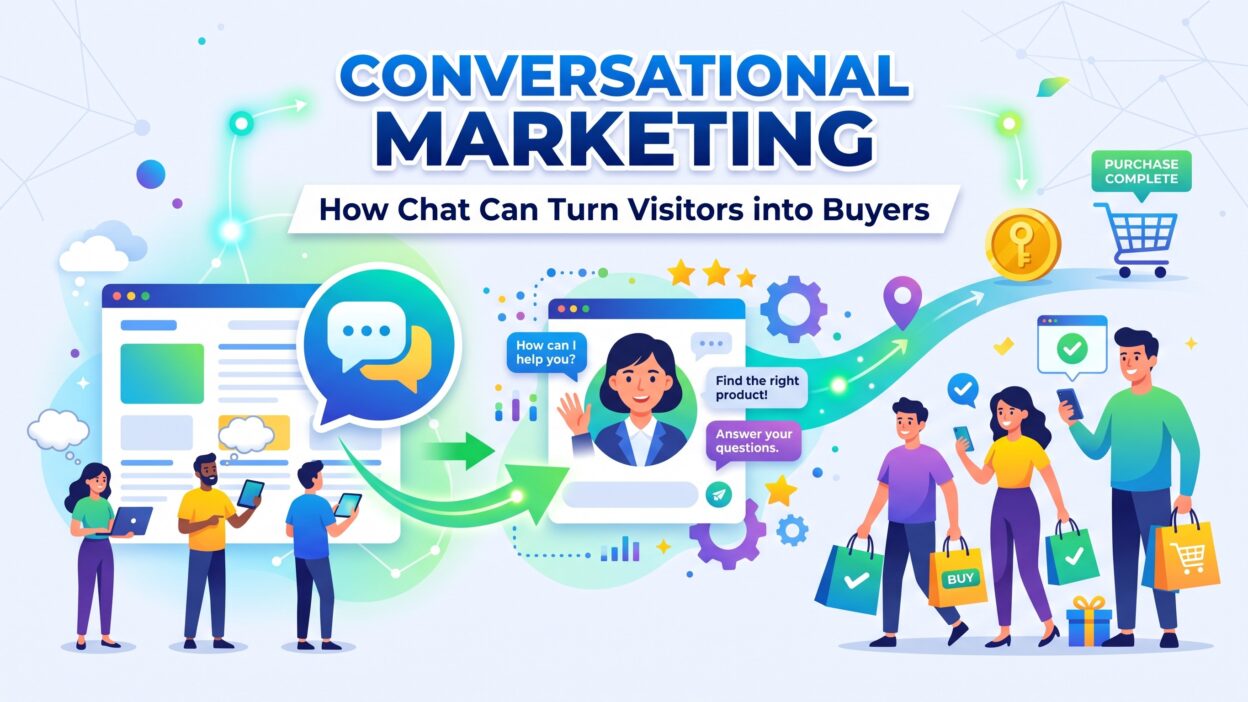
How Conversational Marketing Turns Visitors into Buyers
Every visitor arrives with a question in mind. Conversational marketing answers that question before the visitor has to search for it.
A chat widget can greet a visitor by name if they clicked from an email campaign. It can reference the exact page they are viewing. This context makes the greeting feel personal instead of generic.
Bots also qualify leads early. A simple question like “What brings you here today?” tells your sales team exactly what a visitor wants. This saves hours of guesswork later in the sales process.
Once a bot gathers enough information, it can route the conversation to a live rep. The rep already knows the visitor’s intent. This makes the handoff smooth and the conversation feel continuous.
Conversational marketing also removes friction from the buying journey. A visitor does not need to fill a long form or wait for a callback. They get answers now, and they move toward a decision faster because of it.
Key Components of a Conversational Marketing Strategy
A strong conversational marketing plan needs more than a chat widget bolted onto a homepage.
Start with clear goals. Decide if your chat should book demos, collect emails, or answer support questions. Each goal changes how you design the conversation flow.
Build a bot script that sounds human. Short sentences work better than long paragraphs. A bot that sounds like a robot pushes buyers away instead of pulling them in.
Add smart triggers based on visitor behavior. A visitor who scrolls through your pricing page twice shows strong intent. Your conversational marketing tool should catch this signal and start a chat at the right moment.
Connect your chat tool to your CRM. Every conversation should sync with contact records automatically. This keeps your sales team working from clean, updated data.
Train your team on tone and response time. A great script means nothing if a human rep replies an hour later. Speed keeps the conversation alive.
Best Conversational Marketing Channels
Website Chat Widgets
Website chat remains the most common conversational marketing channel. A widget sits in the corner of your page and greets visitors based on their behavior.
This channel works well for B2B companies with long sales cycles. A prospect can ask a quick question without booking a full call.
Messaging Apps
WhatsApp, Facebook Messenger, and similar apps extend conversational marketing beyond your website. Buyers already spend hours on these apps daily.
Retail and consumer brands use messaging apps to send order updates, answer questions, and recommend products. This channel builds a closer, more personal relationship with buyers over time.
Benefits of Conversational Marketing for Businesses
Conversational marketing shortens the sales cycle. Buyers get answers immediately, so they do not sit in an email queue for days.
This approach also improves lead quality. A bot asks qualifying questions before a rep ever joins the chat. Sales teams spend less time chasing cold leads and more time closing warm ones.
Customer support teams benefit too. Bots handle repetitive questions like pricing tiers or shipping times. This frees human agents to handle complex issues that need real judgment.
Conversational marketing also creates a data trail. Every chat reveals what buyers care about most. Marketing teams use this data to refine messaging, adjust pricing pages, and build better content.
Brand perception improves as well. A fast, helpful chat experience makes a company feel modern and attentive. Buyers remember brands that respect their time.
Common Mistakes to Avoid in Conversational Marketing
Many brands launch conversational marketing tools without a clear script. A vague greeting like “Hi, how can I help?” wastes the first moment of contact.
Some teams automate too much. Buyers can tell when they talk to a bot stuck in a loop. Always give an easy path to a human rep.
Slow response time kills momentum fast. A chat that replies after twenty minutes defeats the entire purpose of conversational marketing.
Ignoring mobile design causes trouble too. Many buyers browse on phones during short breaks. A chat widget that looks broken on mobile loses leads instantly.
Skipping analytics is another common error. Without tracking open rates and response rates, teams cannot tell if their conversational marketing effort actually drives results.
How to Build a Conversational Marketing Plan Step by Step
Begin with your buyer journey. Map out where visitors get stuck or drop off. These moments make the best spots for a chat trigger.
Choose a tool that fits your team size and budget. Small teams can start with simple live chat software. Larger teams may need advanced bot builders with CRM integration.
Write your first message carefully. Keep it short and specific to the page a visitor views. A generic line feels lazy and forgettable.
Set clear escalation rules. Decide exactly when a bot hands a conversation to a human rep. This keeps buyers from feeling stuck in an endless bot loop.
Test your conversational marketing flow with real traffic before a full rollout. Watch how visitors respond, then adjust your script based on real behavior instead of guesswork.
Review your results every month. Buyer needs shift over time, and your conversation flow should shift with them.
Frequently Asked Questions
What does conversational marketing mean in simple terms? Conversational marketing means talking to website visitors through live chat instead of relying only on forms and emails.
Is conversational marketing only for large companies? No, small businesses use it too. A simple chat widget can help a small team capture leads around the clock.
Does conversational marketing replace email marketing? No, it works alongside email. Chat handles immediate questions, while email nurtures leads over a longer period.
What tools support conversational marketing? Popular tools include Drift, Intercom, HubSpot Chat, and Tidio. Each tool offers bot builders and CRM integration.
How fast should a chat reply come in conversational marketing? Aim for under one minute. Buyers lose interest fast if a reply takes too long.
Can conversational marketing work for e-commerce brands? Yes, retail brands use chat to answer product questions and recommend items based on browsing behavior.
Does conversational marketing improve conversion rates? Yes, most brands see higher conversion rates because buyers get answers before they leave the page.
Read More:-Sales and Compliance: Unlikely Allies
Conclusion

Buyers do not want to wait anymore. They want answers the moment a question comes to mind. Conversational marketing gives brands a direct way to meet this expectation.
A well-built conversational marketing strategy shortens sales cycles and improves lead quality. It removes friction from the buying journey and builds trust through fast, helpful replies.
Start small if you feel unsure. Add a simple chat widget to your highest-traffic page first. Watch how visitors respond, then expand your conversational marketing effort across your site.
The brands that grow fastest today talk to their buyers in real time. Conversational marketing is not a passing trend. It is quickly becoming the standard way businesses turn quiet visitors into loyal buyers.