Introduction
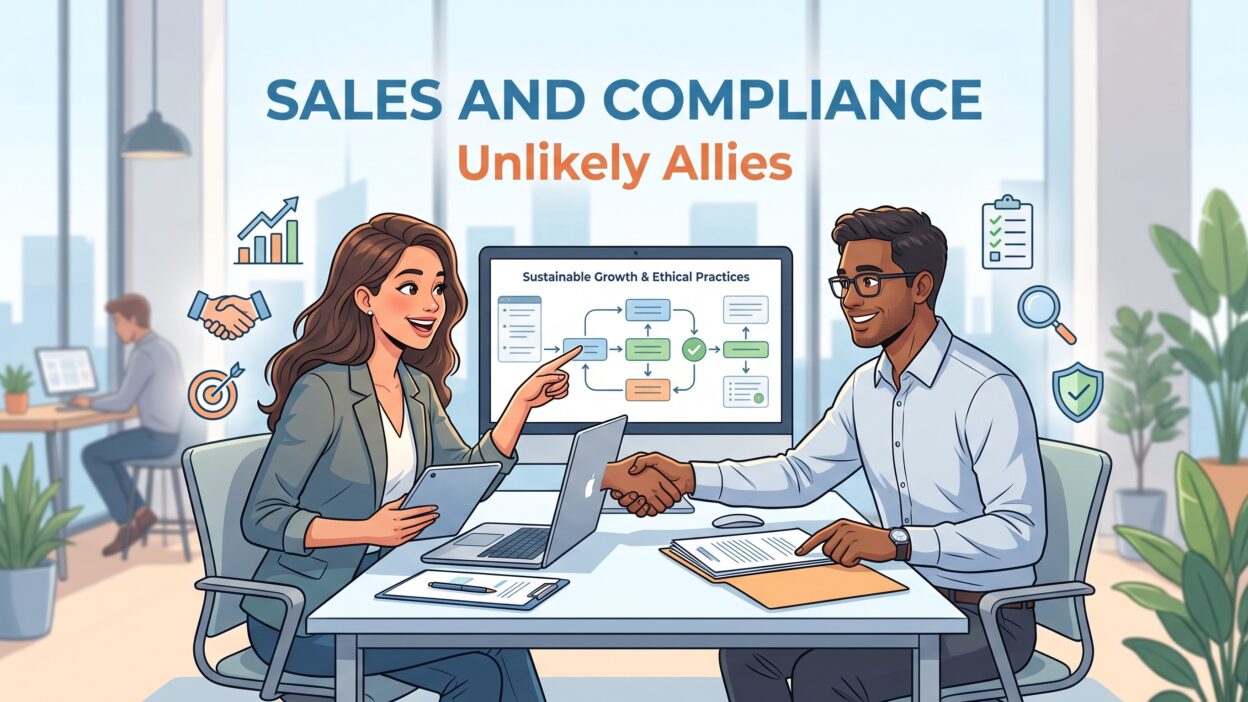
TL;DR Sales teams chase revenue. Compliance teams chase rules. Most people assume these two functions sit on opposite sides of a room, arguing over every contract. That picture misses the real story. Sales and Compliance actually protect the same thing: a healthy, lasting business.
A sales rep wants a deal signed fast. A compliance officer wants that deal signed correctly. Neither goal cancels the other out. These two functions work best when both sides treat each other as partners, not obstacles.
This blog looks at why Sales and Compliance clash so often, and why they need not clash at all. It covers real friction points, practical fixes, and the habits that build trust between these two teams. Every section stays grounded in real workplace situations, not theory.
Table of Contents
Why Sales and Compliance Seem Like Opposites
Sales moves fast. Compliance moves carefully. That basic difference in pace creates most of the tension people notice first. A rep wants an answer in an hour. A compliance reviewer needs a full day to check a contract clause properly.
This speed gap feels like conflict, but it rarely means one side works against the other. Sales and Compliance simply operate on different clocks, built around different risks.
The Root of the Tension
Sales gets measured on closed deals and revenue targets. Compliance gets measured on avoided fines and clean audits. Two different scorecards drive two different mindsets. A rep pushing hard on a deal is not ignoring risk on purpose. A compliance officer slowing a deal down is not blocking growth on purpose either.
Old Habits That Made Things Worse
Many companies built these two teams as separate silos for years. Compliance joined a deal only at the very end, right before signing. By that point, a rep had already promised terms that legal could never approve. This late involvement created years of bad blood between Sales and Compliance across entire industries.
What Compliance Actually Protects in a Sales Process
Compliance is not paperwork for its own sake. It protects the company from fines, lawsuits, and reputation damage that can sink a business fast. A single bad contract clause can cost more than a hundred good deals combined.
Compliance also protects the customer. Rules around data privacy, fair pricing, and honest marketing exist because buyers deserve honest treatment. Both teams share this customer protection goal, even when it does not feel that way during a rushed deal cycle.
Regulatory Risk
Regulated industries face strict rules on what a sales rep can promise. A healthcare sales rep cannot guarantee outcomes a product has not proven. A financial services rep cannot promise returns that carry real risk. Compliance exists to catch these promises before they leave the building.
Contractual Risk
A rushed contract often skips proper review of liability terms. A skipped review can leave a company exposed to a lawsuit years later. Compliance review, even when it feels slow, catches these gaps before a signature makes them permanent.
Reputational Risk
A single compliance failure can end up in the news within days. Trust built over ten years can disappear in one bad headline. Sales and Compliance both lose when a shortcut damages brand trust that took years to build.
Where Sales and Compliance Clash Today
Modern deal cycles create new friction points every year. A few show up again and again across companies of every size.
Pressure to Close Before Quarter End
Reps face real pressure near the end of every quarter. A compliance review that takes three extra days can feel like the difference between hitting a number and missing it. This pressure pushes some reps to skip steps that Compliance considers non-negotiable.
Data Privacy Rules Across Regions
A deal spanning multiple countries triggers different privacy rules in each region. A rep selling into Europe faces different data rules than one selling into the United States. Both teams must work together to keep contract language accurate across every region a deal touches.
Discounting and Approval Chains
Reps want flexibility on pricing to close a deal fast. Compliance wants a clear approval trail for every discount given. This tension shows up constantly in software and subscription businesses, where pricing flexibility drives most closed deals.
Marketing Claims That Outrun the Product
A rep under pressure sometimes repeats a marketing claim that legal never fully cleared. This gap between what marketing publishes and what compliance approves creates real risk during a sales call. Sales and Compliance need shared language here, not separate scripts.
Building a Working Relationship Between Sales and Compliance
The best companies stop treating these two teams as opponents years ago. They built real workflows that bring both sides into a deal early, not at the final signature stage.
Shared Goals on Paper
A written agreement between department heads helps a lot here. Sales agrees to loop compliance in early on complex deals. Compliance agrees to give clear turnaround times reps can plan around. This simple written agreement often solves half the daily friction between these two teams.
Early Involvement on Complex Deals
Waiting until the final week of a deal cycle creates last-minute chaos every time. Bringing a compliance reviewer into a deal during the proposal stage catches problems while there is still time to fix them. Early involvement turns Sales and Compliance into a single team working the same deal together.
Regular Communication Channels
A weekly sync between sales leadership and compliance leadership catches small issues before they grow. A shared chat channel for quick questions saves hours compared to email chains. Regular contact builds trust faster than any formal policy document ever could.
Practical Ways Compliance Supports Sales Growth
Compliance often gets blamed for slowing deals down. The reality tells a different story once you look closely at real numbers.
Building Trust With Buyers
Buyers notice when a vendor takes data privacy seriously. A clean compliance record becomes a real selling point during procurement review. Both teams win when a buyer chooses your company because your contracts feel safer than a competitor’s.
Cleaner Contracts Close Faster
A contract reviewed properly the first time avoids three rounds of legal back and forth later. Clean contracts actually shorten a deal cycle instead of lengthening it. Reps who partner early with compliance often close faster than reps who skip that step.
Fewer Deal Delays Down the Road
A deal signed with a compliance gap often gets renegotiated within a year. That renegotiation wastes far more time than the original review would have taken. Sales and Compliance working together up front prevents this expensive rework later.
Industry Examples Worth Studying
Different industries handle this relationship in different ways, based on their specific risk profile.
Financial Services
Banks and lenders face some of the strictest sales rules anywhere. A rep cannot promise a rate or a return without proper disclosure language attached. Compliance teams in this industry often sit inside the sales process itself, reviewing calls and scripts in real time.
Healthcare and Life Sciences
A healthcare sales rep faces rules around patient outcomes and product claims. Compliance teams here train reps directly on what language crosses a legal line. This close partnership between Sales and Compliance keeps both patients and the company protected.
SaaS and Technology Companies
Software companies face growing data privacy rules across every region they sell into. A rep closing an enterprise deal now routinely loops in a compliance reviewer for data handling clauses. This habit has become standard practice as global privacy law keeps expanding each year.
Measuring the Impact of a Strong Partnership
A few clear metrics show whether Sales and Compliance actually work well together inside a company.
Deal Cycle Length
Track average time from proposal to signature across deals that involved early compliance review versus deals that did not. Companies with strong alignment often see shorter cycles once reps trust the process instead of avoiding it.
Contract Renegotiation Rate
Count how many signed contracts get reopened within twelve months due to a compliance gap. A falling renegotiation rate signals that early review is actually working as intended.
Rep Satisfaction With Compliance Turnaround
Survey reps regularly on how they feel about compliance response times. Rising satisfaction scores usually mean the two teams have built real trust, not just a formal policy on paper.
Technology That Brings Sales and Compliance Together
Modern tools remove much of the friction that used to define this relationship. The right technology stack turns a slow manual process into something reps barely notice during a normal workday.
CRM Rules Built Into the Workflow
A CRM that flags a risky clause automatically saves a rep from waiting on a manual review every time. Compliance teams now write rules directly into deal stages, so a red flag appears before a rep even sends a proposal out the door. This small shift saves hours across a busy sales floor every single week.
Automated Contract Review Tools
Contract software now scans language for risky terms in seconds instead of days. A rep still needs a human review for complex deals, but routine contracts move through much faster. This speed helps both teams avoid the old bottleneck that used to slow every deal down equally.
Real-Time Call Monitoring in Regulated Industries
Banks and insurers now use call monitoring tools that flag risky language the moment it gets spoken. A rep hears a gentle correction prompt instead of finding out about a problem weeks later during an audit. This real-time feedback loop turns compliance into a coaching tool, not just an enforcement one.
Audit Trails That Protect Everyone
Digital signature platforms now log every version of a contract automatically. This audit trail protects both the rep and the company if a dispute ever comes up later. Both sides benefit from a clear record nobody has to reconstruct manually after the fact.
Training Programs That Actually Stick
A one-time compliance training session rarely changes real behavior on the sales floor. Companies getting this right build training into the regular rhythm of a sales team’s week.
Scenario-Based Training Over Lecture Slides
Reps remember a real scenario far better than a slide full of legal text. Training built around actual deal situations, like a client asking for an off-the-record discount, sticks in a rep’s memory. Compliance teams that write these scenarios with sales leaders build training reps actually pay attention to.
Short, Frequent Refreshers
A single annual training session leaves too many gaps across a busy year. Short monthly refreshers, even five minutes long, keep rules fresh in a rep’s mind without eating into selling time. This rhythm keeps Sales and Compliance connected all year, not just during onboarding week.
Manager Coaching in Real Deals
A sales manager who understands compliance basics catches problems during a normal deal review, not after a formal audit. Training managers alongside reps creates a second layer of protection built into daily coaching conversations. This layered approach spreads compliance awareness naturally through the whole sales organization.
The Human Side of This Partnership
Policies and tools only go so far without real trust between people. The strongest partnerships come down to relationships between individual reps and individual reviewers.
A compliance officer who explains the reason behind a rule earns far more cooperation than one who simply says no. A rep who asks a question early, instead of guessing, builds a reputation compliance teams respect over time. These small daily interactions shape the culture between Sales and Compliance more than any written policy ever could.
Leaders on both sides set the tone for everyone below them. A sales leader who publicly backs a compliance decision sends a clear signal to the whole team. A compliance leader who celebrates a fast, clean deal review sends the same signal back. This mutual respect at the top filters down into daily habits across the entire company.
Common Mistakes Companies Make
Many companies write a compliance policy and never train sales teams on it properly. A policy nobody understands gets ignored the first time real pressure hits during a big deal.
Other companies keep compliance completely separate from the sales tech stack. Reps end up guessing at rules instead of checking them inside the same tools they already use daily. This gap between systems creates constant friction between Sales and Compliance that a simple integration could fix.
Some companies only involve compliance after a problem already happened. Reactive involvement teaches reps to see compliance as a punishment, not a partner. Sales and Compliance need proactive contact, not just cleanup duty after a mistake.
A few companies also rotate compliance staff too often across accounts. Reps lose the relationship they built with one reviewer just as trust starts forming. Consistency in these relationships matters as much as the actual policy itself.
Best Practices for Aligning Sales and Compliance
Train new reps on compliance basics during onboarding, not months later. Early training sets the tone before bad habits ever form on a live deal.
Build compliance checks directly into the sales workflow tools reps already use. A rep should never need to leave their CRM to check a basic rule.
Set clear turnaround time commitments from compliance on every review type. Reps plan better when they know a straightforward review takes one day, not an open-ended wait.
Celebrate wins that came from strong compliance practices, not just wins despite them. A deal that closed because a client trusted your data policies deserves recognition too.
Keep a shared glossary of terms both teams use the same way. Confusion over language causes more friction between Sales and Compliance than actual rule disagreements ever do.
Who Owns What: Clarifying Roles
Confusion over ownership causes more friction than any actual rule disagreement. A clear map of responsibilities removes most of the daily back and forth between teams.
What Sales Owns
Reps own the relationship with the buyer and the pace of the deal. They own accurate note taking during calls, so compliance has real information to review later. They own asking questions early instead of assuming an answer under pressure.
What Compliance Owns
Compliance owns the final read on regulatory risk inside a contract. They own clear turnaround commitments so reps can plan a deal timeline properly. They own explaining the reason behind a rule, not just enforcing it silently.
What Legal Owns Separately
Legal often gets confused with compliance, though the two roles differ in most companies. Legal handles broader contract law and litigation risk. Compliance focuses on regulatory rules tied to the specific industry a company operates in. Sales teams benefit from understanding this split, since it changes who gets looped in for which question.
Shared Ownership Areas
Some areas need both teams working together directly. Discount approval chains, data handling clauses, and marketing claim reviews all sit in this shared space. Both teams need a documented process for these areas specifically, since unclear ownership here causes the most delays.
Bringing New Reps Into a Compliance-Aware Culture
The first ninety days shape how a new rep treats compliance for years afterward. Companies that get onboarding right rarely fight this battle again later.
New reps should shadow a compliance review during their first month on the job. Watching a real review happen teaches more than any slide deck ever could. A new rep who sees why a clause matters treats future reviews as normal, not as an obstacle.
Pairing a new rep with a mentor who models good habits works well here too. A mentor who loops compliance in early, without being asked, shows a new rep what good practice actually looks like day to day. This modeling matters more than any written policy handed out during orientation week.
Managers should also set expectations early about deal pace and review timing. A new rep who understands normal review windows from day one never sees a compliance check as a surprise delay later. This simple expectation setting prevents most of the frustration that builds between Sales and Compliance over a rep’s first year.
Frequently Asked Questions
Why do Sales and Compliance often disagree inside a company? Sales moves fast toward revenue targets. Compliance moves carefully toward risk reduction. These different goals create natural friction, though both sides usually want the same healthy business outcome.
Can strong compliance actually help close more deals? Yes, in many cases. Buyers trust vendors with clean data practices and solid contracts. Sales and Compliance working together often becomes a real selling point during procurement review.
How early should compliance get involved in a deal? As early as possible on any complex deal. Waiting until the final signature stage creates rushed reviews and missed problems that early involvement would have caught easily.
What industries need the closest Sales and Compliance partnership? Financial services, healthcare, and any business handling sensitive personal data need the tightest partnership. Rules in these industries carry real legal and financial consequences for mistakes.
Do smaller companies need formal Sales and Compliance processes? Yes, even a small team benefits from basic training and clear escalation steps. Problems scale quickly once a company grows, so early habits save real trouble later.
What is the biggest myth about Sales and Compliance working together? The biggest myth says compliance only slows deals down. Done well, compliance actually shortens deal cycles by catching problems before they cause delays later in the process.
Read More:-B2B Customer Data Platform Explained: Fit, Features, Risks
Conclusion

Sales and Compliance look like opposites on paper, chasing different goals with different clocks. Look closer and the picture changes completely. Both teams protect the same company from the same real risks, just from different angles.
Companies that treat these two teams as partners close deals faster and face fewer costly surprises later. Early involvement, clear communication, and shared goals turn friction into real teamwork. Sales and Compliance stop working against each other once both sides understand the shared stakes involved.
The unlikely alliance between these teams is not really unlikely at all. It is the natural result of two departments protecting the same business from two different directions. Companies that build this partnership early gain a real advantage that shows up in cleaner contracts, faster deals, and stronger buyer trust over time.