Introduction
TL;DR Every industry talks about the AI Boom right now. Factories mention it. Law firms mention it. Even small local shops mention it during hiring conversations. This is not a passing trend sitting in a tech blog somewhere.
The AI Boom already changed how companies hire, train, and pay their people. Some jobs grew fast because of it. Other jobs shrank just as fast. A worker today needs to understand this shift, not just hear about it in passing.
This blog breaks down what the AI Boom actually means for real jobs and real paychecks. It covers which roles are growing, which roles are shrinking, and which skills matter most right now. Every section stays grounded in real hiring patterns, not vague predictions.
Table of Contents
What People Mean by the AI Boom
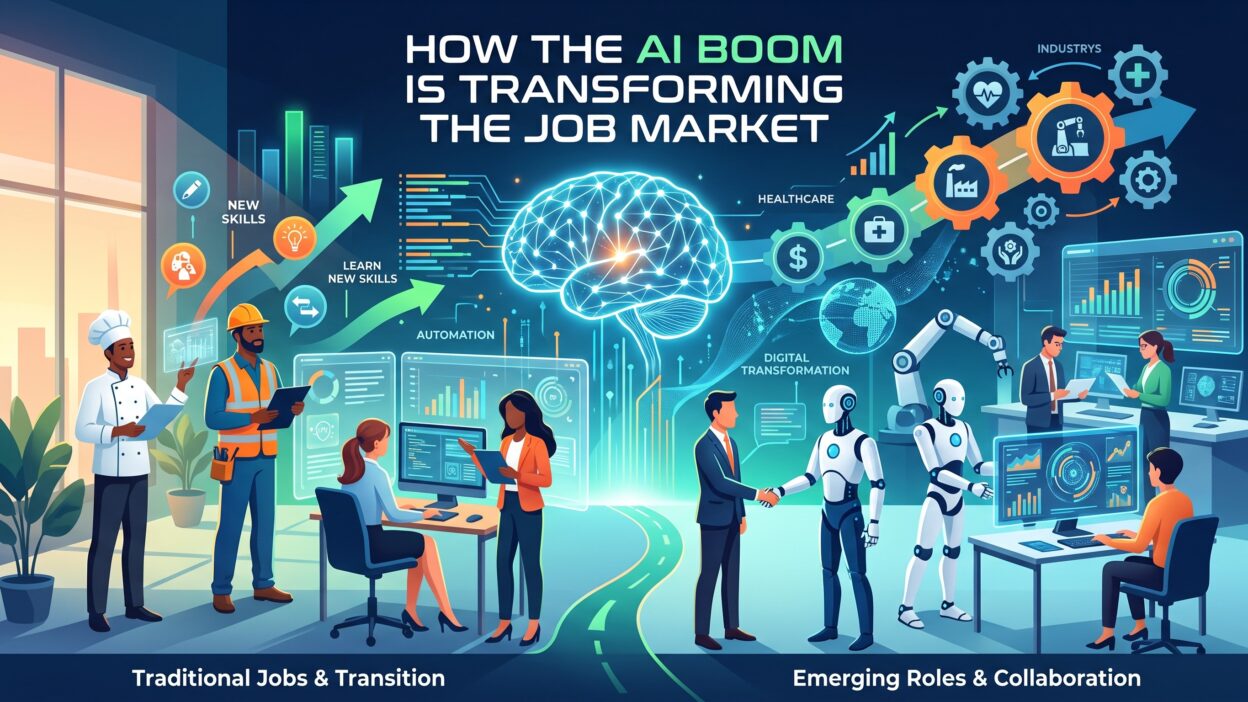
The AI Boom refers to the fast rise of artificial intelligence tools across nearly every business function. This includes writing tools, coding assistants, customer service bots, and data analysis systems. Companies adopted these tools far faster than most people expected just two years ago.
This speed sets this shift apart from earlier tech waves. Cloud computing took a decade to spread widely. AI tools spread through entire industries within a couple of years. That pace explains why the job market feels so unsettled right now.
A Quick Look at the Timeline
Large language models became genuinely useful for business work only a few years back. Adoption moved from a few tech companies to nearly every industry within a short window. This fast timeline is the core reason this wave feels different from past waves of automation.
Why This Wave Feels Bigger
Earlier automation replaced physical tasks on factory floors mostly. This wave touches knowledge work directly. Writers, analysts, and even junior lawyers now compete with tools that write drafts in seconds. The AI Boom reaches deeper into office jobs than any previous shift in technology.
Jobs Growing Because of the AI Boom
Not every job news story here is bad news. Plenty of roles grew fast, and some barely existed three years ago.
AI Engineers and Machine Learning Roles
Demand for engineers who build and train models keeps climbing every quarter. Companies outside traditional tech now hire for these roles too, including banks, retailers, and hospitals. This wave created an entire hiring category that recruiters struggle to fill fast enough.
AI Operations and Prompt Specialists
A newer role sits between engineering and everyday business work. These specialists design prompts, test model outputs, and fix errors before a tool reaches customers. This role grew directly out of this shift and barely existed as a job title before it.
Data Infrastructure and Hardware Roles
Every AI model needs data pipelines and serious computing power behind it. Engineers who build this infrastructure see strong demand right now. Chip makers and cloud providers hire aggressively to keep pace with model training needs driven by the AI Boom.
AI Trust and Safety Roles
Companies now hire people specifically to check model outputs for bias, errors, and legal risk. This role barely existed five years ago. This wave pushed companies to take output quality seriously once real customers started seeing model mistakes firsthand.
Jobs Shrinking Because of the AI Boom
Growth on one side always comes with loss on another side. A few job categories shrank fast, and the pattern keeps repeating across industries.
Entry-Level Content and Copywriting Roles
Junior writers used to handle routine content like product descriptions and basic blog posts. AI tools now draft this content in seconds, cutting demand for entry-level writing roles sharply. This shift hit new graduates hardest, since these roles once served as an easy first job.
Basic Customer Support Positions
Chatbots now handle a large share of simple customer questions without a human involved at all. Support teams shrank in many companies during this shift. Human agents increasingly handle only the complex cases a bot cannot resolve properly.
Routine Coding and QA Testing Jobs
AI coding assistants write basic scripts and catch simple bugs faster than a junior developer can. Companies still need senior engineers, but junior coding roles shrank noticeably. The AI Boom changed what a first coding job even looks like for new graduates today.
Administrative and Scheduling Roles
Tools now handle calendar scheduling, basic data entry, and routine email sorting without any human step involved. Administrative teams shrank at many mid-size companies over the past two years. This shift hit support staff roles that once felt secure for decades.
Industries Feeling the AI Boom Most
A few industries face bigger shifts than others right now, based on how easily their work fits into an automated process.
Technology and Software Companies
Tech companies adopted these tools first and fastest. Engineering teams now ship code faster with AI assistance built directly into daily workflows. Hiring patterns shifted toward senior talent who can review AI output, rather than junior talent who once wrote every line by hand.
Customer Service and Call Centers
This industry saw some of the steepest job losses tied to this shift. Bots handle a growing share of calls and chats without a human step involved. Remaining human roles now focus on complex complaints and emotional situations a bot cannot handle well.
Financial Services
Banks use AI tools for fraud detection, basic customer questions, and document review work that once took analysts hours. Junior analyst roles shrank in some firms, while roles focused on model oversight grew at the same time. The AI Boom reshaped entry-level finance work in a very short window.
Healthcare Administration
Hospitals now use AI tools for scheduling, billing, and basic patient intake questions. Clinical roles stayed mostly untouched so far, but administrative staff saw real cuts in some systems. This split shows how the AI Boom hits support functions before it touches skilled hands-on work.
Media and Publishing
Newsrooms and publishers now use AI tools for basic drafts, headline testing, and content summaries. Junior reporting roles shrank at several outlets over the past two years. Senior editorial roles grew in importance, since someone still needs to check facts and add real judgment.
New Job Titles Created by the AI Boom
A wave of brand new job titles appeared on job boards that barely existed before this shift began.
Prompt Engineer
This title covers workers who design and refine instructions that get the best output from an AI model. Some companies already folded this work into broader roles, but the core skill remains in high demand.
AI Ethics Officer
Larger companies now hire someone dedicated to reviewing AI decisions for fairness and legal risk. This role grew directly out of public concern around biased or harmful model outputs.
Machine Learning Operations Engineer
This role keeps AI systems running smoothly in production, catching failures before customers notice them. It blends traditional software engineering with newer model management skills this shift made necessary.
AI Trainer and Data Annotator
Someone still needs to label data and correct model mistakes by hand. This role grew fast even though it rarely makes headlines compared to flashier engineering titles.
Skills Workers Need Right Now
A worker does not need a computer science degree to stay relevant during the AI Boom. A few practical skills matter far more than most people expect.
Working Alongside AI Tools Daily
Employers now expect basic comfort with AI writing and research tools across nearly every department. Workers who learn these tools quickly gain a real edge over peers who avoid them out of hesitation.
Judgment and Quality Review
AI tools produce drafts fast, but someone still needs to catch errors and add real judgment. This review skill matters more now than raw output speed ever did before.
Data Literacy
Understanding basic data concepts helps workers across nearly every department, not just technical roles. Reading a chart correctly or spotting a flawed dataset has become a valuable skill during this shift.
Communication and Client Relationships
AI tools struggle with real human trust and relationship building. Workers who handle client relationships well remain hard to replace, regardless of how fast automation spreads elsewhere.
How Companies Are Restructuring Teams
Companies are not just adding AI tools on top of old team structures. Many are rebuilding entire departments around this new reality.
Smaller Teams With More Oversight Work
Some departments shrank in headcount while individual output actually grew. A smaller team, supported by AI tools, now handles work that once required twice the staff. This shift changed how managers plan headcount for the year ahead.
New Reporting Lines for AI Oversight
Many companies created new leadership roles specifically to oversee AI adoption across departments. These leaders report directly to senior executives now, showing how seriously companies treat this shift.
Cross-Training Existing Staff
Rather than hiring new specialists for everything, many companies train existing staff on AI tools instead. This approach saves hiring costs and keeps institutional knowledge inside the company during a fast-moving shift.
The Wage and Salary Effect
Pay patterns shifted alongside these job changes, and the shift went in different directions depending on the role.
Rising Pay for AI-Specific Skills
Workers with real AI engineering or oversight skills command higher pay than similar roles did just three years ago. Companies compete hard for scarce talent in this space, pushing salaries up quickly across the board.
Flat or Falling Pay in Automated Roles
Roles heavily automated by these new tools saw slower wage growth or outright cuts in some companies. Entry-level writing and basic support roles felt this pressure the most during the recent shift.
Wider Pay Gaps Across Experience Levels
Senior workers who can direct and review AI output now earn a real premium over junior peers doing similar work. This gap grew wider than it was before the AI Boom reached most industries.
How Different Generations Experience the AI Boom
Age and career stage change how a worker feels about this shift. A recent graduate faces a very different reality than someone twenty years into a career.
Early-Career Workers Facing a Tougher Entry Point
New graduates once relied on routine tasks to learn a job from the ground up. Those routine tasks now belong to AI tools in many companies. This shift makes the first year of a career harder to break into, even for talented graduates with strong degrees.
Mid-Career Workers Adapting Under Pressure
Workers ten or fifteen years into a career often carry deep expertise that AI tools cannot fully replace yet. Many still feel pressure to prove they can direct and review AI output well. This group faces retraining demands that earlier career stages never had to handle at this pace.
Senior Workers Holding an Advantage
Senior workers with deep judgment and strong client relationships often hold a real advantage right now. Companies value their ability to catch AI mistakes and guide junior staff through this shift. Experience carries real weight during a period when raw technical output alone means less than it used to.
Regional Differences in the AI Boom
This shift does not look the same everywhere. Local economies, industries, and policy choices shape how hard a region feels the impact.
Tech Hub Cities Feel It First
Cities built around major tech employers saw hiring shifts earlier than smaller markets. Engineering salaries in these hubs rose fast for AI-specific roles, while some support roles shrank at the same pace. This uneven pattern makes national job data hard to read without a regional lens.
Smaller Markets Catching Up Slowly
Smaller cities and rural areas often see these changes arrive later, since fewer companies there build or deploy AI tools directly. Workers in these markets sometimes have more time to adapt, though the eventual impact still reaches most local employers.
Global Differences Worth Noting
Some countries moved faster on AI adoption due to looser regulation or stronger tech investment. Other regions face slower change due to stricter labor rules or limited access to advanced computing infrastructure. These global gaps mean the AI Boom plays out unevenly depending on where a worker actually lives.
What Workers Are Saying About This Shift
Surveys and workplace conversations reveal a mix of excitement and real anxiety among workers today.
Excitement Around New Opportunities
Many workers report genuine excitement about new tools that remove tedious parts of their job. A marketer who no longer writes routine reports by hand often welcomes the extra time for creative strategy work instead. This positive sentiment shows up most among workers who already hold secure, senior positions.
Anxiety Among Junior Staff
Younger workers report far more anxiety about job security during this shift. Many describe feeling unsure whether their current role will even exist in five years. This anxiety pushes some toward extra certifications and skill building outside normal work hours.
A Growing Demand for Transparency
Workers increasingly want honest communication from employers about how AI tools will change their specific role. Companies that explain restructuring plans clearly tend to keep morale higher than companies that stay silent until layoffs happen suddenly.
Looking Ahead to the Next Few Years
Predicting the exact shape of this shift years out remains hard, but a few patterns already look likely based on current hiring trends.
More Hybrid Roles Blending Human and AI Work
Expect more job titles that blend traditional expertise with AI tool management directly. A marketer who also manages AI content pipelines, or a nurse who also reviews AI diagnostic suggestions, represents this hybrid pattern well. These blended roles will likely grow faster than either pure technical roles or pure traditional roles alone.
Continued Pressure on Entry-Level Hiring
Companies will likely keep automating routine entry-level tasks across most white-collar industries. This pressure means new graduates should expect to build a broader skill set earlier than past generations did. Internships and apprenticeships focused on judgment-heavy tasks may become more valuable than ones focused on routine execution.
Growing Regulation Around AI Use in Hiring
Governments in several regions already draft rules around AI use in hiring and performance review. Expect more formal regulation within the next few years, shaping how companies can use these tools when making staffing decisions. This regulatory layer will likely slow some of the fastest changes tied to the current wave of adoption.
Common Mistakes Workers and Companies Make
Some workers ignore these tools entirely, hoping the trend fades away on its own. This approach usually backfires within a year or two, once a role gets restructured without warning.
Other workers panic and abandon their core skills to chase every new AI trend instead. Chasing every trend without building real depth in one area rarely leads to strong career outcomes.
Companies sometimes cut junior roles too fast without building a pipeline for future senior talent. This short-term thinking creates a talent gap five years down the road, once current senior staff retire or move on.
Some companies also roll out AI tools without proper training for existing staff. Workers left confused by new tools often resist adoption, slowing down the very efficiency gains the company hoped to capture.
Best Practices for Navigating This Shift
Learn the basics of at least one major AI tool relevant to your field this year. Waiting too long to build this comfort puts a worker behind peers who already started.
Focus on skills that pair well with AI tools rather than skills that compete directly against them. Review, judgment, and client relationships hold up far better than pure output speed alone.
Companies should invest in training before cutting headcount, not after. A trained existing team often adapts faster and cheaper than a fresh round of specialized hiring.
Track real productivity data before making big staffing decisions tied to new tools. Assumptions about AI efficiency without real measurement often lead to costly staffing mistakes later.
Build a habit of continuous learning rather than treating training as a one-time event. The pace of change during the AI Boom means skills from even two years ago can already feel outdated.
Frequently Asked Questions
What jobs are safest during the AI Boom? Roles built around judgment, client trust, and complex problem solving stay safer for now. Skilled trades and hands-on healthcare roles also face less direct pressure from these tools.
Are entry-level jobs disappearing because of the AI Boom? Some entry-level roles, especially in writing and basic support, shrank noticeably. Entry-level roles requiring hands-on skill or in-person trust still remain fairly stable right now.
Do workers need a technical background to benefit from the AI Boom? No, many valuable skills right now involve reviewing AI output and building client relationships. A technical background helps in some roles, but it is not required across most industries.
How fast is the AI Boom changing hiring patterns? Very fast compared to past tech shifts. Many companies restructured entire departments within just a year or two of adopting these tools widely.
Will the AI Boom eventually create more jobs than it removes? Nobody can say this with full certainty yet. Early data shows new job categories forming quickly, though the net effect across every industry still remains unclear.
What is the biggest myth about the AI Boom and jobs? The biggest myth says every job faces equal risk. In reality, some roles face heavy disruption while others barely change, depending on how much judgment and human trust the work actually requires.
Read More:-Top Data Cleansing Platforms
Conclusion

The AI Boom already reshaped hiring, pay, and daily work across nearly every industry. Some roles grew fast, creating job titles that barely existed a few years back. Other roles shrank just as quickly, hitting entry-level positions the hardest.
Workers who build skills around judgment, review, and real human relationships stand in a stronger position going forward. Companies that train their existing teams, rather than cutting first and asking questions later, usually adapt faster and cheaper.
This shift is not slowing down anytime soon. The AI Boom will keep reshaping job titles, pay structures, and career paths for years to come. Workers and companies that stay curious, rather than fearful, tend to come out ahead during this kind of change.