Introduction
TL;DR Most companies treat a conference booth or a webinar as a one-day event. The content stops the moment the lights go down. That approach wastes most of the value sitting inside every session, every conversation, and every slide. B2B event content marketing flips that pattern. It turns a single event into weeks of blog posts, videos, social clips, and sales material. This guide walks through the full process, from planning before the event to repurposing content long after it ends. You get a clear framework, real examples, and a plan you can copy for your next event. B2B event content marketing is not extra work bolted onto an event. It is the reason the event pays off.
Table of Contents
What Is B2B Event Content Marketing?
B2B event content marketing means turning everything that happens at an event into usable marketing assets. A keynote becomes a blog post. A panel discussion becomes three short video clips. A booth conversation becomes a case study quote. Nothing gets wasted once a team plans for this from the start.
This differs from basic event promotion. Promotion gets people through the door. B2B event content marketing keeps working after the doors close. A single two-day conference can fuel a content calendar for two full months, if someone captures the right material during the event itself.
The approach works because buyers trust real moments more than polished ads. A clip of a real customer speaking on a panel carries more weight than a scripted testimonial. B2B event content marketing captures that authenticity and spreads it across channels your audience already checks.
Why B2B Event Content Marketing Matters in 2026
Building Trust Before the Sale
B2B buyers research heavily before they ever talk to a sales rep. Most of that research happens through content, not conversations. A strong B2B event content marketing program puts your brand inside that research phase directly. A prospect finds your session recording during a Google search. They watch ten minutes of real insight instead of a sales pitch. Trust builds before your sales team says a single word.
Analyst-backed and expert-led content earns even more trust than a branded blog post. Buyers know the difference between a marketing claim and a real expert speaking on stage. B2B event content marketing captures that expert voice at the source, then spreads it far past the room it started in.
Turning One Event Into Months of Content
Most marketing teams run on tight budgets and tighter deadlines. Producing fresh content every week burns through both fast. Events solve that problem in one stroke. A single conference can produce dozens of assets in just a few days.
Think about what one event actually holds. Ten sessions, twenty interviews, hundreds of photos, and a stream of live social reactions. B2B event content marketing captures all of it, then stretches it across a content calendar for months. One well-run event can replace weeks of content planning meetings.
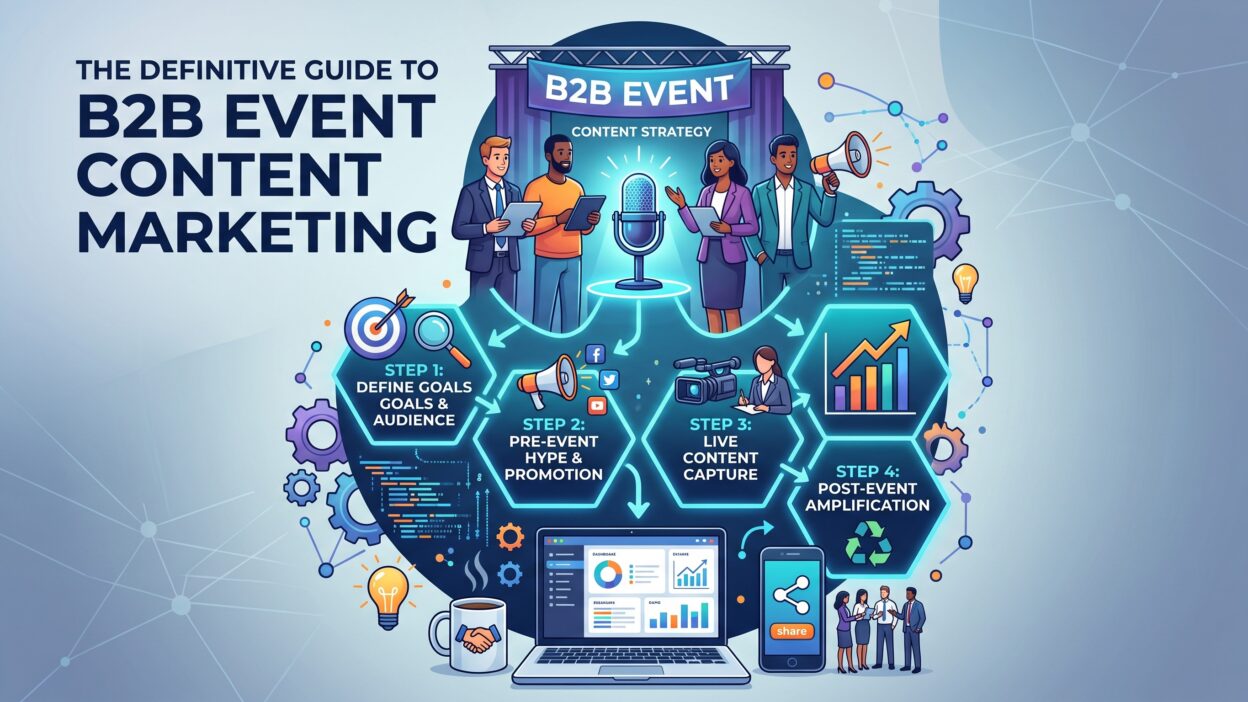
The B2B Event Content Marketing Lifecycle
Every strong program follows three phases. Each phase needs its own content plan, not an afterthought stitched on at the end.
Pre-Event Content
Content before the event builds anticipation and drives registrations. Speaker interviews work well here. A short video with a keynote speaker gives people a reason to show up. Blog posts that preview session topics help too, especially when they answer a real question your audience already searches for.
Email sequences matter just as much as blog content. A short series leading up to the event keeps registrants engaged instead of forgetting they signed up. B2B event content marketing during this phase should focus on one goal: getting the right people to actually attend, not just register and disappear.
Teaser content on social media rounds out this phase. A countdown post, a behind-the-scenes photo, or a quick poll about session topics keeps your event visible in a crowded feed. None of this needs a large budget. It needs a plan and someone assigned to run it daily.
During-Event Content
Content captured during the event becomes your biggest asset library. Assign someone specifically to capture this, since sessions often get missed once the event actually starts. A dedicated content person records sessions, snaps photos, and grabs quick interviews between talks.
Live social posts keep people who could not attend engaged in real time. A strong quote pulled from a session, posted within minutes, often gets more engagement than a polished post published a week later. B2B event content marketing thrives on this kind of speed, since raw and real beats scripted and late.
Booth conversations deserve capture too. A quick thirty-second clip of a customer explaining why they use your product carries more weight than any case study your team writes internally. Ask permission, hit record, and move on to the next conversation.
Post-Event Content
The event ends, but the content work is only halfway done. This phase is where most teams drop the ball entirely. Raw footage sits untouched in a folder for weeks. Photos never make it past a shared drive. B2B event content marketing done right treats this phase as equal in importance to the event itself.
Start with a recap blog post within a few days, while the event still feels current. Break session recordings into shorter clips for social media next. A forty-minute talk can become five separate two-minute videos, each built around one strong point the speaker made.
Case studies come next, built from conversations captured at the booth or during sessions. Sales teams can use these clips directly in outreach, since a real customer voice closes deals faster than a written quote ever could. This phase can stretch a single event’s content across eight to ten weeks if a team plans the calendar properly.
Content Formats That Work Best for B2B Events
Video and Session Recordings
Video carries the most weight in B2B event content marketing today. A recorded session lets someone who missed the event get the same value as someone who attended in person. Full recordings work for gated content behind an email form. Short clips work for free, public social posts that drive traffic back to your site.
Editing matters more than raw footage quality. A ten-second hook at the start of a clip decides whether someone keeps watching or scrolls past. Pull the strongest, most quotable moment from a talk and lead with that, not the speaker’s introduction.
Written Recaps and Social Posts
Not every buyer wants to watch a video. A written recap serves people who prefer to skim for the key points fast. Structure these around three or four main takeaways instead of a full transcript nobody reads start to finish.
Social posts extend the reach of every recap. LinkedIn works especially well for B2B event content marketing, since decision-makers spend real time there daily. A short post built around one strong insight, paired with a photo or video clip, usually outperforms a long-form article shared on the same platform.
Data and Insight-Led Content
Surveys and polls run during an event produce data nobody else has. A quick poll asked to two hundred attendees becomes an original data point your team can cite for months. Original data earns backlinks and press mentions that generic blog content rarely gets on its own.
Turn this data into a simple report or infographic after the event wraps. B2B event content marketing built around real data holds up better over time than opinion pieces, since numbers age slower than trends and stay useful for future pitches too.
How to Build a B2B Event Content Marketing Plan
Start with a content calendar built before the event, not during it. Map out what content type gets published on which day, starting two weeks before the event and running eight weeks after it ends. This prevents the common trap of good footage sitting unused because nobody assigned a deadline to it.
Assign clear roles next. One person owns capture during the event itself. Another owns editing and publishing afterward. A third owns distribution across email and social channels. Without clear ownership, content usually stalls somewhere between the camera and the publish button.
Brief your speakers ahead of time too. Ask them in advance for one strong, quotable line they plan to say. This single step makes editing dramatically faster later, since you already know which ten seconds to clip out of a forty-minute talk.
Build in a repurposing step at the very end of the calendar. A single keynote can become a blog post, three social clips, one email newsletter feature, and a slide in a future sales deck. B2B event content marketing pays off most when one piece of raw footage turns into five or six finished assets instead of just one.
Common Mistakes to Avoid
Teams often skip the capture step entirely, assuming they will remember the best moments later. They rarely do. Assign someone to record everything, even sessions that seem unimportant at the time, since the strongest quote sometimes comes from an unplanned Q&A moment.
Another common mistake involves publishing everything at once right after the event. A content dump on day one buries your best material under a pile of average clips. Spread the calendar out instead, so each asset gets its own moment to perform.
Some teams also forget to loop sales into the process. A great customer testimonial clip sitting in a marketing folder helps nobody if sales reps never see it. Share finished assets directly with the sales team, and make sure they know these clips exist and where to find them.
Skipping the data-driven content is another frequent gap. A quick poll takes five minutes to set up during an event but often gets forgotten in the rush of managing the actual day. Build this into your pre-event checklist so it never gets missed.
How to Measure B2B Event Content Marketing Success
Track content performance separately from event attendance numbers. Registrations tell you how promotion worked. Views, shares, and time spent watching tell you how the actual content performed after the fact.
Watch which repurposed clips drive the most traffic back to your site. This tells you which speakers and topics resonate most with your audience, which helps you plan speaker selection for your next event too.
Tie content back to pipeline where you can. A prospect who watches a session recording, then books a call two weeks later, shows the real value of B2B event content marketing beyond simple engagement metrics. Most CRMs can track this connection if your team tags content links properly from the start.
Give the content calendar time to fully play out before judging results. A recap blog might rank in search months after publishing, long after the event itself is forgotten. B2B event content marketing often pays off slowly, not all at once in the first week.
Frequently Asked Questions
What is B2B event content marketing?
B2B event content marketing means capturing everything valuable at a business event and turning it into ongoing marketing content. This includes session recordings, social clips, blog recaps, and customer testimonials collected during the event itself.
How long should a B2B event content marketing calendar run?
Most teams get the best results from a calendar running two weeks before an event and eight to ten weeks after it ends. This spreads content out so each piece gets attention instead of competing with everything else published the same week.
What content works best right after a B2B event?
A recap blog post published within a few days performs best while interest stays high. Short video clips pulled from session recordings follow closely behind, since they work well across social platforms and require less reading time from a busy buyer.
Do small companies need a full B2B event content marketing plan?
Yes, and the plan can stay simple. Even one person with a phone camera can capture enough footage for a month of social content. The framework matters more than the budget behind it.
How does B2B event content marketing help sales teams?
Sales teams get real customer quotes and video clips they can send directly during outreach. A genuine customer voice, captured on video at an event, often moves a deal forward faster than a written case study alone.
Should webinars follow the same B2B event content marketing approach?
Yes, mostly. A webinar recording can get cut into shorter clips the same way an in-person session would. The main difference sits in the pre-event phase, since a webinar usually needs a stronger email push to drive live attendance.
Read More:-Zapier API Review 2026: Features, Rate Limits, Pricing & the B2B Data Gap
Conclusion

Most events end the moment the last session wraps up. That is exactly where B2B event content marketing should start working hardest. A single conference or webinar holds enough raw material for months of blog posts, video clips, and sales assets, if a team plans the capture and repurposing steps ahead of time.
Build the plan before the event, not during it. Assign clear ownership for capture, editing, and distribution. Brief your speakers, run a quick data poll, and loop your sales team into every finished asset. B2B event content marketing rewards teams that treat the post-event phase as seriously as the event itself.
Start with your next scheduled event, even a small one. Assign one person to capture everything, build a simple eight-week content calendar, and measure what actually drives traffic back to your site. B2B event content marketing turns a single day of work into months of results, and that return only grows the more consistently you run the process.