Introduction
TL;DR Revenue teams waste hours on broken handoffs and messy territory maps. RevOps fixes these problems by connecting sales, marketing, and customer success under one shared system. RevOps Success Stories show exactly how this shift plays out inside real companies.
Leaders often ask for proof before they invest in a new process. A well-documented RevOps success story gives them exactly that proof, built on real numbers instead of vague promises.
This blog walks through several RevOps Success Stories built around smarter territories and efficient automation. You will see the problems teams faced, the fixes they built, and the results that followed. You will also find common themes, best practices, and answers to common questions about RevOps.
Table of Contents
What Is RevOps and Why Success Stories Matter
RevOps stands for revenue operations. This function connects sales, marketing, and customer success teams around one shared data system and one shared goal. Instead of three teams working in isolation, RevOps builds one clear path from first contact to renewal.
Reading RevOps Success Stories helps other teams avoid the same early mistakes. A story about a messy handoff process saves another team from repeating that exact problem. Real examples teach faster than theory alone.
The Rise of RevOps Teams
Companies used to run sales, marketing, and support as separate departments with separate goals. This setup created gaps where leads fell through the cracks. RevOps emerged to close those gaps and unify the entire revenue engine.
Fast-growing companies adopted this model first. They needed every team pulling in the same direction to keep up with rapid growth. Slower-moving industries have since followed, drawn in by the results these early adopters reported.
Investors and board members also started asking sharper questions about revenue efficiency. A single connected RevOps function gave leaders a clear answer instead of three separate reports that never quite matched up.
Why Real RevOps Success Stories Help Other Teams
Generic advice rarely convinces a skeptical leadership team. A real story with real numbers changes minds faster than any slide deck. RevOps Success Stories give teams proof that this approach actually works in practice.
These stories also show the messy middle part most case studies skip. Teams learn not just the final result, but the actual steps that led there. This detail makes the lessons easier to apply inside a different company.
Smarter Territory Planning: A RevOps Success Story
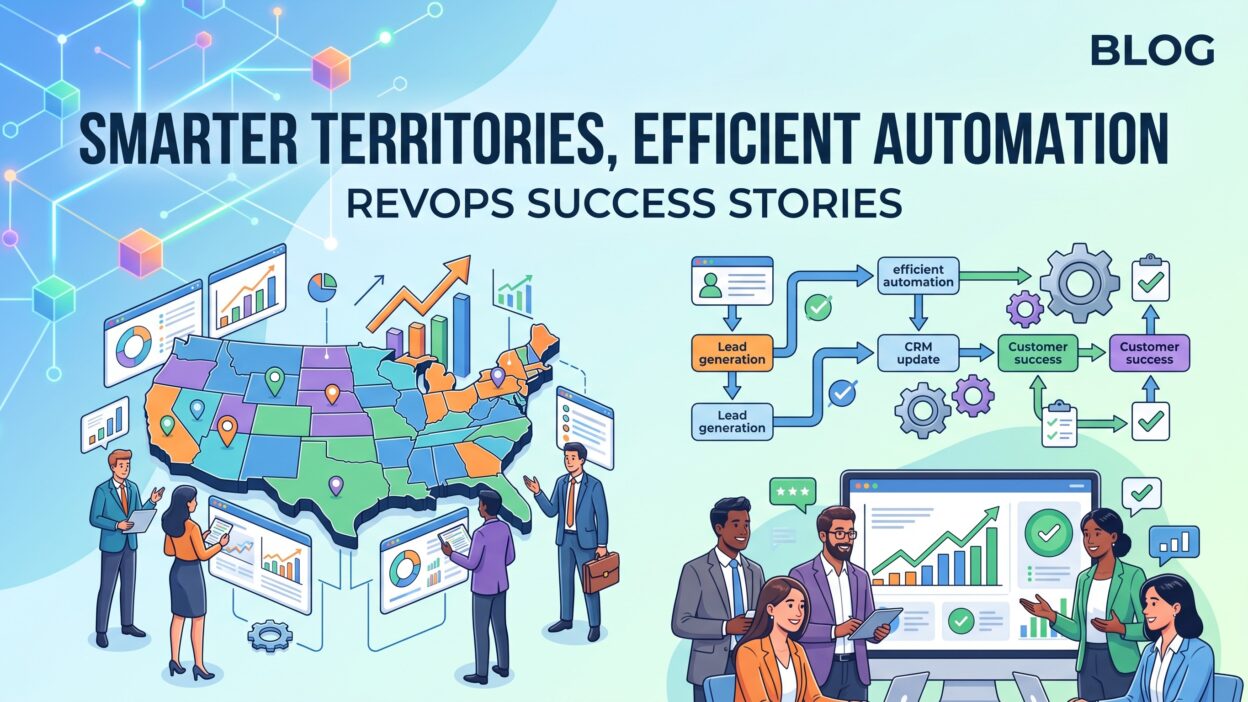
Territory mapping sounds simple until a company grows past a few dozen accounts. One growing software company learned this lesson the hard way before fixing it with a data-driven approach.
The Problem With Manual Territory Mapping
The sales team split territories by state lines drawn years earlier. New accounts landed wherever a manager felt they fit best that week. Reps ended up with wildly uneven workloads, and some regions sat almost untouched.
This manual process created real frustration. Top reps carried too many accounts while newer reps sat idle waiting for leads. Revenue leaders could not explain why some regions underperformed quarter after quarter.
Finance teams also struggled to trust the forecast. A territory built on outdated lines meant projected numbers rarely matched what actually closed. Every quarterly review turned into a debate about whose data was even correct.
How Data Fixed Territory Assignments
The RevOps team pulled firmographic and account data into one shared system. They mapped territories based on industry fit, account size, and actual buying signals instead of old state lines. This shift turned a rough guess into a measured plan.
The team also built a simple dashboard showing account load per rep in real time. Managers could spot an overloaded territory within days instead of months. This visibility became the backbone of every future planning session.
Results After Smarter Territory Planning
Within two quarters, rep workloads evened out across every region. Pipeline coverage improved because every account finally had a clear owner. This RevOps success story became the model other teams inside the company followed for their own planning.
Sales leaders reported faster ramp times for new reps too. A balanced territory gave new hires a fair shot at hitting quota instead of an unfair, overloaded patch of accounts.
Retention among the sales team improved as well. Reps stopped leaving out of frustration over uneven workloads, and hiring managers found it easier to set fair, realistic quota expectations for every new hire.
Efficient Automation: A RevOps Success Story
Manual handoffs between marketing and sales cost one mid-size company real revenue before their RevOps team stepped in.
The Problem With Manual Handoffs
Marketing generated leads through webinars and content downloads. Someone then manually exported these leads into a spreadsheet. A sales development rep checked that spreadsheet once a day and reached out to new names.
This delay killed momentum. A lead who filled out a form on Monday morning sometimes did not hear back until Wednesday afternoon. Interest cooled fast, and response rates suffered badly.
Marketing blamed sales for slow follow-up. Sales blamed marketing for sending unqualified names in the first place. This finger-pointing wasted energy that could have gone toward actually fixing the process.
Automating Lead Routing and Follow-Up
The RevOps team connected the marketing platform directly to the CRM. New leads triggered an instant notification to the right rep based on territory and industry fit. A simple automated email also went out within minutes, keeping the lead warm until a human reached out.
This automation removed the daily manual export entirely. Leads moved from marketing to sales in minutes instead of days, and no lead slipped through a forgotten spreadsheet again.
Results After Automation
Response times dropped from an average of two days to under fifteen minutes. Conversion rates on inbound leads rose noticeably within the first quarter after launch. This RevOps success story convinced leadership to fund further automation across other parts of the funnel.
The sales team also reported less frustration. Reps no longer wasted time chasing cold leads that had already lost interest by the time contact happened.
Marketing gained something valuable too. Clear routing data showed exactly which campaigns produced leads that actually converted, letting the team shift budget toward what genuinely worked.
RevOps Success Stories in Sales and Marketing Alignment
Alignment problems between sales and marketing show up in almost every growing company. One financial services firm turned this common struggle into a clear win.
Breaking Down the Sales Marketing Divide
Marketing measured success through lead volume. Sales measured success through closed deals. These different scorecards created constant tension, with each team blaming the other for missed targets.
The RevOps team stepped in as a neutral party. They gathered both teams together and mapped the entire funnel from first touch to closed deal. This shared view exposed exactly where leads dropped off and why.
Shared Metrics and Shared Goals
Both teams agreed on one shared metric: qualified pipeline created per month. This single number replaced the old, conflicting scorecards. Marketing stopped chasing raw lead volume and started focusing on lead quality instead.
Weekly meetings between both teams became standard practice. These sessions kept everyone honest about what was actually working and what needed adjustment.
The RevOps team also built a shared dashboard both departments could check anytime. No one had to wait for a formal meeting to see how the funnel was performing that week.
Results After Alignment
Qualified pipeline grew steadily over the following two quarters. The blame game between departments faded as both teams worked from the same numbers. This RevOps success story became a favorite example the company shared with new hires during onboarding.
Sales cycle length also shortened. Better-qualified leads meant reps spent less time chasing prospects who were never a real fit.
RevOps Success Stories in Customer Retention
Retention often gets less attention than new sales, but one healthcare technology company proved how much revenue sits inside this stage of the funnel.
Spotting Churn Signals Early
Customer success teams noticed churn only after a customer already decided to leave. By that point, saving the account felt nearly impossible. The RevOps team built a model tracking product usage, support ticket volume, and contract renewal dates together.
This model flagged accounts showing early warning signs weeks before a renewal conversation even started. Success managers finally had time to act instead of reacting too late.
The model weighed several signals together instead of relying on just one number. A drop in login activity paired with a spike in support tickets carried far more weight than either signal alone.
Connecting Support and Success Teams
Support tickets and customer success notes used to live in separate systems. A success manager often had no idea a customer filed three frustrated tickets that same week. The RevOps team connected these systems into one shared account view.
This connection gave success managers full context before every renewal call. They walked into conversations already knowing the customer’s recent experience instead of guessing.
Results After Retention Focus
Churn dropped noticeably within the first year of this new system. Renewal conversations became proactive instead of reactive. This RevOps success story spread quickly across the customer success industry through conference talks and case study write-ups.
Expansion revenue also grew. Success managers spotted upsell opportunities earlier once they had a full, connected view of each account’s health.
RevOps Success Stories in Customer Onboarding
Onboarding often decides whether a new customer sticks around long enough to renew. One logistics software company turned a shaky onboarding process into a real strength.
The Problem With a Disconnected Handoff
Sales closed a deal and moved on to the next prospect immediately. The onboarding team received a bare-bones summary with almost no context about what the customer actually needed. New customers often repeated the same details they had already shared during the sales process.
This gap frustrated customers right from the start. A shaky first impression made some accounts hesitant to fully commit to the product, even after signing a contract.
Building a Shared Handoff Process
The RevOps team built a structured handoff form inside the CRM. Sales reps filled in key details about goals, pain points, and promised timelines before closing every deal. Onboarding teams received this context automatically instead of chasing it down manually.
This shared process turned a rushed handoff into a smooth transition. Customers felt like the company already understood their needs on day one.
Results After a Smoother Handoff
Time to first value dropped noticeably once onboarding teams had proper context from the start. Early churn during the first ninety days fell as well. This RevOps success story pushed the company to apply the same structured handoff approach to renewals and upsells too.
Common Themes Across RevOps Success Stories
Reading enough of these stories reveals a clear pattern. The same few ingredients show up again and again.
Clean Data as the Foundation
Every story above started with messy, scattered data. Every fix started with cleaning and connecting that data first. No amount of clever automation works well on top of bad information.
Teams that skip this step often build automation on a shaky foundation. The fix looks good at first but breaks down once real scale hits.
Cross-Team Collaboration
None of these wins happened inside one department alone. Sales, marketing, and customer success all had to sit at the same table and agree on shared goals. RevOps worked best as a bridge, not a replacement for these teams.
This collaboration took real effort to build. Teams with a history of blaming each other needed patient facilitation before real trust formed.
Continuous Measurement
Every successful team kept measuring results long after the initial fix launched. They did not treat the project as finished after the first good quarter. Ongoing tracking caught small problems before they grew into big ones.
This habit turned a one-time win into a lasting practice. Teams that stopped measuring often slipped back into old, messy habits within a year.
Challenges Companies Face Before These Wins
These success stories rarely happened without real friction along the way. Understanding these challenges helps other teams prepare for their own journey.
Siloed Systems
Most companies start with sales, marketing, and support tools that never talk to each other. Connecting these systems takes real technical work and often real budget. Teams underestimate this effort at the start of nearly every project.
Legacy systems built years ago rarely export data cleanly. RevOps teams often spend weeks just mapping how old fields match up with new ones.
Resistance to Change
Reps comfortable with old habits often resist new tools and new processes. A rep who has hit quota for years using their own system sees little reason to change. RevOps teams need patience and clear proof before winning these skeptics over.
Early wins help here. A small, visible success convinces doubters faster than any mandate from leadership ever could.
Some teams also found success by involving skeptical reps early in the design process. A rep who helped shape the new system felt ownership over it instead of resentment toward it.
Lack of Clear Ownership
Some companies never assign a clear owner for cross-team data and processes. Without ownership, small problems linger for months because no one feels responsible for fixing them. RevOps success depends on someone owning this responsibility directly.
Companies that skip this step often see their improvements fade within a year. Clear ownership keeps momentum going long after the first project ends.
Best Practices to Build Your Own RevOps Success Story
Companies looking to write their own success story can follow a few proven habits.
Start With One Small Win
Trying to fix everything at once overwhelms most teams. Successful companies picked one clear problem, like slow lead routing, and solved it first. This early win built trust and momentum for bigger projects later.
A small win also gives teams real data to study. Lessons learned on a small scale translate well once a company tackles bigger challenges.
Invest in the Right Tools
Manual fixes only stretch so far. Companies that saw real results invested in tools that connected their systems and automated repetitive tasks. The right tool removed hours of manual work every single week.
Teams should test tools against their own messy data before committing to a long contract. A demo with clean sample data rarely reveals real-world problems.
Keep Leadership Involved
Every success story above had visible support from leadership. Executives cleared budget roadblocks and pushed through resistance from skeptical teams. Without this support, most RevOps projects stall before they reach real results.
Regular updates to leadership also kept the project accountable. Teams shared real numbers instead of vague progress reports, which built continued trust in the work.
Future of RevOps Success Stories
RevOps keeps evolving as new tools and techniques emerge. Future success stories will likely look different from the ones told today.
AI-Driven Territory and Forecast Models
AI models now predict ideal territory splits based on far more signals than a human planner could track manually. These models adjust automatically as new accounts and market shifts appear. Future RevOps success stories will lean heavily on this kind of predictive planning.
Forecasting will also grow sharper. Models trained on years of pipeline data catch patterns that human intuition alone often misses.
Real-Time Revenue Dashboards
Static reports pulled once a month will fade as real-time dashboards become standard. Leaders will watch pipeline health and territory balance update live instead of waiting for a quarterly review. This speed will shape how quickly future teams write their own success stories.
Companies adopting this real-time view early will catch problems within days instead of months.
Frequently Asked Questions
What makes a strong RevOps success story?
A strong story includes a clear problem, a specific fix, and measurable results. The best stories also explain the real steps a team took, not just the final outcome.
How long does it take to see results from a RevOps project?
Most companies see early signs of progress within one or two quarters. Bigger structural wins, like full territory overhauls, often take closer to a year to fully mature.
Do small companies have their own RevOps success stories?
Yes. Small companies often move faster than larger ones because they have fewer systems to untangle. Many small teams see meaningful results within just a few months.
What tools support these kinds of RevOps wins?
CRM platforms, marketing automation tools, and data integration software all play a role. The specific tool matters less than how well it connects across teams.
Can one person run a RevOps success story alone?
One person can start the process, but lasting success needs buy-in from sales, marketing, and customer success leaders together. Cross-team support turns a small project into a real, sustained win.
Why do some RevOps projects fail to become success stories?
Projects often fail when teams skip data cleanup or stop measuring results too soon. Clear ownership and ongoing tracking separate lasting wins from short-term fixes that quietly fade.
How do teams share their RevOps success internally?
Many teams present results during all-hands meetings or quarterly business reviews. A short write-up with clear before-and-after numbers usually convinces other departments to try the same approach.
Read More:-8 Best Chatbot Welcome Message Tools for B2B Websites
Conclusion

RevOps Success Stories share a clear pattern. Clean data, cross-team collaboration, and steady measurement turn a messy revenue process into a smooth, efficient one. Smarter territories and efficient automation sit at the heart of nearly every win covered in this blog.
Building your own success story takes patience and the right support from leadership. Start with one small fix, prove it works, and expand from there. Companies that commit to this steady approach will write their own RevOps success stories within a year or two, not just read about someone else’s.
Every story in this blog started small, with one frustrated team and one messy process. The lesson stays the same across every industry. Fix the data first, bring the right people together, and let the results speak for themselves.