Introduction
TL;DR B2B buyers expect fast, relevant, and helpful responses. A slow website with a generic contact form no longer meets that expectation. Chatbot Scripts have become one of the most powerful tools to engage and convert B2B leads at scale.
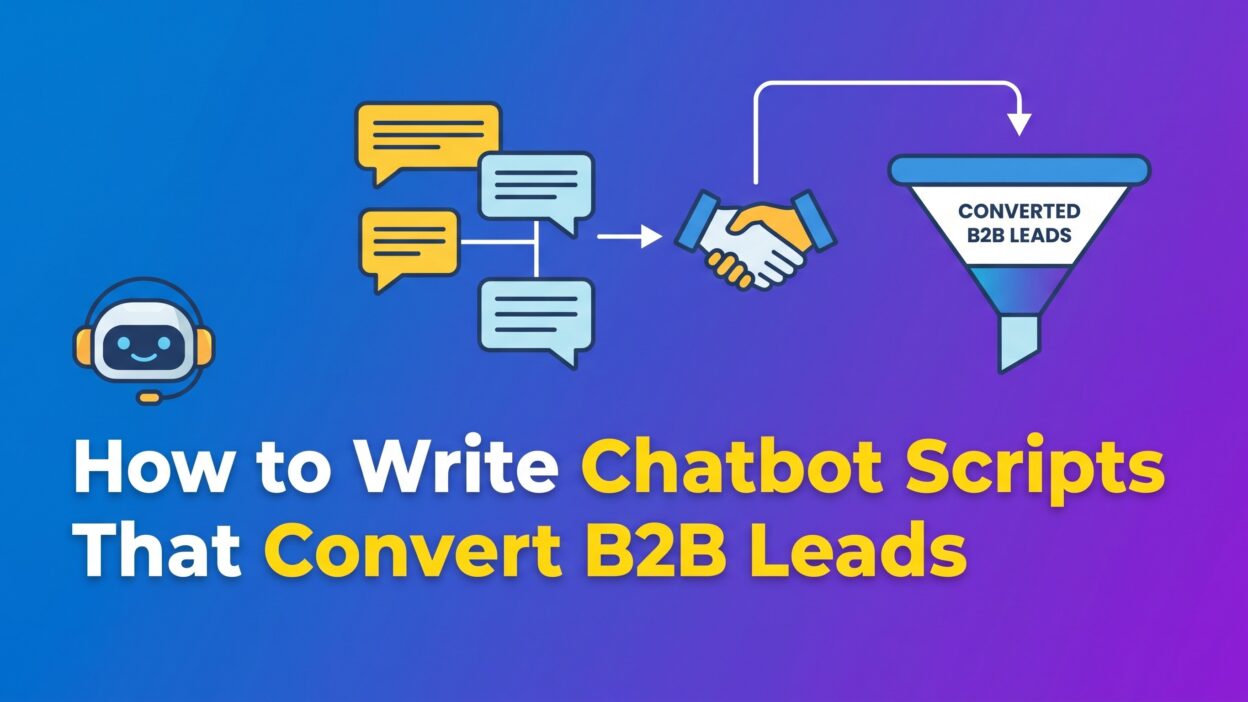
A well-written chatbot does not just answer questions. It guides a visitor through a conversation with purpose. It qualifies prospects, books meetings, and moves deals forward — all without a human in the room.
This guide covers everything you need to write Chatbot Scripts that actually work. You will learn the structure, language, tone, and strategy behind high-converting B2B chatbot conversations. Whether you use Drift, Intercom, HubSpot, or any other platform, these principles apply universally.
Why Chatbot Scripts Matter in B2B Marketing
B2B sales cycles are long. Decision-making involves multiple stakeholders. Buyers research extensively before they ever speak to a salesperson.
A chatbot sits at the intersection of that research and the sales conversation. It engages a prospect at their moment of interest and starts a conversation that a human may not be available to have.
The quality of that conversation depends entirely on the Chatbot Scripts behind it. A poorly written script frustrates visitors and drives them away. A well-crafted script makes visitors feel understood and confident to take the next step.
B2B buyers are sophisticated. They can identify a robotic, generic chatbot experience immediately. They disengage when the conversation feels irrelevant or scripted in a hollow way.
Great Chatbot Scripts solve this problem. They use the right language for the audience. They ask smart questions. They route prospects correctly based on their answers.
The ROI of strong Chatbot Scripts is measurable. More qualified leads, more meetings booked, and faster pipeline creation are the direct outcomes. Companies using well-optimised chatbot conversations consistently outperform those relying on passive forms and email follow-up.
Understanding the B2B Buyer Before You Write
Writing effective Chatbot Scripts starts with a deep understanding of your audience. B2B buyers are not a monolith. Different personas visit your website with different goals and at different stages of the buying journey.
A marketing director visiting your pricing page has different intent than a developer landing on your integrations page. Your Chatbot Scripts must reflect these differences.
Start by identifying your core buyer personas. Document their roles, pain points, goals, and common objections. This information shapes every line of your chatbot conversation.
Map your website pages to buyer intent. A visitor on your homepage is likely early-stage. A visitor on a case study page is deeper in their research. A visitor on your pricing or demo request page has strong purchase intent.
Your Chatbot Scripts should reflect these intent signals. Early-stage visitors need educational offers and light-touch engagement. High-intent visitors need direct pathways to book a meeting or speak to sales.
The language your personas use matters enormously. Study your sales call recordings. Read your customer reviews and testimonials. Use the exact words your buyers use to describe their problems and goals. Chatbot Scripts that mirror buyer language feel natural and build rapport instantly.
The Structure of High-Converting Chatbot Scripts
Every high-converting chatbot conversation follows a clear structure. Understanding this structure helps you write Chatbot Scripts with intention and logic.
The Opening Message
The opening message sets the tone for the entire conversation. It must be welcoming, specific to the page, and immediately relevant.
Generic openers like “Hi there! How can I help?” perform poorly in B2B contexts. They signal a lack of preparation and invite vague responses.
Strong Chatbot Scripts open with context. A pricing page chatbot might say: “Thinking about pricing? I can help you understand what plan fits your team’s size and goals.” This opener is specific, helpful, and immediately relevant to the visitor’s intent.
The opening message should feel human. Short sentences work better than long ones. A friendly, confident tone outperforms formal or stiff language.
Personalisation improves performance significantly. If your chatbot can detect returning visitors, company names from IP data, or UTM parameters from ad campaigns, use that data in the opener. Personalised Chatbot Scripts drive higher engagement from the very first message.
Qualification Questions
Qualification is the core function of B2B Chatbot Scripts. The chatbot must quickly identify whether the visitor is a good fit and where they are in their buying journey.
Avoid asking too many questions in sequence. Three to five targeted questions are sufficient to qualify most B2B prospects. More than that creates friction and reduces completion rates.
Design questions with multiple-choice answers where possible. Open-ended questions require visitors to type, which creates more effort. Button-based responses keep the conversation moving quickly.
Focus qualification questions on the criteria that matter most to your sales team. Company size, industry, current tools, and timeline to purchase are common B2B qualification points.
Strong Chatbot Scripts sequence questions logically. Each question builds on the previous answer. The flow feels like a natural conversation, not an interrogation.
Always explain briefly why you are asking a question. “So I can connect you with the right person, could you tell me your team size?” gives context that makes the question feel respectful rather than intrusive.
The Value Offer
After qualifying a prospect, your Chatbot Scripts must offer clear value. This is where many chatbot scripts fall flat.
The value offer must match the visitor’s identified need. A prospect who said they are evaluating solutions in the next 30 days needs a different offer than someone just starting research.
For high-intent visitors, the best offer is a direct meeting with a sales expert. Your chatbot should make booking that meeting as easy as possible. Calendar integrations like Calendly or HubSpot Meetings allow in-chat scheduling with zero friction.
For mid-funnel visitors, offer relevant content. A relevant case study, a comparison guide, or a short video demo provides value without pushing a premature sales conversation.
For early-stage visitors, offer educational content that builds trust. A blog post series, a webinar invite, or a free tool registration all serve awareness-stage buyers well.
Routing and Handoff Logic
B2B organisations have multiple audience segments. A small business prospect needs different treatment than an enterprise prospect. Your Chatbot Scripts must route each segment correctly.
Build routing logic based on qualification answers. An enterprise prospect answering “500+ employees” should route directly to an enterprise sales representative or a dedicated booking flow.
The handoff from chatbot to human must be smooth. Chatbot Scripts that set clear expectations perform better. Telling a prospect: “I am connecting you with our enterprise team — they will reach out within two hours” creates clarity and confidence.
Live chat escalation is a critical part of routing. When a high-value prospect is active on the site and an agent is available, the chatbot should offer an immediate live connection. Speed of response is a competitive advantage in B2B sales.
Tone and Language in B2B Chatbot Scripts
Tone is one of the most underestimated elements of Chatbot Scripts. B2B does not mean boring. It does not mean stiff, corporate, or distant.
B2B buyers are human beings. They respond to warmth, clarity, and genuine helpfulness. The best Chatbot Scripts strike a balance between professional credibility and approachable personality.
Avoid jargon that confuses rather than clarifies. Use industry-relevant language that your buyers recognise, but do not hide meaning behind buzzwords.
Short sentences work best in chat format. Long paragraphs feel out of place in a chat window. Write the way a smart colleague would speak — clearly, directly, and without unnecessary padding.
Use contractions naturally. “We’ll” feels more human than “We will.” “You’re” feels more conversational than “You are.” Chatbot Scripts that sound human-written convert better than those that sound automated.
Avoid overselling in the chat. B2B buyers are sceptical of sales pressure. A chatbot that pushes too hard for a meeting on every message feels aggressive. Build trust first. The meeting request lands better after genuine value.
Use empathy in your language. Acknowledging a visitor’s challenge before jumping to a solution creates connection. A line like: “Managing enterprise software evaluations can take forever — we help teams cut that time in half” shows understanding before making a claim.
Chatbot Scripts for Different B2B Use Cases
Different pages and scenarios require different Chatbot Scripts. Writing one universal script and deploying it everywhere is a common and costly mistake.
Homepage Chatbot Scripts
The homepage attracts the widest range of visitors. Some are customers. Some are prospects. Some are partners or job seekers.
Homepage Chatbot Scripts should segment visitors quickly. An opening question like “What brings you here today?” with button options such as “Exploring solutions,” “Existing customer,” or “Partnership inquiry” routes each visitor appropriately within seconds.
Keep the homepage script light and welcoming. Do not push for qualification too aggressively at this stage. Create curiosity and guide visitors toward the most relevant part of your site.
Pricing Page Chatbot Scripts
The pricing page attracts high-intent visitors. A prospect reading pricing information is actively evaluating your product. Your Chatbot Scripts here must be direct and helpful.
Address common pricing objections proactively. Many B2B buyers worry about contract length, implementation costs, and hidden fees. A chatbot that acknowledges these concerns and offers clear answers builds immediate trust.
Offer a personalised pricing consultation rather than a static price sheet. “Our pricing depends on your team size and needs — let me connect you with someone who can build a custom quote in 15 minutes” is far more effective than displaying a table of numbers.
Demo Request Page Chatbot Scripts
Visitors on a demo request page are close to converting. Your Chatbot Scripts here should reduce friction, not add it.
A chatbot on a demo page can pre-qualify the prospect while they wait for the form to load. Ask key qualification questions through chat before presenting the booking calendar. This creates a more natural experience and reduces form abandonment.
After qualification, book the meeting directly in the chat. Avoid redirecting visitors to another page or tool. Every extra click reduces conversion probability.
Returning Visitor Chatbot Scripts
Returning visitors have already engaged with your brand. They deserve a different conversation from first-time visitors.
Chatbot Scripts for returning visitors should acknowledge previous engagement. “Welcome back — you explored our enterprise solution last time. Ready to see how it works in practice?” is far more relevant than a generic opener.
Use CRM data and cookie information to personalise these conversations. A returning visitor who downloaded a whitepaper last week is a warm prospect. Your chatbot should reflect that context in its conversation flow.
Common Mistakes in Chatbot Scripts That Kill Conversions
Many well-intentioned Chatbot Scripts fail because of predictable and avoidable mistakes. Knowing these errors helps you write scripts that perform consistently.
Asking for an email too early is the most frequent conversion killer. Visitors who do not yet trust you will not share their email in the first message. Build rapport first. Earn the email through value, not through demand.
Writing scripts that are too long exhausts visitors. Every unnecessary message adds friction. Review your scripts ruthlessly. Cut any message that does not move the conversation toward a clear goal.
Using a one-size-fits-all script across all pages wastes the context each page provides. A visitor on your security compliance page has very different concerns from a visitor on your onboarding page. Tailor each script to the page and the intent it represents.
Failing to test scripts regularly allows underperformers to drain leads over time. Chatbot Scripts require the same A/B testing discipline as landing pages and email subject lines. Test different openers, question sequences, and value offers continuously.
Ignoring drop-off points in the conversation flow is a data blind spot. Analytics show exactly where visitors disengage. Use this data to rewrite the messages that cause abandonment.
Making the bot sound like a robot damages trust immediately. Overly formal language, numbered lists in chat bubbles, and mechanical phrasing all signal inauthenticity. Write every message as if a thoughtful human colleague sent it.
Integrating Chatbot Scripts With Your CRM and Marketing Stack
Chatbot Scripts are most powerful when connected to your broader marketing and sales technology stack. A chatbot that captures data in isolation creates more manual work and loses valuable context.
CRM integration ensures every qualified lead flows directly into Salesforce, HubSpot, or your preferred system. Chatbot responses populate contact records with qualification data, page visit context, and conversation notes. Sales reps receive fully briefed leads rather than cold names.
Marketing automation integration allows your chatbot to trigger nurture sequences based on conversation outcomes. A prospect who requested a case study but did not book a meeting can automatically enter an email nurture track that continues the conversation.
Meeting scheduling integrations like Calendly or HubSpot Meetings allow real-time calendar booking within the chatbot conversation. This is one of the highest-impact integrations available. Eliminating email back-and-forth from the booking process dramatically increases conversion rates.
Analytics platforms track chatbot performance at the conversation level. Engagement rates, qualification rates, meeting booking rates, and drop-off points are all measurable. Use these insights to refine your Chatbot Scripts on a regular cadence.
Intent data integrations allow your chatbot to greet high-value accounts with personalised messages when they visit your site. When a target account from your ABM list visits, your Chatbot Scripts can reference the company by name and offer account-specific content. This level of personalisation is a significant competitive advantage.
Testing and Optimising Your Chatbot Scripts
Writing strong Chatbot Scripts is not a one-time activity. Continuous testing and optimisation are what separate high-performing chatbots from average ones.
Start with a hypothesis for every test. Do not change multiple elements simultaneously. Isolate one variable — the opening message, a qualification question, or a CTA — and measure its impact before moving to the next test.
Opening message A/B tests produce some of the largest performance gains. Test proactive versus reactive engagement. Test question-based openers versus statement-based openers. Even a small improvement in engagement rate at the opening message compresses positively throughout the entire funnel.
Qualification question testing identifies the optimal number and sequence of questions. Too many questions reduce completion. Too few questions produce unqualified leads. The right balance is different for every audience and product category.
CTA testing reveals what offer resonates most with your specific audience. Some audiences respond better to “Book a 15-minute call.” Others prefer “See a quick product demo.” Testing both reveals which framing converts your buyers more effectively.
Review chatbot conversation transcripts regularly. Read actual conversations between your chatbot and real visitors. These transcripts reveal language mismatches, confusing messages, and missed opportunities that data alone cannot expose.
Benchmark your chatbot performance monthly. Track engagement rate, qualification completion rate, meeting booking rate, and the percentage of chatbot conversations that produce a CRM record. Set improvement targets and hold the chatbot programme accountable to them.
Related Concepts Every Marketer Should Know
Conversational Marketing and Its Relationship to Chatbot Scripts
Conversational marketing is the broader strategy that Chatbot Scripts support. It replaces static forms and delayed follow-up with real-time, two-way engagement. A chatbot is the primary delivery mechanism for conversational marketing at scale.
The core principle is that buyers want answers now. A chatbot powered by strong Chatbot Scripts delivers those answers instantly, 24 hours a day, across all time zones.
Lead Qualification Frameworks
BANT (Budget, Authority, Need, Timeline) and CHAMP (Challenges, Authority, Money, Prioritisation) are common B2B qualification frameworks. Your Chatbot Scripts can embed these frameworks into the conversation flow without making the interaction feel like a sales checklist.
Translate each qualification criterion into a natural-sounding question. “What’s your biggest challenge with your current solution?” captures “Need” without the clinical B2B sales jargon.
Chatbot Personalisation Strategies
Personalisation elevates Chatbot Scripts from functional to exceptional. Use firmographic data, page context, UTM parameters, CRM data, and behavioural signals to personalise each conversation.
Segment-specific scripts outperform universal scripts every time. An enterprise-focused script that speaks directly to IT directors converts far better than a generic script written for all visitors.
FAQs About Chatbot Scripts for B2B Lead Generation
How long should a B2B chatbot script be?
The ideal Chatbot Script for B2B lead qualification involves three to seven messages from the chatbot. Keep each message short. The entire qualification flow should complete within two to three minutes of visitor time. Longer conversations show higher drop-off rates.
Should my chatbot identify itself as a bot?
Yes. Disclosing that a visitor is speaking to a chatbot builds trust rather than eroding it. Most B2B buyers respect transparency. A bot that pretends to be human and gets discovered damages brand credibility. Strong Chatbot Scripts are honest about what they are while still feeling warm and human in tone.
What is the best opening line for a B2B chatbot?
Page-specific, problem-focused opening lines consistently outperform generic greetings. A chatbot on a CRM software pricing page might open with: “Evaluating CRM options? I can help you find the right fit for your team size and budget.” This opener scores higher engagement because it is immediately relevant.
How do I handle prospects who do not want to chat?
Always include a clear exit option in your Chatbot Scripts. A prospect who prefers to fill out a form or browse independently should have that choice. Forcing engagement creates frustration. Offering choice builds trust and often brings reluctant visitors back to the chat on their terms.
How often should I update my chatbot scripts?
Review your Chatbot Scripts every quarter at minimum. Update them after product changes, pricing adjustments, or new customer feedback. Run active A/B tests monthly. High-performing chatbot programmes treat script optimisation as an ongoing discipline, not a one-time project.
Can chatbots replace human sales development representatives?
Chatbots handle top-of-funnel qualification and meeting booking effectively. They work best as a first layer in the sales process. Human SDRs handle complex conversations, objection handling, and relationship building. The most effective B2B sales organisations use strong Chatbot Scripts to qualify and book meetings, freeing SDRs to focus on closing conversations.
What metrics should I track for my chatbot?
Track engagement rate (visitors who interact with the chatbot), qualification completion rate, meeting booking rate, lead-to-opportunity rate from chatbot sources, and cost per chatbot-generated lead. These metrics together paint a full picture of chatbot performance and guide script optimisation priorities.
Read More:-B2B Advertising KPIs: Aligning Campaign Metrics with Revenue Impact
Conclusion

Writing Chatbot Scripts that convert B2B leads is both a craft and a strategy. It requires a deep understanding of your buyer, a logical conversation structure, precise language, and a commitment to continuous optimisation.
The companies that invest in great Chatbot Scripts gain a significant advantage. Their websites work harder. Their sales teams receive better qualified leads. Their pipeline grows faster and more predictably.
Start with your highest-intent pages. Write specific, personalised scripts that speak directly to the visitor’s context and intent. Ask qualification questions that matter. Offer value before asking for commitment. Route prospects intelligently and book meetings with zero friction.
Connect your chatbot to your CRM, your marketing automation, and your calendar tools. Measure everything. Test regularly. Read your transcripts and let real conversations guide your improvements.
Chatbot Scripts are never truly finished. The best ones evolve with your product, your market, and your buyers. Treat them as living documents and they will reward you with consistent, compounding returns on your B2B lead generation investment.
Great conversations start with great scripts. Write them with care, test them with discipline, and optimise them with data.