Introduction
TL;DR Banner ads have a bad reputation. Many people think they get ignored. For B2B marketing, the story looks different.
B2B display advertising puts your brand in front of decision makers while they browse other sites. It builds awareness. It supports longer sales cycles. It keeps your name visible during long research periods.
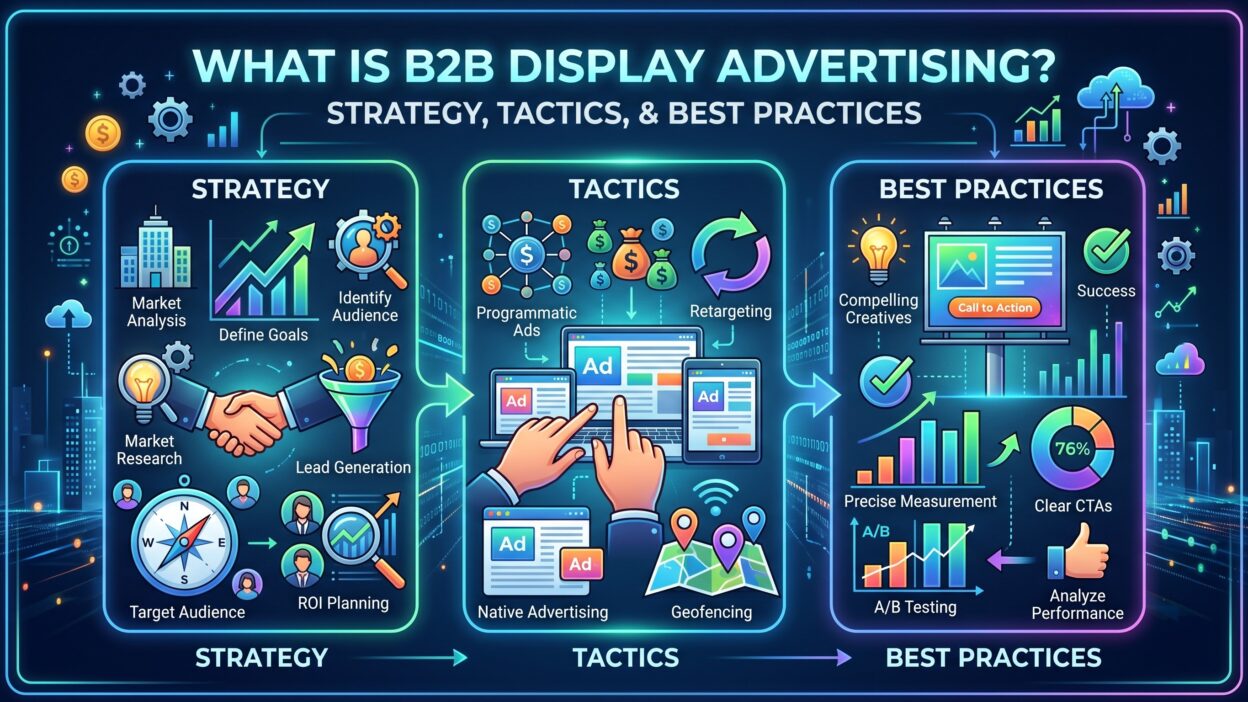
This guide covers what B2B display advertising means, why it works, and how to run it well. We walk through strategy, targeting, ad formats, common mistakes, and best practices. We also answer common questions at the end. Let’s get into it.
Table of Contents
What Is B2B Display Advertising? +
B2B display advertising means placing visual ads, like banners or images, on websites your target buyers visit. These ads appear outside of search results, often on news sites, industry publications, or business tools.
Unlike search ads, display ads do not wait for someone to type a query. They show up while a person reads an article or checks their email. This makes B2B display advertising useful for reaching buyers earlier in their research, before they start actively searching for a solution.
How B2B Display Advertising Differs from B2C Display Ads
B2C display ads often push immediate purchases. A shoe ad might follow someone after they viewed a product page. B2B display advertising works on a longer timeline.
B2B buyers research for weeks or months before they reach out to a vendor. B2B display advertising keeps your brand visible during this whole period. The goal shifts from instant clicks toward steady recognition across a long buying journey.
Why B2B Display Advertising Matters for Your Marketing Mix
Search ads catch people actively looking for a solution. B2B display advertising reaches people earlier, before they start that search.
Building Brand Awareness Among Target Accounts
When a buyer recognizes your brand name, they trust your content more. B2B display advertising builds this recognition over time. A buyer who sees your ads repeatedly feels more comfortable clicking on your content later, even in organic search results.
Supporting Longer B2B Sales Cycles
B2B deals often involve multiple people across several months. B2B display advertising keeps your brand in front of these people throughout the cycle. This steady presence supports sales conversations, since prospects already recognize your name when a rep reaches out.
How B2B Display Advertising Works
B2B display advertising runs through ad networks and platforms that place your ads on other websites. Understanding the basic mechanics helps you plan a stronger campaign.
Ad Networks and Programmatic Platforms
Ad networks connect advertisers with websites that have ad space available. Programmatic platforms automate this process. They use data and bidding systems to decide which ad shows to which visitor, in real time.
B2B display advertising often runs through programmatic platforms like The Trade Desk, LinkedIn, or Google Display Network. These platforms let you set targeting rules and budgets, then handle the placement automatically across thousands of sites.
Targeting Options for B2B Audiences
Targeting decides who sees your ad. B2B display advertising can target by company, industry, job title, or browsing behavior.
Account-based targeting shows ads only to specific named companies on your target list. Contextual targeting shows ads on pages related to your industry, like a marketing blog for a marketing software company. Retargeting shows ads to people who already visited your website. Each method serves a different goal within a B2B display advertising strategy.
Building a B2B Display Advertising Strategy
A strong B2B display advertising strategy starts with clear goals, not just a budget and a few banner designs.
Define Your Campaign Goals First
Decide what success looks like before you launch. Some campaigns aim for brand awareness, measured by impressions and reach. Others aim for website traffic, measured by clicks. Some aim for pipeline support, measured by influenced deals over time.
B2B display advertising goals shape every other decision, from targeting to creative design. A campaign built for awareness looks very different from one built for direct response.
Match Your Strategy to the Buyer Journey
Early-stage buyers need education. Mid-stage buyers compare options. Late-stage buyers need reassurance before signing.
B2B display advertising can support each of these stages with different messages. Early-stage ads might highlight a problem your product solves. Mid-stage ads might highlight a comparison or differentiator. Late-stage ads might highlight customer testimonials or case studies.
Map your ad creative and targeting to these stages. This keeps your B2B display advertising relevant to where each buyer sits in their research, instead of pushing the same message to everyone.
Top Tactics for B2B Display Advertising
These tactics help you get more from your B2B display advertising budget.
Use Account-Based Targeting for Key Accounts (Suggested: 180 words)
If your sales team has a list of target accounts, use that list for your display campaigns. Account-based targeting shows your ads only to people working at those specific companies.
This focused approach raises the chance your ad reaches someone who actually influences a buying decision. B2B display advertising aimed at named accounts often costs more per impression, but the relevance pays off through higher engagement from the right people.
Retarget Website Visitors with Relevant Messages
Most website visitors leave without filling out a form. Retargeting brings them back. B2B display advertising through retargeting shows ads to people who already viewed your site.
Match the ad message to the page they visited. Someone who read a blog post about a specific problem might respond well to an ad about your solution to that problem. Someone who visited your pricing page might respond well to a demo offer.
Test Multiple Ad Formats and Sizes
Display ads come in many shapes, from small banners to large rectangles to skyscraper formats along the side of a page. Different placements call for different sizes.
B2B display advertising performs better when you test several formats at once. Some formats get more visibility on certain sites. Running a mix lets the platform find the combinations that perform best for your audience.
Keep Creative Simple and Clear
Busy ads with too much text get ignored. Keep your message short. One headline, one image, one call to action works best.
B2B display advertising competes with everything else on a page, from articles to other ads. A clean design with a clear message stands out more than a crowded one. Test different headlines, but keep the overall layout simple across versions.
Measuring B2B Display Advertising Performance
Display advertising metrics differ from search advertising metrics. Understanding the right numbers helps you judge success accurately.
Look Beyond Click-Through Rate
Display ads often get lower click-through rates than search ads. This does not mean they fail. B2B display advertising often works through repeated exposure, not a single click.
Track view-through conversions too. These show when someone sees your ad, does not click, but later visits your site directly or through search. This metric captures the awareness value that click-through rate misses.
Connect Display Spend to Pipeline
The strongest measure of B2B display advertising looks at influenced pipeline. Did accounts exposed to your ads move through the sales funnel faster than accounts that were not exposed?
Marketing teams can compare deal velocity and win rates between these two groups. This connection between B2B display advertising and actual revenue helps justify the budget during planning conversations with leadership.
Common Mistakes in B2B Display Advertising
Many B2B marketers run display campaigns that underperform due to a few common issues.
One mistake is targeting too broadly. A generic audience wastes budget on people who never become buyers. Narrow your targeting to match your actual ideal customer profile.
Another mistake is expecting search-level click-through rates. B2B display advertising serves a different purpose. Judging it by the same metrics as search ads leads to early, incorrect conclusions about performance.
Some teams launch one ad creative and never update it. Audiences get tired of seeing the same ad repeatedly. Refresh your creative every few weeks to avoid this fatigue.
Finally, some teams skip the connection to sales data. Without this link, B2B display advertising looks like a cost with no clear return. Build this reporting connection early, so you can show real impact over time.
Best Practices for B2B Display Advertising
Set realistic expectations from the start. B2B display advertising builds awareness and supports pipeline over months, not days.
Align your ad messages with your other marketing channels. A buyer should see consistent language across your ads, website, and emails. This consistency builds trust faster than disconnected messages.
Use a mix of targeting methods. Combine account-based targeting for key accounts with broader contextual targeting for awareness. This balance covers both precision and reach within your B2B display advertising budget.
Review performance regularly, but give campaigns enough time before making changes. Display campaigns often need a few weeks of data before patterns become clear.
Coordinate with your sales team. Share your target account list with sales, so reps know which prospects might already recognize your brand from B2B display advertising before a first call.
Frequently Asked Questions
What is B2B display advertising used for?
B2B display advertising builds brand awareness and supports long sales cycles by keeping your company visible to target buyers as they browse other websites.
How is B2B display advertising different from search advertising?
Search advertising targets people actively searching for a solution. B2B display advertising reaches people earlier, often before they start searching, through visual ads on other sites.
What targeting options work best for B2B display advertising?
Account-based targeting works well for named target accounts. Contextual targeting works well for broader industry awareness. Retargeting works well for re-engaging past website visitors.
How do you measure success in B2B display advertising?
Look at view-through conversions, brand awareness lift, and influenced pipeline, not just click-through rate. B2B display advertising often shows its value through repeated exposure over time.
How much budget does B2B display advertising need to work?
Budget needs vary by industry and target account list size. Start with a modest test budget, measure results over a few weeks, then adjust based on what you learn.
Can small B2B companies use display advertising effectively?
Yes. Small companies can focus their B2B display advertising budget on a tight list of target accounts or a narrow industry niche, which keeps costs manageable while staying relevant.
How often should B2B display advertising creative get updated?
Refresh your ad creative every few weeks to avoid audience fatigue. Rotating headlines and images keeps your B2B display advertising campaigns feeling fresh to repeat viewers.
Read More:-A Corporate Guide to Pride — How Companies Get it Right (and Wrong)
Conclusion

B2B display advertising gives your brand a steady presence during long buyer journeys. It builds awareness early, supports sales conversations later, and keeps your name visible while buyers research their options.
Start with clear goals. Match your strategy to where buyers sit in their journey. Test different targeting methods, formats, and creative styles.
Track results beyond click-through rate. Connect your campaigns to pipeline data whenever you can. B2B display advertising proves its value over months, through patterns in awareness and deal velocity, not through a single click.
A consistent presence across the web builds trust before a sales conversation even starts. B2B display advertising helps your brand earn that recognition, one impression at a time.