Introduction
TL;DR B2B buyers do not behave like regular shoppers. They research for weeks. They involve many decision makers. They compare vendors on price, support, and trust. This guide breaks down customer profiling and segmentation for B2B teams. You will learn what it means, why it matters, and how to use it the right way.
Sales and marketing teams waste budget when they treat every account the same. Customer profiling and segmentation fixes that problem. It groups your buyers by traits that matter. It helps you send the right message to the right person at the right time.
This guide covers definitions, benefits, types, steps, tools, mistakes, and best practices. We also answer common questions at the end. Let’s get started.
What Is Customer Profiling and Segmentation?
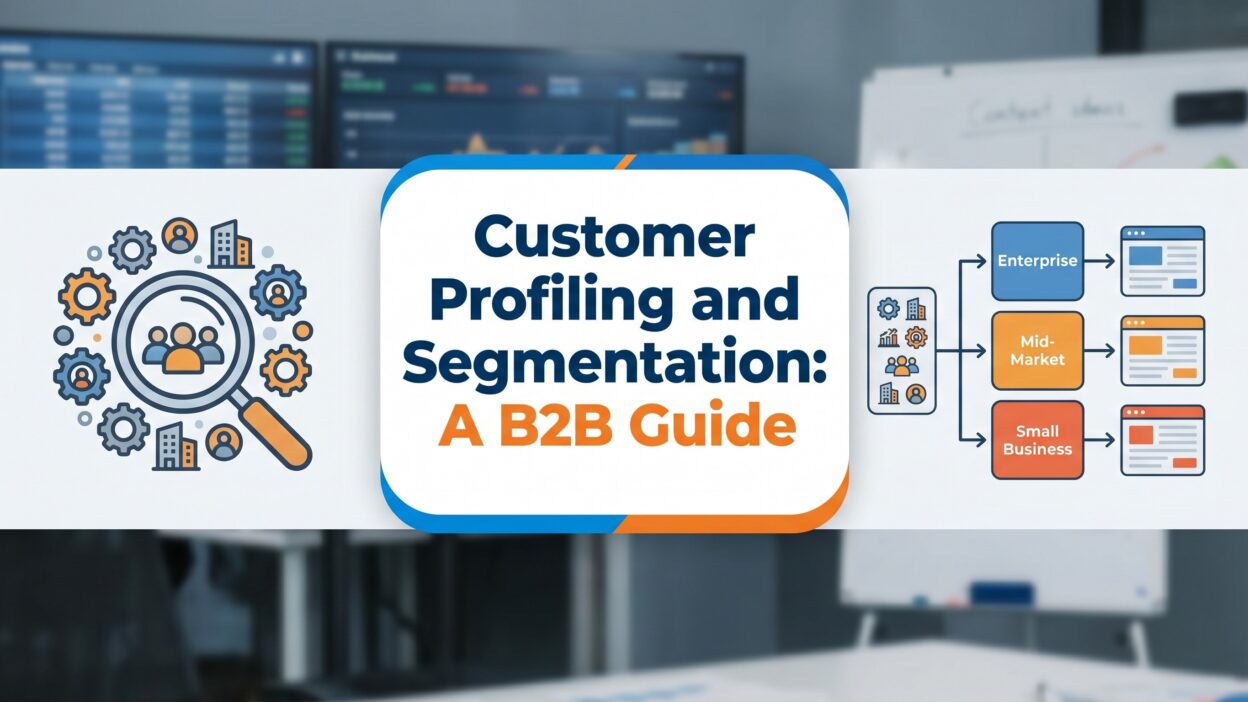
Customer profiling and segmentation is the process of grouping your customers based on shared traits. A customer profile describes a typical buyer. It includes details like company size, industry, role, and pain points. Segmentation takes those profiles and sorts your full customer base into smaller groups.
In B2B, this process looks different than in B2C. A B2B buyer often represents a company, not just themselves. Their decisions affect budgets, teams, and long-term contracts. Customer profiling and segmentation in B2B must account for company-level data and individual buyer behavior together.
Why B2B Companies Need Customer Profiling and Segmentation
B2B sales cycles run long. Deals involve multiple stakeholders. A marketing team, a finance lead, and an IT manager may all weigh in on one purchase. Without customer profiling and segmentation, your messaging stays generic. Generic messaging loses deals.
Segmentation lets your sales team speak directly to each stakeholder’s concern. It lets marketing build campaigns that match real buyer journeys. It lets product teams build features that solve actual problems. Customer profiling and segmentation turns guesswork into a clear strategy.
Customer Profiling vs Customer Segmentation: What’s the Difference?
People often mix these two terms. They connect closely, but they are not the same thing.
A customer profile is a single, detailed picture of one buyer type. Think of it as a snapshot. It shows their job title, company size, budget range, and goals. A profile answers the question: who is this buyer?
Segmentation is the grouping step. It takes your full customer list and splits it into smaller buckets based on shared traits. A segment answers a different question: which group does this buyer belong to?
Customer profiling and segmentation work together as a pair. You build profiles first. Then you use those profiles to create segments. Each segment then gets its own marketing plan, sales script, and onboarding flow. This combination drives real results in B2B growth.
Benefits of Customer Profiling and Segmentation for B2B Businesses
Strong customer profiling and segmentation brings measurable gains across sales, marketing, and product teams. Here is how it helps each area.
Better Marketing ROI
Generic campaigns burn budget fast. A campaign aimed at “everyone” reaches no one well. Customer profiling and segmentation lets you build campaigns for specific buyer types. A campaign for a small startup founder looks different from one aimed at an enterprise procurement officer. Each message lands better. Open rates rise. Click rates rise. Cost per lead drops over time.
Improved Sales Targeting
Sales reps waste hours chasing leads that never convert. Customer profiling and segmentation gives reps a clear picture of which accounts fit best. Reps can prioritize high-value segments first. They can also tailor their pitch based on the segment’s pain points. This shortens sales cycles and raises win rates.
Stronger Customer Relationships
Customers notice when a vendor understands their business. Segmentation helps your support and success teams adjust their approach for each group. A small business client may need simple guides and fast email support. An enterprise client may need a dedicated account manager and quarterly reviews. Customer profiling and segmentation makes these adjustments possible at scale.
Types of B2B Customer Segmentation
B2B teams use several segmentation models. Most companies combine more than one model for the best results.
Firmographic Segmentation
Firmographic segmentation groups companies by business attributes. These include industry, company size, revenue, location, and number of employees. This is the most common starting point for B2B customer profiling and segmentation. A software company, for example, might create separate segments for healthcare, retail, and finance clients. Each industry has different rules, budgets, and buying habits.
Behavioral Segmentation
Behavioral segmentation groups customers by how they act. This includes website visits, product usage, purchase frequency, and support ticket history. A customer who logs in daily behaves differently than one who logs in once a month. Behavioral data shows real engagement, not just stated interest. Customer profiling and segmentation based on behavior often predicts churn risk early.
Needs-Based Segmentation
Needs-based segmentation groups buyers by the problem they want to solve. Two companies in the same industry might buy your product for different reasons. One wants to cut costs. Another wants to scale faster. Needs-based segmentation helps your team craft messages that speak to the actual goal, not just the product features.
Value-Based Segmentation
Value-based segmentation groups customers by their worth to your business. This includes contract size, lifetime value, and renewal likelihood. High-value accounts often get more attention from sales and customer success. Customer profiling and segmentation by value helps leadership decide where to spend resources.
How to Build a Customer Profile for B2B
A strong customer profile forms the base for accurate segmentation. Here is how to build one.
Data Collection Methods
Start with your existing customer data. Pull records from your CRM. Look at past deals, deal sizes, and close rates. Review support tickets for common complaints.
Next, talk to your sales team. They speak with buyers daily. They know which questions come up again and again. Ask them about objections, budget ranges, and decision timelines.
Run surveys with current customers. Ask about their role, team size, and goals. Short surveys with five or six questions work best. Long surveys get ignored.
Review your website analytics too. Look at which pages get the most traffic from your best customers. This shows what content attracts good-fit buyers.
Key Data Points to Include
A complete B2B customer profile should cover company details and buyer details together.
Company details include industry, company size, annual revenue, and location. These factors shape budget and buying speed.
Buyer details include job title, department, and seniority level. A marketing manager and a CFO care about different things, even at the same company.
Pain points matter too. What problem keeps this buyer up at night? What happens if they do not solve it?
Buying triggers also matter. What event pushes this buyer to start looking for a solution? A new regulation, a funding round, or a leadership change can all trigger a search.
Finally, note the buyer’s preferred channels. Some buyers respond to email. Others prefer LinkedIn or phone calls. Customer profiling and segmentation works best when it includes this channel data, since it tells your team how to reach each group.
Step-by-Step Process for Customer Profiling and Segmentation
Follow these steps to build a working segmentation model for your B2B business.
Define Your Goals
Start with a clear goal. Do you want to improve lead quality? Do you want to reduce churn? Do you want to grow upsell revenue? Your goal shapes which data points matter most. Without a goal, customer profiling and segmentation becomes a data exercise with no direction.
Gather and Clean Your Data
Pull data from your CRM, support platform, and website analytics. Check for duplicate records. Remove outdated contacts. Fix missing fields where possible.
Clean data matters more than a lot of data. A small, accurate dataset beats a large, messy one. Bad data leads to wrong segments, and wrong segments lead to wasted campaigns.
Step 3: Analyze and Group Your Customers (Suggested: 130 words)
Look for patterns across your customer base. Group accounts by industry first. Then layer in company size. Then add behavior data, like product usage or engagement level.
Some teams use spreadsheets for this step. Others use software with built-in segmentation features. Either method works, as long as the groups stay clear and useful.
Build Detailed Profiles for Each Segment
Once you have your groups, write a profile for each one. Give each segment a name, like “Mid-Market Manufacturing” or “Enterprise Healthcare IT.” Include their goals, pain points, budget range, and buying triggers.
Share these profiles across your company. Sales, marketing, product, and support teams should all use the same set of profiles. This keeps messaging consistent everywhere.
Apply Segments to Your Strategy
Now put your segments to work. Build email campaigns for each segment. Adjust your website content to speak to each group. Train sales reps on how to pitch each segment differently.
Review results every quarter. Customer profiling and segmentation is not a one-time project. Markets shift, and your segments should shift with them.
Tools for Customer Profiling and Segmentation
Many platforms support customer profiling and segmentation for B2B teams. CRM platforms like HubSpot and Salesforce store customer data and allow basic segmentation by industry, deal size, and lifecycle stage.
Marketing automation tools add another layer. They track email opens, clicks, and website visits. This behavioral data feeds back into your segments and sharpens them over time.
Customer data platforms (CDPs) pull data from many sources into one place. They combine CRM data, website data, and support data. This gives a fuller picture for customer profiling and segmentation across large B2B organizations.
Survey tools also play a role. Tools like Typeform or SurveyMonkey help gather direct feedback from buyers. This feedback fills gaps that behavioral data cannot show, like motivation and intent.
Spreadsheets still work for smaller teams. A well-organized spreadsheet with filters can support basic segmentation without extra cost. Start simple. Add tools as your customer base grows.
Common Mistakes to Avoid in Customer Profiling and Segmentation
Many B2B teams make the same errors when they start customer profiling and segmentation.
One common mistake is creating too many segments. A list of fifty micro-segments becomes impossible to manage. Aim for five to eight clear segments at most.
Another mistake is relying only on firmographic data. Company size tells you little about actual needs. Pair firmographic data with behavior and pain points for a fuller picture.
Some teams build profiles once and never update them. Markets change. Buyer needs shift. A profile from three years ago may no longer match reality. Review and refresh your profiles every six to twelve months.
Another issue is keeping segments locked inside one department. If only marketing sees the segments, sales and support miss out on valuable context. Share segment data across the whole company.
Finally, some teams skip the data cleanup step. Messy data creates messy segments. Spend time on data quality before you build anything else.
Best Practices for B2B Customer Segmentation
Keep your segments simple and actionable. Each segment should lead to a clear action, like a specific email sequence or sales script.
Use real customer interviews alongside data. Numbers show patterns, but conversations show context. A short call with a real buyer often reveals more than a spreadsheet full of numbers.
Align your segments with your sales team’s structure. If sales reps focus on specific industries or regions, build segments that match those territories. This makes adoption easier.
Test your segments with small campaigns first. Send a targeted email to one segment and measure the response. Adjust the profile based on what you learn.
Document everything. Write down how each segment was built, what data went into it, and when it was last updated. This helps new team members understand your customer profiling and segmentation system quickly.
Revisit your segments after major business changes. A new product launch, a new market, or a big shift in pricing can all change how your segments should look.
Frequently Asked Questions
What is the main goal of customer profiling and segmentation in B2B?
The main goal is to group buyers by shared traits so your team can target each group with the right message. This raises marketing efficiency and improves sales conversion rates.
How many segments should a B2B company create?
Most B2B companies do well with five to eight segments. Too few segments miss important differences. Too many segments become hard to manage and act on.
What data sources work best for B2B segmentation?
CRM records, website analytics, support tickets, and direct surveys all work well. A mix of company data and behavior data gives the strongest results.
How often should B2B companies update their customer profiles?
Review profiles every six to twelve months. Update them sooner if your market shifts, your product changes, or you enter a new industry.
Can small B2B companies use customer profiling and segmentation too?
Yes. Small companies can start with a simple spreadsheet and basic firmographic data. The process scales as the business grows, and tools can get more advanced over time.
What is the difference between a buyer persona and a customer segment?
A buyer persona describes one type of individual decision maker. A customer segment groups full accounts or companies with shared traits. Many B2B teams use both together for full coverage.
Does customer profiling and segmentation help with customer retention?
Yes. Segments based on usage and behavior help your team spot at-risk accounts early. This allows support teams to step in before a customer churns.
Read More:-How to Write Chatbot Scripts That Convert B2B Leads
Conclusion
Customer profiling and segmentation gives B2B companies a clear way to understand their buyers. It turns a long list of accounts into useful, actionable groups. Sales teams target better. Marketing teams spend smarter. Support teams respond faster.
Start small. Build a few clear profiles based on real data. Group your accounts into segments that make sense for your business. Share these segments across every team.
Review your work often. Buyer needs change, and your segments should change with them. Companies that treat customer profiling and segmentation as an ongoing habit, not a one-time task, see the strongest long-term results.
Take the first step today. Pull your customer data, look for patterns, and build your first set of profiles. The clarity you gain will shape better decisions across your whole business.