Introduction
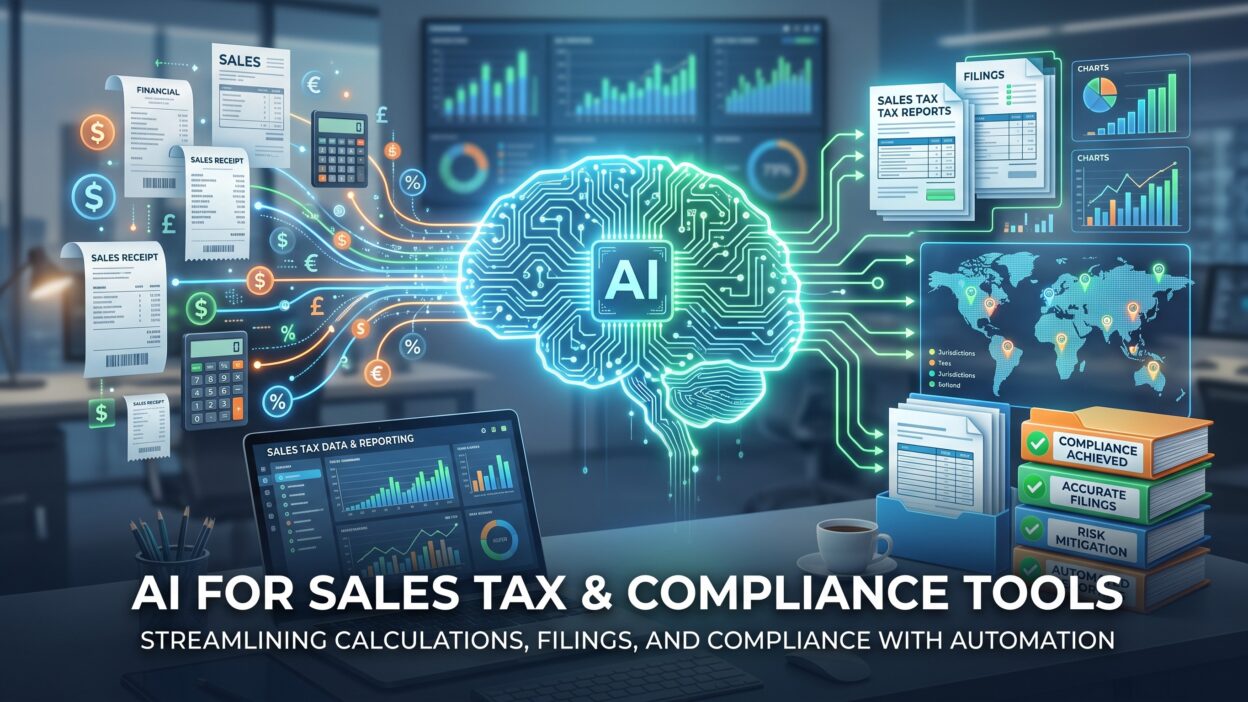
TL;DR Sales tax rules change every year. States add new rates. Cities redraw tax boundaries. A single missed update can trigger a costly audit. This is exactly why AI for Sales Tax has become a real business priority, not just a nice-to-have feature.
Finance teams used to track these changes by hand. Spreadsheets broke under the weight of multi-state selling. Manual filing ate up entire weeks every quarter. AI for Sales Tax removes this burden by scanning rate changes, filing deadlines, and nexus rules automatically.
In this guide, you get a full look at how AI for Sales Tax works, which tools lead the market, and how to pick the right one for your business. We also cover secondary topics like compliance automation, nexus tracking, and audit readiness. By the end, you know exactly where to start.
Table of Contents
What Is AI for Sales Tax
AI for Sales Tax refers to software that uses machine learning to calculate, file, and monitor sales tax obligations. The system reads your transaction data and applies the correct rate for every location. It also flags when your business crosses a nexus threshold in a new state.
Traditional tax software relies on static rate tables. Someone updates those tables by hand, often with a delay. This newer approach works differently. The system pulls live data from government sources and adjusts rates the moment a change happens.
Machine learning models also improve over time. The more transactions a system processes, the better it gets at catching unusual patterns. A sudden spike in exempt sales might signal a data entry error. The engine catches this kind of anomaly before it becomes a filing problem.
Compliance teams use these platforms for more than rate lookup. Nexus tracking counts among the biggest use cases today. A business selling in twenty states needs to know exactly when it crosses a revenue or transaction threshold in each one. Manual tracking across twenty spreadsheets invites mistakes. Automated tracking through AI for Sales Tax removes that risk entirely.
Product taxability adds another layer of complexity most people underestimate. A t-shirt might sell tax-free in one state and taxed in another. Digital downloads carry their own separate rules again. Keeping track of every combination by hand is nearly impossible once a catalog grows past a few dozen items. Automated platforms store these rules centrally, so nobody on your team needs to memorize them.
Filing automation rounds out the core function. Once the system calculates what you owe, it prepares and submits returns to each state tax authority. This cuts filing time from days down to minutes for most finance teams. The result is a compliance process that runs quietly in the background instead of eating up your accounting calendar.
Why Businesses Need AI for Sales Tax
Sales tax mistakes carry real financial risk. States charge penalties and interest on late or incorrect filings. A growing business selling across state lines faces this risk multiplied by every new jurisdiction it enters.
Manual compliance does not scale well. A finance team might handle five states without much trouble. Add fifteen more states, and the same team drowns in rate changes and filing deadlines. Automation scales without adding headcount.
Speed matters during audits too. Auditors ask for detailed transaction records going back years. A manual system buries this data across old spreadsheets and email threads. AI for Sales Tax keeps everything organized in one searchable system, ready for any audit request.
Accuracy improves customer trust as well. Charging the wrong tax rate on a checkout page frustrates buyers and creates refund headaches. A live-rate engine pulls current data, so customers see the correct charge every time.
Cost savings add up over time. Hiring a tax specialist for each new state gets expensive fast. A single platform handling automated calculations, filing, and nexus tracking often costs far less than expanding an internal team.
Peace of mind might be the biggest benefit of all. Founders and finance leaders sleep better knowing compliance runs on autopilot. AI for Sales Tax turns a stressful quarterly task into a background process that just works.
Investor confidence rises too during due diligence. A company preparing for funding or acquisition needs clean financial records. Buyers and investors ask hard questions about tax exposure across every state where a business sells. A well-documented, automated compliance history answers those questions without weeks of scrambling to reconstruct old filings.
How AI for Sales Tax Works
The technology behind AI for Sales Tax follows a clear process. Each stage builds on data collected in the last one.
Data Collection
The system connects to your point of sale, ecommerce platform, or accounting software. Every transaction flows into the platform in real time. This includes the sale amount, product category, and buyer location.
Rate Calculation
Once the data arrives, the engine matches the transaction against current tax rules. Product category matters here. Groceries, clothing, and digital goods often carry different rates within the same state. The system applies the correct rate instantly, without any manual lookup.
Nexus Monitoring
The platform tracks cumulative sales and transaction counts across every state. When a business crosses a threshold, the system sends an alert. This gives finance teams time to register before a filing deadline arrives.
Filing and Remittance
Once tax collection data is ready, the platform prepares the return for each jurisdiction. Some tools file automatically on your behalf. Others generate the return for a human to review and submit. Either way, the manual math disappears from the process.
This four-step flow repeats every filing period. A well-built platform handles thousands of transactions without slowing down. Compare that to a manual process, where a single analyst might spend days reconciling data before a filing deadline.
Advanced platforms add predictive features on top of this base flow. Some tools forecast when a business will cross a nexus threshold weeks before it happens. This lets a company register early and avoid a compliance gap. This kind of forward planning shows exactly why AI for Sales Tax outperforms older rule-based software.
Ongoing Monitoring
Compliance never really finishes. Rates shift, product lines change, and new states enter the picture as a business grows. A strong platform keeps monitoring every transaction after the initial setup, flagging anything unusual before it turns into a bigger problem. This ongoing layer is often what separates a basic calculator from a true compliance partner.
Top AI for Sales Tax and Compliance Tools
Here is a detailed look at the platforms leading this space today. Each one brings a different strength to the table.
Avalara
Avalara built its reputation on broad tax coverage across thousands of jurisdictions worldwide. The platform connects with most major ecommerce and ERP systems. Its AI-driven engine updates rates continuously, which removes the lag common in older tax software.
Larger businesses often choose Avalara because of its depth. The platform handles complex product taxability rules across many industries. Smaller teams sometimes find the setup process heavier than simpler tools, but the coverage pays off once a business sells across many states.
Vertex
Vertex focuses heavily on enterprise clients with complex tax needs. The platform integrates deeply with large ERP systems like SAP and Oracle. Its machine learning models handle high transaction volumes without performance drops.
Companies with global operations lean toward Vertex because of its international tax support. The learning curve runs steeper here, so most buyers pair Vertex with a dedicated implementation team during rollout.
TaxJar
TaxJar built its name among small and mid-size ecommerce sellers. The platform connects easily with Shopify, Amazon, and other popular sales channels. Its AI engine tracks nexus automatically, sending alerts the moment a threshold gets close.
Pricing stays simple compared to enterprise tools. This makes TaxJar a strong entry point for growing businesses that need reliable tax automation without a lengthy setup process.
Anrok
Anrok focuses specifically on software companies selling digital products and subscriptions. Tax rules for SaaS products vary wildly across states, and Anrok’s engine specializes in this exact complexity.
The platform integrates directly with billing systems like Stripe. Startups scaling their subscription revenue often choose Anrok because it understands digital goods taxability better than general-purpose tools.
Numeral
Numeral targets ecommerce brands looking for a hands-off compliance experience. The platform files returns automatically once nexus triggers appear. Founders like this tool because it removes tax tasks from their weekly workload entirely.
Numeral works best for direct-to-consumer brands selling through a handful of core channels. Its simpler interface trades some flexibility for a much faster setup process.
Stripe Tax
Stripe Tax lives inside the Stripe payment ecosystem already used by thousands of online businesses. The tool calculates tax at checkout automatically, using live location and product data.
Businesses already processing payments through Stripe find this the easiest entry point into automated tax compliance. It lacks some of the deeper filing automation found in dedicated platforms, but it covers calculation needs well for smaller sellers.
Sovos
Sovos serves large enterprises with complex regulatory needs across multiple countries. The platform covers not just sales tax but also VAT and other indirect tax types globally.
Compliance teams at large corporations value the audit trail Sovos builds automatically. Every calculation and filing decision gets logged, which speeds up any future audit review significantly.
TaxCloud
TaxCloud offers a lighter-weight option built for small businesses on tighter budgets. The platform handles calculation and filing basics without the enterprise price tag attached to bigger competitors.
Many small retailers use TaxCloud as their first real step into automated compliance after outgrowing manual spreadsheet tracking. The feature set stays simple, which suits businesses selling in a handful of states.
Zamp
Zamp positions itself as a fully managed compliance service backed by automation. A dedicated team reviews filings alongside the AI engine, adding a human check on top of the automated process.
This hybrid model appeals to businesses that want automation but still want a human available for tricky questions. Zamp costs more than pure software tools, though many buyers see the added support as worth the price.
Quaderno
Quaderno focuses on global digital sellers dealing with VAT, GST, and US sales tax all at once. The platform automates tax calculation across borders, which matters for companies selling software or digital content worldwide.
Its API-first design suits development teams that want deep customization. Quaderno fits well for businesses already comfortable building around an API rather than using a simple dashboard.
AI for Sales Tax vs Manual Tax Management
A manual process feels manageable at first. One spreadsheet tracks rates. One calendar tracks filing dates. This setup works fine for a business selling in one or two states.
Growth breaks this system fast. Every new state adds its own rates, deadlines, and product rules. A spreadsheet cannot flag a nexus threshold the moment it gets crossed. AI for Sales Tax handles this exact problem by watching every transaction continuously.
Cost comparisons favor automation more than people expect. A tax specialist salary runs far higher than most software subscriptions. A single platform often covers work that would otherwise need a full department.
Error rates tell a similar story. Manual data entry invites typos and missed updates. An automated engine pulls rates directly from official sources, cutting out the human error that causes most compliance mistakes.
The tradeoff sits in setup time and cost. Manual tracking needs no software investment upfront. AI for Sales Tax requires a subscription and some integration work. Once running, the ongoing savings in time and reduced risk usually outweigh that initial cost within the first year.
Key Features to Look for in AI for Sales Tax Platforms
Real-time rate accuracy should top your checklist. Rates change often, and a delay of even a few days can create compliance gaps. Confirm how quickly a vendor updates its rate database after a jurisdiction change.
Nexus tracking deserves close attention too. Look for automatic alerts before you cross a threshold, not after. Early warning gives your team time to register properly instead of scrambling under a deadline.
Integration depth matters for daily workflow. Check that the platform connects natively with your ecommerce store, ERP system, or billing tool. A clunky manual export process defeats the purpose of automation.
Filing automation separates strong tools from basic calculators. Some platforms only calculate tax, leaving the filing work to you. Others handle the entire return and remittance process without manual intervention.
Audit support rounds out a strong feature list. A detailed transaction log, stored safely and easily searchable, saves enormous time during a state audit. Ask any vendor how far back their records go and how easily you can export them.
Customer support quality also counts more than people expect. Tax questions often need a fast answer, not a ticket sitting in a queue for days. A platform with responsive support saves real stress during filing season.
Benefits of Using AI for Sales Tax Tools
Accuracy stands out as the clearest benefit. Automated rate lookups remove the guesswork that causes overcharges and undercharges at checkout. Customers see the right price, and your business avoids costly correction filings later.
Time savings follow right behind accuracy. Finance teams no longer spend days each quarter reconciling tax data by hand. The system handles this work continuously in the background.
Risk reduction plays a major role as well. Nexus tracking catches new obligations before they become compliance violations. This proactive approach beats reacting to a penalty notice months after the fact.
Cost control also improves with automation. Hiring extra tax staff for every new state gets expensive quickly. A single platform often costs less than the salary of one additional compliance hire.
Scalability rounds out the benefit list nicely. A growing business can expand into new states or countries without rebuilding its entire tax process. The system adjusts automatically as your footprint grows.
How to Choose the Right AI for Sales Tax Solution
Start by mapping your current footprint. List every state and country where you currently sell. This tells you how much coverage you actually need from a platform today.
Think about your growth plans next. A business expanding fast needs a platform that scales without a painful migration later. Check if the vendor supports international tax rules if global expansion sits on your roadmap.
Review your existing tech stack too. Confirm the tool integrates with your ecommerce platform, billing system, or ERP software. A poor integration creates manual work that defeats the entire purpose of automation.
Test the nexus tracking feature carefully. Ask for a demo using your real sales data if possible. Compare the alerts against your own manual calculations to confirm accuracy.
Consider your budget realistically. Enterprise platforms like Vertex and Sovos carry higher price tags suited for large operations. Smaller businesses often get better value from tools like TaxJar or TaxCloud.
Finally, weigh support quality against your team’s tax expertise. A business without an in-house tax specialist benefits from a platform offering strong customer support or managed services.
Common Mistakes to Avoid with AI for Sales Tax
Many businesses wait too long to adopt automation. Manual tracking works fine for one or two states, but problems build up quietly once a business crosses into new jurisdictions.
Ignoring nexus alerts causes real damage. A warning about an approaching threshold means nothing if nobody reviews it in time. Assign a team member to check these alerts every single week.
Skipping platform integration creates hidden errors. Manually re-entering transaction data invites typos and missed records. Always connect your sales channels directly instead of relying on spreadsheet exports.
Choosing a tool based on price alone backfires often. A cheap platform lacking proper filing automation can cost more in penalties than it saves in subscription fees.
Forgetting to review filings before submission causes trouble too. Automation handles the heavy lifting, but a quick human review catches rare edge cases the system might miss.
FAQs About AI for Sales Tax
What makes AI for Sales Tax different from traditional tax software? Traditional software relies on static rate tables updated by hand. AI for Sales Tax pulls live data and adjusts rates automatically, which catches changes far faster.
Does AI for Sales Tax replace a human accountant? No. The technology handles calculation, filing, and nexus tracking. A human accountant still reviews strategy and handles complex judgment calls the software cannot make.
How accurate is AI for Sales Tax at calculating rates? Accuracy stays high for most standard transactions. Complex product categories sometimes need manual review, so check a vendor’s accuracy guarantee before committing.
Can small businesses afford these tools? Yes. Platforms like TaxJar and TaxCloud offer pricing built for smaller sellers. Enterprise tools like Vertex and Sovos suit larger operations with bigger budgets.
How does nexus tracking actually work? The system monitors your sales volume and transaction count in every state. Once you cross a state’s threshold, the platform alerts your team to register before a filing deadline arrives.
Do these platforms handle international tax rules? Some do. Sovos and Quaderno both cover VAT and GST alongside US sales tax. Confirm international coverage before choosing a tool if you sell outside the United States.
How long does setup usually take? Simple platforms connect within a day or two. Enterprise tools with deep ERP integration can take several weeks, especially when a dedicated implementation team gets involved.
Read More:-Market Intelligence Data: What It Is, Types, and How B2B Teams Use It
Conclusion

Sales tax compliance used to eat entire weeks out of a finance calendar. AI for Sales Tax changes that reality completely. The technology calculates rates, tracks nexus, and files returns without constant manual effort.
Every platform covered here serves a different type of business. Avalara and Vertex suit large enterprises with complex needs. TaxJar and TaxCloud fit smaller sellers looking for a simple entry point. Anrok and Quaderno solve specific challenges around digital products and global sales.
Pick a platform based on your actual footprint and growth plans, not just price. Test the nexus tracking feature before committing, since this catches problems long before they become expensive.
AI for Sales Tax is not a passing trend in finance technology. It solves a real, growing problem for any business selling across state lines. Teams that adopt this approach today build a compliance process that scales quietly in the background for years to come.