Introduction
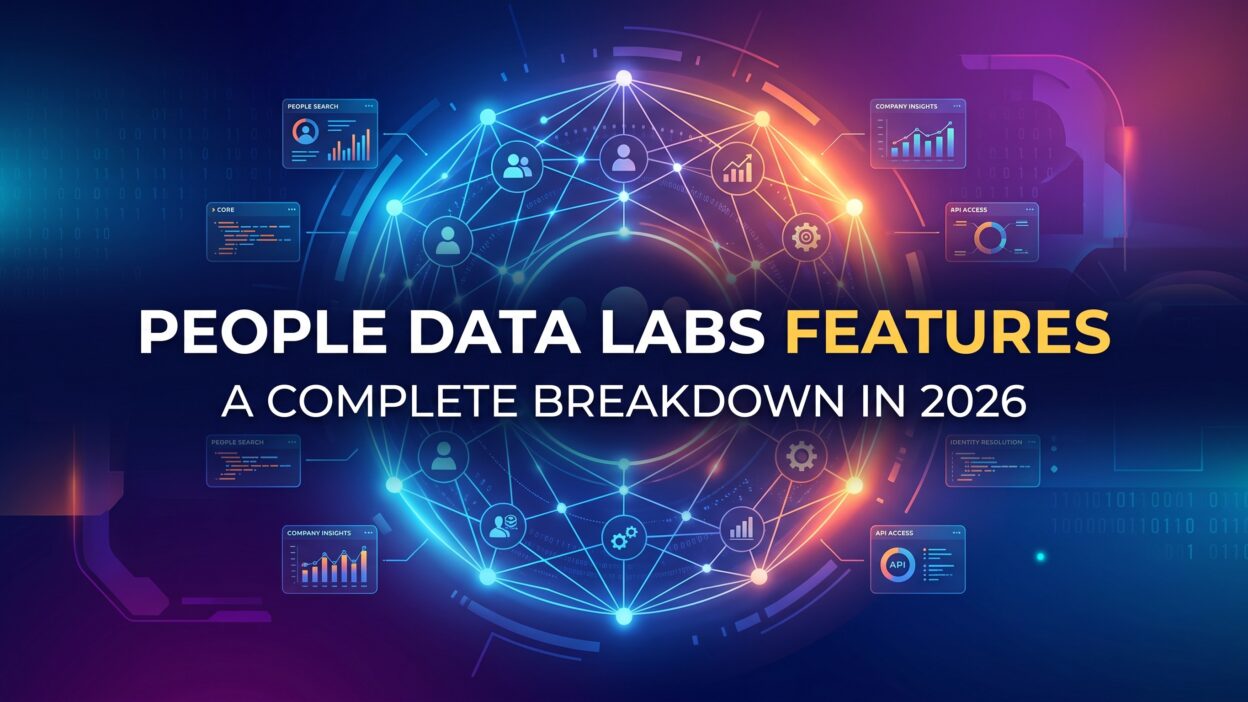
TL;DR Data drives every sales team, recruiter, and marketer today. People Data Labs Features give companies a way to find, verify, and enrich data on people and businesses at scale. This guide breaks down every major part of the platform. You will learn what People Data Labs Features actually do, how they work, and where they fit into your daily workflow.
People Data Labs has grown into one of the most trusted data providers for developers and enterprise teams. The platform blends person data, company data, and search tools into one system. This article walks through People Data Labs Features in plain language. No jargon. No fluff. Just a clear look at what you get.
Table of Contents
What Is People Data Labs
People Data Labs is a data-as-a-service company. It builds and sells access to a massive dataset of professional profiles and company records. Developers pull this data through an API. Sales teams, recruiters, and marketers use the same data through partner tools.
The company does not sell leads directly to consumers. It sells raw data and matching tools to other businesses. Those businesses build products on top of it. This model makes People Data Labs Features useful for a wide range of industries, from HR tech to fintech to ad tech.
Core People Data Labs Features Overview
The platform splits into a few main pillars. Person enrichment sits at the center. Company enrichment sits next to it. Search tools connect the two. Bulk data delivery rounds out the offering for teams that need scale.
Each of these People Data Labs Features solves a specific problem. Some teams only need email verification. Others need full company technographics. The modular setup lets you pick what fits your use case. You do not pay for tools you never touch.
Person Data Enrichment Features
Person enrichment sits at the heart of the platform. You send a partial record, like a name and a company. The system returns a fuller profile. This profile can include job title, work history, education, location, and contact details.
Contact Details and Verified Emails
The email finder tool returns work emails tied to a real person. Each email comes with a confidence score. This score tells you how likely the address is correct. Sales teams use this to cut down on bounced emails.
Phone number matching works the same way. The system checks multiple sources before it returns a number. This reduces wasted calls for outbound teams. Verified contact data is one of the most requested People Data Labs Features among sales operations teams.
Job History and Employment Data
Every profile in the database carries a work history. You see past job titles, company names, and rough date ranges. Recruiters use this to track career paths. Sales reps use it to spot job changes early.
Job change alerts flag when a prospect moves to a new role. This signal often means a fresh budget or new priorities. Many growth teams build automated outreach around this single feature.
Social Profile Matching
The platform links a person record to public social profiles. LinkedIn, Twitter, and GitHub links often appear on a single profile. This helps teams build a full picture of a contact without manual searching.
Profile matching also supports identity resolution. Two records that look different on the surface might belong to the same person. The matching engine merges these records into one clean profile.
Company Data Enrichment Features
Company enrichment mirrors person enrichment but focuses on businesses. You send a domain or company name. The system returns firmographic and operational details about that company.
Firmographic Data
Firmographic data covers the basics. Industry, employee count, revenue range, and headquarters location all fall under this category. Marketing teams use these fields to build tight audience segments.
Funding data sits alongside firmographics too. You can see recent funding rounds and investor names for many companies. This helps sales teams time their outreach around new budget cycles.
Technographic Data
Technographic data shows which tools a company runs. You might see their CRM, their hosting provider, or their analytics stack. This data helps software vendors target companies that already use compatible tools.
A vendor selling a Salesforce add-on can filter for companies that run Salesforce. This narrows the list fast. Technographic data ranks among the more advanced People Data Labs Features for go-to-market teams.
Company Growth Signals
Growth signals track hiring trends, headcount changes, and department expansion. A company adding ten new engineers in one quarter signals growth. Sales teams read this as a buying signal.
These signals update on a rolling basis. You do not need to manually check a company’s LinkedIn page every week. The system tracks the trend and surfaces it through the API.
People Data Labs Search API Features
The Search API lets you query the dataset directly with flexible filters. You can search by job title, skill, location, or company size. Results return in seconds.
Person Search
Person Search lets you build custom lists based on strict criteria. You might search for marketing directors in Texas who worked at a SaaS company before. The filters stack, so results stay precise.
This tool replaces hours of manual prospecting. Recruiters use it to source passive candidates. Sales teams use it to build fresh outbound lists every week.
Company Search
Company Search works the same way but targets businesses. You filter by industry, size, funding stage, or location. The result set becomes your target account list.
Account-based marketing teams rely heavily on this tool. A tight account list means fewer wasted ad dollars. Company Search stands out as one of the more practical People Data Labs Features for ABM programs.
Autocomplete Search
Autocomplete Search speeds up form fills and internal tools. Type a partial company name and the system suggests real matches. This cuts down on typos and duplicate records in your CRM.
Developers often wire this feature into signup forms. A clean input reduces bad data downstream. Small feature, but it saves real cleanup time later.
People Data Labs Data Coverage and Accuracy
Coverage matters more than raw feature count. People Data Labs claims data on over a billion person profiles and hundreds of millions of companies worldwide. The dataset pulls from public web sources, business filings, and licensed partners.
Accuracy varies by region and by field. US-based professional data tends to run deeper than data from smaller markets. Email accuracy sits in a strong range for verified addresses, though no provider hits perfect scores.
The company refreshes its dataset on a regular cycle. Stale data hurts every use case, from recruiting to fraud checks. Fresh data keeps People Data Labs Features useful over time instead of just at signup.
Integration and Developer Features
Developers get several ways to pull data from the platform. The setup favors flexibility over one-size-fits-all access.
REST API Access
The REST API handles most integration work. You send a request with known fields and get enriched data back in JSON. Documentation covers each endpoint with clear examples.
Rate limits scale with your plan. Startups get a smaller quota. Enterprise accounts get higher throughput for bulk workflows. This tiered setup keeps pricing fair across company sizes.
Bulk Data Delivery
Bulk delivery suits teams that need millions of records at once. Instead of hitting the API row by row, you request a full data dump. The team delivers this through cloud storage like S3.
This feature saves serious engineering time for data science teams. Loading a warehouse with fresh records becomes a single pipeline job. Bulk access ranks among the most valuable People Data Labs Features for data-heavy organizations.
SDKs and Documentation
Official SDKs exist for Python and a few other languages. Community libraries fill gaps for less common stacks. Documentation includes code samples for common requests.
A sandbox environment lets developers test calls before they spend credits. This small touch cuts down on wasted budget during development. Clear docs matter more than people admit, and PDL gets this part right.
People Data Labs Pricing and Plans
Pricing runs on a credit system. Each API call costs a set number of credits, depending on the endpoint and the fields you request. Free tiers exist for testing but cap out fast.
Paid plans scale from small startup packages to full enterprise contracts. Enterprise deals often include custom data feeds and dedicated support. Exact pricing needs a call with sales for larger volumes, since public rate cards only cover entry tiers.
Cost per record drops as volume climbs. A company running millions of enrichments per month pays far less per record than a team running a few thousand. This scaling model rewards teams that build People Data Labs Features into core products rather than one-off scripts.
Use Cases for People Data Labs Features
The platform serves several industries well. Each use case pulls from a different mix of the core tools.
Recruiting and Talent Sourcing
Recruiters use Person Search to find passive candidates who match a role. Work history and skill data help filter for real fit, not just keyword matches. Contact enrichment then supplies an email to reach that candidate directly.
Applicant tracking systems often build this enrichment step into their sourcing module. A recruiter searches once and gets a ranked list with contact info attached. This cuts sourcing time by a wide margin.
Sales Prospecting
Sales teams build outbound lists using Company Search and Person Search together. They find target accounts first, then find the right contacts inside each account. Job change alerts add a timing signal on top.
CRM enrichment keeps existing records fresh too. A contact who changes jobs gets flagged automatically. Reps spend less time on stale leads and more time on live conversations.
Marketing and Ad Targeting
Marketing teams use firmographic and technographic filters to build ad audiences. A campaign targeting mid-market SaaS companies running a specific CRM becomes easy to build. Waste drops because the audience matches the ideal customer profile.
Website visitor identification also leans on this data. An anonymous visitor’s IP or email can match against the dataset to reveal company details. This turns anonymous traffic into a workable lead list.
Fraud Detection and Identity Verification
Fintech companies use identity resolution to confirm a user matches a real person. Mismatched data across sources can flag a risky signup. This adds a layer of protection beyond basic KYC checks.
Insurance and lending platforms run similar checks during underwriting. A verified identity reduces fraud losses over time. This use case shows how People Data Labs Features extend beyond sales and marketing into risk management.
Data Privacy and Security Practices
Privacy sits at the center of any people data platform. People Data Labs sources most of its records from public web data, business directories, and licensed partners. The company avoids scraping private or gated content behind logins.
Every enriched record ties back to a lawful basis for collection. This matters for teams operating in the EU or California, where privacy law sets strict limits. Compliance teams often review this sourcing model before they approve a new vendor.
Individuals can request removal from the dataset through a public opt-out form. The company processes these requests and updates its records. This self-service option gives people some control over their own data footprint.
Security on the delivery side matters too. API traffic runs over encrypted connections, and enterprise contracts often include extra safeguards like IP allowlisting. Data teams handling sensitive enrichment work should confirm these details before a large rollout.
Who Should Use People Data Labs Features
Not every team needs this level of data access. A small business running a handful of manual outreach emails each week might not see a strong return. The tools shine once volume and repetition enter the picture.
Recruiting agencies running dozens of searches per week benefit from Person Search and job history data. Sales organizations running structured outbound motions benefit from Company Search paired with contact enrichment. Data science teams building internal tools benefit most from bulk delivery and the raw API.
Marketing teams running account-based campaigns get strong value from firmographic and technographic filters. Fraud and risk teams get value from identity resolution, even outside typical sales use cases. Across all these groups, the common thread is scale. People Data Labs Features pay off once a team moves past manual, one-off research.
Tips to Get the Most from People Data Labs Features
Start narrow before you go broad. Test a small sample of records first, and check the match rate against known contacts. This tells you how well the data fits your specific market before you commit a large budget.
Build fallback logic into your integration. Not every query returns a full profile, so plan for partial matches. A good pipeline treats missing fields as normal rather than as an error state.
Refresh your data on a schedule instead of a one-time pull. Job titles change, people switch companies, and phone numbers go stale. A quarterly or monthly refresh keeps your CRM closer to reality.
Combine multiple fields when you query the API. A search using just a name returns weak results. A search using name, company, and location returns a much tighter match. This small habit improves accuracy across nearly every workflow built on People Data Labs Features.
People Data Labs vs Competitors
Clearbit, ZoomInfo, and Apollo all compete in this space. Each provider builds a different balance between coverage, price, and ease of use. People Data Labs leans toward a developer-first model, while some competitors lean toward a full sales platform with built-in outreach tools.
Teams that want raw data access with full control often pick People Data Labs. Teams that want an all-in-one sales platform sometimes pick a competitor instead. The right choice depends on whether you want to build custom tools or buy a finished product.
Price also plays a role in this decision. People Data Labs often costs less per record at scale compared to some all-in-one platforms. That said, an all-in-one tool might save engineering time even if the per-record cost runs higher.
Pros and Cons of People Data Labs Features
The strongest parts of the platform include broad global coverage, flexible API access, and fair pricing at scale. Developers get real control over which fields they pull and pay for. Bulk delivery suits data teams that need volume without constant API calls.
Weaker spots include patchy documentation for some edge-case endpoints and support that leans toward self-serve for smaller accounts. Data freshness can lag in smaller international markets too. None of these gaps break the platform, but they matter for teams weighing options.
Overall, the balance tilts positive. Most complaints center on support speed rather than data quality. For a developer-heavy team, People Data Labs Features offer strong value against the cost.
How to Get Started with People Data Labs
Sign up for a free account first. This gives you a small credit allowance to test the API. Read through the Person Enrichment and Company Enrichment docs before you write any code.
Run a few test calls in the sandbox. Check the confidence scores on returned data before you trust it in production. Once the results look solid, move to a paid plan that matches your expected volume.
Teams building a long-term product on this data should talk to sales early. Custom contracts often include better rates and dedicated support. This step matters more once your usage moves past a few thousand calls per month.
Frequently Asked Questions
What are the main People Data Labs Features?
The main features include person enrichment, company enrichment, Person Search, Company Search, and bulk data delivery. Each feature works through the same core API, so teams can mix and match based on need.
Is People Data Labs GDPR compliant?
Yes. The company states compliance with GDPR and other regional privacy laws. Data sourcing follows public and licensed channels, and the platform offers deletion requests for individuals who want their data removed.
How accurate is the contact data from People Data Labs?
Accuracy varies by field and region. Verified emails carry a confidence score, and teams should treat lower scores with caution. US-based data tends to run more accurate than data from smaller markets.
Can small startups afford People Data Labs Features?
Yes. A free tier and small paid plans exist for early-stage teams. Costs scale up as usage grows, so a small team can start cheap and expand later without switching providers.
Does People Data Labs offer a free trial?
The platform offers a free credit allowance on signup. This lets developers test real calls before committing to a paid plan. The trial credits run out fast for high-volume testing, so plan test calls carefully.
How does People Data Labs compare to ZoomInfo?
ZoomInfo leans toward a full sales platform with built-in outreach and dialer tools. People Data Labs leans toward raw API access for developers who want to build custom tools. Pricing and use case should guide the choice between the two.
Read More:-Brevo API Review 2026: Can You Build a Full Messaging Pipeline on It?
Conclusion

People Data Labs Features cover a wide range of needs, from person enrichment to company search to bulk data delivery. The platform suits developers and data teams who want control over their data pipeline. Sales, recruiting, marketing, and fraud teams all find real value across these tools.
Coverage runs broad, pricing scales fairly, and the API stays flexible for custom builds. Weak spots exist, like support speed and some documentation gaps, but they rarely outweigh the core value. Any team weighing a data provider in 2026 should put People Data Labs Features on the shortlist and test the free tier before making a final call.