Introduction
TL;DR Every growing company reaches a point where marketing needs a clear owner of pipeline. That owner is usually the demand generation manager. This role sits between marketing strategy and sales results. It turns campaigns into real revenue.
This guide breaks down what this role actually does day to day. You will learn the core skills it requires. You will see real salary ranges and a clear path to break into the job.
Table of Contents
What Is a Demand Generation Manager?
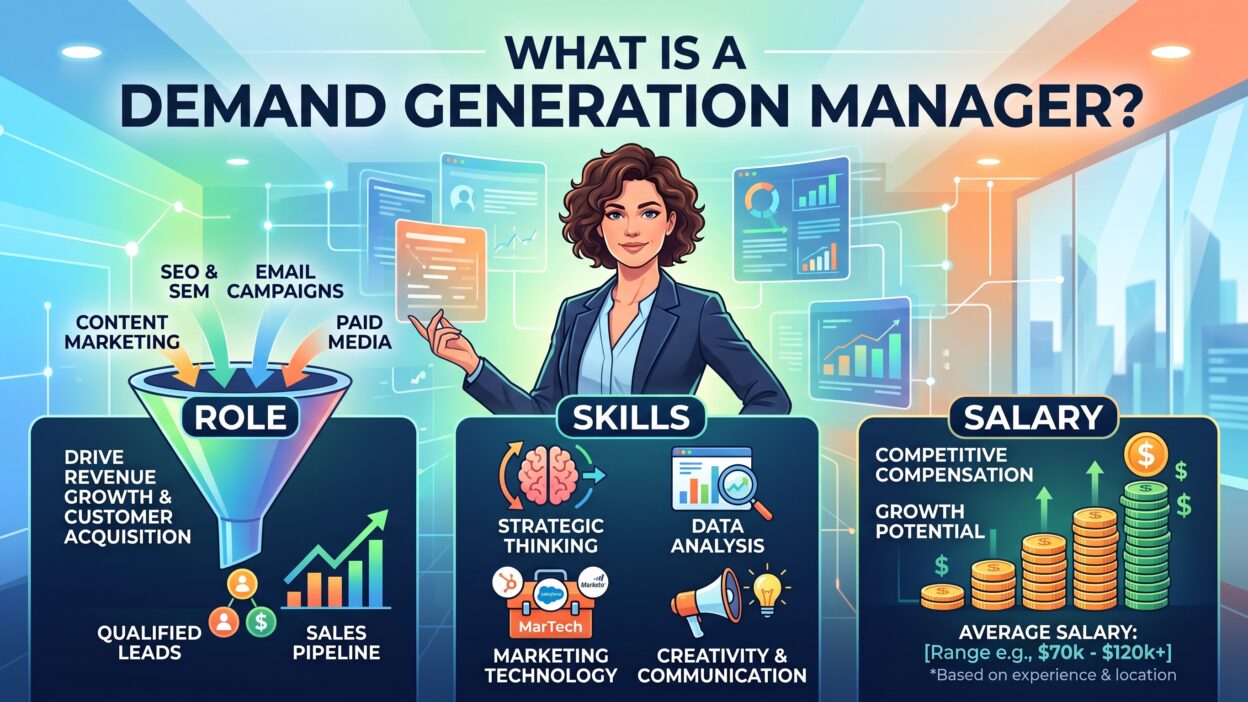
This role plans and runs campaigns that create interest in a product and turn that interest into qualified leads. This person owns the full funnel, from first touch to sales handoff. The goal is steady, predictable pipeline growth.
Many people confuse this role with a general marketing manager. The difference comes down to focus. A demand generation manager cares about one metric above all others: qualified pipeline. Every channel, every campaign, and every piece of content gets judged against this single goal.
How This Role Fits Inside a Marketing Team
This position usually reports to a VP of marketing or a CMO. They work closely with content teams, paid media specialists, and sales development reps. This role acts as the connector between these groups. Content creates the material. Paid media drives the traffic. This person ties both together into campaigns that convert.
Core Responsibilities of a Demand Generation Manager
The daily work in this role touches many parts of the funnel. The exact mix shifts by company size and industry, but a few core duties stay constant.
Campaign Planning and Execution
This person builds the campaign calendar for the quarter. They decide which channels to use for each offer. They set goals for each campaign before it launches, not after.
Managing Paid and Organic Channels
This role oversees paid search, paid social, and sometimes SEO efforts. This person does not need to write every ad or every blog post. They need to know which channel drives real pipeline and shift budget toward it.
Lead Scoring and Qualification
Not every lead deserves a sales call. This professional builds and refines the scoring model that separates hot leads from casual browsers. This model usually blends behavior data with firmographic details like company size and industry.
Sales and Marketing Alignment
Pipeline only matters if sales can close it. This person meets with sales leaders often. They review lead quality together. They adjust the qualification criteria based on real feedback from closed deals.
Reporting and Analytics
This role tracks cost per lead, cost per opportunity, and pipeline generated by channel. These numbers get reported up to leadership every month. Budget decisions for the next quarter often depend on this data.
Skills Every Demand Generation Manager Needs
Success in this role depends on a mix of technical skill and people skill. Neither one alone gets the job done well.
Data Analysis
This professional reads reports daily. They need comfort with spreadsheets and dashboards. They need to spot a declining trend before it becomes a real problem. Basic knowledge of statistics also helps when a campaign result looks unusual and needs a deeper look before anyone reacts to it.
Marketing Automation Platforms
Tools like HubSpot, Marketo, and Pardot run most demand generation programs today. Someone in this role should know how to build workflows inside these platforms, not just request changes from someone else.
Copywriting and Messaging
This role does not need to write every email, but strong instincts for messaging matter. They review ad copy and landing pages constantly. Weak messaging kills even the best targeted campaign.
Project Management
Campaigns involve many moving parts and many people. This person keeps timelines on track across design, content, and sales teams. Missed deadlines here often mean missed revenue targets. A simple project tracker or shared calendar often prevents most of these delays before they start.
Communication and Cross Team Influence
This role has no direct authority over sales, yet it depends on sales cooperation daily. It needs strong communication skills to keep both teams aligned around shared goals.
Tools a Demand Generation Manager Uses Every Day
This role relies on a stack of tools to run and measure the work. Marketing automation platforms handle email sequences and lead scoring. CRM systems like Salesforce track every lead from first click to closed deal.
Analytics platforms show which channels drive real pipeline, not just clicks. Ad platforms across Google, LinkedIn, and Meta handle paid distribution. This person does not need to be an expert in every tool, but they need enough fluency to question the data and spot problems early.
A Day in the Life of a Demand Generation Manager
Mornings usually start with a quick review of dashboards. This person checks overnight campaign performance and flags anything unusual before the rest of the team logs on. A sudden spike in cost per lead needs attention right away, not at the end of the week.
Midday often fills with meetings. A sync with the content team might cover an upcoming ebook launch. A separate call with sales leadership might dig into last month’s lead quality complaints. This role spends real time translating between teams that speak different languages about success.
Afternoons tend to shift toward hands-on campaign work. This could mean building a new email sequence, reviewing ad creative before it goes live, or adjusting targeting parameters on an underperforming campaign. Deep work time gets protected carefully, since the meeting load earlier in the day eats into available hours fast.
End of week usually brings reporting. Numbers get pulled together for a leadership update. Wins get highlighted. Underperforming channels get flagged with a plan to fix them. This weekly rhythm keeps the whole team honest about what actually works.
Demand Generation Manager Salary Expectations
Salary for this role varies by location, company size, and experience level. Entry level professionals moving into this position from a coordinator role often start in the range of 65,000 to 80,000 dollars a year in the United States.
Mid-level professionals in this position with three to five years of experience typically earn between 85,000 and 110,000 dollars annually. Senior professionals managing larger budgets and bigger teams can earn 120,000 dollars or more, especially at companies in competitive tech hubs.
Bonus structures often add another layer to total compensation. Many companies tie a portion of bonus pay to pipeline targets. A demand generation manager who consistently hits these targets can see meaningful upside beyond base salary. Some companies also offer stock options as part of the package, particularly at venture backed startups still building out their leadership team.
Factors That Push Salary Higher
Company size plays a large role in pay. Someone in this position at a large enterprise usually earns more than one at an early stage startup, though startup roles sometimes offer equity to offset lower cash pay. Industry matters too. SaaS and technology companies tend to pay more than traditional industries for this exact role.
Location remains a strong factor as well. Major markets like San Francisco, New York, and Boston pay above the national average. Remote roles have started to narrow this gap, but location still shifts the number in many job postings today. Cost of living adjustments also come into play at companies that adjust pay based on where an employee actually lives rather than a single national rate.
How to Become a Demand Generation Manager
Most people reach this role after a few years in adjacent marketing positions. A common path starts as a marketing coordinator or a content specialist. From there, professionals often move into a demand generation specialist role before earning the manager title.
Education and Background
A bachelor’s degree in marketing, business, or communications gives a strong foundation. That said, many successful professionals in this field come from unrelated degrees and build their skills through hands-on campaign work instead.
Certifications Worth Pursuing
Certifications from HubSpot, Google Ads, and Salesforce carry real weight with hiring managers. These programs prove hands-on knowledge of the tools this role uses every single day.
Building Relevant Experience
Hands-on campaign experience matters more than any single credential. Running even small paid campaigns, building basic email sequences, and tracking results teaches lessons no course can replace. A candidate for this role with a portfolio of real campaign results stands out immediately.
Demand Generation Manager vs Related Roles
Job titles in marketing overlap constantly, and this creates real confusion for job seekers and hiring managers alike.
Demand Generation Manager vs Growth Marketing Manager
A growth marketing manager often focuses on the full customer lifecycle, including retention and expansion revenue. A demand generation manager stays focused mainly on new pipeline creation. The two roles share tools but differ in scope.
Demand Generation Manager vs Marketing Manager
A general marketing manager may own brand work, events, and content strategy broadly. A demand generation manager narrows in specifically on lead generation and pipeline metrics. Smaller companies sometimes combine both roles into one title.
Demand Generation Manager vs Product Marketing Manager
Product marketing focuses on positioning and messaging for a specific product line. A demand generation manager takes that messaging and builds campaigns to distribute it at scale. These two roles work closely together but own different parts of the process.
Career Path for a Demand Generation Manager
Most professionals do not stay in this exact title forever. Someone who performs well in this role often moves into a director of demand generation position within a few years. From there, a path toward VP of marketing or CMO becomes realistic for many.
Some professionals shift laterally into revenue operations or marketing operations, especially if they enjoy the analytical side of the role more than the creative side. Others move toward growth marketing roles that expand beyond new customer acquisition alone.
The skills built in this role transfer well across industries. Someone working in software can often move into healthcare, financial services, or manufacturing marketing without starting over from scratch.
Team Structure Around a Demand Generation Manager
At smaller companies, this role often works alone or with just one coordinator for support. Every task, from campaign setup to reporting, runs through one person. This setup demands strong prioritization skills since nothing gets done unless this individual makes time for it.
Larger companies build full teams around this position. Someone in this role might oversee specialists focused on paid media, email marketing, and campaign operations separately. In this setup, the manager spends less time executing and more time setting strategy and coaching the team toward shared goals.
Reporting structure also shifts with company size. Early stage startups often have this role report directly to a founder or head of marketing. Larger organizations typically place this position under a director or VP within a broader marketing organization, with clearer layers of oversight and more defined budget authority.
Agency environments add another variation worth mentioning. Some professionals in this field work at a marketing agency instead of an in-house team, managing demand generation programs across several client accounts at once. This path demands faster context switching but exposes professionals to a wider range of industries and campaign types than a single in-house role usually allows.
Common Challenges a Demand Generation Manager Faces
This role comes with real pressure, and understanding these challenges helps set proper expectations. Budget constraints often force hard choices about which channels get funding and which get cut.
Sales and marketing misalignment creates friction in almost every organization at some point. This person spends real energy building trust with sales leaders and proving that marketing leads convert into real revenue.
Attribution also remains a constant struggle. Buyers touch many channels before they convert, and proving which campaign deserves credit is rarely simple. This role needs comfort with imperfect data and a willingness to make decisions without a perfect answer every time.
Tech stack complexity adds another layer of difficulty. Most companies run five or more marketing tools at once, and these tools rarely connect perfectly out of the box. This role often spends unplanned hours troubleshooting a broken integration or cleaning up duplicate records in the CRM. Nobody assigns this work formally, yet it falls to this role by default since broken data breaks every report downstream.
Talent retention on the team creates a quieter but real challenge too. Skilled specialists in paid media or marketing operations get recruited constantly by competitors. Keeping a strong team together while budgets stay flat tests the people management side of this job just as much as the strategic side.
Interview Questions for a Demand Generation Manager Role
Hiring managers tend to ask a consistent set of questions when screening for this position. Preparing answers to these questions helps candidates stand out clearly.
A common opening question asks a candidate to walk through a campaign they built from scratch. Interviewers want to hear about the goal, the channels chosen, and the actual results, not just a vague description of the work.
Another frequent question explores how a candidate handles disagreement with a sales leader over lead quality. This tests communication skill and comfort with conflict, both essential for long term success in this role.
Interviewers also like to probe technical comfort by asking a candidate to describe their experience inside a specific automation platform. Vague answers here often signal limited hands-on experience, while detailed answers about specific workflows built and problems solved carry far more weight.
Which Companies Hire for This Role
Startups hiring their first marketing employee often skip this exact title and combine it with broader marketing duties. Once a company reaches a stable product and a repeatable sales process, a dedicated hire for this position usually becomes the next logical step.
Mid-size companies represent the sweet spot for this career path. Budgets exist to run real campaigns across multiple channels, yet the team stays small enough that one person can own the full strategy without layers of approval slowing every decision.
Enterprise companies hire for this role differently. The position often narrows to a specific product line, region, or customer segment. A large company might employ several people with this exact title, each responsible for a slice of the overall pipeline goal rather than the whole funnel.
Nonprofit organizations and educational institutions have also started adopting this role in recent years. The core skills transfer well, though the metrics shift from sales pipeline toward donor acquisition or enrollment numbers.
FAQs About the Demand Generation Manager Role
What degree do I need to become a demand generation manager? Most employers prefer a marketing or business degree, but plenty of successful professionals come from other backgrounds. Hands-on campaign experience often matters more than the specific degree on a resume.
Is demand generation manager a stressful job? The role carries real pressure since pipeline targets get reviewed monthly by leadership. That said, professionals who enjoy data and campaign strategy often find the pressure motivating rather than draining.
How is a demand generation manager different from a sales development representative? A sales development representative works leads directly through calls and emails. This role builds the campaigns and systems that create those leads in the first place. The two positions work together but sit at different stages of the funnel.
What software should I learn to become a demand generation manager? HubSpot, Marketo, Salesforce, and Google Ads cover most of what this role touches daily. Familiarity with basic analytics tools like Google Analytics also helps candidates stand out.
Can a demand generation manager work remotely? Yes, many companies now hire fully remote professionals for this role. The job depends heavily on digital tools and virtual meetings, which makes remote work practical for most teams.
Does a demand generation manager need coding skills? No coding background is required for most roles. Basic comfort with HTML for email templates or landing pages helps, but it stays optional in the vast majority of job postings.
What certifications help most for this career path? HubSpot’s inbound marketing certification and Google Ads certification carry the most weight for entry and mid-level candidates. Salesforce certifications become more valuable as candidates move into senior positions that touch CRM administration directly.
How long does it take to get promoted from this role? Timelines vary widely, but many professionals move into a director level position within three to five years of strong performance. Consistent pipeline results and clear cross team communication speed up this timeline in most organizations.
Read More:-B2B Marketing Personalization: How Data Powers Buyer-Centric Campaigns
Conclusion
This role holds one of the most measurable positions in modern marketing. Pipeline numbers do not lie, and this role lives and dies by that data every quarter. The job blends strategy, analytics, and cross team communication into one demanding but rewarding career path.
If you enjoy campaigns, data, and the challenge of proving marketing’s direct impact on revenue, this role fits well. Build your skills in automation platforms, get comfortable with reporting, and seek out real campaign experience early. The path from coordinator to demand generation manager to marketing leader is well worn, and the demand for this skill set keeps growing across nearly every industry today.