Introduction
TL;DR Choosing between Adobe Experience Platform and Oracle feels like a big decision, and it is. Both platforms cost real money. Both demand months of setup. Both promise to transform how you understand and reach customers. This guide breaks down the Adobe Experience Platform vs Oracle debate in plain terms, so your team picks the right fit instead of the flashier pitch.
Table of Contents
What Adobe Experience Platform Actually Is
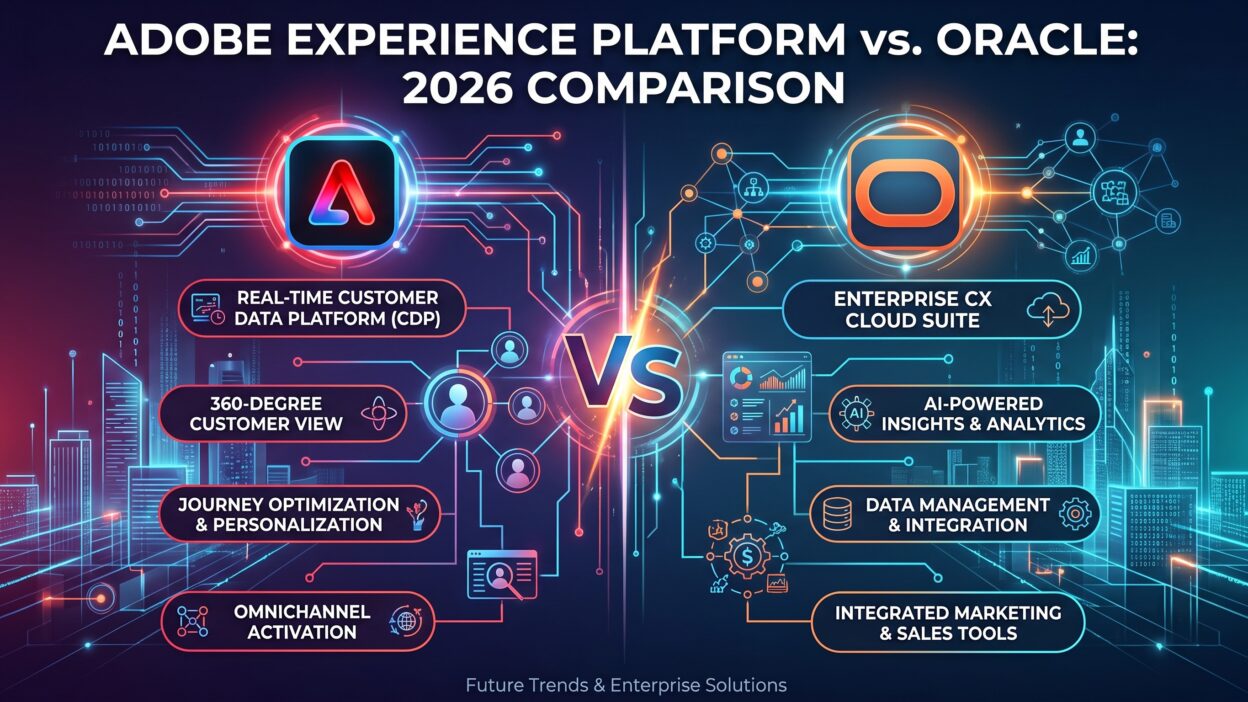
Adobe Experience Platform, often called AEP, works as a customer data platform. Adobe built it as the data foundation beneath its wider marketing suite. AEP pulls customer data from many systems, cleans it, and standardizes it into one unified profile per customer.
This unified data then feeds other Adobe tools. Real-Time CDP uses it to build audience segments instantly. Journey Optimizer uses it to trigger personalized messages across channels. Customer Journey Analytics uses it to reveal patterns across the entire customer lifecycle. Every piece connects back to this shared data layer.
The core idea behind AEP stays focused on one problem. Companies struggle to unify customer interactions across email, web, mobile, and in-store channels. AEP solves that specific problem well. Marketing teams choose Adobe Experience Platform when personalization and unified customer profiles matter most.
What Oracle Brings to the Table
Oracle takes a completely different approach compared to Adobe Experience Platform. Oracle built an entire enterprise operating system rather than a single marketing tool. Fusion Cloud Applications cover finance, supply chain, human resources, sales, service, and marketing under one shared data model.
Customer experience represents just one piece of this much larger puzzle. Oracle Unity serves as the customer data platform component within this ecosystem, handling profile unification and segmentation similar to what AEP offers. The difference lies in scope. Oracle connects customer data directly to financial systems, inventory data, and workforce data across the entire business.
Companies already running Oracle ERP or Oracle HCM often lean toward Oracle for customer data needs too. The appeal comes from having one vendor and one data model across the whole organization. This reduces integration headaches between separate systems.
Oracle’s Enterprise Wide Data Model
Oracle’s single data model connects departments that normally operate in silos. A finance team sees customer lifetime value data next to revenue forecasts. A supply chain team sees customer demand patterns next to inventory levels. This connection rarely exists in companies running separate point solutions from different vendors.
Adobe’s Marketing First Architecture
Adobe Experience Platform stays laser focused on marketing and customer experience use cases. It does not try to replace your ERP or your HR system. Instead, it connects to whatever systems you already run, then centers everything around delivering better customer experiences.
Adobe Experience Platform vs Oracle: Core Architecture Differences
The Adobe Experience Platform vs Oracle comparison really comes down to architecture philosophy. AEP treats customer experience as the center of the universe. Oracle treats customer experience as one department among many equal departments.
Neither approach works better in every situation. A retail brand focused purely on marketing personalization often prefers the Adobe Experience Platform vs Oracle setup that favors Adobe. A large manufacturing company already running Oracle across finance and operations often prefers extending that same Oracle ecosystem into customer data too.
This architectural difference shapes almost everything else in the Adobe Experience Platform vs Oracle decision, from implementation timelines to long term costs to team skill requirements.
Feature Comparison: Adobe Experience Platform vs Oracle
Data Unification Capabilities
Both platforms unify customer data from multiple sources into single profiles. Adobe Experience Platform builds this unification using flexible schemas that adapt to almost any data structure. Oracle builds unification through its standardized Fusion data model, which works smoothly if your other systems already run on Oracle.
Teams with messy, varied data sources across many vendors often find Adobe Experience Platform easier to configure. Teams with clean, standardized Oracle systems already in place often find Oracle faster to connect.
Personalization and Journey Orchestration
Adobe Experience Platform pairs naturally with Journey Optimizer for real time, cross channel personalization. Marketers build journeys visually and trigger messages based on live customer behavior. This strength shows clearly in the Adobe Experience Platform vs Oracle comparison for consumer facing brands running complex, multi touch campaigns.
Oracle offers journey orchestration through its marketing cloud tools too, though the depth of real time personalization historically trails behind Adobe in this specific area. Oracle compensates by connecting journeys directly to sales and service data from the same unified system.
Analytics and Reporting
Customer Journey Analytics gives Adobe users a detailed view across every touchpoint a customer has with the brand. Reports build quickly and update close to real time. Oracle Analytics Cloud offers similarly strong reporting, with an added advantage of blending customer data alongside financial and operational metrics in the same dashboards.
This analytics difference often decides the Adobe Experience Platform vs Oracle question for finance driven organizations that want customer metrics next to revenue and cost data in one place.
AI and Machine Learning Features
Adobe Experience Platform includes built in machine learning models for propensity scoring, next best action recommendations, and audience insights. These models come pre-built and tuned specifically for marketing use cases.
Oracle brings AI capabilities across its entire Fusion suite, including predictive models for sales forecasting, supply chain optimization, and customer churn prediction. The AI advantage in the Adobe Experience Platform vs Oracle debate depends entirely on whether you need marketing specific AI or enterprise wide AI spanning many departments.
Implementation Timeline and Complexity
Neither platform offers a quick setup. Adobe Experience Platform typically takes six to twelve months for a full enterprise rollout, depending on data source complexity and team readiness. Oracle implementations often stretch even longer when companies migrate multiple departments onto Fusion simultaneously.
Companies already running some Oracle products see faster customer data rollouts, since core data structures already exist. Companies starting fresh with either platform should budget significant time for data mapping, governance setup, and team training.
The Adobe Experience Platform vs Oracle implementation gap narrows when a company already commits fully to one vendor’s ecosystem. It widens significantly for companies trying to bolt either platform onto a messy, multi vendor tech stack without proper planning.
Pricing Considerations
Both Adobe Experience Platform and Oracle price based on usage, data volume, and selected modules. Neither vendor publishes simple, fixed pricing publicly. Enterprise deals typically involve custom quotes based on customer record volume, number of channels, and additional modules like Journey Optimizer or Oracle Unity.
The real cost difference in the Adobe Experience Platform vs Oracle comparison shows up in total cost of ownership rather than sticker price alone. Adobe costs often concentrate around marketing technology budgets. Oracle costs often spread across IT, finance, and operations budgets since the platform touches many departments.
Companies should request detailed quotes from both vendors based on actual data volume and use cases before committing. Marketing teams evaluating Adobe Experience Platform vs Oracle should also factor in the ongoing cost of specialized talent needed to manage each platform.
Which Teams Choose Adobe Experience Platform
Marketing heavy organizations gravitate toward Adobe Experience Platform. Retail brands running complex loyalty programs prefer it. Media companies personalizing content recommendations prefer it too. Any team whose primary challenge involves unifying customer touchpoints across channels finds AEP a natural fit.
Companies already using Adobe Analytics, Adobe Target, or Adobe Campaign also lean toward AEP since it integrates tightly with tools they already know. Switching costs stay lower when a company already lives inside the Adobe ecosystem.
Which Teams Choose Oracle
Large enterprises running Oracle ERP, Oracle HCM, or Oracle Supply Chain often extend into Oracle for customer data too. Manufacturing companies, financial institutions, and organizations with complex back office operations frequently choose Oracle for this reason.
Companies that value having customer data next to financial and operational data in one unified system pick Oracle over Adobe Experience Platform. The appeal centers on consolidation rather than specialized marketing depth.
Security and Compliance Differences
Data security matters heavily in any Adobe Experience Platform vs Oracle discussion, especially for companies handling sensitive customer records. Adobe Experience Platform includes built in privacy controls that let teams tag and manage consent data at the record level. This helps companies comply with regulations like GDPR and CCPA without building custom consent logic from scratch.
Oracle brings decades of enterprise security experience from its database and ERP background. Oracle’s compliance certifications span many industries, including finance and healthcare, where regulatory requirements run especially strict. Companies in heavily regulated sectors often trust Oracle’s long track record with sensitive data.
Both vendors invest heavily in encryption, access controls, and audit logging. The real difference shows up in how each platform handles consent management for marketing specifically. Adobe Experience Platform builds consent handling directly into its customer profile structure, making it simpler for marketing teams to respect opt outs across every channel automatically.
Integration Ecosystem and Third Party Connections
Most companies run dozens of marketing and business tools alongside their core customer data platform. Adobe Experience Platform connects easily with popular tools like Salesforce, Google Analytics, and various advertising platforms through pre-built connectors. This flexibility suits companies with a varied, multi vendor technology stack.
Oracle integrations work best within its own ecosystem first. Connecting Oracle Unity to non Oracle tools takes more custom development work compared to Adobe’s more open connector marketplace. Companies fully committed to Oracle across departments rarely notice this limitation, since most of their tools already come from Oracle itself.
This integration gap becomes a real factor in the Adobe Experience Platform vs Oracle decision for companies that value flexibility over consolidation. A marketing team juggling five different vendors typically finds Adobe easier to slot into an existing stack without a major overhaul.
Scalability for Growing Data Volumes
Enterprise customer data grows fast, and both platforms need to handle that growth without slowing down. Adobe Experience Platform runs on a cloud native architecture built specifically to scale with rising data volumes and real time processing demands. Large retail brands processing millions of daily events rely on this scalability during peak shopping seasons.
Oracle scales customer data alongside its entire Fusion suite, meaning growth in other departments like sales or supply chain does not create separate scaling challenges for customer data specifically. This unified scaling model appeals to large enterprises expecting growth across the whole business rather than just marketing.
Testing scalability claims directly matters more than trusting vendor promises. Requesting performance benchmarks based on your own expected data volume gives a clearer picture than generic marketing claims from either vendor.
Vendor Support and Long Term Roadmap
Ongoing support quality affects daily life with either platform long after implementation ends. Adobe offers tiered support plans, with premium tiers providing faster response times and dedicated account management. Community forums and Adobe’s own training resources also help teams troubleshoot common issues without waiting on formal support tickets.
Oracle provides similarly tiered support, with enterprise customers typically receiving a dedicated technical account manager. Oracle’s long enterprise history means extensive documentation exists for nearly every integration scenario, though some resources feel dated compared to Adobe’s more marketing focused materials.
Roadmap direction matters too when choosing between these platforms for the long term. Adobe continues investing heavily in AI driven personalization features within Experience Platform. Oracle continues expanding Fusion’s unified data model across new business functions. Reviewing each vendor’s public roadmap announcements helps teams predict which platform aligns better with future company needs.
Common Mistakes Companies Make During This Decision
Many teams pick a platform based purely on brand reputation instead of actual fit. A company might choose Adobe simply because competitors use it, without checking whether their own data complexity matches Adobe’s strengths. Others choose Oracle purely because IT already manages Oracle elsewhere, without checking whether marketing teams actually need Oracle’s specific customer data tools.
Skipping a proper data audit before choosing causes problems later too. Teams that map out data sources, volumes, and quality issues before deciding between Adobe Experience Platform vs Oracle avoid painful surprises during implementation. Teams that skip this step often discover mid project that their chosen platform needs expensive custom work to handle their actual data.
Underestimating training needs causes trouble as well. Both platforms require specialized skills that most marketing teams do not have on day one. Budgeting time and money for training prevents a expensive tool from sitting unused after launch.
Real World Use Cases Across Industries
Retail brands offer a clear example of the Adobe Experience Platform vs Oracle decision playing out in practice. A fashion retailer running seasonal campaigns across email, app, and web needs fast segment building and instant personalization. Adobe Experience Platform handles this scenario well, since Real-Time CDP builds audiences within minutes and Journey Optimizer triggers messages the moment a customer browses a new category.
Banking and financial services often lean the other direction. A regional bank managing checking accounts, loans, and investment products alongside customer service tickets benefits from Oracle’s unified data model. Customer data sits next to account balances and service history in one system, giving relationship managers a complete picture without switching between tools.
Manufacturing companies present another strong case for Oracle. A company managing complex supply chains alongside direct customer relationships needs inventory data connected to customer demand forecasts. Oracle’s single data model across supply chain and customer experience removes the need for constant data syncing between separate systems.
Media and entertainment companies frequently choose Adobe Experience Platform instead. Streaming services and publishers rely heavily on content recommendation engines and audience segmentation. Adobe’s machine learning models, built specifically for content personalization, give these companies a faster path to relevant recommendations than Oracle’s broader enterprise AI tools.
These examples show why the Adobe Experience Platform vs Oracle question rarely has a single answer across all industries. Your specific data needs and existing systems matter more than any general recommendation.
Migration Considerations for Companies Switching Platforms
Some companies already run one platform and consider switching to the other. Migrating away from legacy customer data systems into either Adobe Experience Platform or Oracle takes careful planning regardless of direction.
Companies moving from Oracle to Adobe Experience Platform usually do so when marketing personalization becomes the priority over broader enterprise consolidation. This migration requires mapping existing customer records into Adobe’s schema structure, which often takes several months depending on data complexity and historical record volume.
Companies moving from Adobe Experience Platform to Oracle typically make this shift when consolidating with existing Oracle ERP or HCM systems already in place. This direction often moves faster if Oracle systems already exist elsewhere in the company, since data models already share common structures.
Running both platforms in parallel during a transition period reduces risk significantly. Teams avoid a hard cutover that leaves marketing campaigns broken mid migration. A phased approach, moving one data source or one channel at a time, gives teams room to catch errors before they affect live customer experiences.
Budget extra time for team retraining during any migration. Staff comfortable with one platform’s interface and logic need real time to adjust to the other. Rushing this step causes avoidable mistakes during the first few months after switching.
Making the Final Decision
Start by listing your actual business problem clearly. If unifying marketing channels and personalizing customer experiences ranks as the top priority, Adobe Experience Platform usually fits better. If connecting customer data across finance, supply chain, and operations ranks higher, Oracle usually fits better.
Next, audit your existing technology stack. Companies deeply invested in Adobe tools save money and time choosing AEP. Companies deeply invested in Oracle Fusion save money and time extending into Oracle’s customer data tools.
Finally, request live demos and proof of concept trials from both vendors using your own sample data. Reading feature comparisons only tells part of the story. Watching each platform handle your actual customer records reveals real strengths and real gaps that marketing material never mentions.
Frequently Asked Questions
What is the main difference between Adobe Experience Platform and Oracle?
Adobe Experience Platform focuses specifically on marketing and customer experience data. Oracle spans an entire enterprise operating system covering finance, supply chain, HR, and customer experience together. The Adobe Experience Platform vs Oracle choice often comes down to how narrow or broad your data needs are.
Is Adobe Experience Platform more expensive than Oracle?
Pricing varies heavily based on data volume, modules, and company size for both vendors. Neither platform publishes fixed public pricing, so direct quotes remain the only reliable way to compare actual costs between the two.
Which platform works better for personalization?
Adobe Experience Platform generally leads in real time personalization and journey orchestration thanks to its tight integration with Journey Optimizer. Oracle offers personalization tools too, though its strength shows more in connecting customer data to broader enterprise metrics.
Can Oracle replace Adobe Experience Platform for marketing teams?
Oracle can handle marketing use cases through Oracle Unity and its marketing cloud tools. Teams needing deep, marketing specific personalization often still find Adobe Experience Platform stronger for that narrow purpose.
How long does an Adobe Experience Platform vs Oracle implementation typically take?
Both platforms usually require six months or longer for a full enterprise rollout. Companies already using other products from either vendor often see faster timelines since core data structures already exist.
Do small and mid size businesses need either platform?
Both platforms target large enterprises with complex data needs and sizable budgets. Smaller businesses often find simpler, cheaper customer data tools a better fit until their data complexity grows significantly.
Read More:-What Is the Right Structure for Your B2B Marketing Team?
Conclusion

The Adobe Experience Platform vs Oracle decision rarely has one universal right answer. Adobe Experience Platform wins for companies chasing deep marketing personalization and unified customer journeys across channels. Oracle wins for companies wanting customer data connected tightly to finance, supply chain, and broader enterprise operations.
Take time to map your actual business problem before choosing either vendor. Audit your existing systems honestly. Request real demos using your own data instead of trusting glossy sales decks alone. The right choice in the Adobe Experience Platform vs Oracle debate depends entirely on your company’s specific goals, existing technology, and long term data strategy.
Whichever platform you choose, commit to proper planning, realistic timelines, and dedicated training. Both Adobe Experience Platform and Oracle deliver strong results when implemented thoughtfully and poorly when rushed. Make the decision that fits your business today while leaving room for growth tomorrow.