Introduction
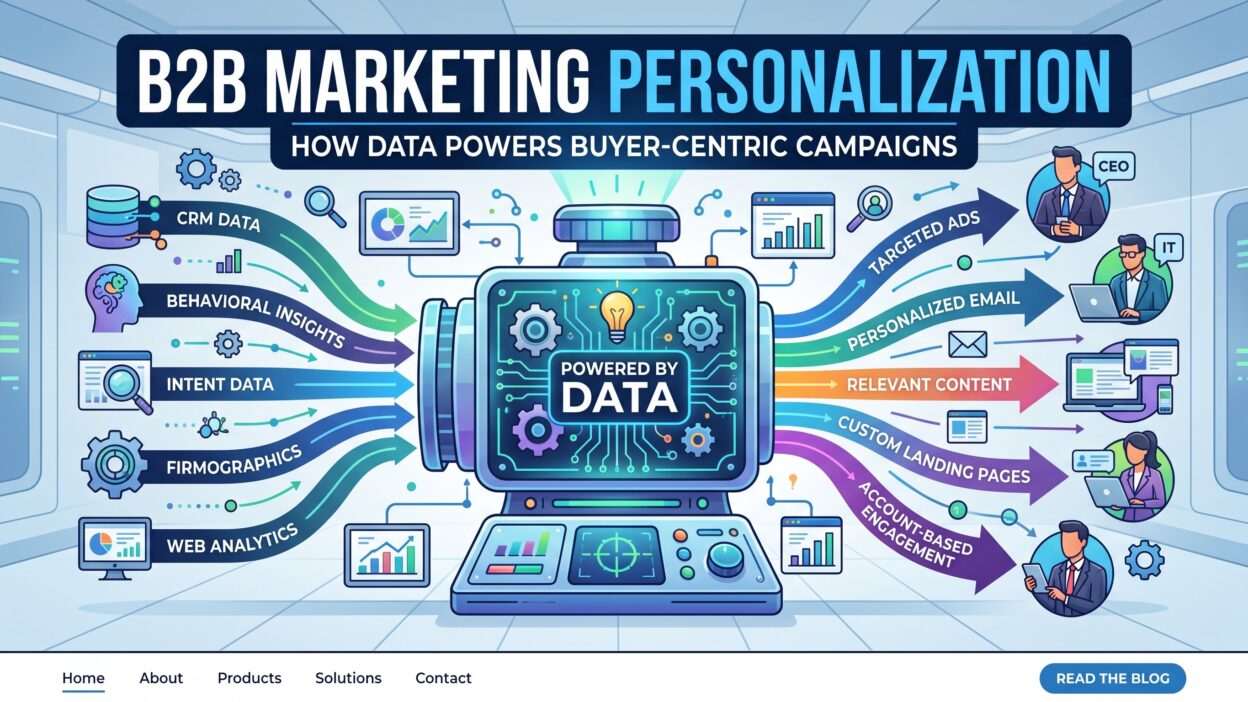
B2B buyers expect relevant content. They ignore generic pitches. This is why B2B marketing personalization matters now more than ever. Companies collect buyer data every day. They rarely use it well. B2B marketing personalization changes this pattern. It turns raw data into buyer-centric campaigns. Sales cycles shrink when messaging fits the buyer’s needs. Marketing teams build trust faster with tailored content. This blog explains how data fuels B2B marketing personalization. It covers frameworks, tools, challenges, and future trends. Marketers can use this guide to build campaigns buyers actually want. Every section includes practical steps. Readers can apply these ideas right away.
Table of Contents
What Is B2B Marketing Personalization?
B2B marketing personalization means tailoring content to a specific business buyer. It uses data like industry, company size, and role. Marketers segment audiences based on this data. Each segment receives messaging built for their situation. This differs from B2C personalization. B2B deals involve multiple decision makers. A single account often has five or more stakeholders. Each stakeholder cares about different outcomes. A CFO wants cost savings. A CTO wants integration ease. B2B marketing personalization addresses both needs within one account strategy. Marketers map content to each buyer role. They build separate messaging tracks for procurement, technical teams, and executives. This approach increases engagement across the buying committee. Static, one-size content fails in complex B2B sales. Personalized content speaks directly to pain points. It shows buyers the vendor understands their business. B2B marketing personalization builds credibility early in the funnel. It also shortens the evaluation phase. Buyers move faster when content answers their exact questions.
Why B2B Marketing Personalization Matters Today
Buyer Expectations Have Changed
Modern B2B buyers research independently. They compare vendors before any sales call. They expect content that matches their industry and stage. Generic emails get deleted fast. Buyers want proof a vendor understands their exact challenge. B2B marketing personalization delivers that proof through targeted content.
Data Drives Better Decisions
Marketing teams now hold massive data volumes. CRM systems track every click and download. Sales tools log every call and meeting. This data reveals buyer intent. Marketers use it to predict next steps. B2B marketing personalization turns these signals into action. A buyer downloading a pricing guide signals purchase readiness. A tailored follow-up email can convert that signal into a demo request.
Competitive Pressure Is Rising
Every competitor now claims to be “customer-first.” Buyers can spot empty claims quickly. Real personalization sets a brand apart. Companies using data-driven personalization report higher win rates. B2B marketing personalization gives sales teams stronger, warmer leads.
The Role of Data in B2B Marketing Personalization
Data forms the backbone of any personalization strategy. Without clean data, personalization fails.
First-Party Data
First-party data comes directly from the buyer. This includes website behavior, form submissions, and email engagement. It also includes CRM records and purchase history. First-party data is the most reliable source for B2B marketing personalization. Marketers own this data fully. They control how it gets collected and stored. This data reveals real buyer behavior, not assumptions.
Third-Party Data
Third-party data comes from external providers. It adds context like firmographics and technographics. Marketers use it to fill gaps in buyer profiles. A firmographic dataset might reveal company revenue or employee count. A technographic dataset shows which software a company already uses. Both details sharpen B2B marketing personalization efforts. They help marketers avoid pitching the wrong solution to the wrong company.
Intent Data
Intent data tracks buyer research activity across the web. It shows which topics a company researches right now. Marketers use intent signals to time outreach. A company researching “cloud migration tools” this week is a hot prospect. Intent data adds urgency to B2B marketing personalization campaigns. It helps sales teams reach buyers at the right moment.
Zero-Party Data
Zero-party data comes from direct buyer input. This includes survey answers and preference center selections. Buyers share this data willingly. It offers the clearest picture of buyer intent. Marketers should treat zero-party data as a top priority source.
Key Components of a Buyer-Centric Personalization Strategy
Account-Based Marketing
Account-based marketing, or ABM, targets specific high-value accounts. Marketing and sales teams align on target account lists. Each account gets custom content and messaging. B2B marketing personalization and ABM work together naturally. ABM narrows the focus. Personalization fills that focus with relevant content.
Dynamic Content
Dynamic content changes based on visitor data. A website might show different case studies to different industries. An email might change its subject line based on the recipient’s role. Dynamic content scales personalization across thousands of accounts. It removes manual work from the process.
Behavioral Triggers
Behavioral triggers launch actions based on buyer behavior. A pricing page visit can trigger a follow-up email. A webinar signup can trigger a nurture sequence. These triggers keep messaging timely. B2B marketing personalization becomes automatic and responsive with strong trigger logic in place.
Buyer Journey Mapping
Every buyer moves through distinct stages. Awareness, consideration, and decision each need different content. Marketers map content types to each stage. This mapping ensures buyers never receive content too early or too late.
Building a B2B Marketing Personalization Framework
Suggested word count: 420–460 words
Step 1 — Data Collection
Start by auditing existing data sources. List every tool that captures buyer data. Combine these sources into one central system. Clean and deduplicate records regularly.
Step 2 — Segmentation
Group buyers by shared traits. Common segments include industry, company size, and buyer role. Smaller segments allow sharper messaging. Broad segments dilute the impact of B2B marketing personalization.
Step 3 — Content Mapping
Match content assets to each segment. A case study for healthcare buyers should mention healthcare outcomes. A whitepaper for finance buyers should address compliance concerns. This step turns segmentation into actual personalized experiences.
Step 4 — Testing and Optimization
Test subject lines, content formats, and send times. Measure open rates, click rates, and conversion rates. Adjust the strategy based on real results. Continuous testing keeps B2B marketing personalization sharp and effective over time.
Tools and Technology for B2B Marketing Personalization
Suggested word count: 360–400 words
CRM Platforms
A CRM stores buyer history in one place. Sales and marketing teams both pull from this record. Clean CRM data supports every personalization effort downstream.
Marketing Automation Software
Automation platforms send targeted emails based on triggers. They score leads based on engagement level. They also manage nurture sequences without manual effort. These platforms make B2B marketing personalization possible at scale.
AI and Predictive Analytics
AI tools analyze buyer patterns across thousands of accounts. They predict which accounts will convert soon. They also recommend next-best content for each buyer. Predictive scoring saves sales teams significant time. It focuses effort on accounts most likely to close.
Content Personalization Engines
These tools swap website content based on visitor identity. A finance company sees finance-specific messaging. A retail company sees retail-specific messaging. This technology removes the need for separate landing pages per segment.
Common Challenges in B2B Marketing Personalization
Data Silos
Sales, marketing, and support often store data separately. This creates incomplete buyer profiles. Teams must integrate systems to get a full picture. Without integration, B2B marketing personalization stays shallow and inconsistent.
Privacy Regulations
Laws like GDPR and CCPA limit data usage. Marketers must collect consent properly. They must also give buyers control over their data. Compliance adds complexity but builds long-term trust.
Content Production Bandwidth
Personalization requires more content variations. Small teams struggle to produce enough assets. Templates and modular content blocks help scale production without added headcount.
Measuring True Impact
Attribution across long B2B sales cycles is difficult. Multiple touchpoints influence a single deal. Marketers need clear attribution models to prove personalization value.
Measuring Success: KPIs for Personalization Campaigns
Marketers should track engagement rate first. This shows whether content resonates with the segment. Conversion rate matters next. It reveals how many engaged buyers move forward. Pipeline velocity is another key metric. Personalized campaigns should shorten the sales cycle. Account penetration measures how many stakeholders within a target account engage with content. Deeper penetration signals stronger account-level interest. Customer lifetime value shows long-term impact. Personalized onboarding often increases retention and expansion revenue. Marketers should review these KPIs monthly. Regular review keeps B2B marketing personalization aligned with real business outcomes.
Best Practices for B2B Marketing Personalization
Start small before scaling. Pick one high-value segment first. Test messaging thoroughly before expanding. Keep data clean at every stage. Bad data leads to bad personalization. Align sales and marketing teams early. Both teams should agree on account priorities. Use consistent messaging across every channel. A buyer should see the same story on email, web, and in sales calls. Respect buyer privacy at all times. Transparency builds trust faster than aggressive targeting. Review performance data often. Small adjustments compound into major improvements over time. Treat personalization as an ongoing process, not a one-time project.
Future Trends in B2B Marketing Personalization
AI will play a bigger role in content creation. Predictive models will suggest content before a buyer even asks. Voice and conversational tools will personalize live interactions. Chatbots will pull from CRM data to answer specific buyer questions. Privacy-first personalization will grow as regulations tighten. Marketers will rely more on zero-party data collected through direct buyer input. Video personalization will expand too. Custom video messages for key accounts will become more common. B2B marketing personalization will keep shifting toward real-time, one-to-one experiences within the next few years.
Frequently Asked Questions
What is B2B marketing personalization? B2B marketing personalization means tailoring marketing content to specific business buyers using data like role, industry, and behavior.
How does B2B marketing personalization differ from B2C personalization? B2B personalization targets buying committees with multiple stakeholders. B2C personalization usually targets one individual consumer.
What data sources support B2B marketing personalization? First-party data, third-party firmographic data, intent data, and zero-party survey data all support strong personalization strategies.
Which tools help scale B2B marketing personalization? CRM platforms, marketing automation software, AI predictive tools, and content personalization engines all support scaling.
How do marketers measure B2B marketing personalization success? Marketers track engagement rate, conversion rate, pipeline velocity, and account penetration to measure real impact.
Is B2B marketing personalization worth the investment for small teams? Yes. Small teams can start with one segment and one content track. This limited approach still improves engagement without heavy resource demands.
Read More:-First-Party vs Third-Party Data: What B2B Teams Need to Know
Conclusion

B2B marketing personalization is no longer optional. Buyers expect relevant, timely content at every stage. Data makes this possible. First-party signals, intent data, and firmographic details all shape stronger campaigns. Marketers who build clear frameworks see faster sales cycles and higher conversion rates. Tools like CRM systems and AI platforms make personalization scalable. Challenges like data silos and privacy rules still exist. Teams that address these challenges early gain a real competitive edge. B2B marketing personalization rewards patience and consistent testing. Small, focused efforts often outperform broad, generic campaigns. Marketers should start with one segment, measure results, and expand gradually. Data-driven, buyer-centric campaigns will keep shaping B2B marketing success for years ahead.