Introduction
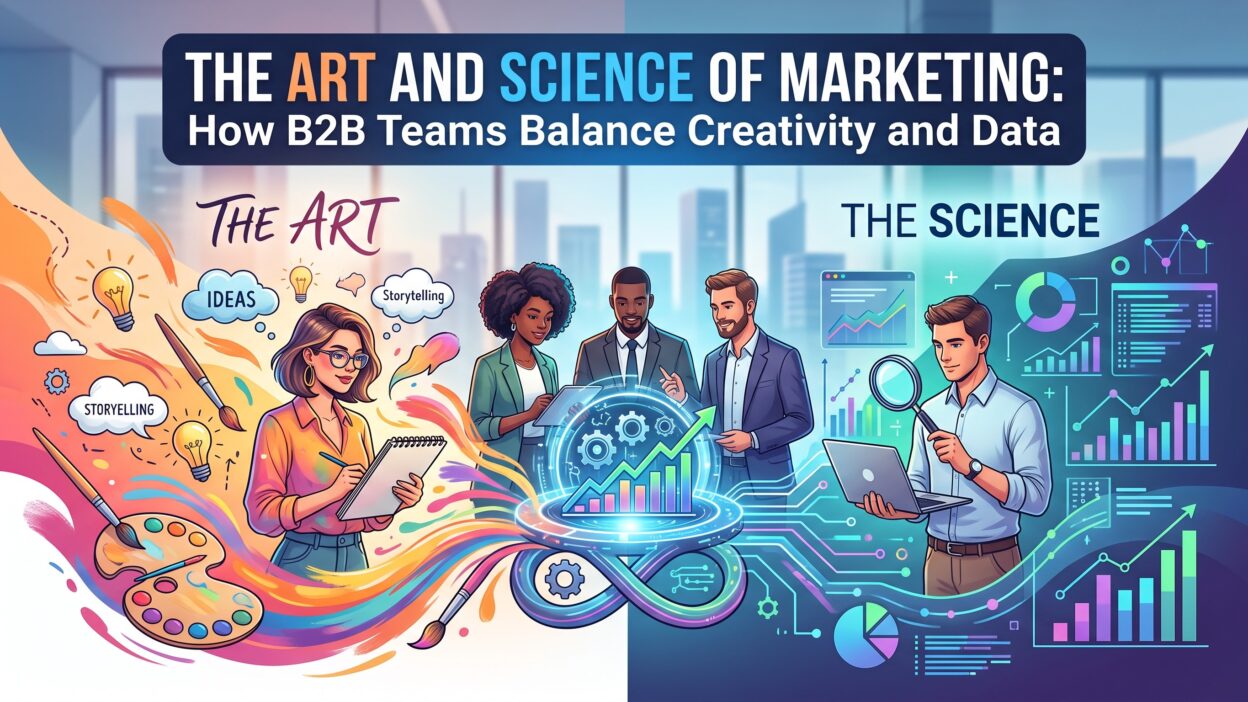
TL;DR Marketing teams face a constant pull between two forces. One side wants bold ideas. The other side wants proof those ideas work. This tension defines the art and science of marketing. Creative teams build stories that grab attention. Data teams measure whether those stories drive results. B2B companies need both sides working together. A campaign built on creativity alone can miss the target buyer. A campaign built on data alone can feel flat and forgettable. The art and science of marketing asks teams to blend instinct with evidence. This blog explains how B2B marketers strike that balance. It covers the creative side, the data side, and the frameworks that connect them. Readers get practical steps for building campaigns that feel human and perform well. Every section includes real approaches teams can use right away.
Table of Contents
What Is the Art and Science of Marketing?
The art and science of marketing describes two disciplines working as one. The art side covers storytelling, design, and brand voice. The science side covers data, testing, and measurement. Neither side works alone in modern B2B marketing. A brilliant ad with no data behind it wastes budget. A data-perfect campaign with weak creative fails to connect emotionally. B2B buyers make rational decisions, but emotion still shapes trust. A buyer picks a vendor that feels credible and reliable. Creative work builds that feeling. Data confirms the feeling reaches the right audience. The art and science of marketing works best when both teams share goals early. Creative teams need data insights before they start designing. Data teams need creative context before they judge results. This partnership shapes stronger campaigns from the first meeting. Companies that treat these as separate departments lose alignment. Companies that blend them build campaigns with both heart and proof.
Why B2B Marketing Needs Both Art and Science
Buyers Respond to Emotion First
B2B buyers research with logic. They still decide with feeling. A well-told brand story builds trust before any spec sheet gets read. The art and science of marketing recognizes this human pattern. Creative work opens the door. Data work proves the door leads somewhere valuable.
Budgets Demand Proof
Marketing budgets face constant scrutiny. Leadership wants clear numbers behind every campaign. Data answers that demand directly. It shows which creative ideas produced real pipeline. Without data, creative teams struggle to defend their budget requests.
Competition Rewards Differentiation
Every competitor now uses similar data tools. Creative execution becomes the real differentiator. A brand with strong data and forgettable creative blends into the noise. The art and science of marketing gives teams an edge competitors cannot easily copy.
The Creative Side of B2B Marketing
Storytelling and Brand Voice
Every brand needs a clear voice. That voice should stay consistent across every channel. Storytelling turns a product into something buyers remember. A strong story explains the problem, the stakes, and the solution. B2B buyers remember stories longer than they remember statistics.
Visual Design and Identity
Design shapes first impressions instantly. Clean layouts and strong visuals build credibility fast. Buyers judge a company’s quality partly through its design choices. Consistent visual identity across web, email, and print builds recognition over time.
Emotional Resonance in B2B Campaigns
B2B marketing often skips emotion in favor of specs and features. This is a mistake. Buyers still feel frustration, ambition, and pressure at work. Campaigns that speak to those feelings connect faster. The art and science of marketing pushes teams to write with empathy, not just accuracy.
Original Ideas Over Templates
Templated campaigns feel safe but forgettable. Original ideas take more effort but earn more attention. Creative teams should protect time for bold concepts, even within tight deadlines.
The Data Side of B2B Marketing
Customer and Market Research
Good campaigns start with research, not assumptions. Surveys, interviews, and market reports reveal real buyer pain points. This research grounds creative work in truth rather than guesswork.
Performance Metrics and Analytics
Metrics show what actually works. Click-through rates reveal which messages grab attention. Conversion rates reveal which messages drive action. Marketers should review these numbers often, not just at campaign end.
A/B Testing and Experimentation
Testing removes guesswork from creative decisions. Two headlines can run side by side. The winner gets scaled. This process protects budget from underperforming ideas. The art and science of marketing treats every campaign as a chance to learn something new.
Predictive Analytics and AI Tools
AI tools now forecast which content will perform best. They analyze past campaign data across thousands of data points. Marketers use these forecasts to guide creative direction before launch. This reduces wasted production time on ideas unlikely to succeed.
Building a Framework That Balances Both Sides
Start With Shared Goals
Creative and data teams should agree on campaign goals before any work begins. Shared goals prevent conflict later in the process.
Research Before Creating
Data teams should share audience insights early. Creative teams use these insights to shape messaging and design direction. This step keeps the art and science of marketing connected from day one.
Build, Test, and Refine
Creative teams produce initial concepts. Data teams test these concepts on small audience segments. Results guide refinements before full launch. This loop keeps quality high without slowing momentum too much.
Measure and Learn
After launch, both teams review results together. Wins get documented for future campaigns. Losses get analyzed honestly. This shared review process strengthens every future project.
Tools That Support the Art and Science of Marketing
Creative Collaboration Platforms
Tools like design and content platforms help creative teams share drafts quickly. These platforms keep feedback organized and visible to the whole team.
Analytics and Attribution Software
Attribution tools track which campaigns and channels drive real pipeline. Marketers use this data to justify creative investment with confidence.
AI-Powered Content Assistants
AI writing and design tools speed up production. They still need human judgment to keep brand voice authentic. Teams should use AI as a starting point, not a final decision maker.
Customer Data Platforms
These platforms unify buyer data from multiple sources. Marketers get a single view of each account. This unified view supports smarter creative decisions across every channel.
Common Challenges in Balancing Creativity and Data
Departmental Silos
Creative and data teams often work in separate systems. This creates disconnected campaigns. Regular joint meetings help close this gap.
Over-Reliance on Data
Some teams chase metrics at the expense of bold ideas. This produces safe, forgettable campaigns. Leaders should protect space for creative risk within data-informed limits.
Under-Valuing Creative Work
Other teams treat creative work as decoration rather than strategy. This weakens brand differentiation over time. Leadership should treat creative direction as a core business decision, not an afterthought.
Slow Feedback Loops
Long approval cycles slow testing and learning. Faster feedback loops help both teams adjust quickly and improve results sooner.
Measuring Success: KPIs for Balanced Campaigns
Brand recall shows whether creative work sticks with buyers. Engagement rate shows whether content earns attention. Conversion rate shows whether that attention turns into action. Pipeline contribution shows whether campaigns support real revenue goals. Marketers should track both emotional and functional metrics together. Emotional metrics include brand sentiment and recall. Functional metrics include click-through rate and cost per lead. The art and science of marketing needs both metric types to tell the full story. A campaign with high engagement but low conversion still needs creative or targeting changes. A campaign with strong conversion but weak recall may need stronger storytelling.
Best Practices for Balancing Art and Science in Marketing
Bring creative and data teams together from project start. Share research before any concepts get built. Test ideas early instead of waiting until launch. Protect time for bold, original creative concepts. Use data to guide decisions, not to kill every risk. Document lessons after every campaign. Build a shared vocabulary between creative and data teams. Celebrate wins that combine both strong storytelling and strong performance. Treat every campaign as a chance to sharpen this balance further. The art and science of marketing improves with consistent practice, not a single perfect campaign.
Future Trends Shaping the Art and Science of Marketing
AI will handle more routine data analysis going forward. This will free creative teams to focus on bigger ideas. Personalized storytelling will grow as data quality improves across platforms. Video and interactive content will demand stronger creative skill alongside data targeting. Real-time testing will speed up the creative refinement process significantly. Brand authenticity will matter more as buyers grow skeptical of generic content. The art and science of marketing will keep evolving as new tools reshape both sides of the discipline.
Frequently Asked Questions
What does the art and science of marketing mean? It describes the balance between creative storytelling and data-driven decision making within a marketing strategy.
Why do B2B teams need both creativity and data? Creativity builds emotional connection with buyers. Data proves which creative ideas actually drive results and revenue.
How do teams combine creative work with data insights? Teams share research early, test creative concepts on small audiences, and refine based on real performance data.
What tools support the art and science of marketing? Creative collaboration platforms, analytics software, AI content assistants, and customer data platforms all support this balance.
Can small marketing teams apply this balance effectively? Yes. Small teams can start with simple research and basic A/B testing before scaling into more advanced tools.
How do marketers measure whether the balance is working? Marketers track both emotional metrics like brand recall and functional metrics like conversion rate together.
Read More:-Chatbot Metrics: The KPIs That Actually Drive Pipeline
Conclusion
The art and science of marketing shapes every strong B2B campaign today. Creative work builds trust and emotional connection. Data work proves impact and guides smarter decisions. Neither side succeeds fully without the other. B2B teams that unite these disciplines see stronger engagement and better pipeline results. Shared goals, early research, and consistent testing keep both sides aligned throughout every project. Tools like analytics platforms and AI assistants support this balance without replacing human judgment. Teams should protect space for bold ideas while still respecting what the data shows. The art and science of marketing rewards teams willing to blend instinct with evidence. Marketers who master this balance build campaigns buyers remember and trust for years ahead.