Introduction
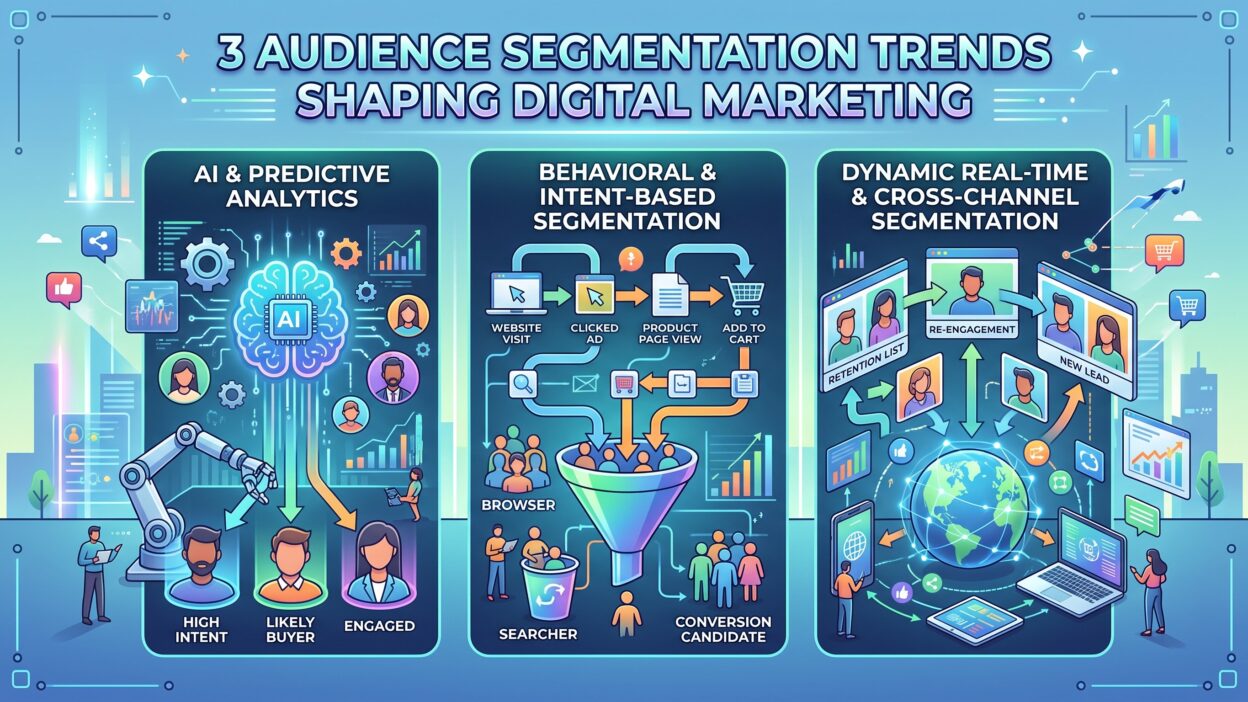
TL;DR Digital marketing keeps changing fast. Buyer behavior shifts every year. Audience segmentation helps marketers keep pace with these changes. It groups people by shared traits instead of treating every visitor the same way. Old segmentation methods relied on basic demographics. New methods rely on behavior, intent, and real-time signals. This shift changes how marketers build campaigns. It changes how they target ads and write content. This blog covers three major audience segmentation trends shaping digital marketing today. Each trend brings new tools and new challenges. Marketers who understand these trends build sharper campaigns. They also waste less budget on the wrong audience. This guide breaks down each trend in detail. It also covers practical steps for applying these trends right away.
Table of Contents
What Is Audience Segmentation?
Audience segmentation means dividing a broader market into smaller groups. Each group shares specific traits like age, interest, or buying behavior. Marketers use these groups to build targeted campaigns. A single message rarely works for an entire audience. Different groups respond to different offers and different tones. Audience segmentation solves this problem directly. It lets marketers speak to each group’s specific needs. Traditional segmentation used simple categories like age and location. Modern audience segmentation goes much deeper. It uses browsing behavior, purchase history, and even emotional triggers. This deeper approach improves engagement significantly. Buyers respond better to messages that match their actual situation. Audience segmentation also improves budget efficiency. Marketers stop spending on audiences unlikely to convert. Instead, they focus spend on segments showing real interest. This shift makes every campaign dollar work harder.
Why Audience Segmentation Matters More Than Ever
Buyers Expect Relevant Messaging
Consumers see hundreds of ads every day. Generic messages get ignored fast. Audience segmentation helps brands cut through this noise. It ensures each message reaches people likely to care about it.
Privacy Rules Are Changing Data Use
New privacy laws limit how marketers collect data. Cookies are disappearing across major browsers. Audience segmentation must adapt to these limits. Marketers now rely more on first-party data and direct signals from users.
Competition for Attention Keeps Rising
Every brand competes for the same limited attention span. Sharp audience segmentation gives marketers an edge. It helps brands stand out with messages that feel personal instead of generic.
Trend One — Behavioral and Intent-Based Segmentation
Moving Beyond Demographics
Age and location alone no longer predict buying behavior well. Marketers now group audiences by actions instead. This includes page visits, search queries, and content downloads. Behavioral audience segmentation reveals what a person actually wants right now.
Real-Time Intent Signals
Intent data tracks research activity across the web. A person searching for “best CRM software” shows clear buying intent. Marketers use this signal to trigger targeted ads immediately. This approach keeps audience segmentation current instead of relying on old, static profiles.
Predictive Behavior Modeling
AI tools now predict future behavior based on past actions. A model might flag a user likely to abandon a cart soon. Marketers can then adjust messaging before the user leaves. This predictive layer makes audience segmentation more proactive than reactive.
Application Across Channels
Behavioral segmentation applies across email, paid ads, and website personalization. A returning visitor sees different content than a first-time visitor. This consistency strengthens the entire customer journey.
Trend Two — Privacy-First and Zero-Party Data Segmentation
The Decline of Third-Party Cookies
Browsers keep phasing out third-party cookies. This forces marketers to rethink how they collect audience data. Audience segmentation built entirely on cookies will soon stop working reliably.
Rise of Zero-Party Data
Zero-party data comes directly from users through surveys, quizzes, and preference centers. Users share this data willingly. It offers highly accurate signals for audience segmentation. Marketers trust this data more because users provide it with full awareness.
First-Party Data Strategies
Brands now invest heavily in owned data channels. Email lists, loyalty programs, and app logins all generate first-party data. This data supports audience segmentation without relying on external tracking tools.
Building Trust Through Transparency
Users share data more willingly when brands explain how it gets used. Clear privacy policies and honest data requests improve response rates. This transparency strengthens long-term audience segmentation efforts, since users keep engaging over time.
Trend Three — AI-Powered Micro-Segmentation
From Broad Groups to Micro-Audiences
Traditional segmentation created a handful of large groups. AI now allows much smaller, precise audience segmentation. Micro-segments might include only a few hundred people sharing very specific behavior patterns.
Dynamic Segments That Update Automatically
AI-powered platforms update segments in real time. A user’s segment can change the moment their behavior shifts. This keeps audience segmentation accurate without manual rework from the marketing team.
Personalized Content at Scale
Micro-segmentation supports highly personalized content without added manual effort. A platform can generate different email variations for dozens of micro-segments automatically. This scale was impossible with manual audience segmentation methods in the past.
Balancing Precision With Simplicity
Too many micro-segments can overwhelm a small marketing team. Leaders should balance precision with practical capacity. Start with a few key micro-segments before expanding further.
How to Apply These Audience Segmentation Trends
Step 1 — Audit Current Data Sources
List every tool collecting audience data today. Identify gaps in behavioral or zero-party data collection.
Step 2 — Prioritize First-Party Data Collection
Build stronger email capture and preference forms. Ask users directly about their needs and interests.
Step 3 — Test AI Segmentation Tools
Start with one AI-powered platform for a single campaign. Measure results before expanding across all channels.
Step 4 — Refine Segments Regularly
Review segment performance every month. Remove segments that show weak engagement. Expand segments that show strong results. This ongoing refinement keeps audience segmentation sharp and effective over time.
Tools That Support Modern Audience Segmentation
Customer data platforms unify behavior across every channel into one profile. Marketing automation tools trigger campaigns based on segment behavior automatically. AI analytics platforms build predictive models from historical data patterns. Survey and preference tools capture zero-party data directly from users. Each tool plays a different role in building strong audience segmentation. Marketers should choose tools that match their team size and data maturity level.
Common Challenges With Audience Segmentation
Data quality remains a constant challenge. Incomplete or outdated data weakens every segment built from it. Privacy compliance adds complexity to data collection processes. Marketers must balance personalization with respect for user privacy. Team bandwidth limits how many segments a company can manage well. Too many segments without enough resources create confusion instead of clarity. Cross-channel consistency also proves difficult. A user might see different messaging on email versus social ads. Strong audience segmentation requires coordination across every marketing channel to avoid this mismatch.
Measuring the Impact of Audience Segmentation
Engagement rate shows whether segmented content resonates with each group. Conversion rate reveals whether that engagement leads to real action. Customer acquisition cost often drops when audience segmentation improves targeting accuracy. Retention rate rises when segmented messaging matches ongoing customer needs. Marketers should track these metrics by segment, not just as one overall average. This detailed view reveals which segments need adjustment and which segments perform well already.
Best Practices for Applying Audience Segmentation Trends
Start with clear business goals before building any segment. Keep segments simple at first, then add complexity gradually. Respect user privacy at every stage of data collection. Test messaging across segments before scaling any campaign. Review segment performance on a regular schedule. Invest in tools that match current team capacity. Train the team on new AI segmentation tools before full rollout. Treat audience segmentation as an ongoing practice, not a one-time setup project.
The Future of Audience Segmentation
AI will keep making audience segmentation more precise and more automatic. Privacy-first data collection will become the standard across every industry. Zero-party data will grow as users demand more control over their information. Real-time segmentation will replace static, quarterly audience updates in most companies. Marketers who invest early in these trends will build stronger customer relationships. Audience segmentation will keep shifting toward speed, precision, and respect for user privacy in the years ahead.
Frequently Asked Questions
What is audience segmentation in digital marketing? Audience segmentation means dividing a broader market into smaller groups based on shared traits like behavior, interest, or demographics.
What are the main audience segmentation trends today? The three biggest trends include behavioral and intent-based segmentation, privacy-first zero-party data segmentation, and AI-powered micro-segmentation.
Why is audience segmentation becoming more important? Buyers expect relevant messaging, privacy laws limit tracking data, and competition for attention keeps rising across every channel.
How does AI improve audience segmentation? AI builds smaller, more precise micro-segments and updates them automatically as user behavior changes in real time.
What data sources support strong audience segmentation? First-party data, zero-party survey data, and behavioral signals like page visits and search activity all support strong segmentation.
How often should marketers review their audience segments? Marketers should review segment performance monthly and adjust segments based on engagement and conversion data.
Read More:-45 Top YouTube Channels for Marketing Professionals
Conclusion

Audience segmentation keeps evolving alongside buyer behavior and privacy expectations. Behavioral and intent-based segmentation helps marketers reach buyers at the right moment. Privacy-first and zero-party data segmentation protects trust while still delivering personalization. AI-powered micro-segmentation adds precision that manual methods could never match. Together, these three trends reshape how digital marketers build and target campaigns. Teams that adopt these approaches early see stronger engagement and better budget efficiency. Audience segmentation works best as an ongoing practice, not a one-time project. Regular review and honest data collection keep every segment accurate and useful. Marketers who invest in these trends now build stronger, more trusted relationships with their audience for years ahead.