Introduction
TL;DR Every marketing team eventually asks the same question. How do we target our best accounts without rebuilding a strategy from scratch every quarter? An account-based marketing template answers this question directly. It gives your team a repeatable structure for every high value account you pursue.
This guide walks through what belongs in a strong account-based marketing template. You will see the core components, the different template types, and a clear process to build your own. FAQs and a full conclusion sit at the end for quick reference.
Table of Contents
What Is an Account-Based Marketing Template?
An account-based marketing template is a reusable framework that guides how your team plans, launches, and measures campaigns aimed at specific target accounts. Instead of building a new strategy for every account, your team fills in the same structure each time. This saves real time and keeps quality consistent across every campaign.
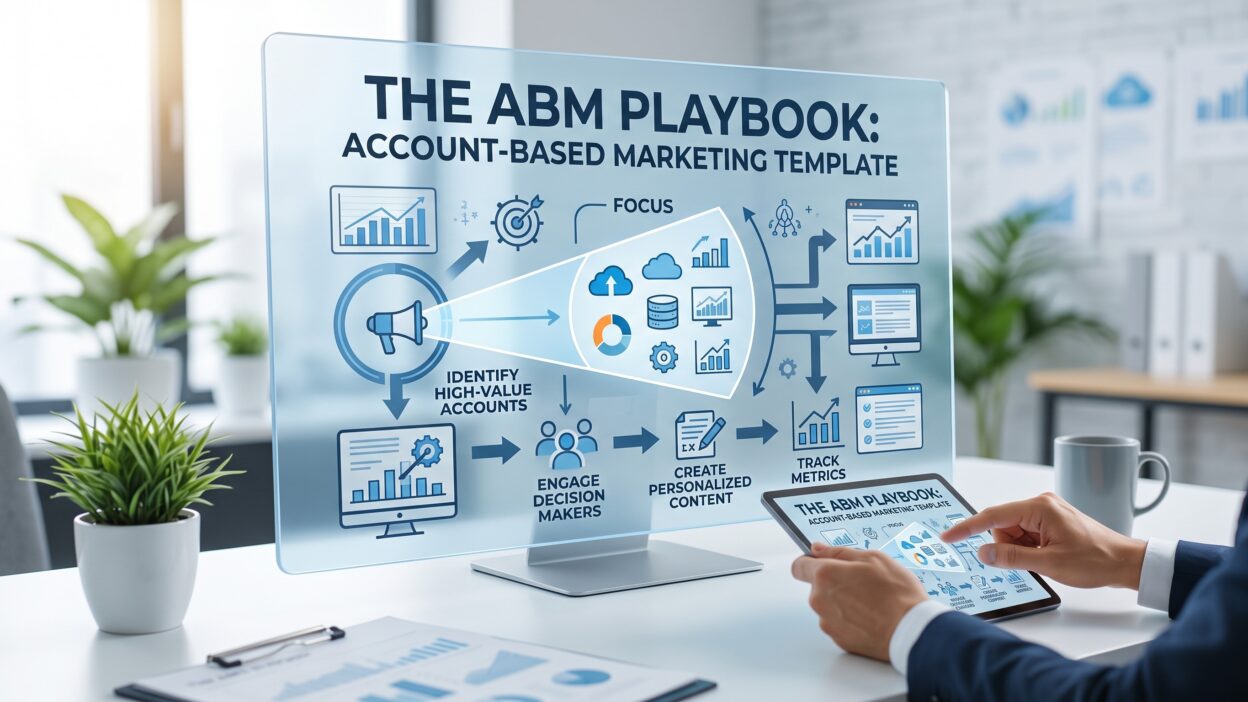
The template usually includes sections for account research, buying committee details, messaging by persona, channel selection, and success metrics. Marketing and sales teams both use this same document, which keeps everyone working from one shared plan instead of separate spreadsheets.
Most templates also include a section for account tiering. Not every account deserves the same level of investment, and a clear tier assignment early on prevents your team from spending enterprise-level effort on a smaller opportunity. This tiering decision shapes almost every other section that follows in the template.
Why Teams Search for a Ready Made Template
Building an ABM program from zero takes real effort. Many teams search for an account-based marketing template because they want a proven starting point rather than a blank page. A solid template shortens the learning curve and reduces the guesswork involved in launching a first campaign.
Marketing leaders also value a template because it makes onboarding new team members easier. A new hire can review the structure and understand the full ABM process within a day or two, rather than learning through months of trial and error on live accounts.
Core Components of an Account-Based Marketing Template
A strong account-based marketing template covers five core areas. Each one plays a distinct role in the overall campaign, and skipping any single piece tends to weaken the whole program later on.
Target Account List
This section names the specific companies your team wants to pursue. The list usually comes from a mix of firmographic data, intent signals, and input from sales reps who know which accounts fit best.
Buying Committee Map
B2B deals rarely involve one decision maker. This part of the template lists every stakeholder involved in the purchase, from economic buyers to technical evaluators. Each stakeholder gets a note about their priorities and concerns.
Messaging Framework
Different stakeholders care about different things. A CFO cares about cost and risk. A department head cares about team efficiency. This section of the template maps specific messages to each persona inside the target account. Strong messaging here often draws directly from case studies or reference customers who match the target account’s industry and size.
Channel Plan
This part outlines exactly where your campaign will reach each stakeholder. Options include paid ads, direct mail, personalized email, and sales outreach. The channel plan also sets timing so every touch feels coordinated rather than random. A well sequenced plan often opens with broader awareness content and narrows toward direct outreach as engagement signals grow stronger.
Success Metrics
Every account-based marketing template needs clear metrics tied to business outcomes. Common metrics include account engagement score, meetings booked, and pipeline generated per account. Vague goals lead to vague results, so this section forces clarity from the start. Setting these numbers before launch also gives your team an honest way to judge the campaign later, rather than shifting the goalposts after results come in.
Why Your Team Needs an Account-Based Marketing Template
Teams that skip this structure often waste time rebuilding basic campaign logic for every new account. A clear template fixes this problem in a few key ways.
Consistency Across Accounts
Without a shared structure, different team members approach each account differently. One rep might skip the buying committee research entirely. Another might launch ads without a clear message. A template keeps every account campaign built the same careful way.
Faster Campaign Launch
Speed matters in ABM just as much as precision. A ready template cuts planning time significantly since your team fills in known fields instead of starting from a blank document. Campaigns launch faster, and sales gets air cover sooner.
Better Sales Alignment
Sales teams trust a process more when they can see exactly how a campaign gets built. Sharing the same account-based marketing template with sales creates transparency. Reps know which accounts are targeted, what messages are running, and when to expect meetings.
Getting Buy-In for Your Account-Based Marketing Template
Even a well designed template fails without support from leadership and other teams. A few steps make this buy-in easier to earn.
Show a Small Pilot First
Rather than rolling out the template across your entire account list, run a pilot with five to ten accounts first. Real results from a small test build far more confidence than a theoretical plan alone. Share early wins with leadership before asking for a bigger budget commitment. A pilot also surfaces practical issues with the template itself, like a field that never gets filled in or a step that takes far longer than expected.
Involve Sales From Day One
Sales reps who feel involved early tend to support the program more actively later. Ask reps to help build the target account list and review the buying committee maps. This early involvement also improves data quality, since reps often know details that marketing data misses.
Set Realistic Timelines
ABM campaigns take longer to show results than broad demand generation efforts. Set expectations early that meaningful pipeline impact might take one or two full quarters to appear. Rushing this timeline creates pressure to declare success too early, based on shallow metrics like impressions rather than real pipeline movement.
Types of Account-Based Marketing Templates
Not every account gets the same level of attention. Most ABM programs split accounts into three tiers, each with its own template style.
One to One Template
This template applies to your highest value accounts, often fewer than twenty companies total. Every detail gets custom built, from personalized landing pages to direct mail gifts tied to the account’s specific industry. This level takes the most effort but drives the highest impact per account. Sales and marketing usually collaborate closely at this tier, meeting weekly to review progress on each individual account.
One to Few Template
This version groups similar accounts together, often by industry or company size. A single template covers a small cluster of accounts with shared characteristics. Messaging stays largely the same, though small details like company name or industry stat get personalized.
One to Many Template
This broader template supports a larger list of accounts, sometimes in the hundreds. Personalization happens at a lighter level, usually through dynamic content blocks and segmented email sequences rather than fully custom assets. This tier relies heavily on marketing automation to scale.
How to Build Your Own Account-Based Marketing Template
Building a working account-based marketing template takes a clear sequence of steps. Skipping any step early usually creates rework later.
Define Ideal Customer Profile
Before you build a target list, define exactly what a good fit account looks like. Consider company size, industry, tech stack, and growth stage. This profile becomes the filter for every account added to your list later.
Build the Target Account List
Pull accounts that match your ideal profile from your CRM and enrichment tools. Sales input matters here too. Reps often know which accounts show real buying signals that data alone might miss. Aim for a list size that matches your chosen tier, since a list too large for a one-to-one approach quickly overwhelms your team’s capacity.
Map the Buying Committee
For each target account, research who sits on the buying committee. LinkedIn, company org charts, and sales conversations all help fill in this picture. Note each person’s role and likely priorities. Include a note on relationship strength too, since a warm contact inside the account carries more weight than a cold name pulled from a database.
Draft Messaging by Persona
Write specific messages for each stakeholder role identified in step three. Avoid generic company-wide messaging here. A message built for a technical evaluator should sound different from one built for a finance leader.
Plan Channels and Timing
Decide which channels reach each persona best. A senior executive might respond better to direct mail than a cold email. Lay out a rough timeline so touches across channels feel connected instead of scattered.
Set Metrics and Reporting Cadence
Define what success looks like before launch, not after. Set a reporting cadence, usually weekly or biweekly, so your team can adjust the campaign quickly if something underperforms.
Account-Based Marketing Template Examples by Industry
The core structure of an account-based marketing template stays consistent, but the details shift by industry.
SaaS Companies
SaaS teams often build templates around product usage signals. An account already using a free trial or a competitor tool gets prioritized messaging around switching costs and specific feature gaps.
Financial Services
This industry deals with longer sales cycles and more compliance considerations. Templates here often include extra fields for regulatory concerns and a longer nurture timeline built into the channel plan.
Manufacturing
Manufacturing accounts often involve multiple locations and layered approval chains. A strong template accounts for regional stakeholders separately, since a plant manager and a corporate procurement lead care about very different details.
Healthcare Technology
Healthcare buyers face strict compliance requirements and long evaluation cycles. Templates in this space often add a dedicated field for compliance and security concerns, since these questions come up early in nearly every buying committee conversation.
Professional Services Firms
Firms selling consulting or agency services often build smaller, highly personalized templates. Relationship history and past project outcomes matter more here than firmographic data alone, so the template usually includes a field for prior engagement notes.
Common Mistakes When Using an Account-Based Marketing Template
Many teams adopt a template and still see weak results. The tool rarely causes the problem. Execution does.
One frequent mistake involves treating the template as a one-time document. Markets shift, and a template built a year ago may no longer reflect current buyer priorities. Review and refresh the structure every few quarters.
Another mistake happens when teams skip the buying committee research step to save time. Messaging built for the wrong stakeholder wastes budget fast. A single missed decision maker can stall an otherwise strong campaign.
Some teams also copy a template built for a different tier of accounts. A one-to-many approach applied to a handful of enterprise accounts feels impersonal and misses the mark. Match the template style to the actual account tier every time.
Finally, weak alignment between sales and marketing undermines even a well-built template. If sales does not know which accounts are active in a campaign, follow-up timing suffers and warm leads go cold before a rep ever reaches out.
Overloading the template with too many fields creates a different kind of problem. Some teams try to capture every possible data point about an account, which makes the document heavy and slow to complete. Keep the structure focused on fields that directly inform messaging or channel decisions, and cut anything that exists just for the sake of thoroughness.
A final common mistake involves measuring success too early. ABM campaigns targeting enterprise accounts can take months to show pipeline results. Teams that judge a campaign after only a few weeks often kill promising programs before they get a fair chance to work.
Tools That Support an Account-Based Marketing Template
Several tools help bring a template to life without heavy manual work. ABM platforms like Demandbase and 6sense provide intent data that feeds directly into your target account list. CRM systems like Salesforce or HubSpot store the buying committee details and track engagement per account.
Personalization tools help scale the messaging framework across a larger account list. Dynamic website content, personalized ad creative, and tailored email sequences all pull from the same core template structure. Reporting dashboards then tie everything back to the metrics defined during the planning stage.
Sales engagement platforms like Outreach or Salesloft often connect directly to the same account data, giving reps visibility into which marketing touches an account has already received. This visibility prevents the awkward situation where a rep calls an account that just received three marketing emails in the same week, unaware the outreach was already happening.
Project management tools also play a quiet but useful role. Larger ABM programs involve many moving pieces across design, content, and paid media teams. A shared task board keeps everyone aligned on deadlines tied to each account’s campaign timeline.
How to Measure ABM Success
Measuring success starts with account engagement. This metric tracks how many stakeholders inside a target account interact with your content, ads, or outreach. Rising engagement usually signals a campaign resonating with the right people.
Pipeline generated per account matters even more to leadership. This ties campaign activity directly to revenue potential, not just clicks or opens. Win rate on ABM accounts compared to non-ABM accounts also shows whether the extra personalization actually moves deals forward faster.
Deal size offers another useful signal. Many ABM programs report larger average deal sizes since accounts feel understood rather than mass marketed. Track this number over several quarters to see the real pattern emerge.
Sales cycle length rounds out the core metric list. A well executed campaign often shortens the time between first contact and closed deal, since the buying committee already understands your value proposition by the time a rep gets involved. Compare this cycle length against non-ABM deals of similar size to see whether the extra upfront effort actually pays off in speed as well as revenue.
Who Should Own the Template Long Term
Someone needs clear ownership of the template once the program launches, or it slowly drifts out of date. Most companies assign this responsibility to a demand generation manager or an ABM specialist, depending on team structure.
This owner reviews the template every quarter alongside sales leadership. They update the ideal customer profile if the market shifts. They refresh messaging if a competitor changes their positioning or a new product feature creates a fresh talking point.
Ownership also means tracking which parts of the template actually get used well and which parts get skipped. If reps consistently skip the buying committee section, for example, that signals a need to simplify the field or provide better training on why it matters.
FAQs About Account-Based Marketing Templates
Do I need special software to use an account-based marketing template? No. A simple spreadsheet or document works fine for smaller programs. Software becomes useful once your account list grows large enough that manual tracking slows your team down.
How many accounts should go into a single template? This depends on your tier. One-to-one templates usually cover fewer than twenty accounts. One-to-many templates can cover hundreds, since personalization stays lighter at that scale.
Can small businesses use an account-based marketing template? Yes. Smaller teams often benefit the most since every account matters more when overall deal volume is lower. A focused template helps a small team punch above its weight.
How often should we update our account-based marketing template? Review the structure every quarter at minimum. Buyer priorities and market conditions shift, and a stale template leads to messaging that feels out of touch.
What is the biggest difference between ABM and traditional demand generation? Traditional demand generation casts a wide net across many potential buyers. ABM flips this approach and focuses tightly on a defined list of high value accounts, with messaging built specifically for each one.
Does sales need to be involved in building the template? Yes, and this involvement matters a great deal. Sales reps often know account details that marketing data alone misses. Their input improves both the target list and the buying committee map significantly.
What is the biggest risk of not using a template at all? Without a shared structure, campaigns become inconsistent and hard to measure. Some accounts get strong personalized outreach while others get almost none, and leadership loses a clear way to compare performance across the program.
Should every department use the same account-based marketing template? Not always. Sales and marketing usually share the core structure, but customer success or renewal teams sometimes need a lighter version focused on expansion opportunities rather than new logo acquisition.
Read More:-45 Top YouTube Channels for Marketing Professionals
Conclusion

A strong account-based marketing template turns a complex strategy into a repeatable process your whole team can trust. It saves planning time, keeps messaging sharp, and gives sales a clear window into every active campaign. The structure matters less than the discipline behind using it consistently.
Start with your ideal customer profile, build out your buying committee research, and match your channel plan to the accounts that matter most. Review the template often and let real campaign results shape future updates. A well built account-based marketing template becomes a genuine competitive advantage once your team commits to using it the same careful way every single time.
Teams that treat this as a living document, rather than a one-time project, tend to see the strongest long term results. Revisit the structure, gather feedback from both sales and marketing, and keep refining it as your target accounts and market conditions evolve. The effort pays off in cleaner pipeline, shorter sales cycles, and stronger relationships with the accounts that matter most to your business.