Introduction
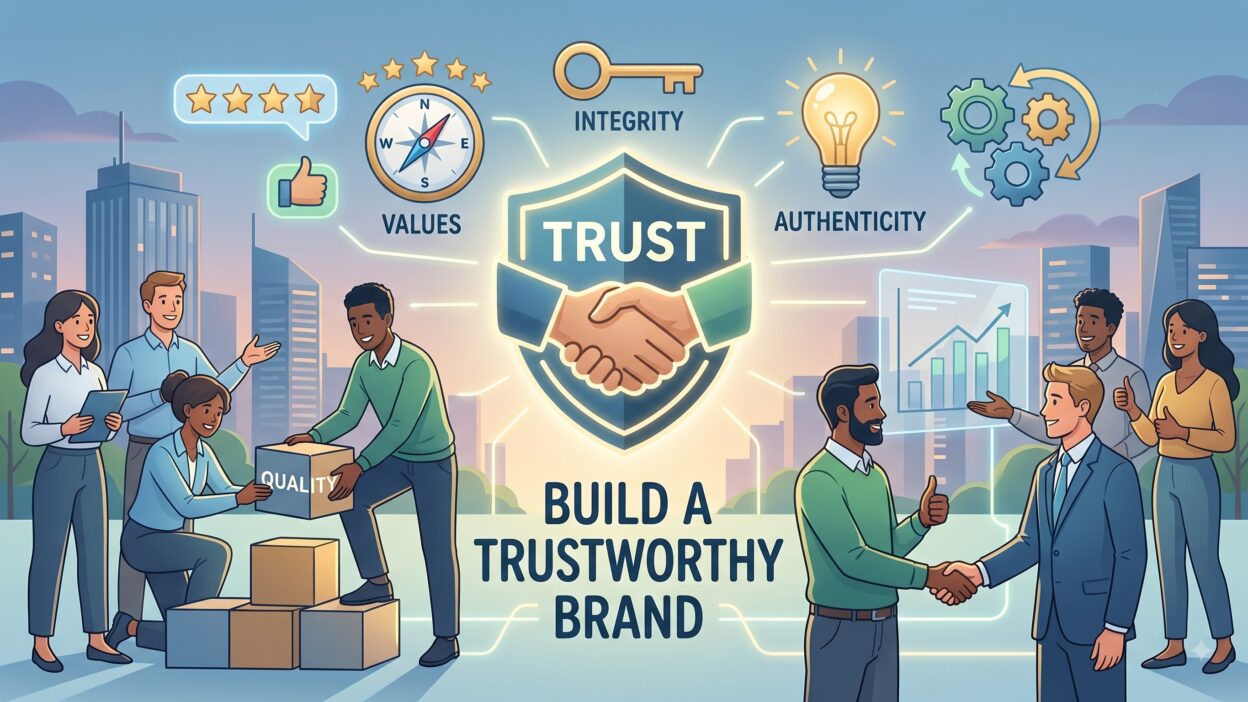
TL;DR Customers buy from brands they believe in. A trustworthy brand wins repeat business, strong referrals, and loyal fans who defend it online. A brand without trust struggles no matter how good the product looks. This guide breaks down exactly how to build a trustworthy brand, step by step, with real actions you can start this week.
Trust doesn’t come from a single campaign or a clever slogan. It comes from small, honest choices repeated over months and years. This article walks through what trust actually means, why it matters for growth, and the exact habits that turn an ordinary company into a trustworthy brand customers rely on.
Table of Contents
What Makes a Brand Trustworthy
A trustworthy brand keeps its word every single time. Customers know what to expect before they buy. Prices stay clear. Promises stay real. Nothing hides behind fine print or confusing terms.
Trust builds through small, consistent actions, not one big marketing push. A trustworthy brand answers support tickets fast. It ships products on time. It fixes mistakes without excuses. These small habits add up into a reputation that customers talk about.
Many founders think a trustworthy brand needs a huge budget or a famous name. That’s simply not true. Small companies build trust through honesty and consistency, often faster than large companies weighed down by red tape and slow decisions. A founder who answers a customer email personally can build more trust in one message than a large ad budget ever could.
Trust vs Popularity
Popularity and trust don’t always move together. A brand can go viral for one clever ad and still lose customers over broken promises. A trustworthy brand plays the long game instead of chasing quick attention.
Popular brands sometimes cut corners to grow fast. This choice damages trust even while sales climb short term. A truly trustworthy brand protects its reputation first and treats growth as the natural result, not the main goal.
Why Trust Drives Long-Term Growth
Trust lowers the cost of every future sale. A trustworthy brand doesn’t need to convince a returning customer twice. That customer already believes the product will work and the company will stand behind it.
Referrals also grow faster around trust. People recommend brands they trust to friends and family without hesitation. This word of mouth costs nothing and often converts better than any paid ad campaign a company can run.
The Real Cost of a Brand That Feels Untrustworthy
A brand that feels shady loses customers quietly. Most people never complain directly. They simply leave and never come back. This silent churn hides inside normal sales numbers until growth stalls without a clear reason.
Untrustworthy brands also pay more for every new customer. Cold traffic converts poorly when a brand feels risky or unclear. Marketing teams spend more on ads just to overcome doubt that a trustworthy brand would never create in the first place. This extra spend often hides inside a rising customer acquisition cost that nobody links back to trust.
Lost Customers and Lost Referrals
A single bad experience can end a customer relationship for good. That lost customer also stops referring friends, which multiplies the damage far beyond one missed sale. A trustworthy brand protects this referral engine by avoiding these breaks in the first place.
Review sites make this loss visible fast. One public complaint about broken promises can influence hundreds of future buyers who read that review before they ever visit your site.
Damage That Outlasts a Single Mistake
Trust takes years to build and only minutes to break. A single data leak or a single broken promise can undo years of careful brand work. Customers remember how a company handled a crisis far longer than they remember the crisis itself.
A trustworthy brand recovers faster from mistakes because customers already believe in its intentions. A brand without that foundation struggles to recover at all, even after the original problem gets fixed.
Signs Your Brand Needs More Trust
Some warning signs show up clearly in your numbers. High bounce rates, low repeat purchase rates, and slow email signups can all point to a trust problem hiding behind normal marketing metrics.
Customer support tickets also reveal trust gaps. Repeated questions about refund policies or data privacy suggest customers feel unsure about your brand before they even buy. A trustworthy brand answers these questions clearly before a customer has to ask.
High Bounce Rates and Low Repeat Purchases
Visitors who leave your site fast often sense something feels off, even if they can’t name the reason. Low repeat purchase rates point to the same problem after the first sale. A trustworthy brand keeps customers coming back without heavy discounts or constant reminders.
Negative Reviews About Honesty
Reviews that mention hidden fees, slow refunds, or misleading claims signal a real trust gap. These specific complaints matter more than a simple low star rating. A trustworthy brand tracks this feedback closely and fixes the root cause fast.
1. Be Transparent About Pricing and Policies
Hidden fees destroy trust faster than almost anything else. Customers feel tricked the moment a final price differs from what they expected. A trustworthy brand shows the full price early, with no surprise charges at checkout.
Clear policies matter just as much as clear pricing. Refund rules, shipping times, and cancellation terms should sit in plain language, not buried inside a long legal document nobody reads.
Show Full Pricing Before Checkout
List taxes, shipping costs, and service fees clearly on the product page itself. Customers who see the full price early trust the checkout process far more than those who discover extra charges at the last step.
Write Policies in Plain Language
Legal teams often write policies in dense language that confuses average readers. Add a short, plain-language summary above the full legal text. This small step helps customers understand their rights without needing a law degree.
2. Keep Every Promise You Make
A trustworthy brand treats every promise as a real commitment, not a marketing line. Shipping timelines, product features, and customer service response times all count as promises customers remember.
Avoid overpromising just to close a sale. A slightly less exciting but accurate claim builds more trust than a bold claim that falls short later. Customers forgive a modest promise far more easily than a broken big one.
Set Realistic Timelines
Give customers a shipping estimate that includes buffer time for delays. A package that arrives early feels like a pleasant surprise. A package that arrives late after a tight promise feels like a broken commitment.
Follow Through on Customer Service Commitments
If your team promises a 24 hour response time, hit that mark every time, not just most of the time. Consistent follow-through on small promises builds the foundation every trustworthy brand needs to grow.
3. Show Real Customer Proof
Real customer stories carry more weight than any marketing headline. Testimonials, case studies, and video reviews all show proof that your brand delivers on its promises. A trustworthy brand lets real customers do part of the talking.
Avoid fake or heavily edited reviews. Customers spot inauthentic praise quickly and lose trust the moment they suspect a review isn’t real. Genuine, specific feedback always beats generic five-star comments.
Feature Detailed Case Studies
A detailed case study with real numbers builds far more trust than a vague success quote. Show the specific problem a customer faced and the specific result your product delivered for them.
Display Reviews Honestly, Including Negative Ones
(suggested word count: 150 words)
A page with only five-star reviews looks suspicious to modern shoppers. Show a few honest three or four star reviews alongside your best ones. This honesty makes every review on the page feel more believable.
4. Communicate Openly During Mistakes
Every company makes mistakes eventually. A trustworthy brand owns the mistake fast instead of hiding it or blaming the customer. Quick, honest communication turns a bad moment into a chance to prove real character.
Send a clear message the moment you discover a problem, whether it’s a shipping delay or a security issue. Silence during a crisis damages trust far more than the original mistake usually does.
Apologize Without Excuses
A real apology names the mistake clearly and skips the excuses. Customers respect a brand that says “we made an error” more than one that blames a vendor or a technical glitch for everything.
Offer a Fair Fix, Not Just Words
Pair every apology with a real fix, like a refund, a discount, or a replacement. Words alone rarely rebuild trust. Customers remember the action a brand takes after a mistake far more than the apology itself.
5. Build Consistent Brand Messaging
Mixed messages confuse customers and quietly chip away at trust. A trustworthy brand uses the same tone, the same core promises, and the same visual style across every channel a customer might see.
Check your website, social media, emails, and ads for consistency. A brand that sounds playful on Instagram but stiff and formal in emails feels like two different companies to a careful observer.
Align Marketing Claims With Real Product Features
Marketing copy that overstates a feature creates a gap between expectation and reality. Keep every claim grounded in what the product actually does. This alignment protects trust the moment a customer starts using your product.
Train Every Team to Speak the Same Way
Sales, support, and marketing teams should all describe your product the same way. A shared style guide keeps every customer conversation consistent, no matter which team member they talk to.
6. Protect Customer Data and Privacy
Data privacy sits at the center of trust today. Customers worry about how their information gets stored and shared. A trustworthy brand treats customer data with the same care it treats customer money.
Explain your data practices in simple terms. Tell customers exactly what you collect and exactly why you need it. Avoid vague privacy policies that leave customers guessing about where their information ends up.
Use Clear Consent for Data Collection
Ask for permission before you collect extra data beyond what’s needed for a purchase. Clear consent checkboxes, not pre-checked boxes buried in fine print, show respect for customer choice and build real trust.
Respond Fast to Security Concerns
If a security issue happens, notify affected customers quickly and clearly. Fast, honest communication during a security event often preserves more trust than companies expect, as long as the response feels genuine and complete.
7. Support Customers With Real Humans
Automated bots handle simple questions well, but complex problems need a real person. A trustworthy brand makes it easy to reach a human when a customer feels stuck or frustrated.
Long hold times and endless chatbot loops damage trust fast. Customers remember how hard it felt to get real help far more than they remember the original problem that led them to reach out.
Make Contact Options Easy to Find
Hide your contact page and customers assume you don’t want to hear from them. Place a clear support link in your website header and footer. Easy access to help builds confidence before a customer even needs it.
Empower Support Teams to Solve Problems
Give support agents real authority to issue refunds or fix account issues without escalating every small request. Customers trust a brand more when the first person they reach can actually help them.
8. Stay Consistent Over Time
Trust grows through repetition. A trustworthy brand acts the same way in year five as it did in year one. Customers relax once they see a pattern of reliable, honest behavior over a long stretch of time.
Avoid sudden shifts in quality, pricing, or service just to boost short-term profit. These changes might lift a quarterly number but often cost far more in lost trust over the following year.
Review Your Brand Promises Every Year
Revisit your core promises annually and check if your team still delivers on each one. A trustworthy brand updates its practices honestly instead of quietly lowering standards while keeping the same marketing claims.
Reward Loyal Customers Consistently
Loyalty programs and consistent perks show long-term customers that their trust matters. Random, one-time discounts feel less meaningful than a steady reward system that customers can count on every time they return.
Common Mistakes That Damage Brand Trust
Many companies chase growth tactics that quietly damage trust. Fake urgency timers, inflated review counts, and misleading discount claims all push short-term sales while costing long-term loyalty. A trustworthy brand avoids these shortcuts, even when a competitor uses them successfully.
Poor internal communication causes another common mistake. A support team promises something that sales already changed, or marketing announces a feature that engineering hasn’t finished yet. These small mismatches confuse customers and slowly erode confidence in the whole brand.
Ignoring feedback ranks as one of the most damaging mistakes. Customers who report real problems expect a real response. A brand that stays silent after repeated complaints teaches customers that their trust doesn’t matter, which pushes them toward competitors who listen.
Finally, some brands treat trust as a marketing message instead of a real practice. Slogans about honesty mean nothing without matching action behind them. A trustworthy brand proves its values through daily decisions, not through a catchy tagline alone.
Best Practices for Long-Term Brand Trust
Build a simple trust checklist your whole team can follow. Include clear pricing, honest marketing claims, and fast response times as non-negotiable standards. This checklist keeps every department aligned around the same trustworthy brand values.
Measure trust directly, not just sales. Track repeat purchase rate, referral rate, and review sentiment as core metrics. These numbers reveal whether your brand actually earns trust or simply wins one-time transactions.
Involve your whole team in trust-building, not just marketing. Support agents, delivery drivers, and product managers all shape how customers experience your brand. Share trust goals across every department so nobody works against the same shared reputation by accident.
Revisit your practices after every major growth phase. Fast growth often introduces new vendors, new processes, and new team members who don’t yet understand your trust standards. A quick review after each growth spurt protects the brand reputation you worked hard to build.
Frequently Asked Questions
What makes a brand trustworthy to customers?
A trustworthy brand keeps its promises, communicates honestly, and protects customer data carefully. Consistency across pricing, service, and messaging all combine to build this kind of long-term trust with customers.
How long does it take to build a trustworthy brand?
Building a trustworthy brand usually takes months or years of consistent action. Trust grows through repeated honest experiences, not through one campaign or one clever marketing message alone.
Can a small business become a trustworthy brand quickly?
Yes, small businesses often build trust faster than large companies because they can respond personally and fix mistakes quickly. Close, direct customer relationships help a small business earn trust without a huge budget.
Does social proof help build a trustworthy brand?
Social proof like reviews and testimonials helps customers trust a brand faster, especially when the proof feels authentic and specific. Fake or exaggerated proof damages trust the moment customers notice the pattern.
What should a brand do after a public mistake?
A trustworthy brand admits the mistake quickly, avoids excuses, and offers a real fix. Fast, honest communication during a crisis often preserves more trust than staying silent or downplaying the issue.
How do you measure brand trust?
Companies measure brand trust through repeat purchase rate, referral rate, review sentiment, and customer retention over time. These metrics show whether a brand truly earns loyalty or just wins short-term sales.
Does employee behavior affect brand trust?
Yes, employee behavior shapes brand trust just as much as marketing does. A support agent who solves a problem quickly, or a delivery driver who handles a package with care, both reinforce the same trustworthy brand image customers experience elsewhere.
Read More:-Enterprise Marketing: Definition, Strategies, and How to Scale
Conclusion

A trustworthy brand grows through small, honest actions repeated over time. Clear pricing, real promises, and fast responses to mistakes all build the kind of reputation customers remember and share with others.
Start with one change today. Simplify your pricing page. Answer support tickets faster. Add a few honest reviews to your product page instead of only the perfect ones. Small steps like these move your brand toward real trust.
Every interaction shapes how customers see your company, whether they buy once or become a loyal fan for years. Companies that stay committed to becoming a trustworthy brand build something far stronger than a good quarter. They build a reputation competitors can’t copy overnight.
Keep checking your progress along the way. Ask customers directly how your brand makes them feel. Their honest answers guide every future decision your team makes about pricing, service, and communication.