Introduction
TL;DR A booked demo doesn’t guarantee a great call. Many prospects show up cold, or they don’t show up at all. Targeted display ads fix this gap. They keep your brand in front of a prospect between the booking and the actual call. This guide breaks down exactly how to build a pre-demo campaign using targeted display ads, step by step.
Most marketing teams pour budget into the top of the funnel and forget about leads who already raised their hand. A booked demo is one of the strongest signals a prospect can give. Targeted display ads protect that signal instead of letting it fade during a busy week of emails and other priorities.
What Pre-Demo Targeted Display Ads Actually Do
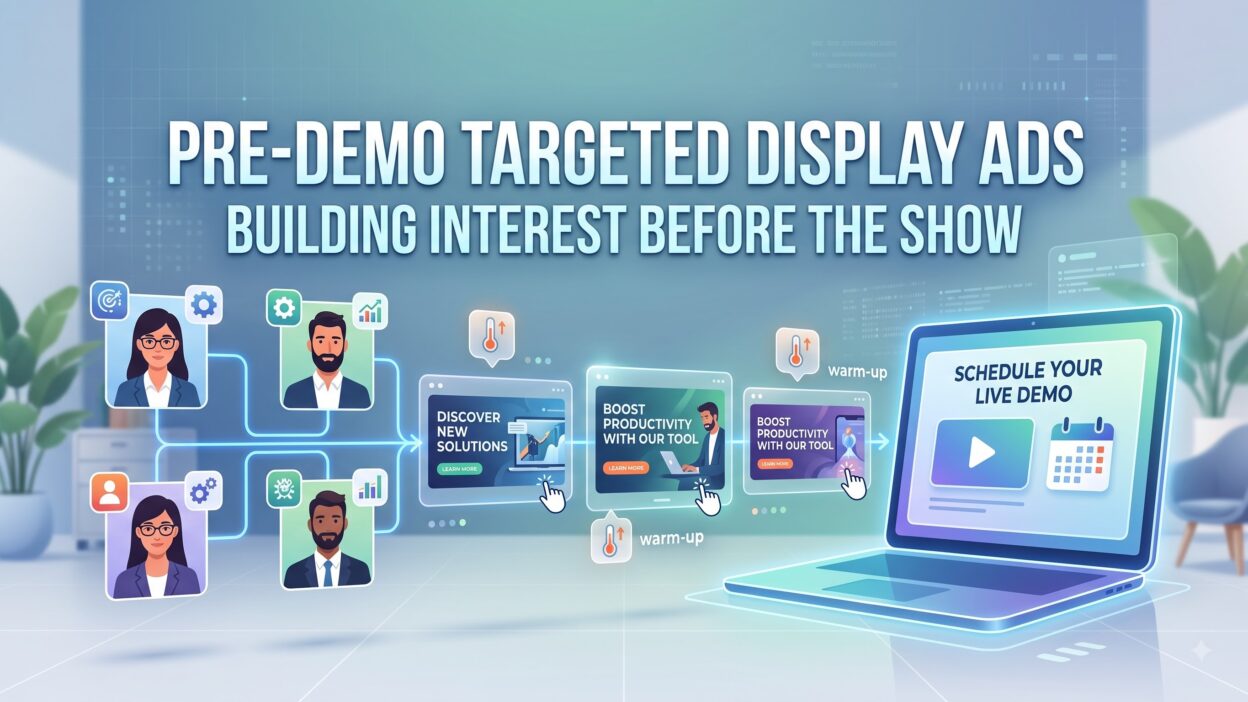
Pre-demo targeted display ads show up between the moment a prospect books a call and the moment that call actually happens. This window often lasts a few days or even a full week. A lot can go wrong during that gap without the right nudge.
These ads don’t sell the product directly. They remind a prospect why they booked the call in the first place. A short case study ad or a quick product clip keeps your company fresh in a busy inbox full of distractions.
Targeted display ads work through simple audience matching. A marketing team uploads a list of booked leads into an ad platform. That platform then shows banner ads, social ads, or video ads to those exact people across the sites and apps they already visit.
The Gap Between Booking and Showing Up
A prospect books a demo with real interest, then life gets busy. Emails pile up. Other vendors reach out. By the time the call date arrives, that early excitement often fades into a foggy memory of why they booked at all.
This gap explains why so many demos start with a confused prospect asking “remind me what this call is about again?” Targeted display ads close this gap by keeping the offer visible the whole time.
How Targeted Display Ads Fill That Gap
(suggested word count: 200 words)
A well-timed ad campaign reminds a prospect of the exact pain point they raised during booking. If a prospect mentioned slow reporting during signup, a display ad about faster reporting keeps that pain top of mind before the call.
Targeted display ads also build familiarity. A prospect who sees your logo three or four times before a call trusts your brand more the moment your rep says hello on the demo itself.
Why Teams Use Targeted Display Ads Before a Demo
Sales teams waste real time on cold, unprepared calls. A prospect who barely remembers the product wastes the first ten minutes of a thirty minute demo just getting reoriented. Targeted display ads fix this problem before the call even starts.
Marketing teams also gain a clear use for ad budget beyond pure lead generation. Instead of only chasing new clicks, a portion of the budget goes toward warming up leads already in the pipeline. This shift often produces a stronger return than another round of cold prospecting ads.
Higher Show-Up Rates
No-shows waste sales time and hurt morale. A prospect who sees a few reminder-style targeted display ads before the call date feels more committed to actually joining. The ad acts like a soft nudge that a plain calendar invite can’t deliver on its own.
Some teams report a real lift in show-up rates after adding a short pre-demo ad sequence. Even a small lift matters when a sales team runs dozens of demos every week.
Warmer Conversations During the Call
A prospect who already saw a case study ad walks into the call with real questions instead of blank confusion. This shift changes the whole tone of a demo. Reps spend less time on basic context and more time on the details that actually close deals.
Targeted display ads also plant specific talking points. A prospect who saw an ad about a certain feature often asks about that exact feature, which gives reps an easy, natural opening.
Signs Your Demo Process Needs Targeted Display Ads
Some warning signs point directly to a gap that targeted display ads can fix. Check your CRM for no-show rates across the last quarter. A rate above twenty percent usually signals real room for improvement.
Talk to your sales team too. Reps often know exactly which calls start cold and confused. This qualitative feedback pairs well with hard numbers when you build the case for a new pre-demo ad budget.
High No-Show Rates
A high no-show rate wastes calendar slots that could go to a more engaged lead. Track this number by lead source and by days between booking and the call date. Longer gaps often show higher no-show rates, which points directly to a trust and memory problem.
Cold Openers on Every Call
Ask your sales team how often a demo opens with a prospect asking basic questions about the product. Frequent cold openers signal that prospects forget the context between booking and the call, which targeted display ads can fix directly.
1. Build a Custom Audience From Booked Demos
Every pre-demo campaign starts with a clean audience list. Export the email addresses or contact details of prospects who booked a call inside your CRM. Upload this list into your ad platform as a custom audience.
Keep this list fresh. Add new bookings daily or weekly so nobody misses the ad sequence. Remove prospects the moment their call happens, so your budget stays focused only on people still waiting for their demo.
Match Your CRM Data to Ad Platforms
Most major ad platforms support direct CRM integrations now. Connect your CRM to your ad account so new bookings flow into your targeted display ads audience automatically, without manual list exports every single day.
Segment by Deal Size or Industry
Not every booked lead deserves the same budget. Segment your audience by deal size or industry so your best prospects see more frequent targeted display ads than smaller, lower priority leads.
2. Choose the Right Ad Platforms for B2B Buyers
Not every ad platform reaches B2B buyers well. LinkedIn, Google Display Network, and programmatic platforms like The Trade Desk all support targeted display ads for business audiences, each with different strengths.
LinkedIn works well for role-based targeting and account matching. Google Display Network offers massive reach across news sites and blogs your prospects already read. Programmatic platforms give you fine control over frequency and placement across a wide mix of sites.
Use LinkedIn for Role-Specific Messaging
LinkedIn lets you target by job title, which helps when different roles care about different parts of your product. A finance lead sees an ROI-focused ad while an IT lead sees a security-focused one, all inside the same campaign.
Use Programmatic Platforms for Wider Reach
Programmatic platforms show your targeted display ads across thousands of sites your prospect visits daily. This wide reach keeps your brand visible without forcing prospects to stay on one single platform to see your message.
3. Create Ad Creative That Builds Trust
Generic banner ads blend into the background. Strong pre-demo creative feels specific and relevant, not like a random ad that follows a prospect around the internet for no clear reason.
Use real product screenshots instead of stock photos. Show an actual dashboard, an actual report, or an actual result. Prospects trust targeted display ads more when the creative matches exactly what they will see during the demo.
Feature a Short Customer Quote
A single strong quote from a happy customer adds instant credibility to a banner ad. Keep the quote short enough to read in two seconds, since most viewers scroll past display ads within a moment.
Keep the Message Focused on One Idea
Cramming five features into one small banner confuses viewers. Pick one clear idea per ad. A focused, simple message performs far better than a busy one packed with too much text.
4. Time Your Targeted Display Ads Around the Demo Date
Timing shapes how effective a pre-demo campaign feels. Start the ad sequence the day after booking. Increase frequency slightly as the call date gets closer, then pause the campaign entirely once the call happens.
A steady drip works better than a sudden burst. Three or four touches spread across a week feel helpful. Ten touches in one day feel like harassment and can push a prospect to cancel the call entirely.
Send a Final Reminder Ad One Day Before
A last reminder ad the day before the call reinforces the date and time without needing another email. This visual nudge often catches prospects who skim past calendar reminders buried in a busy inbox.
Pause Ads Immediately After the Call
Continuing to show targeted display ads after a demo already happened wastes budget and feels sloppy. Set up an automatic rule that removes a contact from the audience the moment their call status changes in your CRM.
5. Use Retargeting to Reinforce Key Messages
Retargeting adds another layer on top of your core pre-demo campaign. If a prospect visits your pricing page after booking, a retargeting ad about pricing can address any hesitation before the call even starts.
This layered approach keeps every touchpoint relevant to actual prospect behavior instead of showing the same generic ad to everyone on your list, regardless of what they do on your site.
Retarget Based on Website Behavior
Track which pages a booked prospect visits after signing up. A visit to a case study page signals interest in proof. A visit to a security page signals concern about compliance. Match your targeted display ads to these specific signals.
Layer Retargeting With Your Main Campaign
Run your core pre-demo sequence alongside a smaller retargeting budget. This combination keeps messaging broad enough to stay memorable while still reacting to specific actions each prospect takes on your site.
6. Personalize Ads by Industry or Role
Generic ads feel like they weren’t made for anyone in particular. Personalized targeted display ads speak directly to a specific industry or role, which makes a prospect feel truly understood before the call even begins.
Build a small set of creative variations. One version for healthcare buyers. One version for retail buyers. One version for finance buyers. Each version uses language and examples that match that specific audience.
Use Industry-Specific Case Studies
A healthcare buyer trusts a healthcare case study far more than a generic success story. Match your ad creative to the closest industry example available, even if you only have a handful of case studies to work with.
Adjust Messaging by Buyer Role
An executive cares about big picture results. A manager cares about daily workflow details. Adjust your targeted display ads copy to match what each role actually cares about during their evaluation process.
7. Track the Right Metrics for Pre-Demo Campaigns
Standard ad metrics like clicks don’t tell the full story for pre-demo campaigns. Show-up rate matters more than click-through rate here, since the real goal is a completed, engaged demo call, not a website visit.
Compare show-up rates between prospects who saw your targeted display ads and prospects who didn’t. This simple split test shows the real impact of the campaign far better than vanity metrics alone.
Track Show-Up Rate as the Core Metric
Pull show-up rate data directly from your CRM or scheduling tool. Segment this number by whether a prospect saw at least one ad before their call. A clear gap between these two groups proves campaign value fast.
Monitor Frequency to Avoid Ad Fatigue
Too many impressions in a short window annoy prospects instead of helping them. Cap frequency at around three to five impressions per day. This limit keeps your targeted display ads helpful instead of overwhelming.
8. Coordinate Ads With Sales Follow-Up
Marketing and sales need to work from the same playbook here. A rep who knows exactly which ads a prospect saw can reference that content naturally during the call, which makes the whole experience feel connected instead of disjointed.
Share your ad creative with the sales team before you launch a campaign. Reps who understand the messaging can build on it during their own outreach instead of accidentally contradicting it.
Give Reps Visibility Into Ad Exposure
Some ad platforms show which prospects viewed or clicked an ad. Share this data inside your CRM so reps walk into every call already knowing what messaging that specific prospect already saw.
Align Email and Ad Messaging
Reminder emails and targeted display ads should tell the same story, not compete with different messages. A consistent theme across both channels reinforces the same key point instead of confusing a prospect with mixed signals.
Common Mistakes With Pre-Demo Ad Campaigns
Many teams launch a pre-demo campaign once and forget to update the creative for months. Stale ads lose impact fast, especially for repeat viewers who see the same banner three or four times during their wait for a call.
Another common mistake involves targeting too broadly. Some teams show targeted display ads to an entire company list instead of just the specific contact who booked the call. This waste drains budget on people who never signed up for a demo in the first place.
Poor frequency control causes real damage too. A prospect who sees the same ad fifteen times in two days feels stalked, not nurtured. Set clear frequency caps before launch to avoid this common and costly mistake.
Finally, some teams forget to remove prospects from the campaign after their call happens. This oversight wastes budget and confuses prospects who already moved into the next stage of the sales process.
Best Practices for Long-Term Success
Review your pre-demo campaign every month. Update creative regularly so repeat viewers see fresh content instead of the same static banner throughout their entire wait period.
Keep your CRM and ad platform tightly connected. A manual, once-a-week export creates gaps where new bookings miss the ad sequence entirely. Automation closes this gap and keeps every new lead inside the campaign from day one.
Test different creative formats over time. Video ads, static banners, and carousel ads all perform differently across industries. A regular testing cadence helps you find the format that drives the strongest show-up rate for your specific audience.
Share results openly between marketing and sales. A shared dashboard showing show-up rates, call quality, and closed deals keeps both teams aligned around the same clear goal for every pre-demo campaign you run.
Frequently Asked Questions
What are pre-demo targeted display ads?
Pre-demo targeted display ads are banner or video ads shown to a prospect between the moment they book a demo and the moment the call actually happens. These ads keep the brand visible and reduce no-shows.
Why do B2B teams use targeted display ads before a sales call?
B2B teams use targeted display ads before a call to boost show-up rates and warm up the conversation. A prospect who sees relevant ads remembers the offer clearly and asks sharper questions during the demo itself.
Which platforms work best for targeted display ads in B2B?
LinkedIn, Google Display Network, and programmatic platforms all work well for B2B targeted display ads. LinkedIn suits role-based targeting, while programmatic platforms offer broader reach across many sites at once.
How long should a pre-demo ad campaign run?
Most pre-demo campaigns run for the length of time between booking and the call date, usually three days to two weeks. Longer gaps between booking and the call benefit even more from a steady ad sequence.
Do targeted display ads really reduce no-shows?
Yes, many teams see a measurable lift in show-up rates after adding targeted display ads to their pre-demo process. The exact lift varies by industry, but the pattern holds across most B2B sales teams that test it.
How much budget does a pre-demo campaign need?
A pre-demo campaign usually needs a modest budget since it targets a small, specific audience of booked leads rather than a broad cold audience. Even a small daily spend can cover frequent targeted display ads for this focused group.
Can small sales teams use targeted display ads too?
Yes, small sales teams benefit from targeted display ads just as much as large enterprise teams. A short weekly list of booked demos and a small ad budget can still create a real lift in show-up rates and call quality.
Read More:-7 Successful Female-Owned Tech Companies: Stories of the Founders’ Grit
Conclusion

The gap between booking a demo and showing up costs sales teams real time and real revenue. Targeted display ads close that gap with simple, consistent reminders that keep a prospect engaged and ready.
Start small if a full campaign feels like too much right now. Build one clean audience list. Create two or three ad variations. Track show-up rate before and after launch to see the real impact clearly.
Every demo deserves a prospect who remembers why they booked in the first place. Teams that use targeted display ads well turn a routine calendar invite into a warm, engaged conversation that closes more deals.
Review your results after each campaign cycle. Adjust creative, timing, and audience segments based on what the data shows. This steady process turns targeted display ads into a reliable part of your sales pipeline, not a one-time experiment.