Introduction
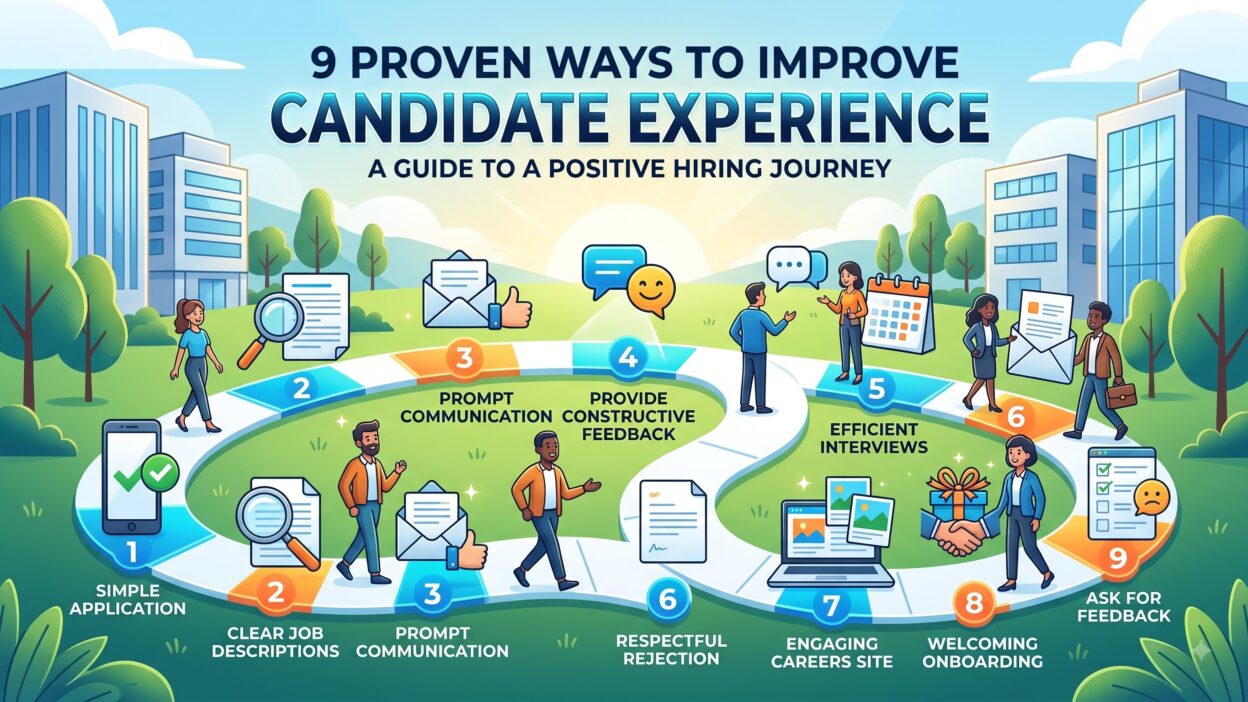
TL;DR A bad hiring process pushes strong candidates away. A great one pulls them closer. Companies that improve candidate experience win better talent and build a stronger name in the job market. This guide breaks down nine proven ways to improve candidate experience, with real steps you can use inside your own hiring process this week.
Table of Contents
What Candidate Experience Really Means
Candidate experience covers every interaction a job seeker has with your company. It starts the moment they read a job posting. It continues through the application, the interview, and the final offer or rejection. Every touchpoint shapes how that person talks about your company later.
Recruiters often think candidate experience only matters for the person who gets hired. That view misses the bigger picture. Rejected candidates talk too. They post reviews on Glassdoor. They tell friends about a slow reply or a confusing application form. A company that fails to improve candidate experience loses more than one applicant. It loses a piece of its reputation.
Companies that improve candidate experience treat every applicant like a future customer or a future referral. This mindset changes how a recruiting team writes job posts, runs interviews, and sends rejection emails. Small changes across the whole journey add up to a much stronger brand in the job market.
Why Companies Struggle to Improve Candidate Experience
Most hiring teams run on tight schedules. Recruiters juggle dozens of open roles at once. Candidate experience often slips down the priority list during busy hiring seasons.
Old systems make the problem worse. Clunky application forms and slow email chains frustrate applicants before an interview even starts. A recruiting team that wants to improve candidate experience needs both a mindset shift and better tools.
Budget limits play a role too. Many recruiting teams work with tight software budgets and small headcounts. Leadership sometimes treats candidate experience as a nice extra instead of a core part of the hiring strategy. Teams that shift this thinking find that small, low-cost changes still move the needle in a real way. A simple template update or a faster reply schedule costs nothing but still leaves a strong impression on every candidate who applies.
The Business Impact of a Strong Candidate Experience
A strong candidate experience shortens time to hire. Candidates who feel respected stay engaged through a long process. They show up prepared. They accept offers faster.
A poor experience does the opposite. Top candidates drop out mid-process when a company moves too slow or communicates poorly. Every company that wants to improve candidate experience needs to see this connection between respect and results.
1. Simplify Your Job Application Process
A long application form kills interest fast. Many job seekers quit halfway through a form that asks for the same information twice. Companies that improve candidate experience start by cutting this friction.
Keep the application short. Ask for a resume and a few key details. Save deeper questions for the interview stage. A ten minute application beats a forty five minute one every time.
Mobile access matters too. Many candidates browse job boards on their phone during a lunch break. A form that breaks on mobile loses that candidate instantly. Test your application on a phone before you publish any job post.
Cut Unnecessary Screening Questions
Screening questions help filter candidates, but too many questions feel like a wall. Stick to three or four questions that truly matter for the role. Drop questions that repeat information already on the resume.
Allow One-Click Applications Where Possible
LinkedIn and Indeed both support one-click applications through a stored profile. Turn this feature on wherever your applicant tracking system allows it. Candidates apply faster and your pipeline fills up quicker.
2. Communicate Clearly at Every Stage
Silence frustrates job seekers more than rejection. A candidate who never hears back assumes the worst about your company. Clear communication is one of the fastest ways to improve candidate experience without spending extra money.
Send a confirmation email the moment someone applies. Let them know when they should expect an update. Follow through on that timeline, even if the update is simply “we need more time.”
Set Clear Expectations About Timelines
Tell candidates exactly how many interview rounds to expect. Share a rough timeline for each stage. This small step removes anxiety and builds trust early in the process.
Personalize Every Rejection Email
A generic rejection email feels cold. Add one line about the specific role or a specific strength you noticed during the interview. This small touch leaves candidates with a better impression, even after a no.
3. Speed Up Your Hiring Timeline
Great candidates rarely stay on the market long. A slow hiring process loses top talent to faster competitors. Companies that improve candidate experience treat speed as a core part of respect for the candidate’s time.
Map out your current process and count the days between each stage. Look for gaps where a resume sits untouched for a week. Fix those gaps first before you add any new tools.
Reduce the Number of Interview Rounds
Five or six interview rounds exhaust candidates and slow hiring managers down. Cut this number to three rounds whenever possible. Combine similar interviews into one session with multiple interviewers instead of separate calls.
Use Same-Week Scheduling for Interviews
Long gaps between interview rounds cause candidates to lose momentum. Aim to schedule the next interview within the same week as the last one. This pace keeps candidates engaged and shows respect for their time.
4. Personalize the Candidate Journey
Candidates notice generic, copy-paste communication right away. Personal touches make a real difference and help companies improve candidate experience in ways that feel authentic, not scripted.
Address candidates by name in every email. Reference specific parts of their resume or portfolio during interviews. Small details like these show a candidate that your team actually read their application.
Match Interviewers to Candidate Background
Pair candidates with interviewers who share similar career paths or interests when possible. A candidate who talks with someone in a similar role feels a stronger connection to the team and the company culture.
Send Role-Specific Follow-Up Content
Share an article, a team photo, or a short video about the specific team a candidate applied to join. This content helps candidates picture themselves in the role and builds excitement during the wait between interviews.
5. Train Interviewers to Represent Your Brand
An interviewer often becomes the face of your entire company for a candidate. A rude or unprepared interviewer can undo months of strong employer branding in a single conversation.
Train every interviewer on basic etiquette. Show up on time. Read the resume before the call. Ask thoughtful questions instead of generic ones pulled from a template.
Build a Simple Interview Guide
Give every interviewer a short guide with core questions and evaluation criteria. This guide keeps interviews consistent and fair across different hiring managers, which helps companies improve candidate experience at scale.
Teach Interviewers to Sell the Role Too
An interview should flow both ways. Train interviewers to spend a few minutes describing the team, the challenges, and the growth path for the role. Candidates remember interviews that felt like a real conversation.
6. Give Constructive Feedback to Every Candidate
Most candidates never receive real feedback after a rejection. This silence damages trust and wastes a chance to leave a positive final impression. Companies that improve candidate experience treat feedback as a gift, not a burden.
Feedback doesn’t need to be long. A short paragraph on one strength and one area for growth goes a long way. Candidates remember companies that respect their effort enough to explain a decision.
Create a Feedback Template for Recruiters
Build a simple template recruiters can fill in quickly after each interview. This template saves time while still giving candidates something honest and useful to take away from the process.
Avoid Legal Risk While Staying Honest
Keep feedback focused on skills and job fit. Avoid comments about personal traits or protected characteristics. A legal review of your feedback template protects both candidates and your company.
7. Use Technology to Improve Candidate Experience
The right technology removes friction from every stage of hiring. An outdated applicant tracking system slows everyone down and frustrates candidates with confusing status updates. Smart technology choices help teams improve candidate experience without adding extra headcount.
Look for tools that offer self-service scheduling. Candidates pick their own interview time from an open calendar instead of a long email chain. This single feature saves days across a typical hiring process.
Add Chatbots for Basic Candidate Questions
(suggested word count: 150 words)
A simple chatbot on your careers page can answer common questions about salary range, remote work policy, or application status. This tool frees up recruiter time for higher value conversations with candidates.
Automate Status Updates Without Losing the Personal Touch
Automated emails keep candidates updated at scale, but a recruiter should still add a personal note for finalists. Balance automation with real human contact at the stages that matter most.
8. Collect and Act on Candidate Feedback
Most companies never ask candidates how the process felt. This gap leaves recruiting teams guessing about what actually needs to change. A short survey after the final interview gives real data you can use to improve candidate experience going forward.
Keep the survey under five questions. Ask about clarity, speed, and overall impression. Send it to both hired and rejected candidates for a full picture of your process.
Turn Survey Data into Real Process Changes
Data means nothing without action. Review survey results every quarter with your hiring team. Pick one or two changes to test based on the most common complaints candidates share.
Share Results with Leadership
Present candidate feedback trends to leadership alongside standard hiring metrics like time to fill. This visibility helps leadership understand why investment in candidate experience matters for overall hiring success.
9. Build a Strong Employer Brand
Candidate experience and employer brand feed each other directly. A strong brand attracts better candidates before the process even starts. A weak brand makes every other step on this list harder to execute well.
Share real employee stories on your careers page. Show actual photos from your office or your remote team calls. Authentic content builds trust faster than polished marketing copy ever could.
Showcase Culture Through Employee Content
Ask current employees to share short video clips about a typical day or a favorite project. This content gives candidates a real look at your company before they ever apply.
Respond to Reviews on Glassdoor and Indeed
Reply to both positive and negative reviews with a calm, professional tone. Candidates read these responses closely and judge how your company handles criticism, which shapes their decision to apply at all.
Common Mistakes That Hurt Candidate Experience
Many hiring teams try to improve candidate experience but repeat the same mistakes without noticing. These mistakes often come from habit, not bad intent. A recruiter reuses an old template email without checking if the details still fit the role. A hiring manager skips a scheduled call and never reschedules. Small slips like these add up fast across a busy hiring season.
One common mistake involves asking candidates to repeat information across multiple rounds. A candidate answers the same background question three separate times with three separate interviewers. This repetition feels lazy on the company’s part, even if each interviewer means well. Share notes between interviewers before every round to avoid this problem.
Another mistake shows up in vague job postings. A listing full of buzzwords but light on real details attracts the wrong candidates and confuses the right ones. Clear job titles, clear salary ranges, and clear day-to-day duties help candidates decide quickly if a role fits them.
Ghosting ranks as the biggest mistake on this list. A candidate finishes a final round interview and never hears back at all. This silence damages a company’s name far more than a quick, honest rejection ever could. Every recruiting team that wants to improve candidate experience needs a firm rule against ghosting, with no exceptions for busy weeks.
Fix Inconsistent Interview Panels
Different interviewers sometimes rate the same candidate in wildly different ways. This inconsistency confuses hiring decisions and frustrates candidates who sense the mixed signals. Standardize your evaluation criteria across every panel to keep judgments fair and clear.
Stop Overselling the Role
Some recruiters oversell a role to close a candidate faster. This tactic backfires the moment a new hire discovers the gap between promise and reality. Honest descriptions build trust and lead to stronger long-term retention.
How to Build a Long-Term Plan to Improve Candidate Experience
A single fix rarely creates lasting change. Companies that truly improve candidate experience treat it as an ongoing project, not a one-time task. Build a simple plan with clear owners, clear metrics, and a regular review schedule.
Start by naming one person who owns candidate experience across the whole hiring process. This person tracks metrics, reviews feedback, and pushes changes through when something isn’t working. Without a clear owner, this work often falls through the cracks during busy quarters.
Set a review cadence that fits your hiring volume. A company with high hiring volume might review candidate experience data monthly. A smaller company might review it every quarter instead. Either way, put a date on the calendar so the review actually happens.
Involve your whole team in this plan, not just recruiters. Hiring managers, interviewers, and even office staff who greet candidates all shape the experience. Share candidate feedback with this wider group so everyone understands their role in the bigger picture.
Set Realistic Goals for Each Quarter
Pick one or two goals each quarter instead of trying to fix everything at once. A goal like “cut average time to hire by three days” gives your team a clear target and a clear way to measure progress.
Celebrate Wins with Your Hiring Team
Share positive candidate feedback with your team when it comes in. Recognition keeps momentum high and reminds everyone why the extra effort to improve candidate experience matters in the first place.
Frequently Asked Questions
What does it mean to improve candidate experience?
To improve candidate experience means making every step of the hiring process smoother and more respectful for job applicants. This covers the job posting, the application, the interviews, and the final decision.
Why should small companies improve candidate experience?
Small companies compete against larger brands with bigger budgets. A strong candidate experience helps a small company stand out and win talent that might otherwise choose a bigger name with a slower process.
How long should a hiring process take?
Most successful hiring processes finish within two to three weeks from application to offer. Companies that improve candidate experience track this number closely and work to shorten it whenever possible.
What tools help companies improve candidate experience?
Applicant tracking systems, self-service scheduling tools, and simple survey platforms all help companies improve candidate experience. The right mix depends on company size and current hiring volume.
Does candidate experience affect employer brand?
Yes, candidate experience directly shapes employer brand. Candidates share their experience through reviews and word of mouth, so a company that fails to improve candidate experience often sees this reflected in public reviews over time.
How do you measure candidate experience?
Companies measure candidate experience through post-interview surveys, time to hire, offer acceptance rate, and online reviews. These metrics together show whether recent changes actually improve candidate experience or not.
Who is responsible for candidate experience inside a company?
Recruiters carry the most day-to-day responsibility, but hiring managers and interviewers shape candidate experience just as much. A company that wants to improve candidate experience needs buy-in from everyone who talks to a candidate, not just the recruiting team.
Read More:-Top Sales Operations Tools for Revenue Teams
Conclusion
A strong hiring process respects a candidate’s time and effort at every single step. Companies that improve candidate experience see faster hires, stronger offer acceptance rates, and a better reputation in the job market.
Start with one or two changes from this list. Simplify your application. Speed up your timeline. Add real feedback after interviews. Small, steady changes build a hiring process candidates actually enjoy.
Every applicant who walks away from your process, hired or not, carries an impression of your company forward. Companies that consistently work to improve candidate experience turn that impression into a real competitive advantage in the fight for top talent.
Treat this work as ongoing, not a one-time project. Review your process every quarter. Ask candidates for honest feedback and act on what they tell you. The companies that win the best talent are the ones that never stop trying to improve candidate experience, year after year, hire after hire.