Introduction
TL:DR Most prospects ignore a single outreach attempt. They see an email, think about responding, get distracted, and forget. A phone call goes to voicemail. A LinkedIn message sits unread for two weeks. Single-touch outreach is the most common reason pipelines stay empty despite constant prospecting activity. The triple touch changes that dynamic entirely. This sales tactic layers three distinct outreach touches across a short window of time, creating presence without pressure and nudging prospects toward a response through deliberate, coordinated contact. Done well, the triple touch feels less like a sales sequence and more like genuine professional engagement. That quality is exactly what makes it work.
Table of Contents
What Is Triple Touch in Sales Outreach
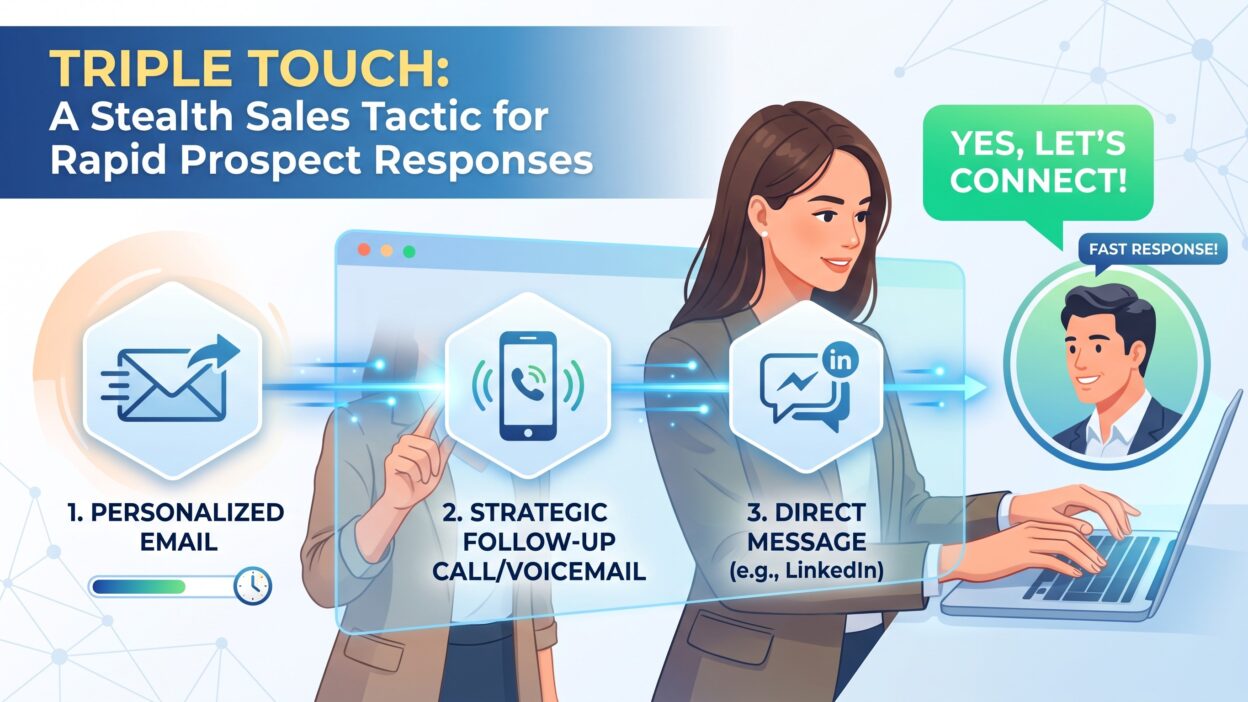
The triple touch is a prospecting strategy built on three coordinated outreach attempts made across multiple channels within a defined, compressed timeframe. Rather than sending one email and waiting two weeks to follow up, a rep using the triple touch deploys three distinct contacts — typically within 24 to 72 hours — through three different communication channels.
The channels most commonly used in a triple touch sequence include email, phone, and LinkedIn. Each touch serves a different purpose and meets the prospect where they naturally spend time. Email gives detailed context. A phone call creates a direct, human moment. LinkedIn connects the outreach to professional identity and builds credibility through visibility.
This Vivun Review 2026 approach to outreach does not exist in isolation. Most high-performing sales teams build the triple touch into their broader sequencing strategy as the initial burst of outreach for new prospects. It is not a one-time tactic applied randomly. It is a disciplined pattern applied consistently across every new prospect the team engages.
The power of the triple touch comes from two psychological principles. The first is the mere exposure effect. People respond more positively to things they have encountered multiple times. A prospect who receives three thoughtful touches from the same rep within 48 hours registers that rep as present and persistent in a way that one email never achieves. The second principle is channel diversity. Different people engage with different communication channels at different times. Reaching a prospect across email, phone, and LinkedIn dramatically increases the probability that at least one touch arrives at a moment when they are ready to engage.
Sales teams that implement the triple touch consistently report higher response rates, shorter time-to-first-conversation, and better pipeline quality compared to single-channel, low-frequency outreach strategies.
The Three Pillars of an Effective Triple Touch Sequence
Every triple touch sequence has three components. Each component plays a specific role in the overall outreach strategy. Understanding that role makes the difference between a sequence that feels coordinated and one that feels like spam.
Touch One — The Email That Opens the Door
The first touch in a triple touch sequence is almost always email. Email gives you space to deliver a relevant, personalized message without demanding an immediate response. A well-written first email introduces who you are, why you are reaching out specifically to this prospect, and what value you offer in connection to a problem they likely face.
The biggest mistake reps make with touch one is writing about themselves and their product. A strong first touch email focuses entirely on the prospect. It references something specific to their company, their role, or their industry. It names a problem they likely experience. It hints at a relevant solution without launching into a product pitch. It closes with a clear, low-friction call to action — typically a request for a short conversation rather than a demo or a proposal.
Personalization at this stage matters more than most reps realize. A generic first email wastes the entire triple touch sequence because it sets a tone of low effort that the subsequent touches cannot recover from. Research the prospect before you write. Spend three to five minutes finding one specific detail that makes your message feel relevant rather than mass-produced.
Touch Two — The Phone Call That Creates a Human Moment
The second touch in a triple touch sequence happens by phone. Make this call within 24 hours of sending the first email. The goal of touch two is not to deliver a long pitch. The goal is to create a brief, memorable human connection that differentiates your outreach from every other email sitting in the prospect’s inbox.
If the prospect picks up, introduce yourself, reference the email you sent, and ask one sharp, relevant question about the challenge your solution addresses. Keep it short. Respect their time visibly. Ask for a five-minute conversation rather than a 30-minute meeting. Most prospects respect brevity.
If the call goes to voicemail, leave a message under 30 seconds. Reference the email. State one clear reason to call back. Give your number clearly. Voicemails that exceed 30 seconds drop off sharply in return-call rates. Keep it tight and specific.
Touch Three — The LinkedIn Connection That Builds Credibility
Touch three in the triple touch comes through LinkedIn. Send a personalized connection request within 48 hours of your first email. Keep the connection message short and relevant. Reference your outreach. Mention the specific reason you wanted to connect professionally.
LinkedIn adds a credibility layer that email and phone cannot replicate. The prospect sees your profile, your professional history, your mutual connections, and your content. That visibility transforms you from an unknown name in an inbox into a real professional with a verifiable identity. That shift meaningfully reduces the friction a prospect feels before responding.
Why Triple Touch Works: The Psychology Behind the Method
Understanding why the triple touch works makes reps more confident executing it and more creative in customizing it for different prospect profiles. The method is not about volume for its own sake. It is about deliberate, psychologically informed engagement.
Repetition builds familiarity. The first time a prospect sees your name, they may notice it briefly and move on. The second time, they recognize it. The third time, recognition creates a mild sense of relationship. That sense of familiarity is not rational, but it is real. Prospects respond more warmly to reps they have encountered multiple times, even if those encounters were brief and one-sided.
Channel variety matters enormously in modern prospecting. Inboxes are crowded. Phone calls get screened. LinkedIn messages pile up. No single channel reliably cuts through on every prospect. The triple touch hedges against channel saturation by spreading outreach across three surfaces simultaneously. This approach dramatically improves the probability that at least one message lands at a moment when the prospect has attention and is in the right mental state to engage.
Timing compression creates a sense of intentionality. A prospect who receives an email on Monday, a phone call on Tuesday, and a LinkedIn request on Wednesday notices that these contacts happened close together. That proximity signals to the prospect that the outreach is purposeful rather than random. It communicates that the rep is genuinely interested in connecting rather than running a mass blast. That perception of personal intent drives response rates higher than spaced-out, single-channel follow-ups.
The triple touch also creates a natural conversation starter for future outreach. If a prospect does not respond to the initial three-touch burst, the rep’s next outreach can reference the prior attempts. That reference creates context and demonstrates persistence without aggression. Many deals that close eventually start with a prospect who ignored the first triple touch but responded months later when the timing aligned.
Reps who internalize the psychology behind the triple touch execute it with more authenticity. They understand why each touch matters and what role it plays in the broader relationship-building process. That understanding shows in the quality of their messaging and the confidence of their delivery.
How to Execute Triple Touch Across Different Prospect Types
One triple touch template does not serve all prospect types equally. A C-suite executive needs a different approach than a mid-level manager. A cold prospect needs a different sequence than a warm inbound lead. Understanding how to adapt the triple touch framework to different prospect profiles dramatically improves its effectiveness.
Triple Touch for Cold Outbound Prospects
Cold prospects have zero relationship context with your company or your product. The triple touch for cold outbound must work harder to earn attention. The first email needs unusually strong personalization. A line that references a specific company announcement, a recent funding round, a published article, or a hiring trend makes the message feel researched rather than automated.
The phone call for a cold prospect should lead with curiosity rather than information. Ask a genuine question about the prospect’s current approach to the challenge you solve. Make the call feel like the beginning of a conversation rather than the delivery of a monologue. Prospects who feel genuinely heard on a first call respond at a significantly higher rate.
The LinkedIn touch for cold outbound should include a brief note that ties to the email and the call. Avoid copying the same message across all three channels. Each touch should feel like a distinct piece of the same thoughtful outreach effort, not three repetitions of the same message delivered through different pipes.
Triple Touch for Warm Inbound Leads
Inbound leads represent the strongest version of the triple touch opportunity. These prospects already expressed interest in your company, your content, or your solution. The triple touch for a warm lead should acknowledge that prior engagement immediately.
The first email for a warm lead references the specific action the prospect took. Mention the content they downloaded, the webinar they attended, or the page they visited. Frame your outreach as a natural follow-up to their interest rather than an unsolicited pitch. This framing reduces resistance immediately because the prospect knows why you are reaching out.
The phone call for a warm lead moves faster toward a meeting request. A prospect who downloaded a buyer’s guide is further along in their thinking than a cold contact. Push for a specific meeting time on the call rather than asking vaguely whether they would like to connect at some point.
Triple Touch for Re-Engaging Dormant Prospects
Dormant prospects who went quiet after early conversations represent a high-value use case for the triple touch. These prospects already know your company. They had a reason for engaging before. Something changed and the deal stalled. A fresh triple touch sequence with new messaging, new context, or a new offer can restart momentum without requiring the rep to rebuild the relationship from zero.
Timing and Cadence: When to Deploy Each Touch
Timing separates a well-executed triple touch from one that feels aggressive or careless. The goal is to appear purposeful and persistent without crossing into annoying. Getting the timing right requires understanding how different prospects process communication and how quickly they typically respond within each channel.
The Optimal 48-Hour Triple Touch Window
The most effective triple touch sequences compress all three touches into a 48-hour window. Send the first email on day one, ideally during a period of high inbox activity. Research suggests mid-morning on Tuesday, Wednesday, or Thursday generates the strongest email open rates for B2B outreach. The phone call follows on day two, within 24 hours of the email. The LinkedIn request goes out on day two as well, either alongside the phone call or a few hours after.
This 48-hour compression creates the familiarity and intentionality effects described earlier. The prospect encounters your name three times in two days across three different channels. That pattern registers as deliberate engagement rather than random spam. The response window stays open because the prospect’s memory of the initial email remains fresh when the phone call and LinkedIn request arrive.
Extending to a 72-Hour Window for Senior Decision-Makers
Senior executives and C-suite prospects operate at high communication volume. Their inboxes process hundreds of messages. Their calendars run back to back. A 48-hour triple touch window may not give them enough time to process and respond to even the most compelling outreach. Extend to a 72-hour window for senior prospects. This gives the prospect more breathing room while still maintaining the clustering effect that makes the triple touch distinct from standard follow-up cadences.
What to Do After the Initial Triple Touch
A triple touch sequence that generates no response does not mean the prospect is not interested. It often means the timing was wrong. Wait five to seven business days after the initial triple touch before attempting a second outreach sequence. The second sequence can use a fresh angle, a new piece of relevant content, or a reference to a recent company event.
Track which touch in your triple touch sequences generates the most responses. Some reps find phone calls drive the most replies. Others find LinkedIn creates the highest engagement. Use that data to refine your sequencing and invest more effort in the channel that performs best for your specific prospect profile.
Crafting Messaging That Makes Each Touch Land
Execution quality determines whether a triple touch drives responses or fills an unsubscribe list. The technical structure of three coordinated touches matters far less than the quality of the messages inside that structure. Strong messaging on each touch requires discipline, specificity, and genuine relevance.
How to Write a Triple Touch Email That Gets Opened and Read
Subject lines determine whether the first touch even gets seen. Short, specific, curiosity-driven subject lines consistently outperform long or generic ones in B2B prospecting. A subject line that references the prospect’s specific company or challenge performs better than one that describes your product’s benefits.
The body of the first touch email should stay under 120 words. Long emails signal low respect for the reader’s time. Short emails signal confidence and clarity. Open with a relevant observation about the prospect’s situation. Follow with a clear, brief description of the specific value you offer in relation to that situation. Close with a single, direct call to action. Remove every word that does not add meaning.
Voicemail Scripts That Drive Return Calls
A strong voicemail for the phone touch in a triple touch sequence includes three elements. State your name and company clearly. Reference the email you sent so the prospect has context. Deliver one sharp, relevant reason to call back. Deliver your phone number twice — once quickly and once slowly at the end so the prospect can write it down without rewinding.
Avoid leaving voicemails that describe your product in detail. Descriptions turn voicemails into advertisements that get deleted. Questions create curiosity that generates return calls. A voicemail that ends with a question about the prospect’s current challenge creates more urgency than one that lists three product features.
LinkedIn Messages That Feel Human, Not Automated
The LinkedIn touch in a triple touch sequence must not read like a copied-and-pasted template. Mention something specific from the prospect’s profile or recent activity. Reference a post they made, a company milestone they shared, or a professional achievement that connects to the reason for your outreach. That specificity tells the prospect you spent real time engaging with their professional presence before sending a connection request.
Common Mistakes That Undermine a Triple Touch Strategy
The triple touch fails when reps understand the structure but not the principles behind it. These mistakes appear regularly across outbound sales teams of every experience level.
Sending the Same Message Across All Three Channels
The fastest way to destroy a triple touch sequence is to copy the same email message into a voicemail and a LinkedIn note. Each channel expects communication formatted for that medium. Email tolerates more length and detail. Voicemail demands brevity and a question. LinkedIn works best with context and a specific reason to connect. Using the same script across all three channels makes the outreach feel lazy and automated rather than thoughtful and coordinated.
Spacing Touches Too Far Apart
A triple touch spread across two weeks loses its clustering power entirely. Three touches spread over 14 days feel like three separate, unrelated outreach attempts rather than one coordinated engagement strategy. The proximity of the three touches is what creates the psychological impact that drives responses. Compress the touches. Maintain the 48 to 72-hour window to preserve the method’s core effectiveness.
Failing to Personalize Each Touch
Generic messaging kills response rates regardless of sequencing strategy. The triple touch amplifies the impact of personalization because the prospect encounters your name three times in a short window. If each encounter feels thoughtful and relevant, that repetition builds warmth. If each encounter feels generic and mass-produced, the repetition breeds irritation. Invest personalization effort into every touch, not just the first email.
Giving Up After One Failed Triple Touch
A single triple touch sequence that generates no response does not disqualify the prospect. Timing, competing priorities, and inbox noise all affect response rates independently of interest level. Many deals that close eventually started with two or three triple touch attempts spread across several months. Persistence with appropriate spacing communicates genuine interest. Giving up after one attempt wastes the relationship-building potential of the initial outreach investment.
FAQs — Triple Touch Sales Strategy
What is the triple touch method in sales?
The triple touch is a prospecting strategy that deploys three coordinated outreach attempts across three different channels — typically email, phone, and LinkedIn — within a 48 to 72-hour window. The method leverages the psychological effects of repetition and channel diversity to increase response rates and create a sense of purposeful engagement with new prospects.
How many times should you contact a prospect before giving up?
Most sales research suggests that 80% of deals require five or more contact attempts before a prospect responds. The triple touch covers the first three of those attempts in a compressed timeframe. After an initial triple touch sequence with no response, follow up again after five to seven business days with a fresh angle or new context. Persistence with relevant messaging drives far more responses than giving up after initial silence.
Does the triple touch work for all industries?
The triple touch works across most B2B sales environments. It performs particularly well in industries with long sales cycles, multiple stakeholders, and complex buying decisions. The specific channels and messaging must adapt to the norms of each industry. A prospect in financial services may respond differently to LinkedIn outreach than a prospect in technology. Adapt the channel mix and messaging tone to fit the prospect’s professional context while maintaining the core structure of three coordinated touches.
Can you use the triple touch for existing accounts?
Yes. The triple touch works well for re-engagement, upsell conversations, and renewal outreach inside existing accounts. Adjust the messaging to reflect the existing relationship. Reference past conversations, prior results, or upcoming milestones relevant to the account. The structure remains the same — three channels, compressed timeframe — but the tone feels warmer and more conversational than cold outbound.
What tools help manage triple touch sequences at scale?
Sales engagement platforms like Outreach, Salesloft, Apollo, and HubSpot Sales Hub all support multi-channel sequencing that automates the scheduling and tracking of triple touch campaigns. These tools allow reps to set up the sequence once and execute consistently across large prospect lists while maintaining personalization at the individual message level.
Read more:-What Is Account-Based Advertising?
Conclusion

Response rates do not improve through volume alone. Sending more emails at the same low quality produces the same poor results at higher speed. The triple touch improves results by improving the strategy behind the outreach — three deliberate, coordinated touches across three channels within a focused timeframe, each one designed to create presence, build familiarity, and invite engagement.
The method works because it respects how buyers actually behave. Buyers are busy. They miss emails. They screen calls. They check LinkedIn on their own schedule. The triple touch meets them across all three surfaces at nearly the same time, increasing the probability that at least one message arrives at a moment of readiness.
Reps who master the triple touch do not apply it mechanically. They understand the psychological principles behind it and use those principles to craft messages that feel genuinely relevant to the specific person receiving them. That combination of structural discipline and messaging quality is what separates a triple touch sequence that generates meetings from one that generates unsubscribes.
Start with the 48-hour window. Build personalization into every touch. Adapt the channel mix to your prospect type. Track your response data by touch number and channel. Refine your sequences based on what the data reveals about your specific prospect profile. Over time, the triple touch becomes one of the most reliable tools in your outbound prospecting arsenal — not because it is a trick, but because it reflects a genuine understanding of how modern buyers engage with outreach.
Build the discipline. Execute with precision. Let the triple touch do the work.