Introduction
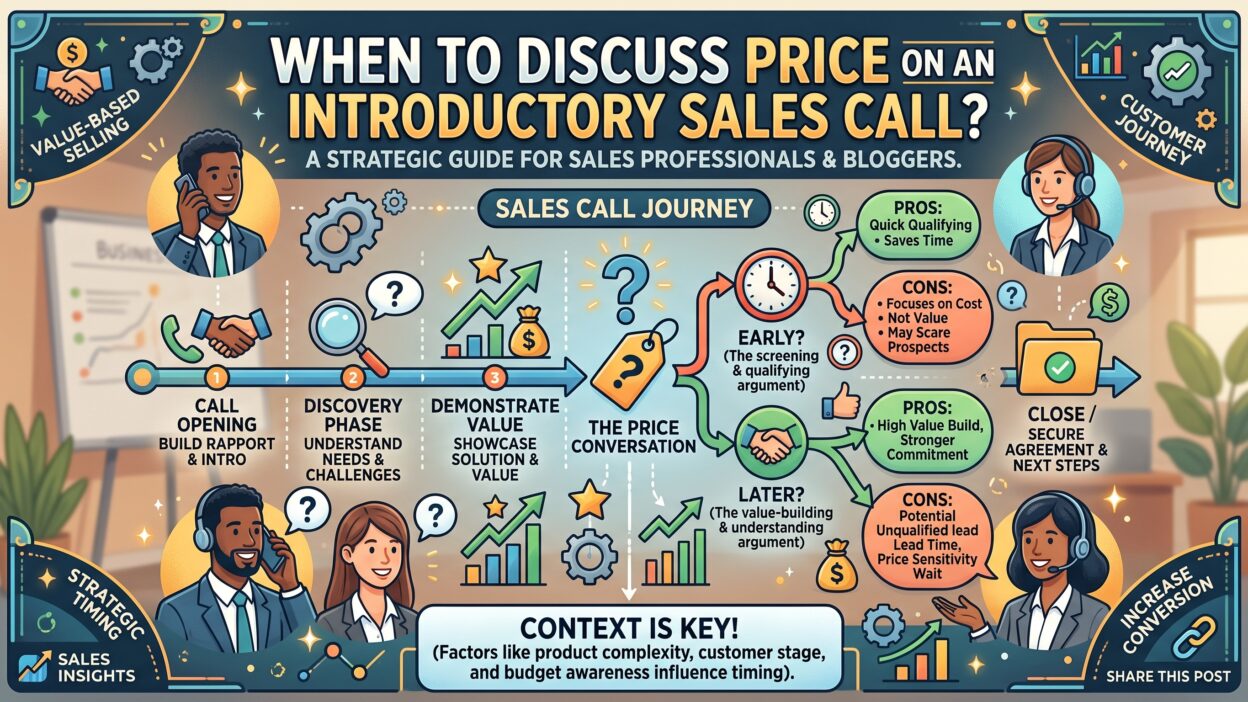
TL;DR Price is the most uncomfortable topic in sales. Ask too early and you kill curiosity before it becomes genuine interest. Wait too long and you waste both your time and the buyer’s. Every sales professional who has ever sat through an awkward pricing conversation on an introductory sales call knows exactly how wrong that moment can go. Getting the timing right is a skill. It separates reps who consistently move deals forward from those who constantly chase unqualified prospects through a leaking pipeline.
This guide answers the central question directly. It breaks down when to discuss price, when to hold back, how to handle the question when buyers raise it first, and how to protect your deal momentum no matter which direction the conversation goes.
Table of Contents
Why Price Timing Matters More Than Most Reps Realize
Timing shapes perception. A price shared too early feels like a number without context. The buyer hears a figure before they understand the value behind it. Their brain immediately compares that number to their gut feel about what something should cost rather than to the actual outcome your solution delivers. That comparison almost always works against you.
A price shared too late creates a different problem. Buyers who get deep into an evaluation and then discover the number falls far outside their budget feel their time was wasted. That frustration turns into negative word of mouth. It also burns your team’s time on a deal that never had a realistic path to close.
The introductory sales call sits at the most sensitive point in the entire buying journey. The buyer does not yet trust you. They do not fully understand your product. They have not articulated the full scope of their problem. You have not asked enough questions to understand what solution they actually need. Quoting a price in that context sets everyone up for failure.
Great sales professionals understand that the introductory sales call serves a specific purpose. That purpose is discovery. The goal is to understand the buyer’s situation deeply enough to know whether a real opportunity exists. Price is a late-stage conversation. It belongs after the buyer sees the value and after you confirm that solving their problem is worth the investment to them.
That said, rigid rules rarely survive contact with real buyers. Some prospects ask about price in the first two minutes. Some deals require a budget confirmation before any evaluation makes sense. Knowing the principles gives you the flexibility to handle each situation with confidence rather than panic.
The True Purpose of an Introductory Sales Call
Many reps treat the introductory sales call like a pitch opportunity. They arrive with slides, a feature list, and a polished talking track. They deliver their message, share their enthusiasm, and wait for the buyer to respond. That approach misses the point entirely.
The introductory sales call is a diagnostic conversation. Its job is to surface the buyer’s current situation, their primary challenges, their desired outcomes, and their buying context. Every question you ask on this call shapes your understanding of whether your solution actually fits their need and whether they represent a real opportunity worth pursuing.
Understanding the Buyer’s Problem Before Anything Else
Problem clarity drives everything. A buyer who cannot articulate a specific problem does not have urgency to buy. Without urgency, no price feels justified. Before price ever enters the conversation, you need to hear the buyer describe their challenge in enough detail that you can connect your solution to a real outcome they care about.
Ask open questions that invite the buyer to describe their situation. Ask what prompted them to take the call today. Ask what they have tried before and why it fell short. Ask what solving this problem would mean for their business or their team. These questions build the context that makes any future price conversation land with weight rather than falling flat.
Qualifying Budget as Part of Discovery — Not as a Price Quote
There is an important difference between exploring budget range and quoting a price. The introductory sales call is an appropriate place to understand whether a buyer has allocated resources for this type of solution. It is not an appropriate place to present a formal pricing structure.
A simple budget question fits naturally into discovery. Ask whether they have a budget set aside for this initiative. Ask whether they have evaluated similar solutions before and what their investment looked like. These questions tell you whether a budget conversation is even worth having at this stage. They give you directional information without locking either party into a number before value gets established.
When Discussing Price Early Is the Right Move
Not every situation follows the same script. Some introductory sales calls require an early pricing conversation. Recognizing those situations and handling them well separates experienced reps from those who follow rigid scripts regardless of context.
The Buyer Asks About Price in the First Five Minutes
This happens constantly. A buyer joins the call and immediately asks what the product costs before you have asked a single discovery question. Many reps either panic and give a number or deflect awkwardly and create tension. Neither response serves the deal.
The right approach acknowledges the question directly. Tell the buyer that pricing depends on their specific situation and what they need from the solution. Tell them you want to make sure you give them a relevant number rather than a generic range. Ask for a few minutes to understand their needs first. Most buyers respect that response when it sounds genuine rather than scripted.
Some buyers push back on that answer. They insist on a ballpark before they will share anything about their situation. In that case, give a range. Share the lowest and highest end of what a solution like yours typically costs. Frame it as directional rather than final. A budget range check on the introductory sales call prevents both parties from wasting time when the investment level is completely misaligned.
The Buyer’s Budget Is the Deciding Factor for Deal Feasibility
Some deals have a hard budget ceiling. Public sector buyers, nonprofit organizations, and companies under tight cost controls sometimes cannot move on a solution that exceeds a specific number regardless of the value delivered. In those situations, confirming budget compatibility early on the introductory sales call saves everyone significant time.
Ask direct budget questions in a respectful way. Ask whether they have an approved budget for this type of project. Ask whether there is a number they need to stay under. If the answer confirms the deal is not feasible at your price point, you have protected your team’s time while treating the buyer with respect.
The Prospect Has High Authority and a Clear Mandate
A senior decision-maker with a defined project, a clear business case, and executive sponsorship moves faster than a typical prospect. These buyers often appreciate directness. They have seen enough sales conversations to know when a rep is stalling. With this type of buyer, raising budget qualification early on the introductory sales call signals confidence rather than desperation.
When Discussing Price Too Early Kills the Deal
Most premature price conversations damage deal momentum. Understanding exactly why helps reps avoid the most common mistakes on the introductory sales call.
The Buyer Has Not Yet Seen the Value
Value justifies price. When a buyer hears a number before they understand what they get for that investment, the number floats without an anchor. Their mind fills in the gap with assumptions that almost never favor your product. They compare your price to competitor prices they vaguely remember. They compare it to what they pay for unrelated tools. They compare it to what they were hoping to spend rather than what solving the problem is worth.
The introductory sales call is the worst place to let that comparison happen. Discovery builds context. A buyer who articulates a specific pain point, quantifies the cost of that problem, and starts to see how your solution addresses it is a completely different evaluator than one who heard a price in minute three.
The Buyer Is Still in Early Research Mode
Not every person who books an introductory sales call is ready to buy. Some are gathering information for a future initiative. Some are building a business case to take to leadership. Some are simply curious after seeing an ad or a LinkedIn post. Quoting a price to a buyer at this stage creates friction rather than momentum.
An early-research buyer needs education, not a sales quote. Use the introductory sales call to understand where they are in their process. Ask whether they have executive buy-in for this initiative. Ask what their timeline looks like. Ask who else needs to be involved in the decision. These questions reveal the buyer’s readiness stage and shape how you spend the rest of the call.
Your Solution Requires Customization Before Pricing
Many B2B solutions require scoping before an accurate price exists. Professional services firms, software platforms with implementation components, and solutions with complex configuration requirements cannot give a meaningful number until they understand the specific deployment. Sharing a number on the introductory sales call before that scoping happens misleads the buyer and creates pricing expectation problems later in the deal.
Be transparent about this reality. Tell the buyer that accurate pricing requires a deeper understanding of their environment. Tell them the discovery process gives both sides the information needed to propose something relevant. That honesty builds trust and sets realistic expectations for how the evaluation will unfold.
How to Handle “What’s Your Price?” on the Introductory Sales Call
Buyers ask this question constantly. Having a confident, prepared response is essential for every rep who handles an introductory sales call regularly.
The Redirect That Keeps the Conversation Moving
The most effective response to an early price question is a confident redirect. Acknowledge the question. Explain briefly why you cannot give a useful number yet. Ask the discovery question that moves the conversation forward. Keep the tone warm rather than defensive. The buyer should feel you are helping them get the right answer, not avoiding their question.
A response like this works well in most situations. Tell the buyer your pricing depends on the size of their team and the specific capabilities they need. Tell them solutions like yours typically range from a specific low figure to a specific high figure depending on scope. Tell them you want to make sure they get a number that actually reflects their situation. Ask them to share a bit about what they are trying to accomplish.
That response gives a directional range, demonstrates transparency, and redirects to discovery without creating tension. Most buyers find it reasonable.
When to Give a Range Versus a Specific Number
Ranges work on the introductory sales call. Specific numbers work after scoping. A range gives the buyer enough information to self-qualify without locking you into a commitment before you know what they need.
Set your range wide enough to cover most common configurations but specific enough to be useful. A range so wide it encompasses virtually any price level tells the buyer nothing. A range that narrows reasonably based on their situation shows you understand your own product’s pricing logic.
How to Turn a Price Question Into a Discovery Conversation
The best reps use a price question as a discovery tool. When a buyer asks about price, they reveal that investment is on their mind. That tells you something useful. Follow up the redirect with a question about their current investment in whatever they use today. Ask what their budget process looks like for this type of initiative. Ask who controls the budget decision.
These questions turn an awkward pricing moment on the introductory sales call into a productive conversation about buying authority and budget reality.
How to Qualify Budget Without Quoting a Price
Budget qualification is a discovery skill. It does not require sharing your price. It requires asking questions that reveal whether the buyer can realistically invest in a solution at your level. Every strong introductory sales call includes some form of budget qualification, even if price itself never gets mentioned.
Questions That Surface Budget Reality Without Pressure
Ask about prior investments in similar solutions. A buyer who has never invested in your category does not have a reference point for what appropriate spending looks like. That conversation requires more education before a number makes sense.
Ask about the initiative’s priority level within their organization. High-priority initiatives have budget. Low-priority initiatives often rely on finding budget later, which rarely happens quickly. Priority signals whether real money exists behind the interest.
Ask about their decision timeline. Deals with a specific quarter close date usually have a confirmed budget. Deals with vague future timelines often lack budget clarity. Timeline and budget correlate strongly in most B2B buying situations.
Ask what their evaluation process looks like and who else is involved. Multiple stakeholders on a buying committee often mean a more formal budget approval process. Understanding that process on the introductory sales call helps you know what evidence and documentation the buyer will need to get a purchasing decision approved.
How to Confirm Budget Fit Without Creating Awkwardness
A direct budget question framed correctly does not feel intrusive. Frame it around helping the buyer rather than qualifying them for your time. Tell the buyer you want to make sure you recommend the right solution for their situation and that understanding their investment range helps you do that. Ask whether they have a budget established for this type of project.
Most buyers answer honestly when the question feels helpful rather than gatekeeping. Some give a specific number. Some give a range. Some say they are still figuring it out. All three responses give you useful information for the next step.
Common Mistakes Reps Make Around Pricing on Introductory Sales Calls
Understanding what goes wrong helps reps build better habits faster. These mistakes appear regularly across every industry and every type of introductory sales call.
Giving a Price Before Asking a Single Question
This mistake happens when reps feel anxious about seeming evasive. They rush to give a number to appear transparent. The result is a price without context that the buyer has no framework to evaluate fairly. Ask at least three to five solid discovery questions before price enters the conversation on any introductory sales call.
Refusing to Engage With the Price Question at All
Some reps deflect price questions so aggressively they create distrust. The buyer feels they are hiding something. A refusal to engage feels like a sales tactic, not a helpful conversation. Acknowledge the question every time. Give directional information. Then redirect to discovery. That approach respects the buyer while protecting the conversation structure.
Anchoring Too High Without Setting Context
Sharing a high number without context triggers sticker shock. Sticker shock on an introductory sales call is very difficult to recover from. Buyers anchor to the first number they hear. If that number feels too high without value context, their evaluation starts from a position of skepticism. Always pair a number with a relevant value statement when price must come up early.
Caving on Price Before the Buyer Even Pushes Back
Some reps pre-emptively discount on the introductory sales call to seem flexible. This move signals that your price was not real to begin with. It trains the buyer to push harder later. Hold your pricing position on the introductory sales call. Reserve flexibility for later negotiation stages when the buyer has seen the value and made a genuine push.
FAQs — Introductory Sales Call and Price Discussions
Should you always avoid discussing price on a first sales call?
Not always. The introductory sales call is generally the wrong place for formal pricing. It is the right place for budget qualification and directional range discussion if the buyer raises the topic or if feasibility is in question. Avoid detailed pricing conversations until discovery reveals a real fit. Adjust based on the buyer’s specific situation and buying stage.
What if the buyer refuses to continue without knowing the price?
Give a range. A buyer who insists on a number before engaging further is exercising their right to self-qualify. Respect that. Share your typical range, explain that the final number depends on their specific situation, and invite them to continue the conversation. Some buyers will proceed. Others will decide the range does not fit. Both outcomes save time for both parties.
How do you bring up budget without sounding like you are screening the buyer?
Frame budget questions as part of helping the buyer find the right solution. Tell them that understanding their investment range helps you recommend the configuration that fits their needs and their situation. Ask whether they have a budget established for this initiative. That framing positions you as an advisor rather than a gatekeeper. Most buyers respond openly to that framing on an introductory sales call.
What is the best response when a buyer says “your price is too high” on the first call?
Ask what they are comparing your price to. Ask what they budgeted for this type of solution. Ask what outcome they expect for that investment. These questions surface whether the objection is real or reflexive. Many early price objections on an introductory sales call disappear once the buyer understands the value delivered for that investment.
How long should an introductory sales call last?
Most introductory sales calls run 20 to 45 minutes. Shorter calls work for SDR qualification conversations. Longer calls suit account executives doing full discovery on complex deals. Time spent on discovery directly shapes the quality of the rest of the sales process.
Read More:-Social Media Strategy Template for Go-to-Market Teams
Conclusion

Price is not the enemy on a sales call. Poor timing is. The introductory sales call exists to open a relationship, surface a real problem, and confirm that a genuine fit exists between what the buyer needs and what your solution delivers. Price belongs in that conversation only when the context supports it.
The strongest sales professionals treat the introductory sales call as a discovery investment. Every question they ask builds the context that makes the eventual pricing conversation land with force rather than resistance. They do not avoid price. They sequence it correctly. They understand that a buyer who sees clear value before hearing a number evaluates that number completely differently than one who hears a price cold.
Develop a confident response to early price questions. Practice redirecting without deflecting. Build discovery habits that surface budget reality without creating awkwardness. Know when a situation calls for an early range and when it calls for a conversation before any number gets shared.
The introductory sales call sets the tone for every conversation that follows. Handle price timing well on this call and the rest of the deal moves with more trust, more momentum, and fewer surprises. Handle it poorly and you spend the rest of the sales cycle trying to overcome a bad first impression that never fully fades.
Master this moment. It pays dividends across every deal you run.