Introduction
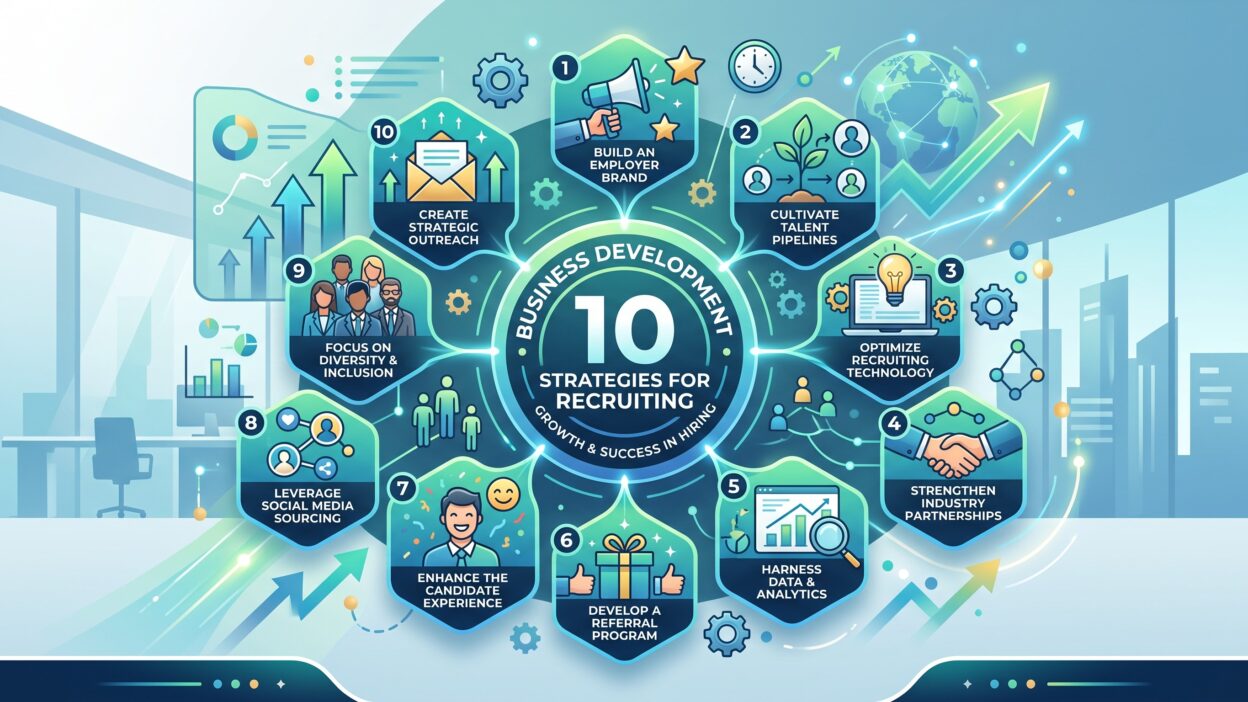
TL:DR Recruiting firms live and die by their client pipeline. A great recruiter can source top talent all day long, but without new business, the desk goes quiet fast. That’s why smart agency owners treat growth as a discipline, not an accident. This guide breaks down ten proven business development strategies for recruiting that actually move the needle. You’ll find real tactics for building your brand, filling your pipeline, and turning candidates into clients. Each section gives you specific steps you can apply this week.
Recruiting is a relationship business first and a sales business second. Clients hire people they trust, not just agencies with a nice logo. Candidates work with recruiters who remember their name and their career goals. The strategies below blend both sides of the equation. Some focus on winning new clients. Others focus on keeping candidates engaged so your pipeline never runs dry. Together, they form a complete playbook. Read through each one, pick a starting point, and build from there.
Table of Contents
1. Build a Strong Employer Brand That Attracts Clients and Candidates
Your brand is often the first thing a prospective client sees before they ever call you. A weak or generic brand makes you look like every other staffing shop in town. A sharp, consistent brand builds trust before the first conversation even starts. This is one of the most overlooked business development strategies for recruiting, yet it drives every other tactic on this list.
Think about the last time you searched for a service online. You probably judged the company by its website and reviews before picking up the phone. Clients do the same thing when they search for a staffing partner. Your brand needs to answer their unspoken question fast: can this agency actually deliver?
Define Your Niche and Voice
Pick an industry or role type and own it. Generalist agencies struggle to stand out. Specialist agencies win trust fast because clients see proof of expertise. Write your website copy, social posts, and pitch decks around that specialty. Use language your target clients actually use in their own job postings. This consistency signals real expertise instead of a scattershot approach.
Showcase Client Wins and Testimonials
Case studies sell better than claims. Ask past clients for short quotes about placement speed, quality of hires, or retention rates. Post these on your site and in proposals. Numbers work better than adjectives. Say “filled 12 roles in 45 days” instead of “fast and reliable.” Specific proof removes doubt during a first meeting.
Keep Your Online Presence Active
Update your LinkedIn page weekly. Share market insights, salary data, and hiring trends. Recruiters who post consistently get inbound leads without cold calling. This builds authority slowly but steadily, and it compounds over time. A quiet profile signals a quiet business, even when that isn’t true.
2. Create a Talent Pipeline Strategy Before You Need It
Reactive recruiting kills deals. Clients want speed, and speed comes from having candidates ready before the job order lands. A talent pipeline strategy turns your bench into a competitive edge and supports nearly every business development strategy for recruiting on this list.
Agencies that scramble for candidates after winning a role always lose ground to competitors with a warm bench. Building a pipeline takes patience upfront, but it pays off every time a client calls with an urgent need.
Map Out Your Target Roles
List the five to ten roles you place most often. Build separate talent pools for each one. Tag candidates by skill level, location, and availability. This makes searches faster when a client calls with urgency. A clear map also shows you which roles need more sourcing attention.
Nurture Passive Candidates Regularly
Don’t wait until you need someone to reach out. Send a quick check-in every few months. Ask about career goals and current satisfaction. Passive candidates remember recruiters who stay in touch without pushing. This habit turns cold contacts into warm relationships over time.
Use a CRM to Track Everything
A messy spreadsheet loses candidates and deals. A proper CRM tracks conversations, follow-up dates, and placement history. This turns your pipeline into a searchable asset instead of scattered notes. Good software pays for itself the first time it saves a lost contact.
3. Leverage Employee Referral Programs for New Business
Referrals close faster and cost less than cold outreach. Both candidates and clients trust a warm introduction over a stranger’s pitch. Building a referral engine is one of the cheapest business development strategies for recruiting available to any agency, regardless of size.
Word of mouth still drives most staffing decisions, even in a digital world. A single happy client can bring you three more without a single ad dollar spent.
Ask Placed Candidates for Introductions
Once someone starts a new job through you, ask if they know other people looking. Timing matters here. People feel grateful right after a placement, so this is the best moment to ask. A simple message works better than a formal request.
Reward Clients Who Refer New Business
Offer a discount or a small perk for client referrals. A simple thank-you note works too. Clients refer recruiters who made their hiring process easy, not just recruiters who filled the role. Recognition keeps that referral habit alive.
Build a Formal Referral Process
Don’t leave referrals to chance. Create a short script your team uses after every successful placement. Track referral sources in your CRM so you know which relationships bring the most value. Formal systems catch opportunities that casual habits miss.
4. Use Data-Driven Recruiting Metrics to Guide Growth
Numbers tell you where to focus your energy. Guessing wastes time and money. Agencies that track the right metrics grow faster because they double down on what already works.
Data removes emotion from decision-making. Instead of arguing about which strategy feels right, teams can point to numbers and act on facts.
Track Time-to-Fill and Placement Rate
These two numbers show how efficient your desk really is. Slow time-to-fill signals a pipeline problem. Low placement rate signals a matching problem. Fix the right issue instead of guessing. Review both numbers weekly, not just at quarter’s end.
Monitor Client Retention and Repeat Business
New clients cost more to win than repeat clients. Track how many clients come back within twelve months. A low repeat rate means your service needs attention, not just your sales pitch. Retention data often reveals problems faster than client complaints do.
Review Source-of-Hire Data Monthly
Know exactly where your best candidates and clients come from. This tells you where to spend your marketing budget and where to cut waste. Data removes guesswork from every business development strategy for recruiting you try. A monthly habit keeps this information fresh and actionable.
5. Strengthen Client and Candidate Relationships for Long-Term Growth
Transactional recruiting burns out fast. Relationship-driven recruiting builds a business that lasts. Clients and candidates both remember how you made them feel, not just the outcome of one placement.
The best recruiters treat every placement as the start of a relationship, not the end of a transaction. That mindset shift changes how clients and candidates talk about your agency.
Check In After Every Placement
Call the client thirty days after a hire starts. Ask how things are going. This small gesture separates you from recruiters who disappear after the invoice clears. It also gives you an early warning if the placement isn’t working out.
Stay in Touch With Candidates You Didn’t Place
Rejected candidates today become placed candidates tomorrow. Send a short note explaining why the fit wasn’t right this time. Most candidates appreciate honesty and remember it. This small courtesy builds a reputation that outlasts any single search.
Treat Every Interaction as a Long-Term Investment
Short-term thinking kills referrals and repeat business. Every phone call either builds trust or erodes it. Choose trust every time, even when a deal doesn’t close. Agencies with this mindset outperform agencies chasing quick wins.
6. Invest in Niche Market Specialization
Broad recruiting agencies compete on price. Specialized agencies compete on expertise, and expertise commands higher fees. Niching down is one of the fastest business development strategies for recruiting firms looking to escape a race to the bottom.
Specialization also makes marketing simpler. A focused message reaches the right people faster than a message trying to appeal to everyone.
Choose an Industry With Steady Demand
Healthcare, tech, and finance consistently need specialized talent. Research which industries in your area have hiring gaps. Pick one where your existing network already gives you an edge. Existing relationships shorten the time it takes to gain traction.
Learn the Industry’s Language and Pain Points
Clients trust recruiters who understand their world. Learn the certifications, tools, and job titles specific to your niche. This knowledge shows up naturally in every client conversation. Fluency in an industry’s language builds credibility faster than any pitch deck.
Position Yourself as the Go-To Expert
Publish content specific to your niche. Speak at industry events if you can. Over time, clients start calling you first because you’re known for that space. Visibility inside a niche compounds faster than visibility across a broad market.
7. Expand Through Strategic Partnerships and Alliances
Partnerships open doors that cold outreach never will. Other businesses already have relationships with your target clients. Borrowing that trust speeds up your growth significantly.
Partnerships also spread the workload. Instead of building every relationship from zero, you tap into networks that already trust your partner.
Partner With Complementary Service Providers
HR consultants, payroll companies, and benefits brokers often work with the same clients you want. Build relationships with these providers. Offer to refer clients to each other. This kind of mutual referral arrangement costs nothing but time.
Join Industry Associations and Chambers
Membership gives you access to networking events and client lists. Attend regularly instead of just joining. Consistent presence builds recognition faster than one-off appearances. People remember faces they see more than once.
Collaborate With Other Recruiting Firms
Sub-contracting or split-fee arrangements let you serve clients outside your specialty. This keeps clients loyal to you even when the role falls outside your niche. Collaboration beats losing a client to a competitor entirely.
8. Optimize Digital Marketing for Recruitment Business Growth
Modern clients research recruiters online before calling. A weak digital presence loses deals before your team even makes contact. Digital marketing has become essential among business development strategies for recruiting agencies today.
A strong digital presence works around the clock. It answers client questions and builds trust while your team focuses on placements.
Run Targeted LinkedIn Ads
LinkedIn lets you target by job title, industry, and company size. Small budgets can still generate solid leads if the targeting is tight. Test different messages to see what resonates. Small adjustments to ad copy often double response rates.
Build an SEO-Optimized Website
Clients search for terms like “recruiting agency near me” or industry-specific staffing keywords. A website built around these searches brings in inbound leads without cold calling. Fast load times and clear service pages matter more than flashy design. Simple, clear pages convert better than cluttered ones.
Send Regular Email Newsletters
Stay visible between projects. Share hiring trends, salary benchmarks, and success stories. Consistent emails keep your name top of mind when a client finally has an opening. A monthly rhythm works well for most agencies.
9. Focus on Candidate Experience as a Growth Driver
Candidates talk. A bad experience spreads through reviews and word of mouth fast. A great experience turns candidates into advocates who recommend you to friends and future employers.
Candidate experience shapes your reputation just as much as client results do. Agencies that ignore this side of the business lose referrals they never see coming.
Communicate Clearly at Every Stage
Tell candidates what to expect and when. Silence creates anxiety and damages your reputation. A quick update, even with no news, keeps trust intact. Clear communication costs little but builds lasting goodwill.
Give Constructive Feedback
Candidates who don’t get the job still deserve honest feedback. This builds goodwill and keeps the door open for future roles. Ghosting candidates destroys your reputation faster than almost anything else. A short, honest note goes a long way.
Make the Process Simple
Long application forms and confusing steps drive candidates away. Simplify every stage of your process. Easy experiences get shared, and shared experiences bring more candidates without extra spend. Every removed step improves your completion rate.
10. Track ROI and Refine Your Business Development Approach
Growth strategies need regular review. What worked last year might not work now. Agencies that review their approach quarterly stay ahead of agencies that set a plan and forget it.
Markets shift, and client needs shift with them. A strategy review keeps your agency aligned with what clients actually want right now.
Calculate Cost Per Placement
Know exactly what each placement costs in time and marketing spend. This number tells you which channels deserve more investment and which ones drain resources without return. Clear cost data makes budget decisions easier.
Survey Clients and Candidates for Feedback
Direct feedback reveals problems metrics miss. Send a short survey after every placement. Look for patterns across responses instead of reacting to single comments. Patterns point to real issues worth fixing.
Adjust Your Strategy Every Quarter
Set aside time every quarter to review what’s working. Cut tactics that underperform. Double down on the business development strategies for recruiting that bring consistent results. Growth comes from steady refinement, not one big plan.
Why These Strategies Work Better Together
No single tactic on this list works in isolation. A strong employer brand means little without a pipeline ready to fill new roles. A great referral program falls flat if candidate experience drives people away. The real power shows up when you combine several business development strategies for recruiting into one connected system.
Think of your agency’s growth engine like a wheel with several spokes. Remove one spoke, and the wheel still turns, but it wobbles. Remove several, and it collapses. Branding brings attention. Pipelines and data turn that attention into results. Relationships and referrals keep the wheel spinning without constant new fuel. Partnerships and niche focus give the wheel direction instead of random spin.
Most agencies pick one or two tactics and stop there. That’s a mistake. Start small, but plan to layer in more strategies as each one becomes routine. An agency running five or six of these consistently will always outgrow an agency running just one, no matter how well that single tactic performs.
Frequently Asked Questions
What is business development in recruiting? Business development in recruiting means winning new clients, growing existing accounts, and building a steady pipeline of job orders. It covers marketing, networking, referrals, and relationship management, all aimed at keeping the agency’s pipeline full. Agencies that treat this as an ongoing discipline grow faster than agencies that treat it as an occasional task.
How do recruiting agencies find new clients? Most agencies find new clients through referrals, LinkedIn outreach, industry events, and content marketing. A strong employer brand and niche specialization also bring inbound leads without heavy cold calling. Combining several channels works better than relying on just one.
What makes a recruiting business grow faster? Agencies grow fastest when they specialize in a niche, track performance data, and invest in candidate and client relationships. Consistent follow-up and a clear digital presence also speed up growth. Small, repeated actions build momentum over time.
How important is candidate experience for business growth? Candidate experience directly affects referrals and reputation. Candidates share good and bad experiences widely, so a smooth process brings in more business over time without extra marketing spend. This makes candidate care a real growth strategy, not just a nicety.
Should small recruiting agencies specialize in a niche? Yes. Niche specialization helps small agencies compete against larger generalist firms. It builds expertise, earns higher fees, and makes marketing efforts more focused and effective. A tight focus often beats a broad, unclear offer.
How often should recruiting agencies review their growth strategy? Quarterly reviews work best for most agencies. This gives enough time to see results from a tactic while still allowing quick adjustments when something isn’t working. Waiting a full year often means missed opportunities.
Can a recruiting agency use these strategies without a big budget? Yes. Many business development strategies for recruiting, like referrals, follow-up calls, and candidate communication, cost nothing but time. Paid tactics such as ads and sponsored content help, but they aren’t required to start seeing results.
What’s the biggest mistake agencies make with business development? The biggest mistake is treating growth as a one-time project instead of an ongoing habit. Agencies that stop marketing once business picks up usually see a slowdown a few months later. Consistency matters more than intensity.
Read More:-The Art of Cold Email: Get Personal, Ask for Action
Conclusion

Growing a recruiting business takes more than good candidates and open job orders. It takes a clear plan for winning and keeping clients. The ten strategies above cover the full picture, from branding and pipelines to data and partnerships. Start with one or two that fit your agency best. Track your results, and add more over time. Consistent effort with the right business development strategies for recruiting builds an agency that grows steadily, year after year. The agencies that win aren’t always the biggest ones. They’re the ones that show up consistently, treat people well, and refine their approach one quarter at a time.