Introduction
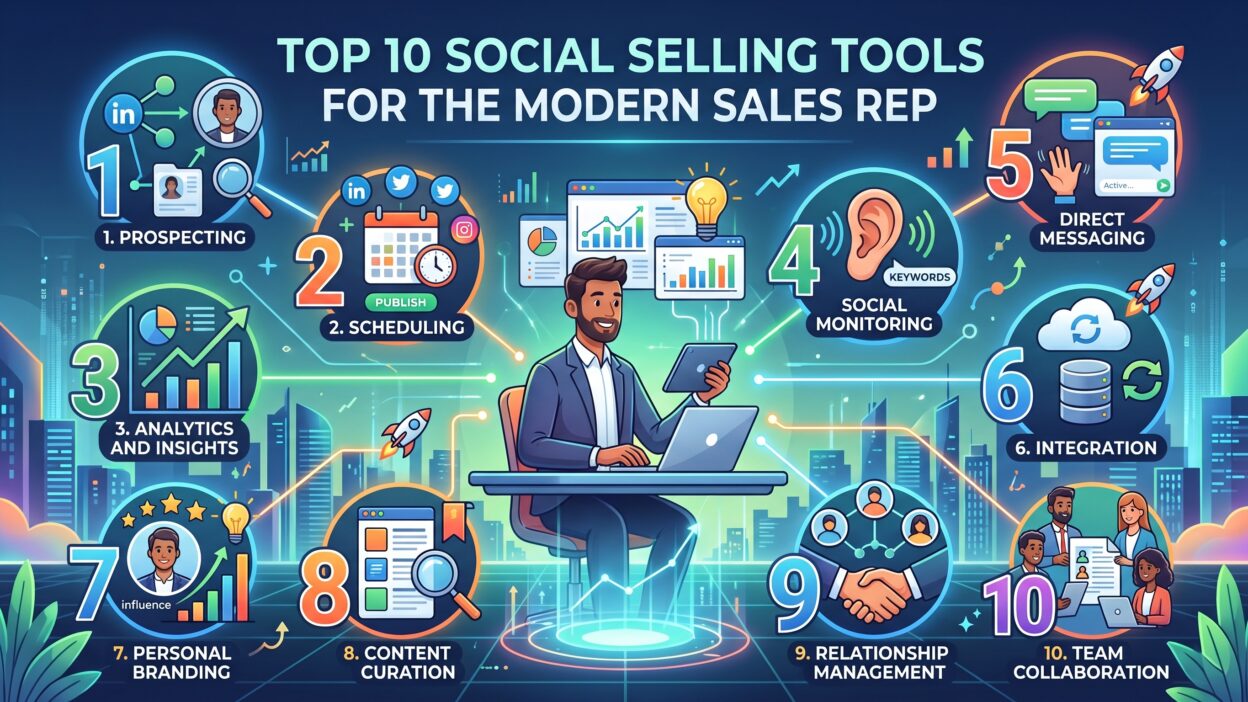
TL:DR Sales has changed dramatically in the last decade. Cold calls no longer rule the game. Email blasts get ignored. Buyers do their research long before they talk to a rep. Smart sales reps meet prospects where they already spend their time — online. That shift is called social selling, and it works. The right social selling tools give reps a massive competitive edge. They help you find leads, build trust, and close deals without ever feeling pushy. This blog covers the top 10 social selling tools every modern sales rep should know about. Each one serves a specific purpose. Together, they form a powerful system that drives real pipeline.
Table of Contents
What Is Social Selling and Why Does It Matter?
Social selling is the practice of using social media platforms to find, connect with, and nurture potential buyers. It replaces interruption-based tactics with relationship-first strategies. A rep who uses social selling tools consistently builds credibility over time. Buyers start to recognize them as experts. When purchase decisions arise, those reps already have a head start. According to LinkedIn, social selling leaders create 45% more opportunities than peers with lower Social Selling Index scores. That number speaks for itself. Companies that invest in the right social selling tools see shorter sales cycles, higher win rates, and stronger customer loyalty.
How to Choose the Right Social Selling Tools
Not every tool fits every sales motion. A solo rep at a startup needs different tools than an enterprise sales team. Before choosing, ask a few key questions. What platforms do your buyers use most? Do you need prospecting, content creation, analytics, or all three? What is your budget? Answering these questions helps you narrow down which social selling tools will deliver real ROI. The ten tools below cover a wide range of use cases. Read through each one carefully and match it to your specific situation.
The Top 10 Social Selling Tools for Sales Reps in 2025
1. LinkedIn Sales Navigator
LinkedIn Sales Navigator sits at the top of nearly every list of social selling tools. The reason is simple — LinkedIn is where B2B buyers live. Sales Navigator gives reps access to a massive database of professional profiles. It goes far beyond a standard LinkedIn search. Reps can filter by job title, company size, industry, geography, and seniority level. The result is a highly targeted list of ideal prospects.
Key Features of LinkedIn Sales Navigator
The platform offers real-time account updates so reps know exactly when a prospect gets promoted, changes jobs, or posts new content. Lead recommendations surface based on your ideal customer profile. The InMail feature lets you message prospects directly, even without a connection. Teams that use Sales Navigator consistently report higher response rates than those relying on cold email alone.
Who Should Use It
Any B2B sales rep who sells to mid-market or enterprise companies should use Sales Navigator. It works especially well for reps in SaaS, professional services, and financial services. The investment pays off quickly when reps use the data to personalize outreach.
Sales Navigator integrates with most major CRMs. HubSpot, Salesforce, and Microsoft Dynamics all connect seamlessly. This integration keeps data clean and saves hours of manual entry each week.
2. HubSpot Sales Hub
HubSpot Sales Hub combines CRM functionality with social selling tools in one platform. It gives reps a complete view of every prospect interaction. Email opens, website visits, LinkedIn activity, and meeting history all appear in a single timeline. That context helps reps have smarter conversations.
Why HubSpot Works for Social Selling
The platform tracks when a prospect engages with your content. Reps get notified in real time. That signal tells you exactly when to reach out. Timing matters enormously in social selling. Reaching a prospect right after they engage with your post creates a natural, relevant reason to connect. HubSpot turns that data into action automatically.
The sequences feature lets reps automate follow-up steps while keeping outreach personalized. Reps write the messages. The system handles the timing. Managers get reporting dashboards that show which reps are most active on social channels and which actions drive the most meetings booked.
3. Hootsuite
Hootsuite is one of the most popular social selling tools for content scheduling and social listening. Content is the engine of social selling. Reps who post regularly build an audience over time. That audience becomes a warm pool of potential buyers. Hootsuite makes it easy to plan, schedule, and publish content across multiple platforms from one dashboard.
Social Listening With Hootsuite
The platform includes streams that monitor keywords, hashtags, and mentions. Reps can track conversations happening in their industry right now. When a prospect posts about a challenge your product solves, Hootsuite surfaces that signal immediately. That creates a perfect opening for a thoughtful, timely comment or direct message.
Teams use Hootsuite to maintain a consistent posting schedule without spending hours each day on social media. Consistency is everything in social selling. Buyers notice reps who show up regularly. Sporadic posting makes it harder to build the trust needed to close deals.
4. Sprout Social
Sprout Social is another strong contender among social selling tools, particularly for teams that prioritize analytics. While Hootsuite focuses on scheduling, Sprout Social goes deeper on data. Reps and managers can see exactly which content resonates with their audience. Engagement rates, reach, and click-through data inform future content decisions.
Sprout Social’s Smart Inbox
The Smart Inbox feature aggregates all social mentions and messages into one place. Reps never miss a comment or DM. Fast responses build rapport. Buyers pay attention to how quickly a rep engages with them online. Sprout Social makes it easy to stay on top of every conversation without toggling between apps.
The CRM tagging feature lets reps label contacts and track relationship history. Over time, this creates a rich record of every touchpoint with each prospect. That context helps reps personalize every interaction.
5. Gong
Gong is a revenue intelligence platform that has become a go-to among social selling tools for teams focused on call and content analysis. It records, transcribes, and analyzes every sales interaction. Reps get detailed feedback on what language drives buyer engagement and what kills deals.
How Gong Supports Social Selling
Social selling does not stop at social media. It extends into every touchpoint — calls, demos, and emails. Gong analyzes patterns across all of those interactions. Managers can see which reps reference social insights during calls. They can identify which talk tracks perform best after a prospect has engaged with content online.
Gong also surfaces deal risks. If a prospect goes dark after a promising social interaction, Gong flags the stall. Reps can re-engage before the opportunity dies. The platform turns conversation data into a coaching engine that makes every rep sharper over time.
6. Crystal
Crystal is one of the most unique social selling tools available. It uses AI to analyze public data and predict a prospect’s personality type. Understanding how someone prefers to communicate is a massive advantage in social selling. Crystal tells you whether a prospect values directness, data, storytelling, or relationship-building. That insight shapes how you write your outreach messages.
Practical Uses of Crystal
When a rep knows a prospect is analytical, they lead with data and ROI figures. When a prospect is relationship-driven, they start with personal connection. Crystal gives reps that intelligence before the first message. The result is outreach that feels natural and relevant. Prospects respond better to messages that match their communication style.
Crystal integrates with LinkedIn and Gmail. Reps can see personality insights directly within their existing workflow. The learning curve is minimal. The payoff in response rates is significant.
7. Vidyard
Vidyard is a video messaging platform that has earned its place among top social selling tools. Video cuts through inbox noise in a way that plain text cannot. A short, personalized video message grabs attention immediately. Buyers see a real face and hear a real voice. That human element builds trust faster than any email ever could.
Why Video Works in Social Selling
Prospects receive dozens of generic outreach messages every day. A 60-second personalized video stands out immediately. Reps can record quick intros, product demos, or follow-up messages directly from their browser. Vidyard tracks when a prospect watches the video and how much of it they view. That engagement data tells reps exactly when to follow up.
Vidyard integrates with LinkedIn, Gmail, and most major sales platforms. Reps can drop a video thumbnail directly into a LinkedIn message or email. The visual element increases click rates dramatically. Teams that add Vidyard to their social selling tools stack report measurable improvements in reply rates.
8. Bombora
Bombora is a B2B intent data platform. It tracks what topics companies are actively researching online. This makes it one of the most powerful social selling tools for prioritizing outreach. Not every prospect is ready to buy right now. Bombora tells you which accounts are surging on topics related to your product. Those accounts deserve your immediate attention.
How Intent Data Improves Social Selling
When an account shows a spike in research around a topic your product addresses, that is a strong buying signal. Bombora surfaces these signals daily. Reps can focus their social outreach on accounts that are already in an active research phase. This makes conversations more relevant and timely.
The data integrates with CRMs and sales engagement platforms. Reps see intent scores directly within their prospecting workflow. Prioritization becomes data-driven. High-intent accounts get attention first. The result is better use of time and higher conversion rates from social outreach.
9. Orum
Orum is an AI-powered parallel dialing platform. It belongs on this list of social selling tools because modern social selling does not eliminate phone outreach — it makes calls smarter. Reps who warm up a prospect on LinkedIn before calling see much higher answer rates. Orum connects calls faster so reps spend more time talking and less time waiting.
Combining Social Signals With Phone Outreach
The best social selling strategies use multiple channels. A rep might engage with a prospect’s post on LinkedIn, follow up with a personalized video, and then call when the timing feels right. Orum handles the dialing so reps can focus entirely on the conversation. The platform also includes coaching features. Managers can listen live, whisper tips to reps, and review call recordings afterward.
Orum tracks connect rates and conversation quality over time. Reps see their own performance data and identify areas to improve. When used alongside social selling tools like LinkedIn Sales Navigator, Orum creates a complete multichannel outreach engine.
10. Shield Analytics
Shield Analytics is built specifically for LinkedIn. It tracks the performance of every post, comment, and engagement action a rep takes on the platform. This makes it one of the most targeted social selling tools available for LinkedIn-focused sales teams. Most reps post on LinkedIn without knowing what actually works. Shield changes that.
What Shield Analytics Measures
Shield tracks impressions, engagements, follower growth, and content performance over time. Reps can see which post formats drive the most views. They can identify the best times to post based on historical engagement data. That information shapes a smarter content strategy.
Managers use Shield to compare content performance across the entire sales team. Top performers share what works. Newer reps learn from real data rather than guesswork. Over time, the whole team builds a stronger LinkedIn presence. A strong presence attracts inbound interest from potential buyers. Inbound leads from social selling are typically more qualified and easier to close than outbound prospects.
Related Topics to Explore
Sales reps and marketers searching for social selling tools often also research related terms. Here are the most important secondary keywords that complement this topic.
Social selling strategy covers the playbook behind using these tools effectively. It includes how to build a personal brand, engage with content, and convert social connections into pipeline.
B2B social selling focuses specifically on selling to businesses through platforms like LinkedIn. The tactics differ from B2C social selling because the buying cycle is longer and involves multiple stakeholders.
LinkedIn social selling narrows the focus to one platform. LinkedIn remains the dominant network for professional selling. Tools like Sales Navigator and Shield Analytics are built specifically for this environment.
Social selling index refers to LinkedIn’s proprietary score that measures a user’s effectiveness at social selling. A high score correlates with better pipeline outcomes.
Sales prospecting tools overlap significantly with social selling tools. Many reps use both categories together to build a complete outreach workflow.
Personal branding for sales is closely tied to social selling. Reps who invest in their personal brand generate more inbound interest and warm leads over time.
How to Build a Social Selling Workflow With These Tools
Choosing tools is only half the job. Building a daily workflow that actually drives results is the other half. The most effective social selling workflows follow a consistent rhythm.
Start each morning by checking your social listening streams. Hootsuite or Sprout Social can show you what your target accounts posted overnight. Look for opportunities to comment thoughtfully. Add genuine value to the conversation. Do not pitch. Just engage.
Spend 20 minutes reviewing your intent data from Bombora. Identify which accounts show buying signals today. Cross-reference those accounts with your LinkedIn Sales Navigator saved leads. Prioritize your outreach list based on who is actively researching.
Create or share one piece of content each day. It does not need to be long. A short observation about an industry trend, a lesson from a recent customer conversation, or a question for your network all work. Consistency matters more than perfection. Shield Analytics will show you over time which formats your audience prefers.
Use Vidyard to record personalized video messages for high-priority accounts. Keep each video under 90 seconds. Reference something specific about the prospect’s company or recent activity. Personal details show that you did your homework.
End each day by logging activity in HubSpot. Note which prospects engaged, which conversations moved forward, and which accounts need a follow-up next week. Clean data in your CRM makes the whole social selling system work better over time.
Common Mistakes Reps Make With Social Selling Tools
Buying tools without a strategy is the most common mistake. Social selling tools amplify effort. They do not replace it. A rep who pitches immediately after connecting on LinkedIn will not see results regardless of which tools they use. Buyers on social media expect value first. They expect respect for their time. They want to feel like a person, not a target.
Another common mistake is spreading across too many platforms. Pick one or two where your buyers actually spend time. For most B2B reps, LinkedIn is the primary platform. Trying to maintain a presence on LinkedIn, Twitter, Instagram, and Facebook simultaneously leads to burnout and mediocre results everywhere. Focus wins.
Ignoring analytics is a third mistake. Social selling tools generate a lot of data. Reps who ignore that data miss opportunities to improve. Review your Shield Analytics report weekly. Look at which posts drove the most engagement. Double down on what works. Stop doing what does not.
Frequently Asked Questions About Social Selling Tools
What are social selling tools? Social selling tools are software platforms that help sales reps use social media to find prospects, build relationships, and ultimately close more deals. They include tools for prospecting, content scheduling, social listening, video messaging, and analytics.
Which social selling tools are best for beginners? LinkedIn Sales Navigator and HubSpot Sales Hub are excellent starting points. Both offer strong onboarding resources and integrate well with existing workflows. Beginners can learn both tools quickly and see results within the first month.
How much do social selling tools cost? Pricing varies widely. LinkedIn Sales Navigator starts around $99 per month per user. HubSpot Sales Hub offers a free tier with paid plans starting at $45 per month. Gong and Bombora are enterprise-priced and typically require a custom quote. Most tools offer a free trial, which is a good way to evaluate fit before committing.
Do social selling tools work for small businesses? Yes. Small business reps often see faster results because they can move quickly and personalize outreach at scale. Tools like Vidyard and Crystal are especially effective for small teams because they level the playing field against larger competitors.
How long does it take to see results from social selling? Most reps see early results within 60 to 90 days. Building a visible presence and a warm network takes consistent effort over time. Reps who post regularly, engage genuinely, and use data to guide their outreach see the strongest long-term results.
Can social selling tools replace cold calling? Social selling tools do not replace cold calling entirely. They make it smarter. Warming up a prospect on social media before calling dramatically increases answer rates. The best sales teams use both approaches together.
What is the difference between social selling and social media marketing? Social media marketing promotes a brand or product to a broad audience. Social selling is a one-to-one strategy where individual reps build relationships with specific prospects. Both use social platforms, but the intent and execution are very different.
Read More:-Triple Touch: A Stealth Sales Tactic for Rapid Prospect Responses
Conclusion

Social selling is no longer optional for modern sales reps. Buyers expect to be reached where they spend their time. They respond to reps who add value, show expertise, and build genuine relationships. Social selling tools make all of that scalable. The ten tools covered in this blog — LinkedIn Sales Navigator, HubSpot Sales Hub, Hootsuite, Sprout Social, Gong, Crystal, Vidyard, Bombora, Orum, and Shield Analytics — each solve a specific problem in the social selling process. Start with the tools that match your biggest current challenge. Add more as your workflow matures. The reps who master social selling tools today will own their markets tomorrow. Invest the time, build the habit, and watch your pipeline grow.