Introduction
TL;DR AI models often guess when they lack real context. B2B teams cannot afford guesses inside their workflows. AI Grounding fixes this problem at the source. This guide explains AI Grounding in plain terms. We cover what it means, why it matters, and how teams apply it. B2B data brings unique challenges around accuracy and structure. AI Grounding solves many of those challenges directly. Sales teams need accurate answers from internal data. Support teams need grounded responses tied to real records. This guide gives you a clear path toward proper AI Grounding. You get practical steps, not vague theory.
Table of Contents
What Is AI Grounding?
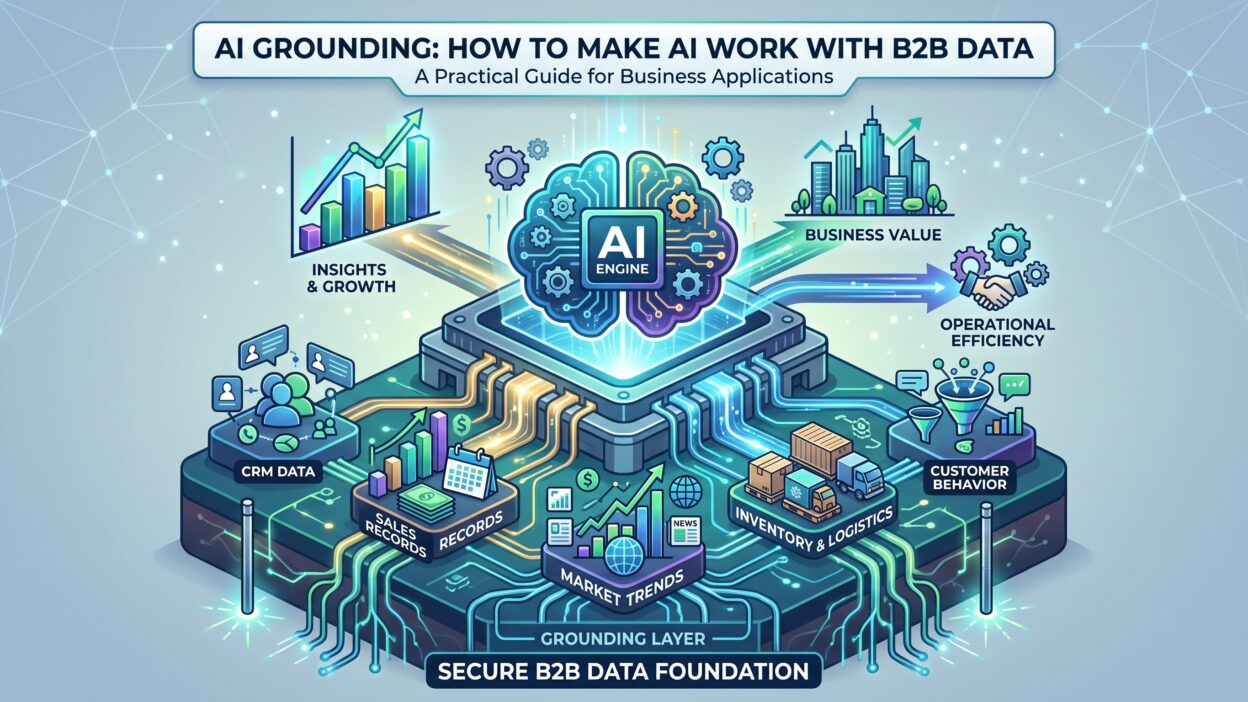
AI Grounding connects a model’s answers to real data sources. Without grounding, a model invents details that sound correct. Those invented details create real risk inside business settings. AI Grounding pulls facts from databases, documents, and live systems. The model then builds its answer around those facts. This process reduces false claims significantly. AI Grounding also adds traceability to each answer. Teams can check where a claim came from. This matters greatly inside regulated industries like finance and healthcare. AI Grounding turns a generic model into a reliable business tool.
Why AI Grounding Matters for B2B Teams
B2B data often lives across many disconnected systems. CRM records sit in one place. Support tickets sit in another. Contracts sit somewhere else entirely. AI Grounding pulls these scattered pieces into one coherent answer. Sales reps get accurate account history instantly. Support agents get correct product details on demand. This reliability builds trust between teams and their AI tools.
The Difference Between AI Grounding and Plain AI Output
A standard AI model relies on its training data alone. That training data grows outdated quickly. AI Grounding adds live, current context to every response. The model checks fresh data before it answers. This single difference separates reliable tools from risky ones.
How AI Grounding Works
This section breaks down the technical flow behind AI Grounding. Each step plays a role in building accurate output.
Data Retrieval
The process starts with a search step. The system pulls relevant documents or records first. This search often uses vector databases for speed. Relevant snippets get ranked by closeness to the query. AI Grounding depends heavily on strong retrieval accuracy.
Context Injection
Retrieved data gets added directly into the model’s prompt. The model reads this context before it generates a reply. This step keeps the answer tied to real facts. Without injection, the model falls back on guesswork again.
Answer Generation
The model writes a response using the injected context. Good AI Grounding setups instruct the model to cite sources. This citation step adds extra trust for business users. Teams can verify claims without digging through raw data themselves.
Validation and Feedback Loops
Some systems add a validation step after generation. A second check confirms the answer matches the source data. Feedback loops then improve future retrieval accuracy. AI Grounding systems get stronger as more data flows through them.
Common Data Sources Used in Grounding
CRM platforms supply customer history details. Knowledge bases supply product and support information. Contracts and legal documents supply compliance context. Internal wikis supply company-specific process knowledge. AI Grounding can pull from all these sources together.
Why B2B Data Creates Unique Challenges
B2B data brings problems that consumer data rarely faces. Records often sit behind strict access controls. Data formats vary widely across departments. AI Grounding must handle these inconsistencies without breaking accuracy.
Data Silos Across Departments
Sales, support, and finance teams often use separate tools. Each tool stores data in its own format. AI Grounding needs connectors that bridge these silos cleanly. Without strong connectors, answers miss important context.
Outdated or Conflicting Records
B2B systems sometimes hold duplicate or outdated entries. Two systems may show different contact details for one account. AI Grounding must rank sources by reliability and freshness. This ranking step prevents confusing or contradictory answers.
Security and Access Control
Sensitive contracts and pricing data need strict access rules. AI Grounding systems must respect those permissions during retrieval. A grounded answer should never leak data a user cannot see. This requirement adds complexity to any serious deployment.
Benefits of AI Grounding for B2B Companies
AI Grounding brings clear, measurable benefits across teams.
Higher Accuracy in Customer-Facing Answers
Support agents give correct answers faster with grounded tools. Customers get fewer wrong details during live chats. This accuracy protects brand trust over time.
Faster Sales Research
Sales reps skip manual digging through old records. AI Grounding surfaces account history in seconds. This speed shortens research time before every call.
Reduced Compliance Risk
Grounded answers tie back to verified source documents. Legal and finance teams gain a clear audit trail. This traceability lowers risk during compliance reviews.
Better Internal Knowledge Sharing
New employees learn company processes faster with grounded tools. They ask questions and get answers tied to real documents. This shortens onboarding time across departments.
How to Implement AI Grounding in Your Stack
Implementation requires a clear plan before any rollout.
Audit Your Data Sources
Start by listing every system holding useful data. Note which systems hold the freshest information. AI Grounding works best when source data stays current.
Choose a Retrieval Method
Vector search suits unstructured documents well. Direct API calls suit structured database records. Many teams combine both methods inside one AI Grounding setup.
Build Strong Access Controls
Map each data source to proper user permissions. AI Grounding must respect these rules during every query. Skipping this step creates serious security gaps.
Test With Real Business Questions
Run real questions from sales and support teams through the system. Check each answer against the original source data. This testing phase catches gaps before a full rollout.
Monitor and Refine Over Time
Track accuracy metrics after launch. Watch for outdated source data causing wrong answers. AI Grounding improves steadily with ongoing monitoring and small fixes.
Tools and Platforms That Support AI Grounding
Several platforms now offer built-in AI Grounding features. Vector database tools like Pinecone support fast retrieval. Enterprise search platforms add grounding layers on top of existing data. Many CDP and CRM vendors now ship native grounding connectors. Teams should pick tools that match their existing data stack closely. A mismatch here often slows down the entire rollout.
Build vs Buy Decisions
Some teams build custom AI Grounding pipelines from scratch. This route gives full control over data handling. Other teams buy ready-made grounding platforms instead. This route saves engineering time but limits some customization.
Common Mistakes Teams Make With AI Grounding
Many teams rush the data audit step. Skipping this step leads to weak retrieval results. Some teams ignore access control during early testing. This oversight creates security risks once live data flows in. Other teams skip ongoing monitoring after launch. AI Grounding quality drops quickly without regular checks. A few teams over-rely on a single data source. Diverse sources usually produce stronger, more balanced answers.
The Future of AI Grounding in B2B
AI Grounding will likely become a standard expectation, not an extra feature. More CRM and CDP vendors will ship native grounding tools. Real-time data feeds will replace static document searches over time. Compliance teams will push for stronger audit trails inside grounded answers. Companies that adopt AI Grounding early will likely see a real edge. Slow adopters may struggle with growing accuracy expectations from customers.
Final Thoughts on AI Grounding
AI Grounding turns a generic model into a dependable business tool. B2B teams gain accuracy, speed, and real traceability. The setup process takes effort but pays off quickly. Companies handling sensitive data benefit most from a careful rollout. Strong access controls and clean data sources matter just as much as the model itself. Teams that follow a clear implementation plan see faster, safer results.
FAQs
What does AI Grounding mean in simple terms?
AI Grounding connects a model’s answers to real data. This stops the model from guessing or inventing facts.
Why does B2B data need AI Grounding?
B2B data sits across many separate systems. AI Grounding pulls that scattered data into one accurate answer.
Is AI Grounding hard to set up?
Setup takes real planning around data sources and access rules. Most teams finish a basic rollout within a few weeks.
Does AI Grounding fix hallucinations completely?
AI Grounding reduces hallucinations significantly. It does not remove every error, so testing still matters.
What tools support AI Grounding today?
Vector databases, enterprise search tools, and many CRM platforms now support AI Grounding natively.
Does AI Grounding work with real-time data?
Yes. Strong AI Grounding setups pull live data, not just static documents.
Read More:-Salesforce Data Enrichment: A Guide for B2B Revenue Teams
Conclusion

AI Grounding solves a real problem for B2B teams using AI tools daily. It ties answers to verified data instead of guesswork. Sales, support, and compliance teams all benefit from this accuracy. The setup process needs careful planning around data sources and access. Teams that invest in proper AI Grounding see faster results and fewer errors. Start with a clear data audit before any larger rollout. That first step sets the foundation for everything that follows.
![Propensity Review: What You Need to Know [2026]](https://blog.emasterlabs.com/wp-content/uploads/2026/06/Propensity_Review__What_You_Need_202606301235-400x225.jpeg "Propensity Review: What You Need to Know [2026] 7")