Introduction
TL;DR Data teams face this decision constantly. Do you pull a snapshot or connect to a live feed? Point-in-time data vs live data shapes how accurate, how fast, and how expensive your reporting becomes. This guide breaks down both approaches, when to use each one, and how most B2B teams end up blending them together.
Table of Contents
What Is Point-In-Time Data
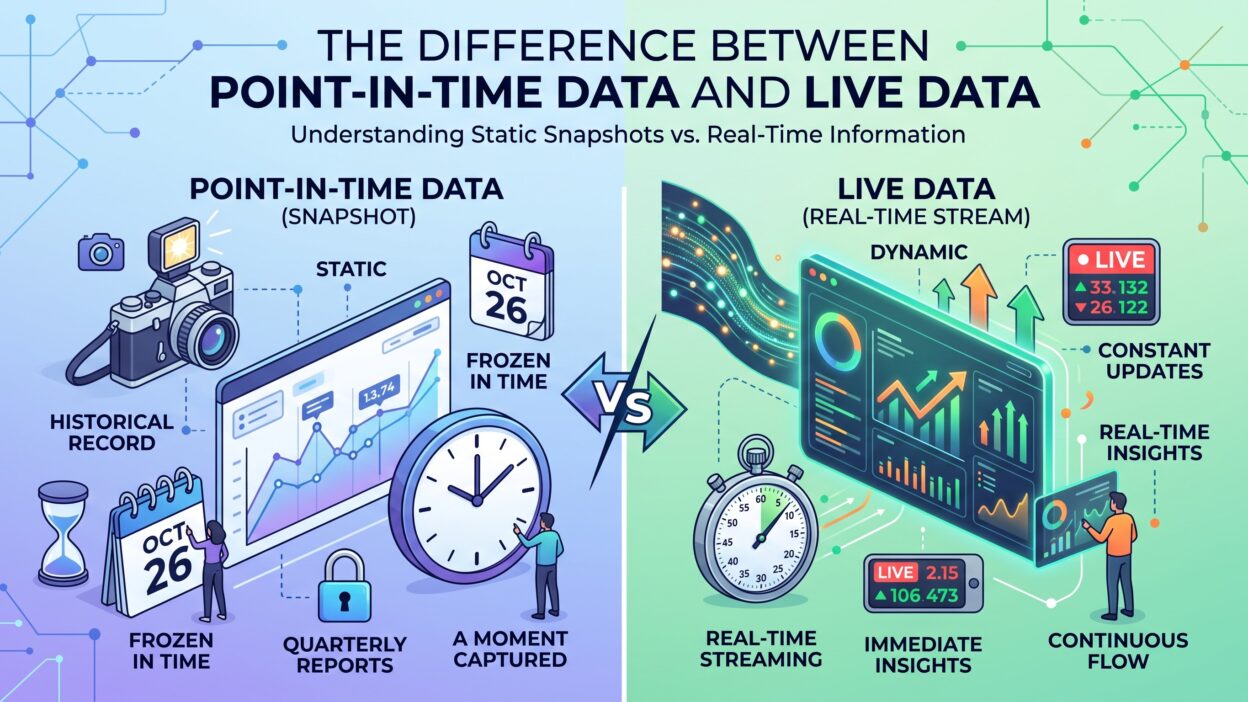
Point-in-time data captures information at one exact moment. Think of it as a photograph. The numbers don’t change once captured, even if the source system updates later.
A sales report pulled at the end of each month counts as point-in-time data. The report reflects reality on that specific date. Nothing inside the report shifts afterward, regardless of new deals closing the next day.
How Point-In-Time Data Gets Created
Most companies generate point-in-time data through scheduled exports or database snapshots. A nightly job might pull every customer record and store it as a dated file. This file becomes a permanent record of that exact moment.
Data warehouses often store multiple point-in-time snapshots for historical comparison. You can look back at customer counts from six months ago without touching your live production database.
Common Use Cases for Point-In-Time Data
Financial reporting relies heavily on point-in-time data. A quarterly earnings report needs numbers locked at a specific date, not numbers that shift after the report goes public.
Compliance and audit trails also depend on this approach. Regulators often require proof of what your data looked like on a specific date, not what it looks like today.
Historical trend analysis uses point-in-time data too. Comparing customer growth month over month requires stable numbers from each period, not numbers that keep changing retroactively.
What Is Live Data
Live data reflects the current state of a system at any given moment. Think of it as a live video feed instead of a photograph. Every refresh shows whatever the source system contains right now.
A sales dashboard connected directly to your CRM shows live data. Close a deal, and the dashboard number updates within seconds. Nothing about this number stays fixed to a past date.
How Live Data Gets Delivered
Live data typically flows through API connections or direct database queries. A dashboard tool queries your CRM every few minutes and displays whatever it finds. Some systems use streaming architecture for near instant updates instead of periodic polling.
Real time analytics platforms build entire products around this delivery method. Speed matters more than historical stability in these systems.
Common Use Cases for Live Data
Operational dashboards benefit most from live data. A support team tracking open tickets needs current numbers, not numbers from yesterday’s snapshot.
Sales teams monitoring daily pipeline movement also rely on live data. A rep wants to see today’s activity reflected immediately, not delayed until tomorrow’s report.
Inventory management systems depend on live data too. A warehouse can’t afford to sell a product that already sold out an hour earlier according to an outdated snapshot.
Point-In-Time Data vs Live Data: Key Differences
Both approaches solve different problems. Understanding the core differences helps you choose correctly for each situation.
Accuracy Over Time
Point-in-time data stays accurate to its capture date forever. Live data stays accurate to right now but becomes outdated the moment you screenshot it.
This difference matters for reporting integrity. Point-in-time data vs live data debates often come down to whether you need historical proof or current status.
Speed and Freshness
Live data wins on freshness every time. A live dashboard shows the newest information available. Point-in-time data always lags behind by definition, since it locks in at a past moment.
Some business decisions need this speed. Others don’t. A daily sales huddle benefits from live numbers. A board report from three months ago doesn’t need updating at all.
Cost and Infrastructure
Live data usually costs more to maintain. Constant API calls, streaming infrastructure, and real time processing all add expense. Point-in-time data costs less since a scheduled export runs occasionally instead of continuously.
Smaller companies often start with point-in-time data for this reason. Live data infrastructure comes later once the budget and technical need both grow large enough to justify it.
Consistency for Historical Analysis
Live data creates a problem for historical comparisons. If you pull a live number today and compare it against a live number pulled last week, the underlying data may have changed between those pulls in ways you can’t fully trace.
Point-in-time data avoids this issue completely. Each snapshot stays locked, giving you a clean comparison across any two dates you choose.
When to Use Point-In-Time Data
Choose point-in-time data whenever you need a stable, auditable record. Financial close processes, compliance reporting, and board presentations all fit this category well.
Point-in-time data vs live data becomes an easy choice once legal or regulatory requirements enter the picture. Auditors want proof locked to a specific date, not a number that shifts after the fact.
Historical benchmarking also favors point-in-time data. Comparing this quarter against the same quarter last year requires numbers that don’t move once recorded.
When to Use Live Data
Choose live data whenever speed drives your decision making. Operational teams, customer support, and sales floor monitoring all benefit from current numbers over historical snapshots.
Point-in-time data vs live data debates often resolve quickly once you consider your team’s actual workflow. A team making decisions minute by minute needs live data. A team reviewing monthly trends needs point-in-time data instead.
Customer facing dashboards frequently use live data too. A client checking their account status expects to see current information, not a number from yesterday’s snapshot.
How B2B Companies Blend Both Approaches
Most mature data strategies don’t pick one option exclusively. They combine point-in-time data and live data based on the specific report or dashboard involved.
Building a Hybrid Data Architecture
A common setup uses live data for operational dashboards and point-in-time snapshots for historical reporting. Both data streams pull from the same underlying source but serve completely different purposes.
Data warehouses often store daily or weekly point-in-time snapshots automatically. This process runs in the background while live dashboards continue pulling current numbers for day to day operations.
Choosing the Right Refresh Rate
Not every live data feed needs second by second updates. Some dashboards refresh every hour instead of continuously. This middle ground reduces infrastructure cost while still beating a fully static point-in-time report.
Match your refresh rate to actual business need. A finance team checking numbers once a day doesn’t need a live feed refreshing every thirty seconds.
Avoiding Common Data Discrepancies
Teams sometimes compare a live number against a point-in-time report and get confused by the mismatch. Document clearly which reports use which method. This single step prevents most confusion between departments.
Label every dashboard and report with its data type. A simple note like “as of March 1st” versus “live as of now” saves your team from unnecessary disputes about which number is correct.
Point-In-Time Data vs Live Data: Which One Fits Your Team
Consider your decision speed first. Fast moving operational decisions favor live data. Slower strategic decisions favor point-in-time data.
Consider your compliance requirements next. Any regulated industry likely needs point-in-time data vs live data clarity built into every audit trail from the start.
Consider your budget too. Live data infrastructure costs more to build and maintain. Point-in-time data fits smaller budgets and simpler reporting needs without sacrificing much value for most use cases.
Most growing B2B companies eventually need both. Start with point-in-time data for core reporting, then add live dashboards as operational needs grow more urgent.
Frequently Asked Questions
What is the main difference between point-in-time data and live data? Point-in-time data captures a fixed moment and never changes afterward. Live data reflects the current state of a system and updates continuously.
Which is more accurate, point-in-time data or live data? Neither one is universally more accurate. Point-in-time data stays accurate to its capture date. Live data stays accurate to the present moment but constantly shifts.
Is live data more expensive than point-in-time data? Yes, in most cases. Live data requires continuous infrastructure like API connections or streaming systems, while point-in-time data only needs periodic exports.
Can a company use both point-in-time data and live data together? Yes. Most mature data strategies use live data for operational dashboards and point-in-time snapshots for historical and compliance reporting.
Why do financial reports rely on point-in-time data instead of live data? Financial reports need numbers locked to a specific date for accuracy and audit purposes. Live data would keep shifting, making consistent reporting impossible.
How often should live data refresh? It depends on business need. Operational teams often need updates every few minutes, while less urgent dashboards can refresh hourly or daily.
Read More:-“Land” Your Best Prospects with Landing Page Marketing
Conclusion

Point-in-time data vs live data isn’t really a competition. Both serve different purposes inside a healthy data strategy. Point-in-time data gives you stable, auditable records for compliance and historical analysis. Live data gives you speed for operational decisions happening right now.
Match each report to its correct data type. A board presentation needs stability. A support dashboard needs speed. Confusing the two creates messy reporting and mismatched numbers across your teams.
Most B2B companies grow into a hybrid model over time. Start simple, add live data where speed truly matters, and keep point-in-time data as your foundation for anything requiring historical accuracy. This balance keeps your reporting both fast and trustworthy.