Introduction
TL;DR Buyers research products long before they talk to a sales rep. Review sites capture that research in real time. Purchase review site intent data and your team spots ready buyers before your competitors even notice them. This guide covers everything about purchase review site intent data, from what it means to how you use it inside your sales process.
Table of Contents
What Is Purchase Review Site Intent Data
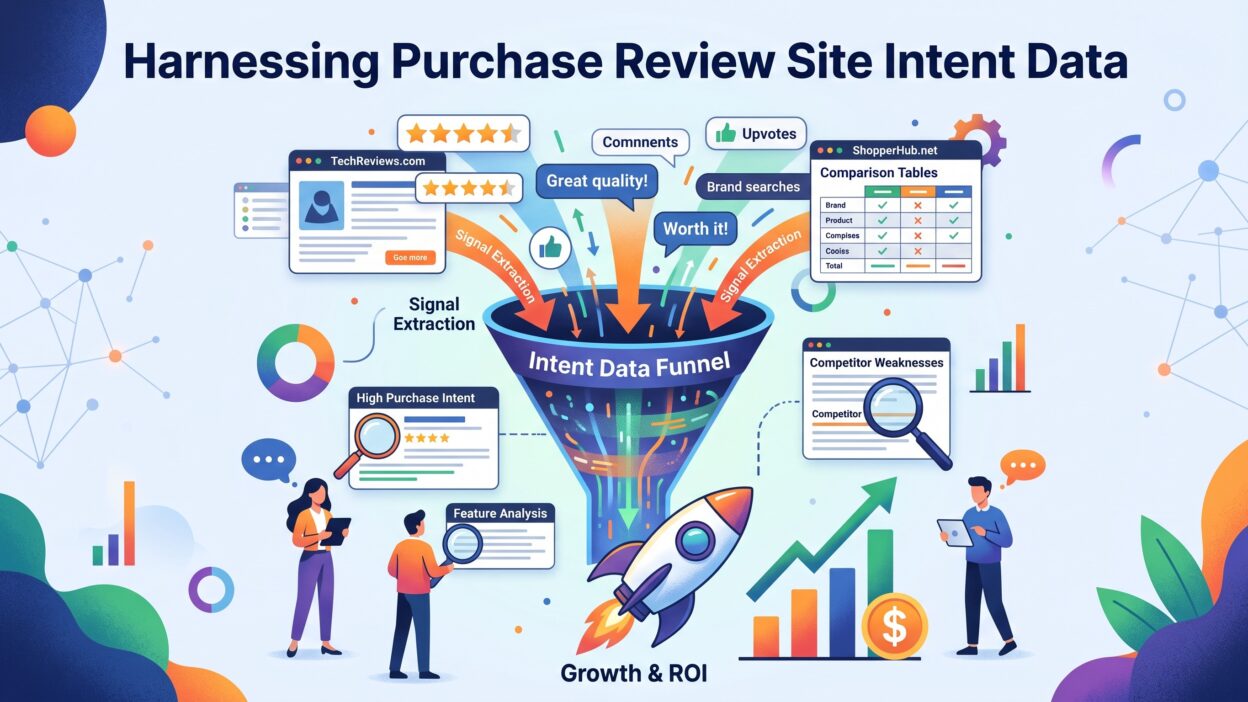
Purchase review site intent data refers to buying signals collected from platforms like G2, Capterra, and TrustRadius. These sites track when a person compares products, reads reviews, or downloads a buyer’s guide. Vendors package this activity into a data feed companies can buy.
A prospect comparing your software against a competitor leaves a digital trail. Purchase review site intent data captures that trail and hands it to your sales team. This information turns cold outreach into a warm, informed conversation.
How Review Sites Collect Buyer Signals
Review platforms track logged in users as they browse categories. A visit to a pricing comparison page counts as a signal. A completed review submission counts as an even stronger signal.
Some platforms also track anonymous visits through IP matching. This method identifies the company behind a visit even without a login. Purchase review site intent data providers combine both signal types into one unified report.
Why This Data Matters for B2B Sales Teams
Sales teams waste hours calling accounts with zero buying interest. Purchase review site intent data flips this approach. Reps focus their time on accounts actively researching a solution like theirs.
Marketing teams benefit too. A account showing intent signals becomes a target for a personalized ad campaign. This alignment between sales and marketing shortens the path from first touch to closed deal.
Types of Intent Data Available from Review Sites
Not all intent signals carry the same weight. Understanding the categories helps you prioritize your outreach correctly.
Category Intent Signals
Category intent shows a company researching a broad product type. A visit to the project management software category page falls into this bucket. This signal casts a wide net and works best for top of funnel marketing.
Purchase review site intent data at the category level suits awareness campaigns. Sales teams should treat this signal as a soft lead, not a hot one ready for a demo call.
Competitor Comparison Signals
Comparison signals carry more weight than category browsing. A prospect comparing your product directly against a named competitor shows real evaluation activity. This buyer sits closer to a purchase decision.
Sales reps should prioritize accounts showing competitor comparison activity. Purchase review site intent data flags these accounts clearly inside most vendor dashboards.
Review Submission Signals
A completed review submission signals strong product familiarity. This person already uses a similar tool and formed an opinion about it. Reaching out to this contact works well for upsell or competitive displacement campaigns.
How to Purchase Review Site Intent Data
Buying intent data requires a clear process. Random data purchases without a strategy waste budget fast.
Choosing the Right Intent Data Provider
G2 offers a native intent data product called Buyer Intent. Capterra and TrustRadius provide similar offerings through their own platforms. Third party aggregators like Bombora also pull signals across multiple review sites into one feed.
Compare providers based on your target market. A provider strong in enterprise software reviews might lack coverage in a niche vertical. Request a sample data set before committing to a contract.
Evaluating Data Coverage and Accuracy
Ask each provider how they identify the company behind a signal. IP based matching sometimes misidentifies remote workers or shared office buildings. Login based matching offers higher accuracy but usually covers a smaller volume of visits.
Check how fresh the data feed runs. Purchase review site intent data loses value if it arrives days after the actual buying signal occurred. Look for providers offering daily or near real time updates.
Understanding Pricing Models
Most providers price based on the number of tracked accounts or monthly data volume. Enterprise packages often include unlimited category access. Smaller packages limit you to specific product categories relevant to your business.
Budget for both the data subscription and the platform needed to activate it. Purchase review site intent data alone does nothing without a CRM or sales engagement tool connected to it.
How to Activate Intent Data Inside Your Sales Process
Buying the data solves half the problem. Activation turns raw signals into actual pipeline.
Connecting Intent Data to Your CRM
Most intent data providers offer a native Salesforce or HubSpot integration. This connection pushes flagged accounts directly into your CRM as a new lead source. Sales reps see the specific signal that triggered the alert.
Build a scoring rule inside your CRM based on signal strength. A competitor comparison signal might score higher than a simple category visit. This scoring keeps your team focused on the strongest opportunities first.
Building Sales Playbooks Around Intent Signals
Give reps a clear script for intent triggered outreach. A cold call script doesn’t fit an account already comparing solutions. The message should reference the buyer’s likely stage without sounding invasive.
Train your team to mention general research trends rather than specific site activity. Referencing an exact page visit feels uncomfortable to most prospects. A softer reference to industry research keeps the conversation natural.
Aligning Marketing Campaigns with Intent Signals
Marketing teams can build retargeting campaigns around flagged accounts. A prospect comparing your product against a rival sees a targeted ad addressing that exact comparison. This approach reinforces your message right when the buyer needs it most.
Email nurture sequences also benefit from intent triggers. Purchase review site intent data lets marketing send a relevant case study the moment a prospect shows evaluation behavior.
Common Mistakes Companies Make with Intent Data
Many teams buy intent data without a plan for using it. The data sits inside a dashboard nobody checks regularly. Assign clear ownership before your subscription even starts.
Some teams treat every signal as equally hot. A single category page visit doesn’t warrant an aggressive sales call. Build a tiered response plan based on signal strength.
Ignoring data privacy rules causes bigger problems. Some regions restrict how companies use tracked browsing behavior. Review your data provider’s compliance practices before you activate any campaign built on this information.
Overloading reps with too many alerts backfires too. A flood of low quality signals trains reps to ignore the tool entirely. Filter your alerts down to the signals that actually predict a closed deal.
Measuring the ROI of Purchase Review Site Intent Data
Track your pipeline generated from intent triggered accounts separately from your other lead sources. This comparison shows whether the investment pays off.
Compare close rates between intent flagged accounts and standard outbound accounts. Most companies see a noticeably higher close rate on accounts already showing research activity.
Measure your sales cycle length for intent driven deals too. A prospect already deep in research often moves faster once a rep reaches out at the right moment.
Review your cost per closed deal from intent data against your other channels. Purchase review site intent data often costs more upfront but frequently delivers a lower cost per win once you factor in shorter cycles and higher close rates.
Frequently Asked Questions
What does purchase review site intent data actually track? It tracks buyer research activity on platforms like G2 and Capterra, including category browsing, competitor comparisons, and review submissions.
Which review sites offer intent data for purchase? G2, Capterra, and TrustRadius all offer native intent data products. Third party aggregators like Bombora also pull signals from multiple sources.
Is purchase review site intent data accurate? Accuracy varies by provider and matching method. Login based matching offers higher accuracy than IP based matching, though it usually covers less overall volume.
How much does review site intent data cost? Pricing depends on tracked account volume and category access. Smaller packages fit niche businesses, while enterprise packages support unlimited category tracking.
Can small businesses use purchase review site intent data effectively? Yes, though small teams should start with a narrow category focus rather than a broad enterprise package. Focused data keeps the signal to noise ratio manageable.
Does intent data violate buyer privacy? Reputable providers follow regional privacy regulations and aggregate signals at the company level rather than tracking individual personal browsing history in most cases. Always review a provider’s compliance documentation before purchase.
Read More:-5 Best Intercom Integrations for Your Support Stack [2026]
Conclusion

Purchase review site intent data gives your team a real advantage over cold outreach alone. You reach buyers while they research instead of guessing when they might be ready. Sales conversations start warmer, and marketing campaigns land with better timing.
Success depends on activation, not just the purchase itself. Connect the data to your CRM, train your reps on the right messaging, and track your results closely. A strong process turns raw signals into real pipeline.
Companies that treat purchase review site intent data as a core part of their go to market strategy consistently outpace competitors still relying on cold lists alone. Build the process now, and your next quarter’s pipeline reflects that head start.