

Introduction
TL;DR In early 2020, offices closed almost overnight. Teams moved to video calls within days. Doctors saw patients through screens. Shoppers learned to order everything online. Companies skipped years of planning and acted fast. That rush shaped the first phase of pandemic technology adoption.
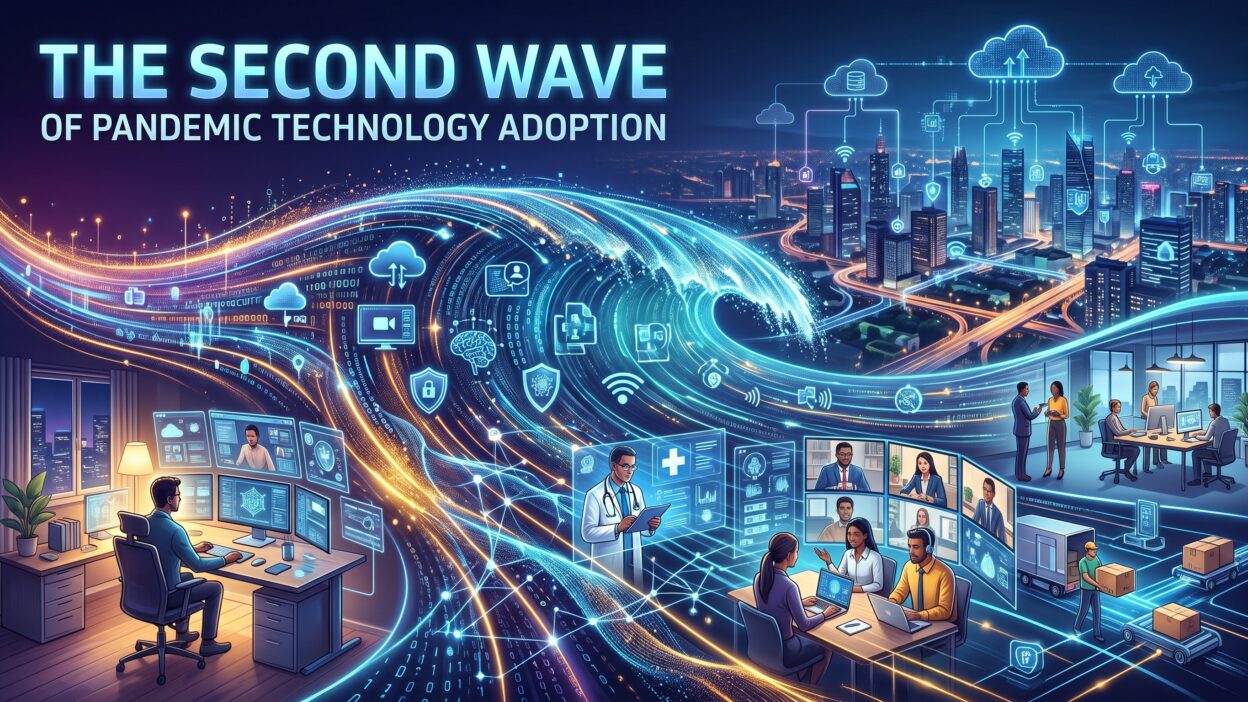
The crisis faded. The tools stayed. A new phase has begun. Leaders no longer scramble. They choose tools with care. They fix the shortcuts they took in a hurry. They connect systems that never talked to each other. They layer artificial intelligence and automation on top. This is the second wave.
Table of Contents
What Is Pandemic Technology Adoption?
A Simple Definition
Pandemic technology adoption describes how people and organizations embraced digital tools during and after the global health crisis. It covers remote work software, telehealth, online shopping, digital payments, e-learning, and cloud systems. It also covers the habits people built around those tools. A person who once avoided online banking now checks a balance from a phone every morning. That habit is part of the story.
Why the Term Still Matters
Some people say the pandemic ended, so the label should fade. The behavior behind it did not fade. Customers expect digital options in every industry. Employees expect flexible work. Patients expect virtual visits. The label points to a lasting shift in expectations, not a short event.
Adoption Versus Acceleration
Adoption means people use a tool. Acceleration means they started using it sooner than planned. The pandemic delivered both. Many firms had cloud plans on a five-year timeline. They finished in five months. Speed brought gaps in training, security, and design. The second wave closes those gaps.
The First Wave: Emergency Adoption
Survival Mode
Speed mattered more than polish. Companies bought whatever worked that week. Video platforms, messaging apps, and file-sharing tools spread across teams. IT departments shipped laptops by the thousand. Nobody had time for long reviews or training plans.
The Big Winners
Video conferencing, e-commerce, food delivery, telehealth, and contactless payments grew fast. Streaming and online learning surged. Cloud providers saw demand jump. Early pandemic technology adoption rewarded tools that were easy to start and hard to break. A simple sign-up page beat a clever feature list.
The Hidden Costs
Quick choices left a mess. Teams ran dozens of overlapping apps. Data sat in silos. Security controls lagged behind the pace of change. Employees felt tool fatigue. Customers met clunky digital experiences that existed only because a physical store had closed. The first wave proved people could change fast. It did not prove they changed well.
How the Second Wave Differs From the First
From Reaction to Strategy
The first wave answered a threat. The second wave pursues a goal. Leaders ask which outcomes they want and pick tools to reach them. Budgets follow business cases, not panic.
From Single Tools to Connected Systems
Companies once bought one tool for one problem. Now they build connected stacks. Data flows between sales, support, finance, and operations. Integration matters more than features. A tool that cannot share data loses ground to one that can.
From Adoption to Optimization
Most teams already own the software they need. They now ask whether people use it well. They measure usage, cut duplicates, and train staff with care. The second wave of pandemic technology adoption rewards depth over breadth. A company with five well-used tools beats a company with fifty ignored ones.
From Human Only to Human Plus AI
Artificial intelligence marks the biggest change. Generative AI tools write, summarize, translate, and code. Agents handle routine tasks across apps. Workers who once learned video platforms now learn to direct AI assistants. That skill shift will shape careers for the next decade.
From Crisis Budgets to Value Scrutiny
Free trials and emergency budgets ended. Finance teams review every renewal. Tools must show a return on investment. Vendors that cannot prove value lose contracts.
Key Drivers Behind the Second Wave
Permanent Hybrid Work
Hybrid work settled in at many companies. Teams spread across homes, offices, and time zones. They need tools for asynchronous communication, shared documents, and digital whiteboards. Office spaces changed too. Meeting rooms now carry cameras, smart booking, and sensors that track use.
Rising Customer Expectations
Customers learned convenience. They book online, pay with a tap, and track deliveries in real time. They compare every brand to the best digital experience they know. Companies that lag lose loyalty fast.
Maturing Cloud Infrastructure
Cloud services grew cheaper and more reliable. Small firms now reach tools that once suited only large enterprises. Teams add new features without buying new hardware. That flexibility lowers the cost of every experiment.
The Rise of AI
Costs fell and quality rose. Teams test AI in marketing, support, finance, and engineering. Early results show real time savings in routine work. Leaders feel pressure to act before rivals do. This pressure fuels pandemic technology adoption in its second phase.
Talent and Labor Gaps
Many industries face worker shortages. Automation fills the gaps. Self-service kiosks, robotic process automation, and smart scheduling reduce the load on stretched teams.
Pressure on Margins
Inflation and tight budgets push firms to cut waste. Technology that trims manual work earns a seat at the table. Leaders favor tools that save money within a year.
Industries Leading the Second Wave
Healthcare
Telehealth moved from novelty to standard option. Remote monitoring devices track blood pressure and glucose at home. Hospitals test AI tools that draft clinical notes and summarize patient charts. Staff shortages push this trend forward. Privacy and safety rules slow it down, so leaders move with care.
Retail and E-Commerce
Shoppers blend online and in-store journeys. Stores offer curbside pickup, mobile checkout, and app-based loyalty programs. Retailers use data to forecast demand and personalize offers. Inventory systems link stores and warehouses in real time.
Education
Schools and universities kept many digital learning tools. Learning platforms track student progress. AI tutors give instant feedback. Debates continue about screen time, equity, and cheating. Schools now write clear policies rather than banning or embracing tools blindly.
Financial Services
Digital banking, mobile wallets, and instant payments feel normal now. Banks use AI to detect fraud and answer customer questions. Branches shrink while apps grow. Regulators watch new products closely.
Manufacturing and Logistics
Supply chain shocks taught firms to value visibility. Sensors, digital twins, and predictive maintenance reduce downtime. Warehouses add robots. Route planning software cuts fuel costs. Pandemic technology adoption in this sector now centers on resilience.
Professional Services and Government
Law firms, consultancies, and agencies digitize their workflows. Citizens expect online forms, digital IDs, and virtual appointments. Public agencies modernize old systems that buckled under the demand spike of 2020.
Technologies Shaping the Second Wave
Generative AI and Agents
Generative AI drafts text, images, and code. Agents carry out multi-step tasks across apps. Teams use them for research, support, scheduling, and reporting. Success depends on good data and clear rules.
Automation and Low-Code Platforms
Workflow automation connects apps and removes repetitive steps. Low-code tools let non-engineers build simple apps. Business teams solve their own problems without waiting in a long IT queue.
Cybersecurity Tools
Pandemic technology adoption widened the attack surface for every company. Remote and hybrid work put company data on home networks and personal devices. Zero-trust models, multi-factor authentication, and endpoint protection now count as standard practice. Phishing and ransomware attacks look more convincing each year.
Data Platforms and Analytics
Firms collect more data than ever. Modern data platforms clean it, store it, and feed dashboards. Leaders want one version of the truth. Clean data also decides how well AI performs.
Internet of Things and Edge Computing
Connected sensors feed real-time data from factories, farms, hospitals, and homes. Edge computing processes that data near the source for faster response. Both technologies grow as hardware gets cheaper.
Digital Collaboration Tools
Collaboration tools keep maturing. Teams use shared workspaces, recorded video updates, and AI meeting notes. The goal shifts from more meetings to better meetings.
Risks of Pandemic Technology Adoption
Security and Privacy Exposure
More tools mean more doors for attackers. Each integration adds risk. Criminals target weak links in vendors and employees. Strong identity controls and regular audits matter more every year.
Tool Sprawl and Cost Creep
Teams keep collecting apps. Licenses overlap. Nobody remembers who bought what. Regular software audits cut waste and risk.
The Skills Gap
New tools demand new skills. Workers need training in data literacy, AI use, and digital safety. Companies that skip training waste their investment.
Employee Fatigue and Change Overload
Workers lived through years of constant change. Another new platform can trigger resistance. Leaders need to explain why a change helps and listen to concerns. Respect for workers’ time builds goodwill.
Digital Inequality
Not everyone has fast internet or modern devices. Rural communities, older adults, and low-income households risk falling behind. Service providers must keep offline options open.
Regulation and Ethics
Governments write new rules for AI, data privacy, and online platforms. Firms must track laws in every market they serve. Ethical questions about bias and surveillance need clear answers.
How to Prepare Your Organization for the Next Phase
Audit What You Already Own
List every tool. Record cost, users, and purpose. Find overlap. Retire what nobody uses. This step often funds new projects.
Tie Every Tool to a Business Goal
Ask what outcome each tool should deliver. Write a measurable target. Review it after six months. Drop tools that miss.
Invest in People Early
Offer hands-on training. Name champions in each team. Create safe spaces to experiment. Reward people who share what they learn. Strong pandemic technology adoption depends on people more than software.
Strengthen Data and Security Foundations
Clean your data. Set access rules. Turn on multi-factor authentication. Back up critical systems. Run phishing drills. Good foundations make AI projects safer and faster.
Start Small and Scale What Works
Pilot new tools with one team. Collect feedback. Measure results. Expand only when the data supports it. Small wins build trust across the company.
Set Clear Governance
Write simple policies on AI use, data sharing, and vendor selection. Name an owner for each policy. Review them every quarter. Governance protects speed. It does not block it.
Keep the Customer in View
Tools should improve the customer journey. Map each touchpoint. Fix the friction. Offer human help when a digital path fails. Customers forgive a slow app faster than a missing person.
How to Measure Pandemic Technology Adoption Success
Good metrics keep pandemic technology adoption honest. Choose a small set and track them each quarter.
Usage rate shows how many licensed users log in each week. Low usage signals a training gap or a poor fit. Time saved shows the hours a tool frees for higher-value work. Ask teams to estimate it and check the estimate against output. Customer satisfaction shows whether digital experiences improve loyalty. Cost per tool shows spending against results.
Security incidents show whether new tools raise risk. Employee sentiment shows whether people like the change. Run a short survey twice a year. Share the results with leaders and teams. Numbers drive better choices than opinions. Review them often and adjust your plan.
What the Future Holds
Predictions need care. A few trends look likely. AI will move from side tool to core workflow. Agents will handle more routine tasks. Hybrid work will keep evolving as firms test new office models. Healthcare will blend virtual and in-person care. Cybersecurity will rank among the top budget lines. Regulation will tighten in most regions.
Workers who learn to direct AI will gain an edge. Managers who coach people through change will hold that edge longer.
A third wave may arrive. Climate events, supply disruptions, or new health threats could force another sprint. Companies with flexible, well-governed technology stacks will adapt faster. They will not need to rebuild from scratch. The lessons of pandemic technology adoption will guide them. Speed matters. Preparation matters more.
Frequently Asked Questions About Pandemic Technology Adoption
What is pandemic technology adoption?
It is the rapid rise in digital tool use that began during the pandemic. It includes remote work software, telehealth, e-commerce, digital payments, and online learning. The habits behind those tools remain.
What was the first wave?
The first wave was the emergency phase of 2020 and 2021. Organizations bought tools quickly to keep operating. Speed mattered more than strategy.
What defines the second wave?
The second wave focuses on strategy, integration, and optimization. Leaders connect systems, train people, and add AI. They judge every tool by its results.
Does pandemic technology adoption still matter in 2026?
Yes. Customer and employee expectations changed for good. Companies that meet those expectations grow. Companies that ignore them lose ground.
Which industries lead the second wave?
Healthcare, retail, financial services, education, and logistics lead the way. Professional services and government agencies follow close behind.
How does AI fit into the second wave?
AI sits at the center. It automates routine work and speeds up decisions. It also raises new questions about data, bias, and control.
What are the biggest risks?
Security gaps, tool sprawl, skills shortages, and employee fatigue top the list. Digital inequality and new regulations add more pressure.
How can small businesses keep up?
Small firms can lead pandemic technology adoption with a focused plan. Start with one problem. Pick one tool. Train your team. Measure the result. Expand when it works.
How long will the second wave last?
Nobody knows for sure. Most experts expect AI-driven change to continue for many years. Leaders should plan for steady change, not a single finish line.
What should leaders do first?
Audit current tools. Name a clear goal for each one. Train the people who use them. Those three moves deliver value fast.
Read More:-Onboarding Drip Campaign for New Customers: A Practical Guide
Conclusion

Pandemic technology adoption did not end with the lockdowns. It changed shape. The first wave taught the world to move fast. The second wave teaches the world to move smart. Leaders now connect systems, train people, and weigh every tool against real goals.
You now know the key drivers of this shift. You have seen which industries lead it and which technologies power it. You know the risks to watch. You have a plan to prepare and a short list of metrics to track.