Introduction
Tl;DR Modern hiring runs on more tools than ever before. Recruiters use AI screening, video interviews and instant scheduling links. Despite all this technology, hiring still feels slow, unfair and frustrating for most candidates and teams. Something inside this process stopped working, even as the tools around it kept improving.
Companies keep buying new software every year. Problems keep repeating anyway. A candidate waits three weeks for a first response. A strong applicant gets rejected by a filter that never reads the full resume. A hiring manager and a recruiter disagree on what a role even needs. These issues sit at the center of a broken process, not at the edges.
This blog breaks down four core problems inside modern hiring today. Each problem gets a clear explanation and a real fix a team can apply this quarter. Readers walk away with a practical plan, not vague advice about culture or mindset.
Hiring leaders read this guide to spot which of these four problems hurts their team the most. Recruiters read this guide to find quick wins they can test without a full system overhaul. Job seekers read this guide to understand why a strong application sometimes disappears into silence for weeks.
Modern hiring does not need a total rebuild to improve. Small, targeted fixes often solve the exact issues covered in this guide. The rest of this post walks through each problem in order, starting with the most common complaint teams raise about their own process.
Table of Contents
Why Modern Hiring Feels Broken Right Now
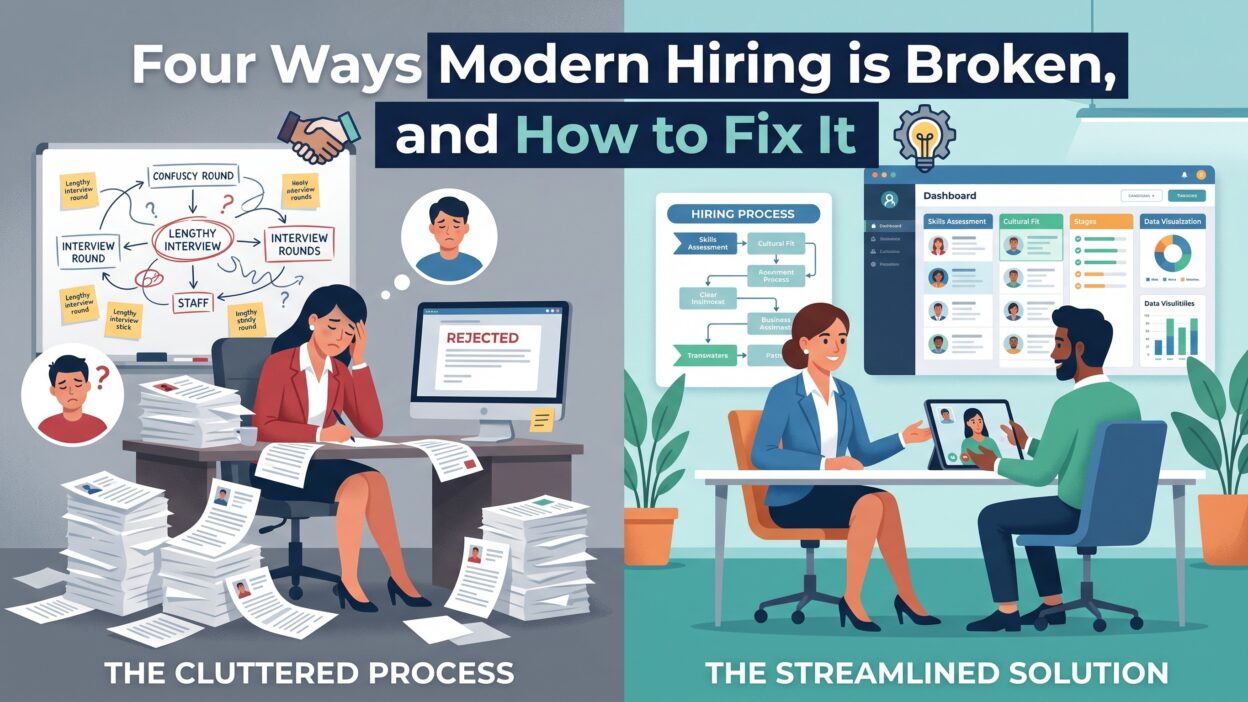
Hiring volume grew fast across most industries this year. Teams added new tools to handle that volume, but many of these tools automated an already broken process instead of fixing it. This hiring process absorbed more technology without solving its core problems underneath.
Candidates notice this gap immediately. A slick application page hides a slow, confusing process behind it. A chatbot answers a simple question, but a real response about an application status still takes weeks. This mismatch between shiny tools and slow substance defines the hiring process for many job seekers right now.
Recruiters feel this pressure from both sides. Leadership wants faster hires and lower costs. Candidates want faster answers and clearer communication. Modern hiring sits in the middle of these competing demands, often without the internal support needed to fix either side properly.
The Gap Between Speed and Quality
Teams often treat speed and quality as opposing goals. A fast process feels risky. A careful process feels slow. This tradeoff rarely finds a real balance between these two forces, so most companies pick one side and struggle with the other.
This tradeoff does not need to exist. A well built process moves fast in the early stages, where volume runs highest, and slows down only for the final decision, where stakes run highest. Few teams design their process this way today, which explains why the speed versus quality debate keeps repeating across the industry.
Early stage screening rarely needs deep human judgment. A short skills check or an automated first pass handles high volume steps well, freeing up recruiter time for later, higher stakes conversations. Teams that apply this logic consistently see faster overall timelines without sacrificing the careful judgment a final hiring decision deserves.
Problem One: Modern Hiring Moves Too Slow for Real Talent Markets
Strong candidates rarely stay available for long. A three week gap between an application and a first response often means a company loses that candidate to a faster competitor. Modern hiring still runs on timelines built for a slower job market from years ago.
Why Slow Processes Lose Strong Candidates
Multiple approval layers slow most hiring decisions down. A resume passes through a recruiter, then a hiring manager, then a panel, then a final approval step. Each layer adds days, sometimes weeks, before a candidate hears anything at all.
Strong candidates read this silence as a warning sign. They assume a company moves slowly in every area, not just hiring. Many walk away and accept a different offer before a slow process even reaches its middle stage.
Communication gaps make this problem worse. A candidate who hears nothing for ten straight days starts checking job boards again, even if they still like the company on paper. A short update, even one saying a decision needs more time, keeps a strong candidate engaged far longer than total silence ever could.
How to Fix Slow Hiring Timelines
Teams should map every single step in their current process first. This map often reveals steps nobody remembers approving, sitting in the workflow purely out of old habit. Cutting even two or three of these steps speeds up an entire pipeline without hurting decision quality.
This kind of process works better with parallel steps instead of sequential ones. A background check and a reference call can run at the same time instead of one after another. This single change alone often cuts a week or more off a typical hiring timeline.
Parallel steps beat sequential ones almost every time in a busy pipeline.
Problem Two: Modern Hiring Relies on Broken Screening Methods
Resume filters and keyword scans still decide which candidates a human ever sees. This screening approach leans hard on these tools, even though they miss strong candidates every single week.
Why Keyword and Resume Filters Miss Talent
A skilled candidate often describes their experience using different words than a job posting expects. A rigid filter rejects this person automatically, regardless of real skill level. This pattern keeps repeating because these filters feel fast and objective on the surface.
This false objectivity hides a real cost. Strong candidates disappear from a pipeline before a human ever reviews their background. Nobody notices this loss directly, since a rejected resume never shows up in a later hiring report.
How to Fix Screening in a Modern Hiring Process
Skills based assessments catch what a resume filter misses. A short test or work sample shows real ability faster than any keyword scan ever could. Teams that add this step see stronger candidates reach later interview rounds.
A human review step also matters here. No borderline resume should get rejected purely by an automated filter. A quick human scan catches strong candidates a machine almost missed, and this single check protects a pipeline from losing talent silently.
Vendors now offer settings that widen keyword matching beyond exact phrases too. A recruiter can teach a system that certain terms mean the same skill, even when the wording differs. This small adjustment often reveals candidates a strict filter would have rejected without a second look.
Problem Three: Modern Hiring Ignores Candidate Experience
Candidates remember how a process treats them, win or lose. This part of the process often forgets that fact, focusing entirely on internal efficiency instead of the human on the other side of the application.
Why Candidates Walk Away Mid Process
Long silences between steps frustrate candidates the most. A person applies, waits two weeks, then gets a generic email requesting the same information already submitted. This kind of friction pushes strong candidates toward a competitor with a smoother, clearer process.
Confusing interview stages add to this frustration. A candidate meets five different people across three separate calls, each asking overlapping questions. This kind of repetition often continues without anyone noticing the toll it takes on a candidate’s patience and interest.
How to Fix a Broken Candidate Experience
Clear, consistent communication solves most of this problem. A simple update at each stage, even a short one, keeps a candidate engaged and informed. This single habit costs almost nothing and prevents most silent drop offs during a long process.
Interview stages should get reviewed and trimmed regularly too. A team should ask a direct question before adding any new interview round. Does this step reveal new information, or does it repeat what an earlier stage already covered? Removing redundant steps respects a candidate’s time and keeps strong applicants engaged through the finish line.
A single point of contact also helps candidates feel less lost. When five different people email a candidate at different times, the process feels disjointed and impersonal. One recruiter acting as a steady contact throughout the process gives a candidate someone familiar to ask questions, which builds trust even during a long wait.
Problem Four: Modern Hiring Still Carries Hidden Bias
Bias rarely announces itself directly inside a hiring process. It hides inside small habits and shortcuts that feel neutral but quietly favor certain candidates over others.
Where Bias Hides Inside a Hiring Process
A hiring manager who favors candidates from their own alma mater rarely notices this pattern in their own decisions. A recruiter who writes a job posting using casual, insider language unintentionally filters out qualified candidates from different backgrounds. This process absorbs these small habits at scale, which multiplies their impact across thousands of applications.
Automated tools can quietly repeat this same bias too. A system trained on past hiring data learns whatever pattern existed in that data, good or bad. Without a direct check, a tool built to remove bias can end up reinforcing it instead.
How to Fix Bias Without Slowing Hiring Down
Structured interviews reduce bias more than almost any other single change. Every candidate answers the same core questions in the same order, scored against the same criteria. This structure removes much of the guesswork that lets bias creep into a final decision.
Regular audits catch bias that structure alone misses. A quarterly review of who advances at each stage, broken down by background, reveals patterns a team might miss day to day. A hiring process improves fastest when teams treat this audit as a normal habit, not a one time compliance task.
Blind resume review offers another simple safeguard. Removing a candidate’s name, school and photo from an early screening step forces a reviewer to focus on real experience instead of unconscious assumptions tied to identity. This small change costs little to set up and often shifts who advances to a first interview.
Building a Modern Hiring Strategy That Actually Works
Fixing these four problems works best as one connected strategy, not four separate projects running in isolation.
Combine Speed, Fairness and Candidate Experience
A strong hiring strategy treats speed, fairness and candidate experience as connected goals, not competing priorities. A faster process that skips fairness checks creates new problems. A fair process that ignores candidate experience still loses strong applicants along the way.
A strong hiring strategy works best when a team designs around all three goals together from the start. Each fix covered above supports the others. Cutting unnecessary steps speeds up a process while also giving candidates a clearer, less frustrating experience.
Track the Right Metrics Every Quarter
Teams should track time to hire, applicant drop off rates and diversity of candidates at each stage. These three numbers together tell a clear story about where a process breaks down. A team that only tracks one number misses the full picture.
Reviewing these metrics every quarter keeps a hiring process honest. This kind of drift back toward old habits happens without a regular check, since small inefficiencies creep back in once nobody watches closely. A short quarterly review, done consistently, protects every fix a team already made.
A simple shared dashboard, updated monthly, keeps these numbers visible to the whole team, not buried in a report nobody opens after the first week. Visibility alone often drives better behavior, since a recruiter watching a live drop off number tends to fix small friction points faster than one relying on a quarterly email summary.
Talent Acquisition Trends Shaping Modern Hiring in 2026
Talent acquisition teams face new pressure this year from every direction. Budgets stay tight while hiring volume climbs, and modern hiring strategies must stretch further than before without extra headcount to absorb the load.
Recruiting technology keeps advancing fast, but adoption still lags behind the marketing around it. Many teams buy a new tool, then never fully configure it to match their real hiring needs. A hiring process improves only when a team actually uses a tool’s full capability, not just its default settings out of the box.
Candidate experience now ranks as a top priority among talent leaders surveyed this year. Word travels fast when a company treats candidates poorly, especially across review sites and social platforms candidates trust. Modern hiring teams that ignore this reputation risk pay for it later through a shrinking pool of strong applicants willing to apply.
Hiring bias also draws more regulatory attention than in past years. Several regions now require companies to explain how an automated system reaches a hiring decision. Teams relying purely on automated filters without human oversight face real legal exposure alongside the talent loss already covered earlier in this guide.
Remote and hybrid roles add another layer of complexity to a modern hiring strategy. A single open role might attract applicants from a dozen different countries, each with different labor laws and expectations. Teams that build flexible, well documented processes handle this complexity far better than teams still running a rigid, single location playbook built for an older job market.
Skills based hiring will keep growing through the rest of this decade. Companies that shift weight away from resumes and keyword filters toward real skills testing already report stronger hire quality. This shift represents one of the clearest paths forward for any team serious about fixing a broken hiring process for good.
Vendor selection matters more than most teams realize during this shift too. A tool that promises to fix every problem covered in this guide rarely delivers on that promise without real configuration work behind the scenes. Teams that pilot a new tool on one role first, then expand once results hold up, avoid the costly mistake of a company wide rollout built on an untested assumption.
Frequently Asked Questions
What makes modern hiring feel broken today?
Modern hiring feels broken because new tools often sit on top of old, inefficient processes instead of replacing them. Slow timelines, weak screening methods, poor candidate experience and hidden bias combine to create frustration for both recruiters and candidates.
How can a company speed up a slow hiring process?
Start by mapping every step in a current process and removing steps that add no real value. Running background checks and reference calls at the same time, instead of one after another, often cuts a week or more off a typical timeline.
Why do resume filters miss strong candidates?
Resume filters reject candidates who describe their skills using different words than a job posting expects. A skilled person can lose a chance at an interview simply because their resume phrasing does not match an exact keyword list built into an automated system.
How does bias hide inside a hiring process?
Bias hides inside small habits, such as favoring familiar schools or writing job postings in insider language. Automated tools can also repeat bias found in old training data, which makes regular audits and structured interviews essential fixes for any team.
What metrics matter most for a modern hiring strategy?
Time to hire, applicant drop off rate and candidate diversity at each stage matter most. Tracking these three numbers together every quarter reveals where a process breaks down and shows whether recent fixes actually improved real hiring outcomes over time.
Does fixing these problems require new hiring software?
Not necessarily. Many fixes covered here involve process changes, not new purchases. Mapping a timeline, adding a skills test or running a structured interview costs little beyond time and a clear plan, though the right tools can support each fix once a team proves the change works.
Read More:-The Enterprise SaaS Sales Process: Key Strategies for Success
Conclusion

Modern hiring carries real problems, but none of them require a total rebuild to fix. Slow timelines improve once a team removes unnecessary steps and runs more tasks in parallel. Broken screening improves once a team adds skills tests and a human review step alongside automated filters.
Candidate experience improves once a team communicates clearly and cuts redundant interview rounds. Hidden bias shrinks once a team commits to structured interviews and regular audits, rather than trusting good intentions alone to solve the problem.
These four fixes work best together, not as separate projects competing for the same limited time and budget. A hiring strategy built around speed, fairness and real candidate experience outperforms a process chasing only one of these goals at a time.
Modern hiring will keep evolving through 2026 and beyond, and companies that fix these four core problems now will out hire competitors still stuck on outdated habits. Start with one fix this quarter. Measure the result honestly. Add the next fix once the first change proves itself on real hiring data, not just good intentions carried over from last year’s plan.
None of these fixes require a massive budget or a full software migration. A recruiter can map a timeline in an afternoon. A hiring manager can add one skills test to a single role this month. A small team can run its first bias audit using data it already has sitting in an existing dashboard. Real progress starts small, and it compounds fast once a team commits to reviewing results every quarter instead of hoping old habits quietly fix themselves.
Every team reading this guide already has everything needed to start today. No new budget approval. No new hire. Just one honest look at a current process, one small fix and one quarter of steady tracking to prove it worked.