Introduction
TL;DR An Ideal Customer Profile guides every smart sales and marketing decision a business makes. It tells a team exactly who to pursue and who to skip.
Many businesses chase every lead that shows up. This wastes time on prospects who never close. An Ideal Customer Profile fixes this problem by pointing a team toward accounts most likely to buy and stay.
This guide breaks down the full process. You will learn what an Ideal Customer Profile means, why it matters, and how to build one step by step for your own business.
Table of Contents
What Is an Ideal Customer Profile
A Clear Definition
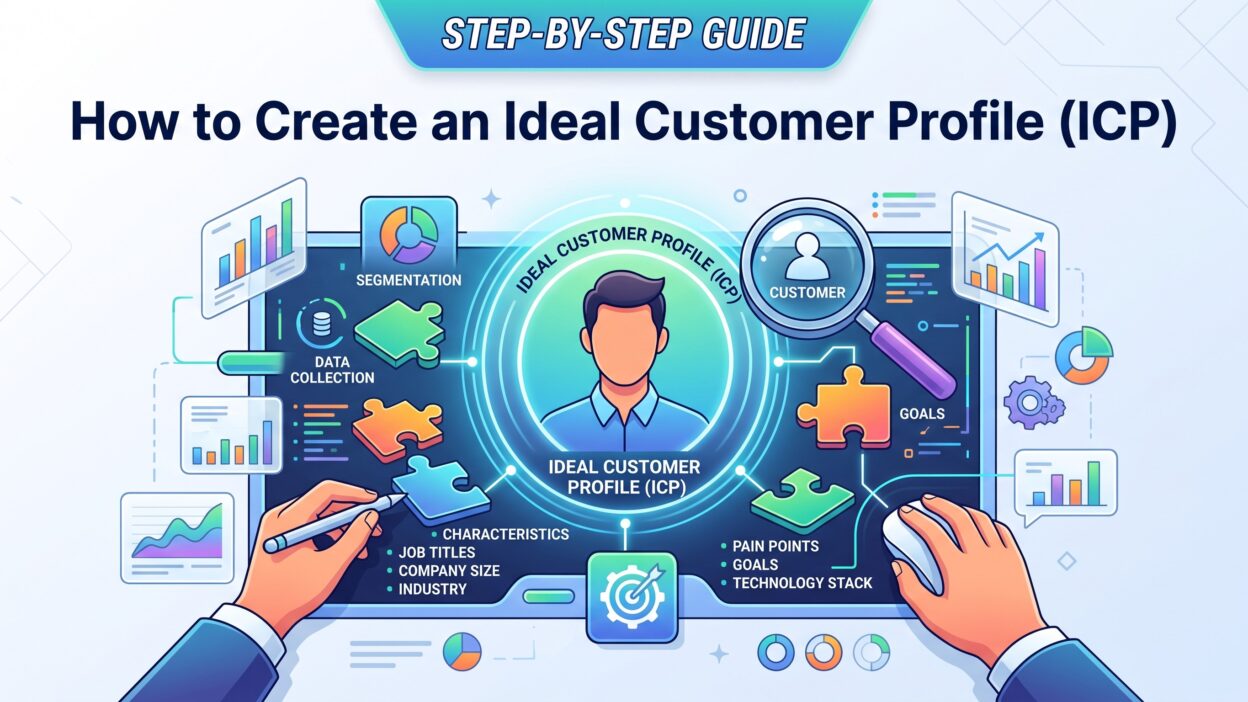
An Ideal Customer Profile describes the type of company most likely to buy your product and succeed with it. This profile includes traits like company size, industry, budget, and specific business needs.
An Ideal Customer Profile focuses on companies, not individual buyers. This distinction matters most in B2B businesses, where a whole organization makes the purchase decision together.
Ideal Customer Profile vs Buyer Persona
These two terms often get mixed up. An Ideal Customer Profile describes the company. A buyer persona describes the individual person inside that company who makes or influences the decision. A strong strategy needs both pieces working together.
Why an Ideal Customer Profile Matters
Better Sales Efficiency
Sales teams waste enormous time chasing the wrong accounts. An Ideal Customer Profile helps reps focus only on prospects likely to close. This focus shortens sales cycles and raises win rates.
Smarter Marketing Spend
Marketing budgets stretch further when a team knows exactly who to target. An Ideal Customer Profile shapes ad targeting, content topics, and even the channels a team chooses to invest in.
Higher Customer Retention
Customers who match your Ideal Customer Profile tend to stick around longer. They get real value from your product because it fits their actual needs. Poor-fit customers churn fast and drain support resources along the way.
Stronger Product Direction
An Ideal Customer Profile also shapes product decisions. Feature requests from your best-fit customers deserve more weight than requests from customers who barely resemble your ideal profile.
How to Build an Ideal Customer Profile
Analyze Your Best Current Customers
Start with your most successful customers today. Look at accounts with high retention, strong usage, and genuine satisfaction. These accounts often reveal the real pattern behind your Ideal Customer Profile.
Identify Firmographic Traits
Firmographic traits include company size, industry, revenue, and location. Review your best accounts and look for shared patterns across these traits. This data forms the foundation of your Ideal Customer Profile.
Understand the Core Problem You Solve
Every strong Ideal Customer Profile connects back to a specific problem. Ask what pain point your best customers shared before they bought your product. A clear problem-solution fit strengthens the whole profile.
Interview Your Top Customers Directly
Numbers only tell part of the story. Talk directly with your best customers. Ask what almost stopped them from buying. Ask what convinced them to move forward. These answers add real depth to your Ideal Customer Profile.
Review Lost Deals Too
Lost deals teach valuable lessons. Look at prospects who churned quickly or never closed at all. These accounts often reveal exactly who does not belong in your Ideal Customer Profile.
Document the Profile Clearly
Write the profile down in simple, specific terms. Include company size, industry, budget range, and the core problem you solve for them. A vague profile helps no one. A specific one guides real decisions daily.
Share It Across Teams
An Ideal Customer Profile only works when the whole company uses it. Share it with sales, marketing, product, and customer success. Every team should point toward the same target.
Key Elements of a Strong Ideal Customer Profile
Company Size and Revenue
Company size shapes buying power and decision speed. A small startup buys differently than a large enterprise. Your Ideal Customer Profile should specify a clear size range that matches your product’s strengths.
Industry and Vertical
Certain industries fit your product better than others. A healthcare-focused tool might struggle to serve retail companies well. Narrowing your Ideal Customer Profile by industry sharpens your entire go-to-market strategy.
Budget and Buying Power
A great-fit company on paper still needs real budget to buy your product. Your Ideal Customer Profile should reflect realistic spending power, not just theoretical interest.
Technology and Tools Already in Use
The tools a company already uses often signal fit. A business already using complementary software tends to adopt new tools faster. This detail belongs inside a thorough Ideal Customer Profile.
Growth Stage and Company Maturity
A fast-growing startup has different needs than a stable, mature company. Your Ideal Customer Profile should account for where a business sits in its growth journey.
Using Your Ideal Customer Profile in Sales and Marketing
Guiding Outbound Sales
Sales reps should use the Ideal Customer Profile to filter every prospect list before outreach begins. This focus alone can dramatically raise reply rates and shorten sales cycles.
Shaping Content and Messaging
Marketing teams should build content that speaks directly to the pain points inside your Ideal Customer Profile. Generic content rarely resonates as strongly as content built for a specific type of company.
Improving Ad Targeting
Paid advertising platforms let teams target by company size, industry, and job title. An Ideal Customer Profile makes this targeting sharp and efficient instead of broad and wasteful.
Aligning Customer Success
Customer success teams benefit from the Ideal Customer Profile too. Accounts that match the profile usually need less hand-holding and churn less often. This lets support teams focus energy where it matters most.
Common Mistakes When Building an Ideal Customer Profile
Many businesses build a profile based on who they wish would buy, not who actually buys well. Wishful thinking rarely produces an accurate Ideal Customer Profile.
Some teams build the profile once and never update it. Markets shift, and a business’s best customers can change significantly within just a year or two.
Other teams ignore lost deals entirely. Data from failed sales often teaches more than data from wins alone. Skipping this step leaves real gaps inside the Ideal Customer Profile.
Finally, many companies build the profile in isolation. Without input from sales, marketing, and customer success together, the Ideal Customer Profile often misses key real-world details.
Tools That Help Build an Ideal Customer Profile
CRM platforms like HubSpot and Salesforce reveal patterns across your existing customer base. Survey tools like Typeform gather direct feedback from your best accounts. Data enrichment tools like Clearbit add firmographic details automatically to existing customer records.
These tools turn scattered customer data into a clear, usable Ideal Customer Profile a whole team can trust.
Frequently Asked Questions
What is an Ideal Customer Profile?
An Ideal Customer Profile describes the type of company most likely to buy your product and succeed with it. It includes traits like industry, company size, and budget.
How is an Ideal Customer Profile different from a buyer persona?
An Ideal Customer Profile describes the company as a whole. A buyer persona describes the specific individual inside that company who makes or influences the purchase decision.
How often should a business update its Ideal Customer Profile?
Review the profile at least once a year, or sooner if your market shifts quickly. An outdated Ideal Customer Profile can lead sales and marketing teams toward the wrong accounts.
Does a small business need an Ideal Customer Profile?
Yes. Small businesses benefit even more from a clear Ideal Customer Profile, since limited resources make wasted effort far more costly.
What is the fastest way to start building an Ideal Customer Profile?
Start by studying your best current customers closely. Their shared traits usually reveal your true Ideal Customer Profile faster than any other method.
Read More:-How to Engage & Recruit Great Passive Candidates
Conclusion

An Ideal Customer Profile gives a business real direction. It tells sales who to pursue, tells marketing what to say, and tells product teams whose feedback matters most.
Start with your best current customers. Study their shared traits closely. Talk to them directly. Review lost deals for honest lessons. Document the profile clearly and share it across every team.
A strong Ideal Customer Profile turns scattered effort into focused growth. It helps a business spend time and budget on the accounts most likely to succeed.