Introduction
TL;DR A Target Market shapes every decision a business makes. It shapes the product, the message, and the price. Without a clear Target Market, a business speaks to no one in particular.
Many beginners try to sell to everyone. This approach usually backfires. A message built for everyone often connects with no one. A clear Target Market fixes this problem fast.
This guide walks through the full process of finding your Target Market. You will learn what it means, why it matters, and how to define one step by step. You will also see common mistakes and answers to common questions.
Table of Contents
What Is a Target Market
A Clear Definition
A Target Market is a specific group of people most likely to buy your product. This group shares traits like age, income, location, or interests. A business builds its entire strategy around this group.
A Target Market is not the same as everyone who could possibly buy something. It is the group most likely to buy, and most likely to become loyal over time.
Target Market vs Target Audience
These two terms often get confused. A Target Market describes a broad group defined by shared traits. A target audience often refers to a narrower group within a specific campaign or piece of content. A Target Market might be young parents. A target audience for one ad might be new parents scrolling Instagram at night.
Why Defining Your Target Market Matters
Better Marketing Results
A clear Target Market makes marketing sharper. A message built for a specific group lands harder than a vague message built for everyone. This focus saves money and improves results at the same time.
Smarter Product Decisions
Knowing your Target Market shapes product decisions early. A product built for busy professionals looks different than one built for retirees. Features, pricing, and packaging all shift based on who you serve.
Stronger Competitive Position
A business that understands its Target Market stands out from competitors who stay vague. Customers notice when a brand speaks directly to their specific needs. This builds trust faster than a generic pitch ever could.
Lower Customer Acquisition Costs
Targeting the right group lowers wasted ad spend. A business that markets to everyone burns money reaching people who never convert. A defined Target Market focuses that same budget on people who actually buy.
How to Identify Your Target Market
Study Your Current Customers
Start with people who already buy from you. Look at your best customers closely. Notice their age, location, income, and buying habits. These patterns often reveal your true Target Market faster than any survey.
Analyze Your Competitors
Look at who your competitors serve well. Read their reviews. Notice what customers praise and what they complain about. Gaps in a competitor’s Target Market often become opportunities for your own business.
Conduct Direct Market Research
Surveys and interviews reveal real insight into your Target Market. Ask real customers about their problems, habits, and preferences. Direct feedback beats guesswork every time.
Build Detailed Customer Personas
Turn your research into a persona. Give this persona a name, an age, a job, and a daily routine. A detailed persona makes your Target Market feel real, not abstract. Teams make better decisions when they picture a real person, not a vague demographic.
Segment Your Market by Key Traits
Break your Target Market into segments based on shared traits. Segments might split by age, income, location, or buying behavior. Each segment might need a slightly different message, even within the same overall Target Market.
Test and Refine Over Time
A Target Market is not fixed forever. Markets shift. Customer habits change. Revisit your research regularly and adjust your Target Market definition as your business grows.
Types of Market Segmentation
Demographic Segmentation
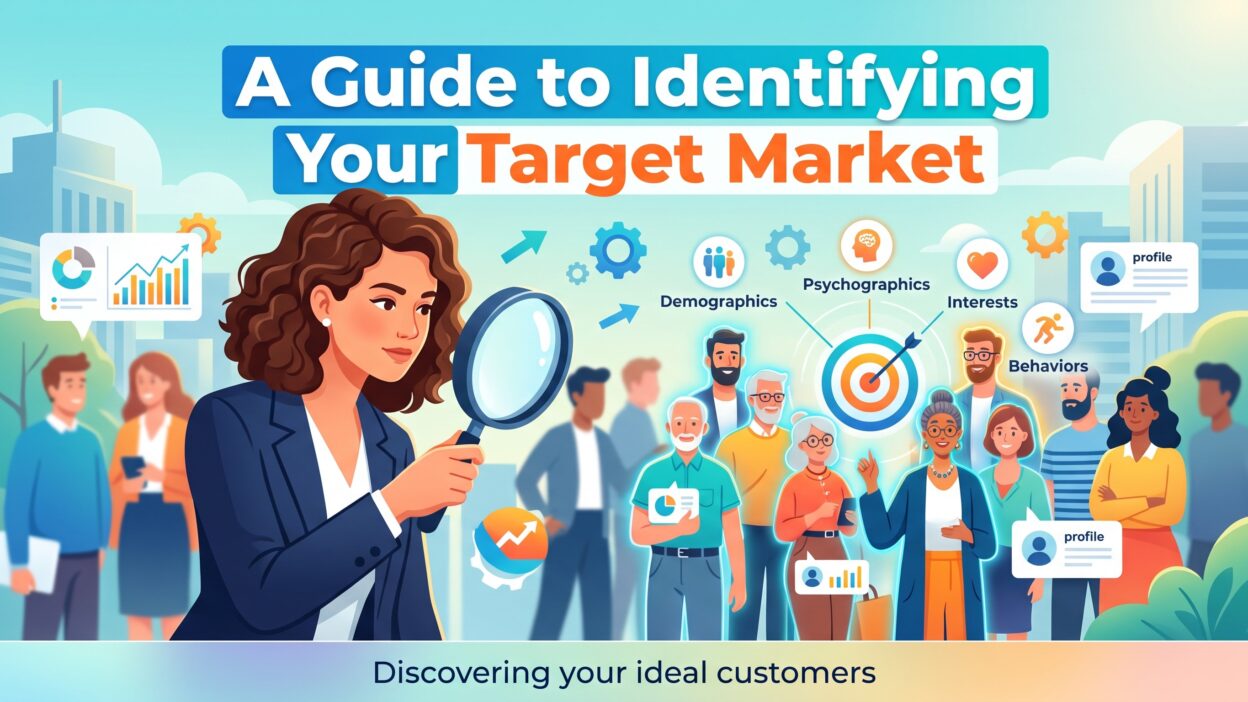
Demographic segmentation groups people by age, gender, income, and education. This method offers the simplest starting point for defining a Target Market. A baby product brand, for example, targets new parents within a specific age range.
Geographic Segmentation
Geographic segmentation groups people by location. A Target Market might live in a specific city, climate, or country. A winter coat brand targets cold climates. A surfboard brand targets coastal regions.
Psychographic Segmentation
Psychographic segmentation groups people by values, interests, and lifestyle. Two people with the same age and income might still want very different things. A Target Market built on psychographics captures this deeper layer of motivation.
Behavioral Segmentation
Behavioral segmentation groups people by how they act, not just who they are. This includes purchase history, brand loyalty, and product usage. A Target Market defined by behavior often converts faster, since these traits connect directly to buying decisions.
Tools That Help You Find Your Target Market
Google Analytics shows real data about who visits your website already. Facebook Audience Insights reveals detailed traits about people who engage with your brand online. Survey tools like Typeform and Google Forms gather direct feedback straight from real customers.
Customer relationship platforms like HubSpot track buying patterns over time. These patterns often reveal a Target Market a business never expected to find. Data beats assumption every single time.
Common Mistakes When Defining a Target Market
Many businesses define their Target Market too broadly. A Target Market described as “everyone who needs shoes” gives no real direction. Narrow the group until the traits feel specific and useful.
Some businesses rely only on assumptions instead of real data. Guesswork often leads a team toward the wrong group entirely. Real research always beats internal opinion.
Other businesses pick a Target Market once and never revisit it. Markets shift constantly. A group that fit five years ago might not fit today. Regular review keeps a Target Market accurate and useful.
Finally, many teams build a Target Market around who they wish would buy, not who actually buys. Wishful thinking rarely builds a profitable business. Real data should always win this argument.
Real World Examples of a Defined Target Market
Peloton built its brand around busy professionals who want a gym experience without leaving home. This narrow Target Market shaped every product decision, from pricing to design.
Warby Parker targeted young, budget-conscious shoppers frustrated with expensive glasses. This clear Target Market let the brand build a simple, direct message that stood out fast.
Dollar Shave Club targeted men tired of overpriced razors sold through confusing store displays. This sharp Target Market helped the brand grow fast through simple, direct marketing.
Frequently Asked Questions
What does Target Market mean in simple terms?
A Target Market means the specific group of people most likely to buy your product. This group shares traits like age, location, income, or interests.
How is a Target Market different from a target audience?
A Target Market describes a broad group defined by shared traits. A target audience usually refers to a narrower group within one specific marketing campaign.
Why does a business need a defined Target Market?
A defined Target Market improves marketing results, sharpens product decisions, and lowers wasted ad spend. Businesses without one often waste resources trying to reach everyone at once.
Can a Target Market change over time?
Yes. Customer habits shift, and markets evolve constantly. Businesses should review their Target Market regularly and adjust it based on new data.
What’s the easiest way to start finding a Target Market?
Start by studying your current best customers closely. Their shared traits often reveal your true Target Market faster than any other research method.
Read More:-What Is Data Intelligence?
Conclusion

A Target Market gives a business direction. It shapes the product, the message, and the marketing budget. Without one, a business speaks to no one clearly.
Start simple. Study your best current customers. Research your competitors. Build a real persona based on real data. Test your assumptions and refine them over time.
A clear Target Market turns scattered marketing efforts into a focused, effective strategy. It helps a business grow with purpose, not guesswork.