Introduction
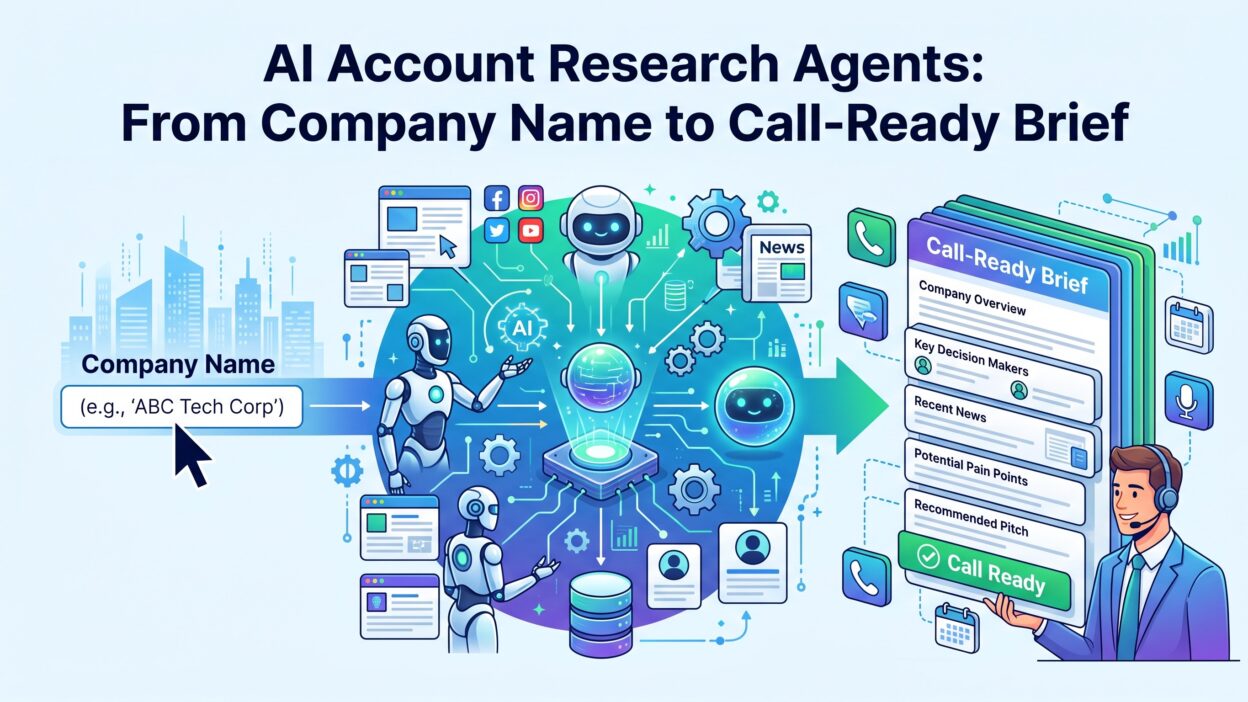
TL;DR A rep types a company name into a search bar. Ten browser tabs open. Thirty minutes pass. The call starts in five minutes and the notes still look messy. This is the old way of prepping for a sales call. AI Account Research Agents fix this exact problem. Type a name. Get a clean, call-ready brief in minutes. This guide breaks down what these tools are, how they work, and how to pick one that actually helps your team close deals.
Sales teams across every industry face the same daily grind. Reps juggle dozens of accounts. Managers push for more calls. Buyers expect sharp, informed conversations from the first minute. Old-school research methods can’t keep pace with any of that. This article walks through the full picture, from the basic definition to the exact workflow, the real benefits, the honest limitations, and the questions worth asking before you buy one.
B2B buying committees keep growing too. A single deal might involve five or six stakeholders across different departments. Each stakeholder cares about a different set of facts. A finance lead wants budget context. A technical lead wants integration details. Keeping all of that straight by hand gets harder every quarter. A structured system built around this exact problem removes the guesswork and gives every rep the same solid starting point, no matter how complex the buying committee looks.
Table of Contents
What Are AI Account Research Agents
The Core Function
These tools pull information from many places at once. They read company websites. They scan news articles. They check public filings, job boards, and social posts. Then they compress all of it into one short document. A rep opens that document before a call. The rep sees company size, funding stage, recent news, and the names of key people. No manual digging happens. The tool does the digging instead.
Sales teams often call this output “pre-call intelligence.” AI Account Research Agents build this intelligence without a human touching a single tab. The finished brief reads like a tight one-page memo. A busy rep scans it in under two minutes and walks into the call ready. The format matters as much as the content here. A wall of text helps nobody under time pressure, so the best tools break information into short, scannable sections a rep can skim between meetings.
Why Sales Teams Need Them Now
Buyers today expect sharp, specific conversations. A generic pitch loses a deal fast. These agents give reps sharp talking points before the call even starts. They flag a recent funding round. They flag a new hire in the buying committee. They flag a competitor the account just dropped. Small details like these build trust fast on a call, and trust is the single biggest driver of a good first meeting.
Sales cycles also move quicker than they used to. Reps carry bigger account lists than before. Manual research simply does not scale to that volume. AI Account Research Agents scale without adding headcount, which matters a lot for lean sales teams working tight budgets. A ten-person team can research like a fifty-person team once this kind of automation sits in the workflow. That shift alone changes how a sales leader plans headcount for the next fiscal year.
The Problem With Manual Account Research
Time Drain on Reps
A rep often spends twenty to thirty minutes researching one account before a call. Multiply that across ten calls a day and five hours vanish before lunch. None of that time touches actual selling. AI Account Research Agents cut that same research down to a few minutes. Reps get their day back and spend it talking to buyers instead of digging through search results. Over a full quarter, that reclaimed time adds up to weeks of extra selling capacity per rep.
Inconsistent Data Quality
Manual research varies wildly by rep. One rep checks LinkedIn and stops there. Another rep reads the company blog and calls it done. Briefs end up uneven across a single team, and managers can’t predict what a rep will or won’t know walking into a call. AI Account Research Agents apply the same method every single time. Every brief follows the same format and hits the same data points. Quality stays consistent no matter who runs the account, whether it’s a rookie on their first week or a ten-year veteran.
Missed Signals
Humans miss things, especially under time pressure. A rep might skip a press release from last week. A rep might miss a leadership change buried in a company blog post. AI Account Research Agents scan far wider and much faster than a person ever could. They catch small signals a rushed rep would walk right past, and those small signals often decide whether a call goes well or falls flat. A single mention of a new VP of Operations can shift an entire pitch strategy, and a machine catches that detail every time without fail.
How AI Account Research Agents Work
Data Collection Layer
The process starts with a company name or a website domain. The tool pulls data from public sources across the web. Sources typically include company sites, news outlets, job boards, and social platforms like LinkedIn. Some tools in this category also pull directly from a company’s CRM and past call notes for extra context. This step builds a raw pool of facts before any analysis happens. The wider the source list, the richer the final brief tends to be.
Analysis and Synthesis
Raw data alone helps nobody prepare for a call. The system filters out noise and ranks what actually matters. It groups facts into themes such as growth signals, pain points, and key stakeholders. Most AI Account Research Agents lean on large language models for this step. The model reads through the raw text and writes short, plain summaries a human can scan quickly. This is the step where quality separates good tools from average ones. A weak model produces vague summaries. A strong model produces sharp, specific ones tied directly to the deal at hand.
Brief Generation
The last step turns analysis into an actual document a rep can use. A strong brief includes a company snapshot, recent news, key contacts, and a short list of suggested talking points. Well-built AI Account Research Agents format this output cleanly, with clear sections and no clutter. A rep should be able to read the whole thing in under three minutes and still remember the key points once the call starts. Some tools even add a short “watch out for” note, flagging a recent layoff or a leadership shakeup that needs careful handling on the call.
Key Features to Look For
Real-Time Data Sources
Stale data hurts a sales call worse than no data at all. A strong tool refreshes its information daily, sometimes more often. Look for a system that pulls live news feeds and current social updates rather than a cached snapshot from months ago. A funding number from a year ago can make a rep look out of touch fast, and buyers notice that gap immediately.
Customizable Brief Templates
Every sales team sells in its own way. A SaaS team cares most about a prospect’s tech stack. A manufacturing team cares more about supply chain details and regional footprint. Strong AI Account Research Agents let admins customize which sections show up in a brief. The template should match how your specific team actually sells, not a generic one-size format built for a completely different industry.
Integration With CRM Tools
A brief that lives in a separate app tends to get ignored fast. Reps already live inside their CRM all day long. The best tools sync directly with platforms like Salesforce or HubSpot. The brief shows up right on the account record, exactly where a rep already looks before dialing a number. This small design choice drives adoption far more than any fancy feature buried three menus deep.
From Company Name to Call-Ready Brief: The Workflow
Input the Target Account
A rep types in a company name or pastes a website domain. Some tools also accept a bulk list of accounts for territory planning. This single action kicks off the entire research process behind the scenes, and the rep can move on to other tasks while it runs.
Automated Data Gathering
The system searches the open web, news archives, and public filings in parallel. It checks employee counts, funding history, and any recent leadership hires. This entire step runs quietly in the background, with zero manual work from the rep. Most tools finish this stage in under two minutes for a mid-sized company.
Signal Prioritization
Not every fact carries equal weight for a call. The tool ranks signals based on where the deal sits in the sales cycle. A signal about budget cuts matters more near a negotiation stage. A signal about company growth matters more during early prospecting. Good AI Account Research Agents adjust their output based on this deal stage automatically, rather than dumping every fact in one flat list.
Brief Delivery
The finished brief lands in the rep’s inbox or directly inside the CRM record. Delivery usually takes just a few minutes from the original request. The rep walks into the call already prepared, without spending a single extra minute searching. Some tools even send a short mobile notification, so a rep can review the brief from a phone on the way to an in-person meeting.
Use Cases Across Sales Teams
Account Executives
AEs lean on these briefs heavily before demos and closing calls. A sharp brief helps an AE speak the buyer’s own language from the first minute. It surfaces likely objections before those objections even come up live on the call. An AE walking in with three specific, researched talking points beats one walking in with a generic slide deck every single time.
Sales Development Reps
SDRs handle the very first cold email or cold call in a sequence. AI Account Research Agents help SDRs personalize that first outreach fast, without spending twenty minutes on one prospect. A single personalized line about a recent product launch beats a generic template every time. Reply rates on outbound emails climb noticeably once this kind of detail shows up in the first two sentences.
Customer Success Teams
CS teams use these briefs heavily before renewal conversations. The tool flags a drop in product usage or a new stakeholder who just joined the account. This early flag often gives a CS manager enough time to save a shaky account well before churn actually happens. A renewal conversation grounded in real usage data feels completely different from one built on guesswork.
Sales Managers and Team Leads
Managers use these briefs a bit differently than reps do. A manager might scan a batch of briefs before a pipeline review, checking which accounts show real momentum. A manager coaching a new rep can point to a brief and show exactly what good preparation looks like. Team leads also use aggregate data from these tools to spot patterns across an entire territory, like a cluster of accounts all going through a similar leadership change at the same time.
Benefits of AI Account Research Agents
Time Savings
Reps get real hours back every single week. Sales leaders see more calls happen per rep across the whole team. AI Account Research Agents free up that saved time for actual selling instead of searching. Some teams report an extra five to seven hours per rep per week once the tool fully replaces manual research.
Better Call Preparation
A prepared rep simply sounds more credible on a call. Buyers notice instantly when a rep clearly knows their business already. These tools help an average rep sound like a seasoned top performer on nearly every call. Preparation, more than natural talent, tends to separate strong quarters from weak ones across a sales floor.
Higher Win Rates
Sharper conversations tend to close more deals over time. Teams running AI Account Research Agents often report stronger pipeline conversion within a quarter or two. Preparation builds buyer confidence fast, and that confidence pushes deals across the finish line. A well-prepared discovery call also shortens the overall sales cycle, since fewer follow-up questions get left unanswered.
Challenges and Limitations
Data Accuracy Concerns
No public data source stays perfectly accurate forever. Public records sometimes go stale or simply turn out wrong. AI Account Research Agents can occasionally pull outdated numbers when an underlying source lags behind reality. Reps should still verify any major claim before quoting it directly on a call, especially numbers tied to funding or headcount.
Over-Reliance Risk
A brief works as a strong starting point, not a full script to read from. Reps still need real judgment and active listening skills on the call itself. These agents support the conversation well, but they never replace the human doing the actual talking and listening. A rep who reads a brief word for word on a call sounds robotic fast, and buyers pick up on that immediately.
Choosing the Right AI Account Research Agent
Evaluation Criteria
Check data freshness first, before anything else. Check integration options with your existing CRM next. Check how cleanly the tool formats its final output. AI Account Research Agents differ quite a bit across these three specific areas, so testing more than one tool usually pays off before committing to a long-term contract.
Questions to Ask Vendors
Ask exactly where the underlying data comes from. Ask how often that data actually refreshes. Ask whether the brief format can be customized for your team’s specific sales motion. Ask about pricing per seat versus pricing per account researched, since the two models suit very different team sizes. These few questions quickly separate strong tools from weaker copycat products flooding the market right now.
Best Practices for Implementation
Start Small
Pilot the new tool with just one team first, not the whole org at once. Measure the actual time saved and the real quality of each brief. Expand the rollout only after that pilot clearly proves its value across a full sales cycle, not just a handful of calls.
Train Your Team
Reps need one short training session, not a long onboarding course. Show them exactly how to read a brief quickly under time pressure. Show them where to double check a claim if a call carries high stakes. A fifteen-minute walkthrough usually covers everything a rep needs to start using the tool confidently.
Measure Results
Track call preparation time and win rates over a full quarter. Compare these numbers from before the rollout against numbers after it. This simple data set justifies the investment clearly to sales leadership, and it also highlights which reps adopted the tool fastest and saw the biggest gains.
Common Mistakes to Avoid
Some teams roll out a new tool to everyone at once, skipping the pilot stage entirely. That approach usually creates confusion instead of quick wins. Other teams treat the brief as gospel and skip any manual verification, which backfires the moment a data point turns out stale. A third mistake involves picking a tool based purely on price, without checking whether it actually integrates with the CRM the team already uses every day. Avoiding these three mistakes alone puts a rollout ahead of most competitors trying the same thing.
The Future of AI Account Research Agents
Voice-based agents will likely join text briefs soon. A rep might ask a spoken question mid-call and get an instant spoken answer back. These tools will also start predicting buying intent, not just describing past events. Expect deeper integration with calendar tools and call recording platforms in the near future too, tying research directly into the actual conversation as it happens. Some vendors already experiment with live coaching, where the agent whispers a relevant fact into a rep’s ear during a video call, right when it matters most.
Frequently Asked Questions
What is an AI Account Research Agent? It is a tool that gathers company data automatically and turns it into a short, usable sales brief within minutes, cutting out the manual search work reps used to do by hand.
How accurate is the data from AI Account Research Agents? Accuracy depends heavily on the underlying source quality. Reps should still confirm any major claim before a high-stakes call, especially anything tied to funding numbers or leadership changes.
Do AI Account Research Agents replace human research completely? No, they handle the first ninety percent of the work. Human judgment still drives the actual conversation on the call, and no tool can replicate genuine listening skills.
Which sales teams benefit most from this technology? Account executives, SDRs, and customer success teams all benefit clearly. Each team simply uses the brief in a slightly different way, tuned to their specific stage of the customer relationship.
How fast does a typical brief generate? Most tools in this category produce a full brief in under five minutes from a single company name, and some finish in under sixty seconds for smaller companies.
Can these tools integrate directly with a CRM? Yes, most modern platforms sync cleanly with Salesforce, HubSpot, and similar CRM tools already in use, pushing the brief straight onto the account record automatically.
What should a sales team check before buying one? Check data refresh speed, CRM integration depth, and template flexibility. A short pilot with real accounts reveals more than any vendor demo ever will.
Read More:-Meltwater Features: A Complete Breakdown in 2026
Conclusion

AI Account Research Agents solve a real, everyday problem for sales teams. They turn hours of manual digging into a five-minute brief a rep can actually use. Reps walk into calls prepared, confident, and ready to speak the buyer’s language from the first sentence. Sales teams close more deals while wasting far less time on busywork. The technology keeps improving too, moving from simple summaries toward real-time coaching during live calls. Any team scaling outbound, renewals, or account management should test this category of tool this quarter and see the time savings firsthand.