Introduction
TL;DR Most companies leave a trade show with a stack of leads and no real proof of value. Leadership asks a simple question afterward. Did the event pay off? Without the right systems, nobody has a clear answer.
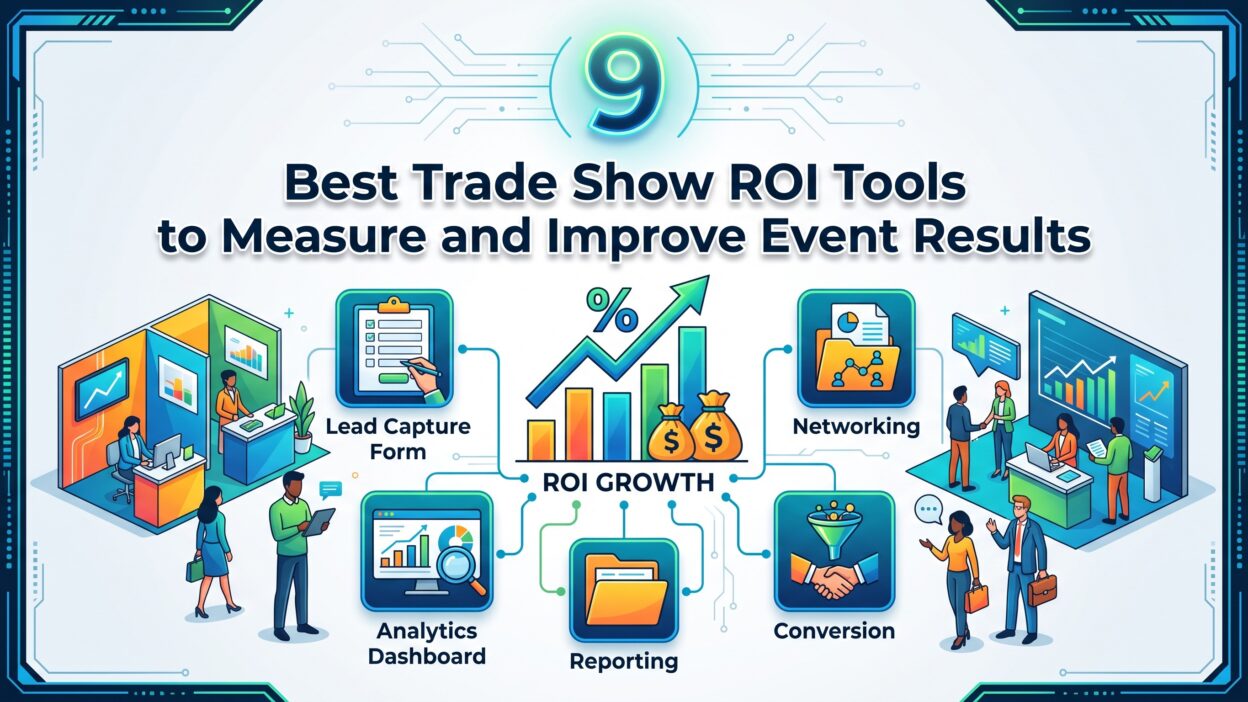
Trade Show ROI Tools fix that gap. They connect booth activity to real pipeline and revenue. This list breaks down nine tools worth considering, along with what to look for before you buy.
Table of Contents
Why Trade Show ROI Tools Matter
Trade shows cost real money. Booth space, travel, staff time, and giveaways add up fast across a single event season. Without measurement, this spend stays impossible to defend at budget time.
Trade Show ROI Tools solve this by tracking activity from badge scan to closed deal. This visibility shows which events actually drive revenue and which ones drain budget without a real return.
Marketing and sales alignment also improves with the right tools in place. Leads captured at a booth flow directly into the CRM. Sales sees context immediately, instead of chasing down a stack of business cards weeks later.
Leadership trust grows once reporting improves. A clear ROI number from Trade Show ROI Tools makes next year’s budget conversation far easier than a gut feeling about how the event “felt.”
What to Look for in Trade Show ROI Tools
Not every tool fits every team. A few criteria matter most when comparing options.
Integration capability ranks first. The tool should connect directly to your CRM and marketing automation platform. Manual data exports waste time and introduce errors into your reporting.
Ease of use for booth staff matters just as much. A complicated lead capture app slows down conversations on a busy show floor. Staff need something fast and intuitive, even during a rush of foot traffic.
Reporting depth separates basic tools from strong ones. Look for dashboards that show pipeline and revenue, not just lead counts. Trade Show ROI Tools should answer the actual business question, not just track activity.
Scalability matters for teams attending multiple events per year. A tool that works well for one small show should still perform cleanly across a packed annual event calendar.
9 Best Trade Show ROI Tools
Here are nine tools worth evaluating, based on the role each one plays in the event process.
1. Cvent
Cvent handles event registration and logistics at scale. Its reporting features track attendee data from registration through post-event surveys. Larger companies running multiple annual events often rely on Cvent for consistent data across their full event calendar.
2. Bizzabo
Bizzabo focuses on the full event experience, covering both in-person and hybrid formats. Its analytics dashboard connects attendee engagement to pipeline data when paired with a CRM integration. Teams running branded conferences often favor this platform.
3. Splash
Splash specializes in fast, branded event pages and streamlined registration. Marketing teams use it to track signups and attendance without heavy setup time. Its reporting ties event attendance back to marketing campaigns cleanly.
4. HubSpot
HubSpot serves as the marketing and CRM backbone for many teams tracking trade show performance. Event leads flow into existing workflows, letting teams measure pipeline generated from a specific show alongside every other marketing channel.
5. Salesforce
Salesforce anchors revenue tracking for many B2B teams. Trade show leads tagged correctly inside Salesforce let sales leadership see closed-won revenue tied directly back to a specific event, which strengthens the ROI case significantly.
6. iCapture
iCapture focuses specifically on lead capture at the booth. Staff scan badges or enter details on a tablet, and the data syncs to the CRM in real time. This speed reduces the lag between a conversation and a follow-up.
7. Zuant
Zuant offers similar lead capture functionality, with strong offline support for venues with weak internet connectivity. Custom forms let teams collect specific qualifying details during the conversation itself, improving lead quality from the start.
8. RainFocus
RainFocus targets larger enterprise events with complex data needs. Its platform unifies registration, session tracking, and lead data into one system, giving marketing teams a single source of truth across large, multi-track conferences.
9. Certain
Certain provides event management and reporting aimed at marketing teams running a heavy event calendar. Its analytics connect attendance and engagement data to broader campaign performance, supporting a clearer view of trade show ROI over time.
How to Choose the Right Trade Show ROI Tools for Your Team
Start by mapping your current process. Identify where data gets lost today, whether that happens at badge scanning, CRM entry, or post-event follow-up. This gap shows exactly which type of tool solves your biggest problem first.
Budget plays a real role in this decision too. Smaller teams attending a handful of shows per year rarely need the same platform as an enterprise team running a dozen annual events. Match tool complexity to your actual event volume.
Test the tool at a smaller event before committing to a full rollout. A live trial reveals usability issues that a demo alone rarely shows. Booth staff feedback after a real event carries more weight than any sales pitch from a vendor.
Consider your existing tech stack carefully. Trade Show ROI Tools work best when they plug directly into your current CRM and marketing platform. A tool that requires a separate reporting process defeats much of its own purpose.
Common Mistakes When Measuring Trade Show ROI
Many teams track lead volume alone and stop there. A high lead count means little without knowing how many of those leads turn into real pipeline. Volume without quality context tells an incomplete story.
Some teams skip tagging leads by event source inside the CRM. Without this tag, revenue never traces back to the specific show that generated it. This gap makes real ROI calculation nearly impossible months later.
Manual data entry causes errors that quietly undercut good tools. A badge scanned correctly but entered incorrectly into a spreadsheet creates bad data from the start. Automated syncing through proper Trade Show ROI Tools avoids this problem entirely.
Some teams also measure ROI too soon after the event ends. B2B sales cycles often stretch for months. A fair ROI calculation needs enough time to let leads actually move through the pipeline before judging the event’s true value.
Metrics Trade Show ROI Tools Should Help You Track
Cost per lead shows basic efficiency, comparing total event spend against leads captured. This number alone stays incomplete without deeper context from later pipeline stages.
Lead-to-opportunity conversion rate shows quality, not just volume. A smaller lead count that converts well often beats a huge list that never advances past the first sales call.
Closed-won revenue tied to the event remains the most important number of all. Strong Trade Show ROI Tools trace this full journey, connecting a badge scan to a signed contract months later.
Cost per closed deal rounds out the picture. This final number lets leadership compare trade show spend directly against other marketing channels on equal footing.
FAQs
What are Trade Show ROI Tools used for? Trade Show ROI Tools track event spend against real business outcomes, connecting booth activity, captured leads, and eventual revenue into one clear picture.
Do small companies need dedicated Trade Show ROI Tools? Yes, though smaller teams can often start with simpler tools like a lead capture app paired with their existing CRM instead of a full enterprise platform.
How long does it take to see ROI from a trade show? Most B2B sales cycles take several months. A fair ROI calculation usually waits at least one full quarter after the event before drawing conclusions.
Can Trade Show ROI Tools integrate with an existing CRM? Most modern tools support direct integration with platforms like Salesforce or HubSpot, which keeps lead data flowing automatically without manual entry.
What is the most important metric to track from a trade show? Closed-won revenue tied directly to the event matters most, since it proves real business impact beyond lead count alone.
How much do Trade Show ROI Tools typically cost? Pricing varies widely based on features and event scale. Lead capture apps often cost less than full enterprise event management platforms.
Should sales and marketing share access to Trade Show ROI Tools? Yes. Shared access keeps both teams aligned on lead quality and follow-up speed, which improves the accuracy of the final ROI report.
Read More:-
Conclusion

Trade Show ROI Tools turn a vague sense of event success into real, defensible numbers. The nine tools in this list each solve a different piece of the puzzle, from registration to lead capture to full revenue tracking.
Map your current gaps before choosing a tool. Match the platform to your team size and event volume. Track leads all the way through to closed revenue, not just booth activity. The right Trade Show ROI Tools turn your next event budget conversation into an easy one, backed by real data instead of guesswork.