Introduction
TL;DR One generic email rarely fits every subscriber on your list. A new lead and a loyal customer want different things from your inbox. Email list segmentation closes that gap by sending the right message to the right group.
This guide breaks down what segmentation means, why it works, and how to build a real strategy around it. It covers the main segment types, a step-by-step setup process, and the mistakes that quietly weaken results.
Table of Contents
What Is Email List Segmentation?
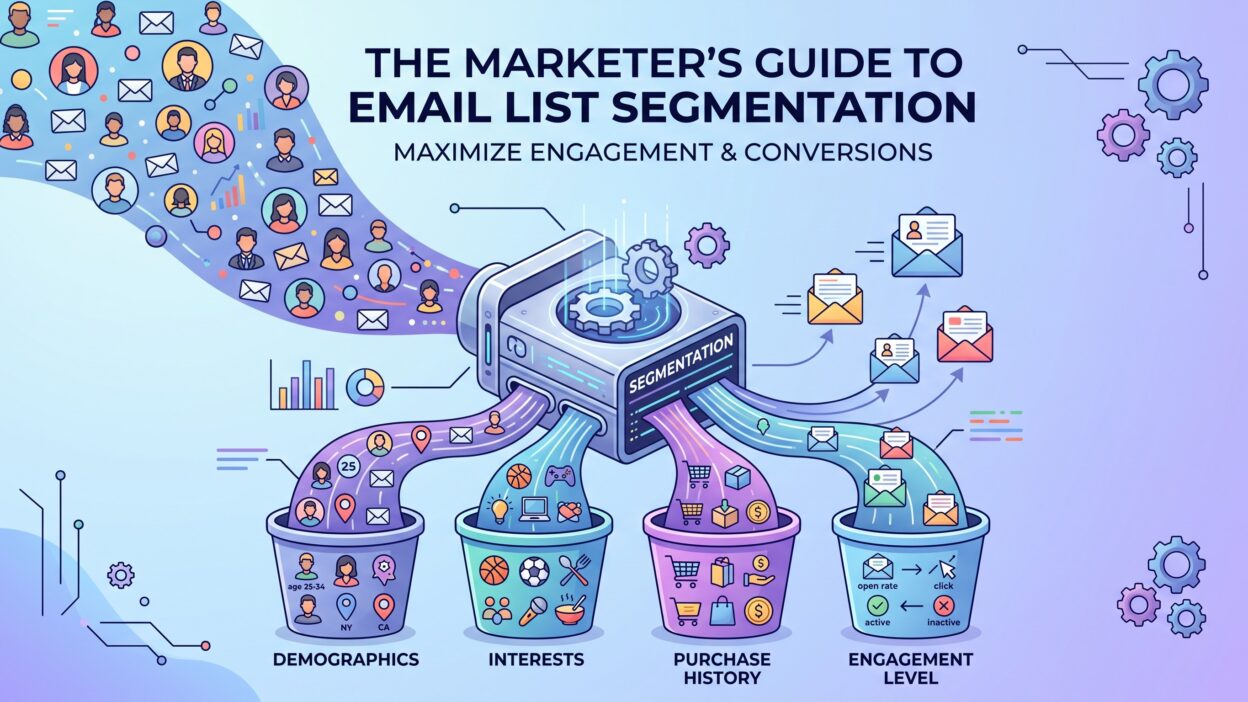
Email list segmentation means splitting your subscriber list into smaller, more specific groups. Each group shares a trait, like industry, purchase history, or engagement level. Campaigns then target these groups instead of the full list at once.
A single list sent one message treats every subscriber the same. Email list segmentation rejects that approach. It recognizes that a new subscriber and a long-time customer sit at very different stages of the relationship.
This practice applies across almost every email type. Newsletters, promotional campaigns, and onboarding sequences all improve once segmentation replaces a one-size-fits-all approach.
Why Email List Segmentation Improves Results
Relevance drives every metric that matters in email marketing. A subscriber who receives content matching their interests opens more often and clicks more often. Email list segmentation delivers that relevance at scale.
Unsubscribe rates often drop once segmentation starts. Subscribers leave a list mainly because the content feels irrelevant. Sending fewer, better-targeted emails keeps people subscribed longer than blasting everyone with the same message weekly.
Revenue impact shows up clearly too. Segmented campaigns convert better than generic blasts, since the offer already matches what the recipient actually wants. This lift compounds over time as your segmentation criteria improve.
Deliverability benefits from this practice as well. Email providers track engagement closely. A list full of disengaged subscribers hurts your sender reputation. Email list segmentation lets you manage inactive contacts separately, protecting your main sending reputation.
Types of Email List Segmentation
Segmentation can follow several different paths. Most strong strategies combine more than one type at once.
Demographic Segmentation
This approach splits subscribers by traits like job title, company size, or location. A B2B list often benefits from segmenting by industry or role, since buyers in different positions care about different outcomes.
Behavioral Segmentation
Behavioral segmentation groups subscribers by what they actually do. Past purchases, website visits, and content downloads all count as useful signals here. This data often predicts future interest better than demographic details alone.
Lifecycle Stage Segmentation
This method groups subscribers by where they sit in the customer journey. A new lead needs educational content. A current customer needs product updates and renewal reminders. Lifecycle stage segmentation keeps messaging aligned with real needs at each point.
Engagement Level Segmentation
Active subscribers behave differently than inactive ones. Grouping by open and click history lets you reward engaged subscribers with more frequent sends, while re-engagement campaigns target those who have gone quiet.
How to Build an Email List Segmentation Strategy
A strong segmentation strategy follows a clear process. Skipping steps usually shows up later as messy, overlapping segments.
Step 1: Audit Your Current List
Review the data you already have on each subscriber. Note which fields are complete and which sit empty. This audit shows what segmentation is actually possible right now, before you plan anything further.
Step 2: Choose Segmentation Criteria
Pick two or three criteria to start with instead of building dozens of segments at once. Industry and engagement level often provide a strong starting combination for most B2B lists.
Step 3: Set Up Your Segments in Your Platform
Most email platforms support tags, custom fields, or saved filters for this purpose. Build your segments carefully and test that subscribers land in the correct group before sending any live campaign.
Step 4: Write Content for Each Segment
Draft messaging that speaks directly to each group’s situation. A segment built around new leads needs different subject lines and offers than a segment built around existing customers nearing renewal.
Step 5: Test and Refine Your Segments
Review performance by segment regularly. Some segments may need to split further as you learn more about subscriber behavior. Others may need to merge if the distinction turns out to matter less than expected.
Tools That Support Email List Segmentation
The right platform makes this process far easier to manage. Most modern email tools support custom fields and behavioral tracking natively, which removes the need for manual list sorting.
CRM integration matters for B2B teams especially. Connecting your CRM to your email platform lets segments update automatically as deal stage or account data changes. This keeps your email list segmentation accurate without constant manual updates.
Analytics tools round out the stack. They show which segments perform best over time, helping you refine criteria based on real results instead of assumptions.
Common Mistakes with Email List Segmentation
Many teams create too many segments at once. Dozens of tiny groups become impossible to manage and dilute the benefit of segmentation entirely. Start small and expand only once the basics work well.
Some teams segment once and never revisit their groups. Subscriber behavior changes over time. A segment built a year ago may no longer reflect current interests or lifecycle stage accurately.
Inconsistent data collection undermines segmentation too. If sign-up forms skip key fields, segments end up incomplete from the start. Strong email list segmentation depends on consistent data capture at every entry point.
Some marketers also forget to segment out unengaged subscribers. Sending every campaign to inactive contacts drags down open rates and can hurt deliverability across the entire list, even for the segments performing well.
Metrics That Prove Email List Segmentation Works
Open rate comparisons between segmented and non-segmented campaigns show the clearest early signal. Segmented campaigns typically post noticeably higher open rates within the first few sends.
Click-through rate tells a similar story. Relevant content earns more clicks than generic content sent to an entire list. This metric often shows the biggest gap between segmented and unsegmented campaigns.
Conversion rate ties segmentation back to real business results. Tracking conversions by segment shows which groups respond best to specific offers, guiding future campaign planning with real data instead of guesswork.
FAQs
What is the easiest way to start email list segmentation? Start with one simple criterion, like engagement level or industry. Build from there once you see how subscribers respond to more targeted content.
How many segments should an email list have? Most teams do well with three to seven core segments. More granular targeting can come later, once the basic structure proves useful.
Does email list segmentation improve deliverability? Yes. Sending relevant content to engaged segments protects your sender reputation, while separating inactive subscribers prevents them from dragging down overall performance.
What data do you need for email list segmentation? Basic demographic fields, behavioral data like clicks and purchases, and lifecycle stage information all support strong segmentation. More data allows more precise targeting.
How often should segments get reviewed? Review segments quarterly at minimum. Subscriber behavior shifts over time, and outdated segments can quietly hurt campaign performance.
Can small email lists benefit from segmentation? Yes. Even a list under a thousand subscribers benefits from basic segmentation, especially by engagement level and lifecycle stage.
What tools support email list segmentation best? Most major email platforms include native segmentation features. CRM integration adds further precision for B2B teams tracking deal stage and account data.
Read More:-
Conclusion

Email list segmentation turns a generic blast list into a set of targeted, relevant campaigns. Subscribers respond better when the message actually fits their situation, and that relevance shows up directly in open rates, clicks, and revenue.
Start small. Audit your current data. Pick a few criteria that matter most to your audience. Build your segments, write content that speaks to each group, and refine the strategy as you learn. Email list segmentation rewards the marketers who treat it as an ongoing habit, not a one-time project.