Introduction
TL;DR Snowflake handles massive volumes of business data every day. Sales teams need clear signals to find the right buyers. Marketing teams need sharp segments to run smart campaigns. Technographic and firmographic data give both teams that clarity.
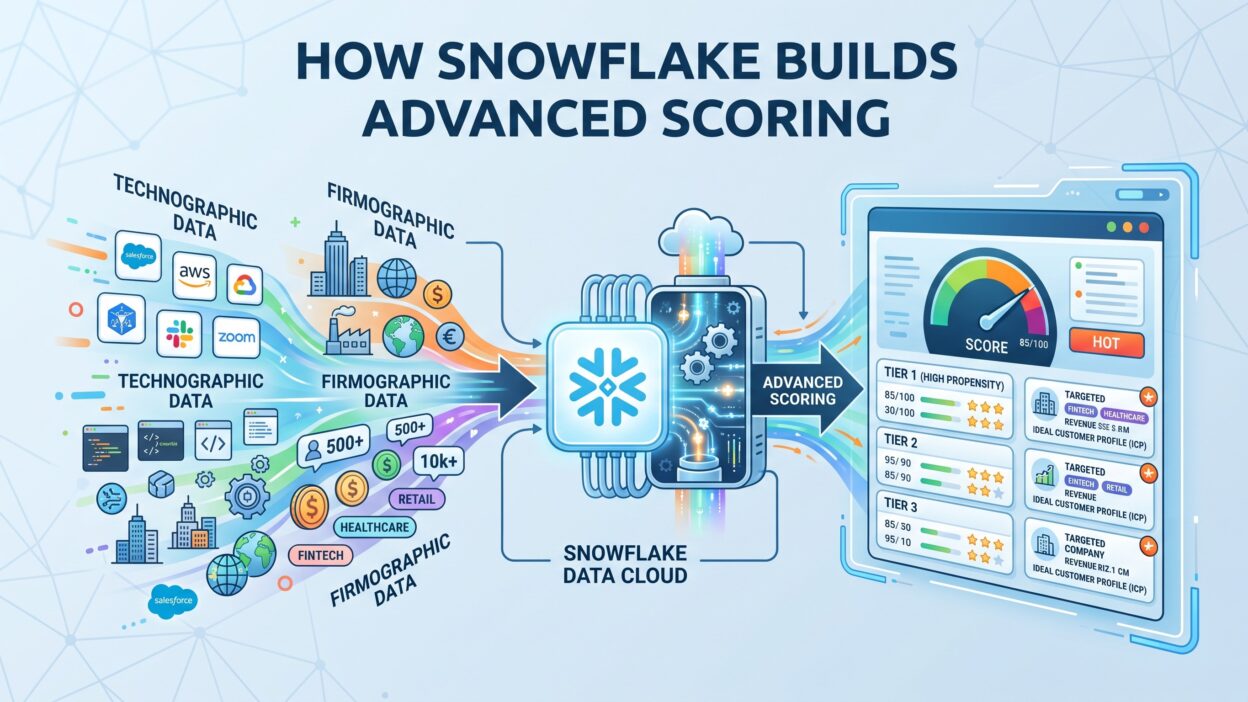
Technographic data shows the tech stack a company uses. Firmographic data shows the company’s size, industry, and revenue. Snowflake blends these two data types to build advanced scoring models. These models rank leads and accounts based on real signals, not guesswork.
This blog breaks down how Snowflake uses technographic and firmographic data. You will learn how the data gets collected, how scoring models get built, and why this approach drives better results. You will also see real use cases, common challenges, and best practices for teams who want similar results.
By the end, you will understand why technographic and firmographic data sit at the center of modern B2B scoring strategies.
Table of Contents
What Is Technographic and Firmographic Data?
Every strong scoring model starts with strong data. Snowflake relies on two core data types to power its scoring engine: technographic data and firmographic data. Each one answers a different question about a target account.
Technographic Data Explained
Technographic data reveals the software, tools, and platforms a company runs. This includes CRM systems, cloud providers, marketing automation tools, and security software. A company using a competitor’s data warehouse sends a different signal than one still running legacy systems.
Snowflake tracks technographic data to spot buying triggers. A company adopting new cloud infrastructure often needs better data warehousing soon after. This signal helps sales teams reach out at the right moment. Technographic data turns a cold lead into a warm one.
Firmographic Data Explained
Firmographic data describes the company itself. This includes industry, employee count, annual revenue, location, and growth stage. A 50-person startup behaves differently than a 5,000-person enterprise. Firmographic data helps Snowflake sort accounts by fit.
A good fit means the account matches Snowflake’s ideal customer profile. Firmographic data filters out accounts that will never convert. It also highlights accounts ready to scale their data infrastructure. Technographic and firmographic data together create a full picture of each account.
Why Snowflake Needs Technographic and Firmographic Data
Sales teams waste time chasing the wrong leads. Marketing teams waste budget on the wrong segments. Technographic and firmographic data fix both problems at once.
Snowflake sells to companies with complex data needs. Not every company fits that mold. Firmographic data filters accounts by size and industry. Technographic data confirms whether an account already runs tools that pair well with Snowflake’s platform.
This combination sharpens every stage of the funnel. Marketing teams build tighter audience segments. Sales reps get better lead lists. Customer success teams predict churn risk earlier. Technographic and firmographic data remove the guesswork from account prioritization.
Snowflake also uses this data to guide product positioning. A company running outdated on-premise systems needs a different pitch than one already using modern cloud tools. Technographic and firmographic data shape the entire go-to-market strategy, not just the scoring model.
How Snowflake Collects Technographic and Firmographic Data
Collecting clean data takes real infrastructure. Snowflake builds this infrastructure through several channels.
Data Ingestion Pipelines
Snowflake ingests data from multiple sources into a central warehouse. These pipelines pull technographic signals from web crawlers, job postings, and public tech stack databases. Firmographic details come from business registries, funding databases, and public filings. Automated pipelines keep this data fresh and accurate.
Third-Party Data Partnerships
Snowflake partners with data vendors who specialize in technographic and firmographic data. These vendors scan millions of websites and business records daily. Snowflake merges this external data with its own first-party data. This blend gives a fuller view of each account than either source alone.
Internal Data Warehousing
Once collected, technographic and firmographic data lands inside Snowflake’s own data platform. Teams query this data using standard SQL. Data engineers build clean, structured tables that feed directly into scoring models. This setup keeps the data organized and ready for analysis at any time.
Building Advanced Scoring Models with Technographic and Firmographic Data
Scoring models turn raw data into action. Snowflake builds several scoring layers using technographic and firmographic data.
Lead Scoring
Lead scoring ranks individual contacts based on fit and intent. Firmographic data checks whether the contact’s company matches Snowflake’s target profile. Technographic data checks whether the company already uses complementary tools. A lead from a mid-size company running a competing warehouse scores higher than a lead from a tiny company with no cloud tools at all.
Snowflake assigns point values to each signal. High-fit firmographic traits add points. Strong technographic signals add more points. The final score tells sales reps which leads deserve immediate attention.
Account Scoring
Account scoring looks at the whole company instead of one contact. Snowflake combines firmographic data like revenue and headcount with technographic data like current software stack. This score shows which accounts fit the ideal customer profile and show buying signals at the same time.
Marketing teams use account scores to build target account lists. Sales teams use the same scores to plan outreach sequences. A high account score often triggers a direct sales touch instead of a generic email campaign.
Predictive Scoring Models
Predictive models take scoring one step further. Snowflake feeds historical technographic and firmographic data into machine learning models. These models study past deals and find patterns among accounts that closed successfully.
The model then predicts which new accounts look similar to past winners. This prediction updates constantly as new data flows in. Predictive scoring gives Snowflake an edge over static, rule-based scoring systems used by many other companies.
Key Technographic Data Points Snowflake Tracks
Snowflake tracks specific technographic signals that matter most for its business. Current data warehouse or database platform ranks high on this list. A company running an older on-premise database often needs a cloud upgrade soon.
Cloud provider usage matters too. Companies already using major cloud platforms adapt faster to Snowflake’s architecture. Business intelligence tools also carry weight. A company running advanced BI tools usually generates large volumes of data that need better storage and processing.
Security and compliance tools tell another part of the story. Companies with strict compliance tools often work in regulated industries that need enterprise-grade data platforms. Marketing automation and CRM platforms round out the technographic picture. These tools show how mature a company’s overall tech stack looks.
Snowflake studies these technographic data points together, not one at a time. A full technographic profile paints a much clearer picture than any single tool would show alone.
Key Firmographic Data Points Snowflake Tracks
Firmographic data covers the business fundamentals every scoring model needs. Employee count sits near the top of this list. Company size often predicts data volume and budget size.
Annual revenue matters just as much. Companies with strong revenue numbers usually have budget for enterprise data platforms. Industry vertical also shapes the score. Certain industries like finance, healthcare, and retail generate huge amounts of data and need strong storage solutions.
Geographic location plays a role too. Some regions show faster cloud adoption rates than others. Growth stage rounds out the firmographic profile. A fast-growing startup often needs scalable data infrastructure sooner than a stable, slow-growth company.
Snowflake combines these firmographic data points with technographic data to build a complete account view. Firmographic data alone shows fit. Technographic data alone shows readiness. Together, they show both.
Benefits of Combining Technographic and Firmographic Data
Combining these two data types creates a scoring model far stronger than either type alone. Firmographic data narrows the list to the right type of company. Technographic data confirms the timing feels right.
This combination cuts wasted outreach. Sales reps spend less time on accounts that will never convert. Marketing teams build sharper ad targeting using the same combined data. Customer success teams predict expansion opportunities using technographic shifts inside existing accounts.
Snowflake also uses this combined data to personalize messaging. A prospect running a specific competing tool receives content that speaks directly to that situation. A prospect in a specific industry receives case studies from similar companies. This level of personalization drives higher response rates across every channel.
Revenue teams align faster when they share one scoring system built on the same data. Sales, marketing, and customer success all look at the same technographic and firmographic signals. This shared view removes confusion about which accounts matter most right now.
Real-World Use Cases
Sales Prioritization
Sales reps get a daily list ranked by score. High-scoring accounts show strong firmographic fit and active technographic signals. Reps call these accounts first. This process replaces old-fashioned cold calling with targeted, informed outreach.
Marketing Segmentation
Marketing teams build campaigns around specific technographic segments. A campaign might target companies running a specific legacy database. Another campaign might target fast-growing companies in a specific industry. Firmographic data shapes the audience. Technographic data shapes the message.
Customer Success Scoring
Customer success teams watch for technographic changes inside existing accounts. A customer adding new data tools often signals room for expansion. Firmographic growth, like a jump in headcount, signals the same opportunity. These signals help customer success teams reach out before the customer even asks for more capacity.
Challenges in Using Technographic and Firmographic Data
No data system runs perfectly. Technographic data can go stale fast. Companies switch tools often, and outdated signals lead to bad scoring decisions.
Firmographic data faces its own issues. Public records don’t always update quickly. A company might report old employee counts or old revenue figures. Snowflake must refresh this data on a regular schedule to avoid scoring errors.
Data privacy adds another layer of complexity. Snowflake must collect and store technographic and firmographic data within legal boundaries. Compliance teams review every data source carefully before it enters the scoring pipeline.
Integration challenges also come up often. Different data vendors format their technographic and firmographic data differently. Snowflake’s engineering teams must clean and standardize this data before any scoring model can use it well.
Best Practices for Building Scoring Models
Strong scoring starts with clean data. Snowflake refreshes its technographic and firmographic data on a strict schedule. Stale data leads to poor scores and wasted sales effort.
Weighting matters just as much as collection. Not every data point deserves equal weight. A strong technographic signal, like adopting a new cloud platform, often deserves more weight than a small firmographic detail.
Teams should also test their scoring models often. Snowflake compares predicted scores against actual deal outcomes. This feedback loop improves the model over time. A scoring model built once and never reviewed loses accuracy fast.
Cross-team alignment rounds out the best practices list. Sales, marketing, and customer success teams need to agree on what a “good” score means. Shared definitions keep everyone working from the same playbook.
Future of Technographic and Firmographic Data at Snowflake
Technographic and firmographic data will keep growing more precise. Snowflake continues to invest in better data pipelines and stronger vendor partnerships. Machine learning models will keep improving prediction accuracy over time.
Real-time scoring looks like the next big shift. Instead of daily or weekly updates, scores may update the moment new technographic or firmographic data arrives. This shift would let sales teams react to buying signals within minutes instead of days.
Snowflake will likely expand its technographic tracking into newer categories like AI tools and data governance platforms. Firmographic tracking may expand into more granular funding and growth metrics. These additions will sharpen scoring accuracy even further in the years ahead.
Frequently Asked Questions
What is the difference between technographic and firmographic data? Technographic data shows the tools and software a company uses. Firmographic data shows company details like size, revenue, and industry. Snowflake uses both together for stronger scoring.
Why does Snowflake use technographic and firmographic data for scoring? This data helps Snowflake find accounts that fit its ideal customer profile and show real buying signals. It replaces guesswork with clear, measurable data points.
How often does Snowflake update its technographic and firmographic data? Snowflake refreshes this data on a regular schedule through automated pipelines and vendor partnerships. Fresh data keeps scoring models accurate.
Can small businesses use technographic and firmographic data too? Yes. Any company selling to businesses can use technographic and firmographic data to find better-fit leads and build sharper marketing segments.
Does technographic and firmographic data replace human judgment in sales? No. This data supports sales reps with better information. Reps still use their own judgment during conversations and negotiations.
What tools help collect technographic and firmographic data? Many vendors specialize in this space. Snowflake blends vendor data with its own first-party data inside its cloud data platform.
Read More:-Jiminny Review 2026: An Honest Assessment
Conclusion

Snowflake built a smarter scoring system by combining technographic and firmographic data. Firmographic data confirms company fit. Technographic data confirms buying readiness. Together, they give sales, marketing, and customer success teams one clear view of every account.
This approach cuts wasted effort and sharpens every outreach effort across the funnel. Snowflake keeps refining its technographic and firmographic data pipelines to stay ahead of shifting buyer behavior. Companies that follow this same model can build stronger scoring systems of their own.
Technographic and firmographic data will only grow more important as buyer behavior keeps shifting toward digital-first research. Companies that master this data today will build stronger pipelines tomorrow. Snowflake’s approach offers a clear blueprint worth following.