Introduction
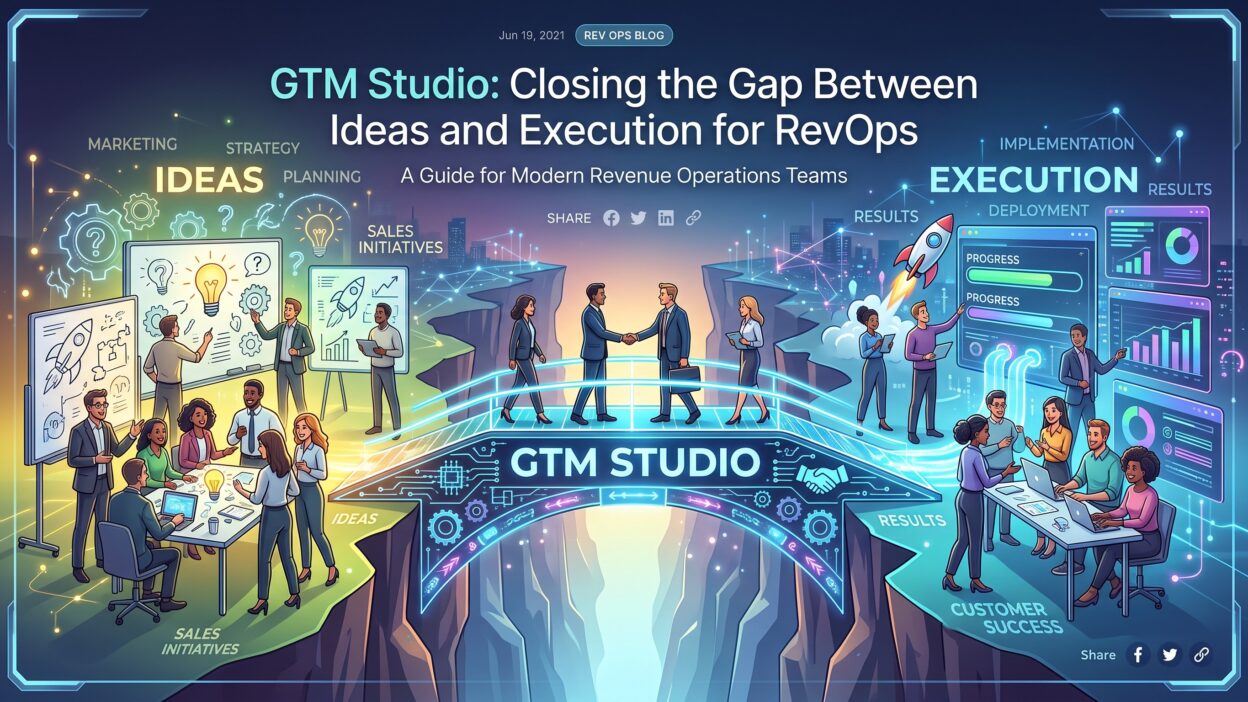
TL;DR Great go-to-market ideas die inside ticket queues every single day. A RevOps leader spots a new segment worth targeting. An SDR manager wants to test a fresh outbound play. Both ideas stall because someone needs a data pull, a workflow build, or a developer’s time. GTM Studio exists to close that exact gap.
GTM Studio gives revenue teams one workspace to pull data, enrich records, and launch plays without waiting on engineering support. RevOps teams no longer need to request a list from another department or stand in line for a custom automation build. GTM Studio puts that power directly into the hands of the people running the strategy.
This blog breaks down how GTM Studio works, why RevOps teams need it, and how it changes daily execution. You will see the core features, real use cases, and the problems GTM Studio solves inside modern revenue teams.
By the end, you will understand exactly why GTM Studio matters for any RevOps function trying to move faster.
Table of Contents
What Is GTM Studio?
GTM Studio is a go-to-market data management and orchestration platform built for revenue operators. It combines data enrichment, signal tracking, and campaign activation inside one connected workspace.
The Core Idea Behind GTM Studio
Most RevOps teams juggle disconnected tools. One tool handles enrichment. Another tool handles list building. A third tool handles activation into the CRM. GTM Studio merges these steps into a single workspace. Revenue operators drag and drop data sources, apply enrichment, and launch a play, all without switching tabs or waiting on another team.
Who GTM Studio Serves
GTM Studio serves RevOps leaders, sales operations teams, and marketers who own go-to-market execution. Anyone responsible for designing account lists, scoring leads, or launching outbound plays benefits from GTM Studio’s speed. Teams stuck waiting on engineering backlogs find GTM Studio especially valuable, since it removes that dependency almost entirely.
Why RevOps Teams Need GTM Studio
RevOps teams face a familiar problem. Ideas move fast, but execution moves slow. A strategist spots a new expansion opportunity, but the data sits scattered across five different systems. GTM Studio solves this exact bottleneck.
Data fragmentation costs revenue teams real money every quarter. Reps chase the wrong accounts. Marketing builds campaigns around stale lists. GTM Studio pulls first-party and third-party data into one place, so every team works from the same source of truth.
Speed matters just as much as accuracy. GTM Studio lets teams launch a new play in minutes instead of weeks. This speed advantage compounds over time, since teams using GTM Studio can test more plays and learn faster than teams still waiting on manual list pulls.
RevOps leaders also gain visibility they rarely had before. GTM Studio shows which plays perform well and which ones need adjustment. This visibility turns RevOps from a reactive support function into a strategic driver of pipeline growth.
Core Features of GTM Studio
GTM Studio packs several core capabilities into one connected system.
Pre-Built Plays
GTM Studio ships with a library of pre-built plays like inbound acceleration, champion tracking, and competitive displacement. Teams pick a play, customize it slightly, and launch it fast. This removes the blank-page problem many RevOps teams face when building a new campaign from scratch.
Waterfall Enrichment
GTM Studio runs enrichment across dozens of data vendors at once. This waterfall approach fills in missing emails, phone numbers, and firmographic details using the highest-confidence source available. Reps get complete, accurate records without manually checking multiple databases one at a time.
AI-Powered Scoring and Routing
Specialized AI agents inside GTM Studio handle scoring, routing, and even message drafting. This automation frees revenue teams from repetitive operational work. Instead of manually ranking leads, teams let GTM Studio surface the accounts most likely to convert right now.
Native CRM and Sales Tool Integration
GTM Studio connects directly with major CRM platforms and sales engagement tools. Leads route instantly. Records stay current across every connected system. This integration keeps sales, marketing, and RevOps aligned around one consistent view of every account.
How GTM Studio Powers the Revenue Lifecycle
GTM Studio supports every stage of the revenue lifecycle, not just the top of the funnel. New business teams use GTM Studio to spot high-intent prospects and activate outreach immediately. Intelligent scoring flags which accounts deserve attention first.
Customer expansion teams use GTM Studio to uncover upsell and cross-sell paths inside existing accounts. AI-powered insights surface whitespace that sales reps might otherwise miss entirely. This turns account growth into a repeatable process instead of guesswork.
Retention teams benefit too. GTM Studio surfaces predictive churn indicators and engagement triggers before a customer relationship weakens. Teams can step in early, rather than reacting after a customer already decided to leave.
This full-lifecycle coverage sets GTM Studio apart from tools that only handle one stage of the funnel. RevOps teams get one platform instead of stitching together separate tools for acquisition, expansion, and retention.
GTM Studio and Cross-Team Alignment
Misalignment between sales, marketing, and RevOps costs companies pipeline every quarter. Marketing targets accounts sales already deprioritized. Sales works leads without visibility into real intent signals. GTM Studio fixes this by giving every team the same data at the same time.
Shared visibility changes how teams work together. A marketer building a campaign sees the same account list a sales rep sees. A RevOps leader building a scoring model knows sales and marketing will both act on the same output. GTM Studio removes the guessing game that often stalls cross-team execution.
This alignment shows up directly in results. Teams using GTM Studio launch more plays per quarter than teams still working from disconnected systems. Faster response times also translate into stronger conversion rates, since reps reach the right accounts while intent signals stay fresh.
Real-World Use Cases for GTM Studio
Launching a New Outbound Play
A RevOps leader wants to test a new play targeting companies that recently adopted a competitor’s product. Instead of waiting weeks for a data pull, the team builds the segment inside GTM Studio, enriches it instantly, and launches outreach the same day.
Uncovering Expansion Opportunities
A customer success team wants to find upsell candidates inside its current book of business. GTM Studio surfaces stakeholders the team never knew existed and flags accounts showing strong buying signals for additional products.
Reducing Churn Risk
A renewals team notices engagement dropping across several key accounts. GTM Studio flags these accounts early using predictive indicators, giving the team time to intervene before the relationship weakens further.
Benefits of Using GTM Studio
GTM Studio saves time across nearly every RevOps task. Teams no longer wait on engineering resources to build simple workflows. This speed lets RevOps test more ideas and learn faster from real market feedback.
Data quality improves significantly too. Waterfall enrichment across many vendors produces cleaner, more complete records than any single data source could offer alone. Clean data leads to sharper targeting and fewer wasted outreach attempts.
GTM Studio also reduces tool sprawl. Instead of maintaining separate systems for enrichment, scoring, and activation, teams manage everything inside one workspace. This consolidation cuts costs and simplifies training for new team members joining the RevOps function.
Finally, GTM Studio strengthens forecasting accuracy. With cleaner data and consistent plays running across the funnel, revenue leaders can trust their pipeline numbers far more than they could with fragmented, manually maintained lists.
Challenges Teams Should Expect
No platform solves every problem instantly. Teams adopting GTM Studio still need strong internal alignment on how to define an ideal customer profile. A powerful platform still needs clear direction from the people using it.
Change management also matters. Reps used to older workflows sometimes resist a new system, even one built to save them time. Strong onboarding and clear communication about the benefits of GTM Studio help teams adopt the platform faster.
Data governance deserves attention too. As GTM Studio pulls information from many sources, teams need clear rules about which signals matter most for their specific market. Without this clarity, teams risk drowning in data instead of acting on it efficiently.
Best Practices for Getting the Most from GTM Studio
Start small before scaling. Teams new to GTM Studio should launch one or two plays first, measure results, and refine before expanding across the entire revenue org. This approach builds confidence and produces early wins that support broader adoption.
Keep your ideal customer profile updated regularly. GTM Studio works best when segmentation criteria reflect real market conditions, not outdated assumptions from a year ago. Review and refresh these definitions every quarter.
Involve sales reps early in the process. Reps who understand why GTM Studio flags certain accounts trust the system more and act on its recommendations faster. Training sessions and clear documentation help drive this trust across the team.
Track results consistently. GTM Studio provides the data needed to measure play performance, but teams still need to review these results regularly and adjust their approach based on what the numbers show.
Frequently Asked Questions
What is GTM Studio used for? GTM Studio helps RevOps teams pull, enrich, and activate go-to-market data inside one workspace, closing the gap between strategy and execution.
Who benefits most from GTM Studio? RevOps leaders, sales operations teams, and marketers responsible for building account lists, scoring leads, and launching outbound plays benefit most from GTM Studio.
Does GTM Studio require engineering support to use? No. GTM Studio removes the need for engineering support by giving revenue operators drag-and-drop tools to build and launch plays independently.
How does GTM Studio improve data quality? GTM Studio runs waterfall enrichment across many vendors at once, filling in missing details using the highest-confidence source available for each record.
Can GTM Studio help with customer retention, not just new business? Yes. GTM Studio surfaces predictive churn indicators and engagement triggers, helping teams address retention risk before a customer relationship weakens.
How does GTM Studio integrate with existing sales tools? GTM Studio connects natively with major CRM platforms and sales engagement tools, keeping records current and routing leads instantly across every connected system.
Read More:-Context Layer for AI Agents: A Guide for GTM Teams
Conclusion

RevOps teams no longer need to accept the slow grind between a good idea and real execution. GTM Studio closes that gap by combining enrichment, scoring, and activation inside one connected workspace. Teams move faster, test more plays, and trust their data far more than they could with disconnected tools.
The real value of GTM Studio comes from how it changes daily behavior across revenue teams. Sales, marketing, and RevOps finally work from the same data at the same time. This alignment turns scattered effort into coordinated execution.
Companies serious about scaling their go-to-market motion should look closely at GTM Studio. The platform gives RevOps teams the speed and clarity needed to turn strategy into pipeline, without the usual wait for engineering support along the way.