Introduction
TL;DR Deals stall for one simple reason. Reps lack visibility into who really holds influence inside an account. Relationship Intelligence Data solves that problem. It maps every connection between your company and a buying committee. This guide explains what Relationship Intelligence Data means for revenue teams. It shows how the data gets collected and used. You get real benefits, tool options, and mistakes to avoid along the way.
Table of Contents
What Is Relationship Intelligence Data
Relationship Intelligence Data captures the connections between people inside your company and people inside a target account. This data goes beyond a simple contact list. It shows who knows whom, how strong that connection runs, and which internal rep holds the best relationship with a given stakeholder.
Revenue teams once relied on gut feel to answer these questions. Relationship Intelligence Data replaces gut feel with real evidence pulled from email threads, calendar invites, and meeting history.
Definition and Core Meaning
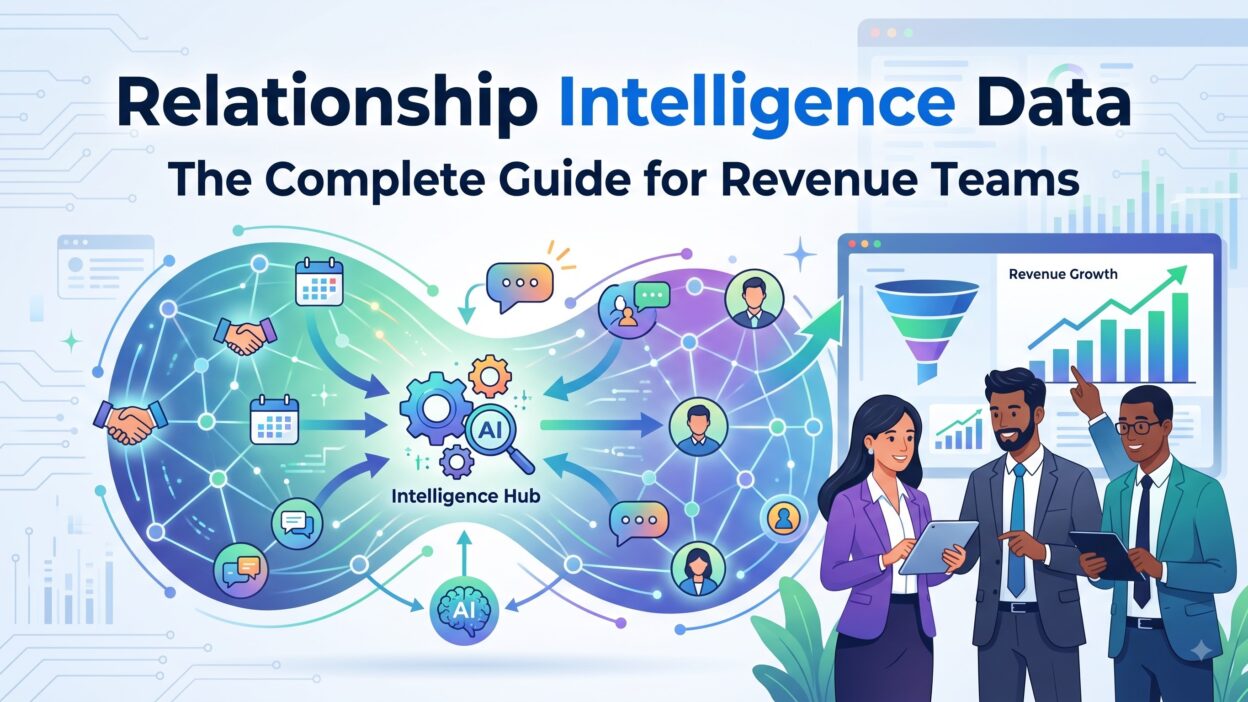
Relationship Intelligence Data turns communication history into a network map. Each email, call, and meeting becomes a data point. That data point shows connection strength between two people. Revenue teams use this map to find the strongest path into a target account.
Why Revenue Teams Need It
Deals rarely close through one contact alone. Buying committees include multiple stakeholders across departments. Relationship Intelligence Data shows every internal team member with a prior connection to that committee. Reps use this insight to bring the right colleague into a deal at the right moment.
How Relationship Intelligence Data Works
Relationship Intelligence Data runs through a few connected steps that turn raw communication history into a usable map.
Data Collection Layer
The process starts by scanning email, calendar, and CRM activity across your organization. This scan builds a full picture of every external contact your team has communicated with in the past.
Relationship Mapping Layer
Once collected, the data gets mapped into a network graph. This graph shows connection strength based on email frequency, response time, and meeting cadence. Relationship Intelligence Data scores each connection so reps know which relationships run deep and which stay surface level.
Insight Delivery Layer
The final step surfaces this mapped data inside tools your team already uses. A rep opens an account record and instantly sees which colleague holds the strongest relationship with a target stakeholder. Relationship Intelligence Data only creates value once reps see and use these connections during real deal work.
Types of Relationship Intelligence Data
Relationship Intelligence Data draws from several distinct signal types across your organization.
Communication Frequency Data
This data tracks how often two people exchange emails or calls. Frequent contact usually signals a stronger working relationship worth leveraging during a deal.
Response Time Data
Fast replies often signal genuine engagement. Relationship Intelligence Data flags contacts who respond quickly as warmer connections compared to contacts who take days to reply.
Meeting History Data
Calendar records reveal which stakeholders your team has met in person or over video calls. This history often carries more weight than email alone inside a Relationship Intelligence Data model.
Organizational Change Data
People move jobs often. Relationship Intelligence Data tracks when a known contact switches companies. This signal opens a fresh door into a brand new account through an existing relationship.
Benefits of Relationship Intelligence Data for Sales Teams
Sales teams close deals faster when they enter through a warm connection instead of a cold outreach attempt.
Warmer Account Entry
Cold outreach rarely gets a fast response. Relationship Intelligence Data reveals a warmer path through an existing colleague connection. Reps ask for an introduction instead of starting from zero.
Stronger Deal Coverage
Large deals need multiple champions across a buying committee. Relationship Intelligence Data shows gaps in coverage. A rep sees exactly which stakeholders lack a strong internal connection and works to close that gap early.
Reduced Deal Risk
Deals often stall when a key champion leaves the company mid cycle. Relationship Intelligence Data flags this change immediately. Reps pivot toward a new stakeholder before the deal goes cold.
Sales leaders also use this data during account planning sessions. They review which reps hold the strongest network inside a target account and assign ownership based on real relationship strength rather than territory rules alone.
Benefits of Relationship Intelligence Data for Marketing and Customer Success
Sales is not the only team that benefits from Relationship Intelligence Data.
Smarter Event Invitations
Marketing teams use this data to invite stakeholders with strong existing relationships to events and webinars. Attendance rates rise because the invitation comes through a familiar connection.
Better Account Handoffs
Customer success teams inherit accounts after a deal closes. Relationship Intelligence Data shows which internal contacts already hold strong relationships with the client. This history prevents a cold, awkward handoff after signature.
Expansion Opportunity Detection
Existing customers often connect to new stakeholders through referrals and internal moves. Relationship Intelligence Data flags these fresh connections and turns them into expansion or referral opportunities across account teams.
Relationship Intelligence Data vs Traditional CRM Data
Traditional CRM data tracks deal stages, contact details, and activity logs. This data answers what happened inside a deal.
Relationship Intelligence Data answers a different question. It shows who actually holds influence and connection strength across an account. CRM data tells you a call happened. Relationship Intelligence Data tells you how strong that relationship really runs and who else inside your company could help.
Strong revenue teams use both systems together. CRM data manages the deal process. Relationship Intelligence Data reveals the human network behind that process.
How to Build a Relationship Intelligence Data Strategy
A working strategy follows three clear steps for most revenue teams.
Connect Your Communication Sources
Link email, calendar, and CRM systems into one data pipeline. Relationship Intelligence Data needs full visibility across every channel your team uses to communicate with prospects and customers.
Score and Map Relationships
Apply scoring rules based on frequency, response time, and meeting history. This step turns raw communication logs into a clear map of relationship strength across your entire organization.
Put Insight Into Daily Workflows
Surface Relationship Intelligence Data directly inside your CRM and sales tools. Reps should see relationship strength without leaving their normal workflow. Insight buried in a separate dashboard rarely gets used during real deal work.
Review your strategy every few months. Team members change roles. New tools get added. Relationship Intelligence Data stays useful only when your pipeline keeps pace with organizational change.
Best Tools for Relationship Intelligence Data
Several platforms specialize in capturing and scoring Relationship Intelligence Data for revenue teams.
Relationship Mapping Platforms
Tools like Introhive and Affinity scan email and calendar data automatically. These platforms build a full relationship graph without manual data entry from reps.
CRM Add On Tools
Some CRM platforms offer native or plugin based relationship scoring features. These add ons surface Relationship Intelligence Data directly inside existing account records for easy rep access.
Account Planning Software
Account planning tools combine Relationship Intelligence Data with deal stage information. This combination gives account teams a full view of both process and people during strategic planning sessions.
Pick a tool based on your team size and existing tech stack. Smaller teams often start with CRM native scoring. Larger enterprise teams usually need a dedicated relationship mapping platform for full coverage.
Common Mistakes Teams Make With Relationship Intelligence Data
Even well resourced teams misuse this valuable resource.
Collecting Data Without Consent Rules
Scanning email and calendar data raises privacy questions. Set clear consent and compliance rules before you roll out any Relationship Intelligence Data platform across your organization.
Ignoring Stale Connections
Not every past connection stays relevant. A contact from three years ago might carry little current influence. Filter your Relationship Intelligence Data by recency to avoid chasing outdated relationships.
Failing to Train Reps
Reps ignore data they do not understand. Train your team on how to read relationship scores and use them during real account planning and outreach decisions.
Frequently Asked Questions
What is Relationship Intelligence Data in simple terms?
Relationship Intelligence Data maps the strength of connections between your team and people inside a target account, based on real communication history.
How does Relationship Intelligence Data differ from CRM data?
CRM data tracks deal activity and stages. Relationship Intelligence Data tracks connection strength and influence across a buying committee.
Which teams benefit most from Relationship Intelligence Data?
Sales, marketing, and customer success teams all use this data to strengthen account entry, event targeting, and handoffs.
Is Relationship Intelligence Data private or compliant to collect?
Most platforms follow strict privacy rules and only scan data your organization already owns, such as company email and calendar systems. Always confirm compliance before rollout.
What tools support Relationship Intelligence Data collection?
Platforms like Introhive and Affinity, along with CRM native scoring features, support this collection and scoring process.
How often should teams review their Relationship Intelligence Data strategy?
Review your approach every few months since staff changes and new tools affect data accuracy over time.
Can small companies use Relationship Intelligence Data effectively?
Yes. Small teams often start with CRM native features before scaling to a dedicated relationship mapping platform as their account list grows.
Read More:-Data Deduplication: Why It Matters, Benefits & Use Cases
Conclusion

Relationship Intelligence Data gives revenue teams a clear map of human connection instead of a guess. Sales reps enter accounts through warm paths instead of cold calls. Marketing teams invite the right stakeholders to events through familiar contacts. Customer success teams avoid awkward handoffs after a deal closes.
The real value shows up once your team acts on the map, not just collects it. Connect your communication sources first. Score relationships based on real signals like frequency and response time. Surface this insight directly inside daily workflows your reps already use.
Review your Relationship Intelligence Data strategy on a regular schedule and train your team to trust the signals it surfaces. Revenue teams that treat this data as an ongoing practice build stronger pipelines and close deals through paths competitors never see.