Introduction
TL;DR Revenue teams sit on piles of data every day. Most of that data goes unused. Customer Intelligence turns raw data into decisions your sales and marketing teams can act on. This guide explains what Customer Intelligence means for B2B teams. It shows how the process works step by step. You get real benefits, tool options, and common mistakes to avoid. By the end you will know how to build a Customer Intelligence practice that actually moves revenue.
Table of Contents
What Is Customer Intelligence
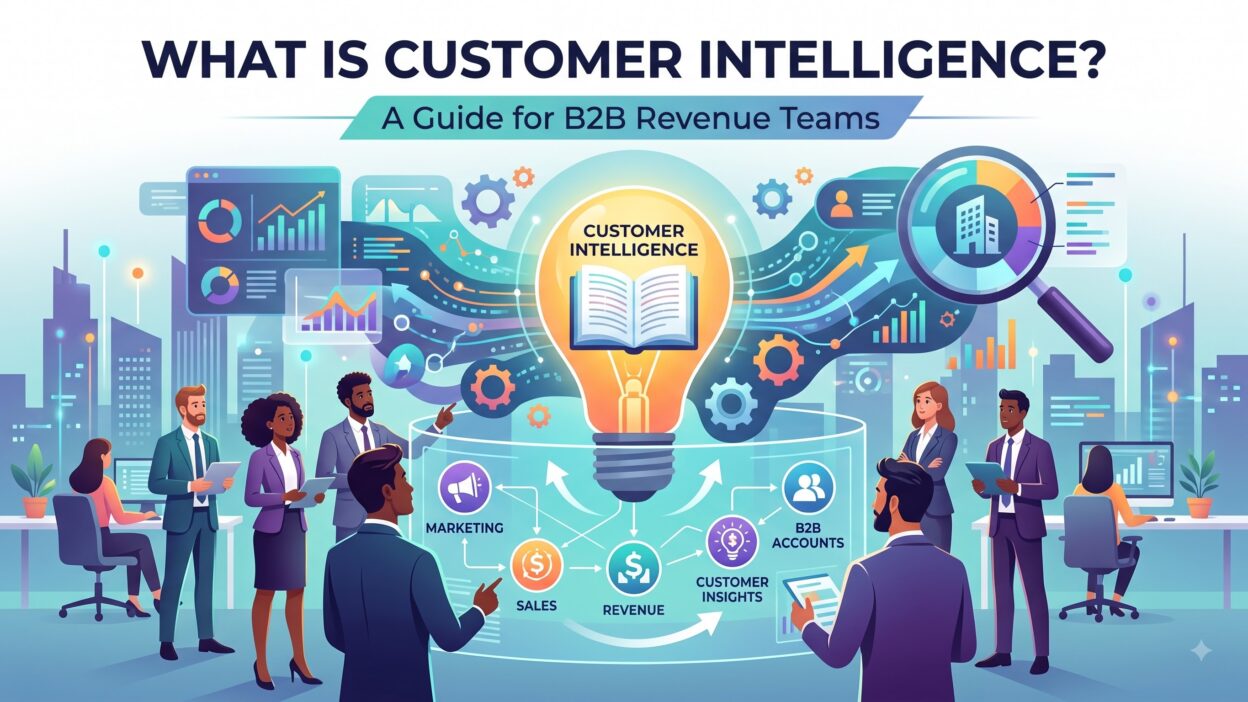
Customer Intelligence means the process of gathering customer data and turning it into insight. That insight guides sales, marketing, and product decisions. Customer Intelligence goes beyond simple reporting. It connects data points across channels and reveals patterns real people miss.
Think of it as a bridge. Raw data sits on one side. Smart action sits on the other side. Customer Intelligence builds that bridge for revenue teams.
Definition and Core Meaning
Customer Intelligence combines firmographic details, behavior patterns, and buyer intent into one clear picture. A sales rep sees not just a company name but a full profile of that account. This profile shows recent activity, likely needs, and buying signals. Customer Intelligence gives every team member the same view of the customer.
Why B2B Revenue Teams Need It
B2B sales cycles run long. Deals involve multiple stakeholders. Customer Intelligence helps reps track each stakeholder and their concerns. Marketing teams use the same intelligence to shape campaigns around real buyer behavior instead of guesswork. Without Customer Intelligence, teams operate on assumptions. With it, teams operate on evidence.
How Customer Intelligence Works
Customer Intelligence runs through three connected layers. Each layer builds on the one before it.
Data Collection Layer
The first layer gathers raw data. This data comes from your CRM, website visits, email opens, and support tickets. Some data comes from third party providers who track buying signals across the web. Customer Intelligence starts here, with a wide net of raw inputs.
Data Analysis Layer
Raw data means nothing without analysis. This layer applies rules, scoring models, and pattern detection to the collected data. A prospect who visits your pricing page three times sends a different signal than one who reads a single blog post. Customer Intelligence platforms score these signals automatically.
Action Layer
The final layer turns insight into action. A sales rep gets an alert when a target account shows buying intent. A marketer triggers a personalized email based on recent behavior. Customer Intelligence only creates value when someone acts on the insight it produces.
Types of Customer Intelligence Data
Customer Intelligence pulls from several distinct data types. Each type answers a different question about the buyer.
Firmographic Data
Firmographic data covers company size, industry, revenue, and location. This data answers a basic question: does this company fit our ideal customer profile? Customer Intelligence platforms use firmographic filters to narrow massive prospect lists into qualified segments.
Behavioral Data
Behavioral data tracks what a prospect actually does. Page visits, content downloads, and product trial usage all count as behavioral signals. This data answers a deeper question: how engaged is this prospect right now?
Intent Data
Intent data shows research activity happening outside your own website. A company searching industry terms across the web signals early buying interest. Customer Intelligence tools pull this data from third party networks and flag accounts worth watching.
Sentiment Data
Sentiment data captures tone and satisfaction across support tickets, reviews, and survey responses. This data warns teams before a customer churns. Customer Intelligence connects sentiment data to renewal and expansion decisions across the customer lifecycle.
Benefits of Customer Intelligence for Sales Teams
Sales teams close more deals when they understand the buyer before the first call.
Sharper Lead Prioritization
Reps waste time chasing leads with no real intent. Customer Intelligence scores every lead based on fit and behavior. Reps spend their time on accounts most likely to buy, not accounts that simply filled out a form.
Shorter Sales Cycles
Deals move faster when reps understand stakeholder concerns early. Customer Intelligence surfaces which pages a buyer viewed and which content they downloaded. Reps walk into calls already knowing the buyer’s likely questions.
Higher Win Rates
Win rates rise when reps tailor their pitch to real signals instead of a generic script. Customer Intelligence reveals competitor mentions, budget signals, and urgency cues buried inside account activity. Reps adjust their approach based on this evidence rather than gut feel.
Sales leaders also use Customer Intelligence to forecast pipeline health. Accounts showing strong intent signals move through stages faster. Leaders spot which deals need extra attention and which deals will likely close on schedule.
Benefits of Customer Intelligence for Marketing Teams
Marketing teams need real signals to build campaigns that convert.
Better Audience Segmentation
Marketers group accounts by behavior and firmographic fit. Customer Intelligence makes this segmentation precise instead of guesswork based on broad industry labels alone.
Personalized Campaigns
Generic campaigns underperform against personalized ones. Customer Intelligence shows exactly which content a prospect engaged with already. Marketers build follow up campaigns around that specific interest instead of sending the same message to everyone.
Improved Retention Messaging
Retention teams need to know which customers show signs of disengagement. Customer Intelligence flags declining usage or negative sentiment early. Marketing teams step in with targeted retention campaigns before a customer decides to leave.
Event marketers also lean on Customer Intelligence to invite the right accounts to webinars and trade shows. Attendee lists built from real intent data convert far better than lists built from static company directories alone.
Customer Intelligence vs Business Intelligence
Teams often confuse these two terms. Business Intelligence looks inward. It tracks company performance metrics like revenue, expenses, and operational efficiency.
Customer Intelligence looks outward. It tracks the customer, not the company itself. This data covers buyer behavior, intent signals, and satisfaction levels across the customer journey.
Both systems support smart decisions but answer different questions. Business Intelligence tells you how your company performs. Customer Intelligence tells you how your customer thinks and behaves. Strong revenue teams use both systems together for a complete view of growth.
How to Build a Customer Intelligence Strategy
A strong Customer Intelligence strategy follows three clear steps.
Step One Define Your Data Sources
List every place customer data already lives. CRM records, website analytics, support tickets, and third party intent providers all count. Customer Intelligence starts with a full inventory of available data sources.
Step Two Centralize Your Data
Scattered data creates blind spots. Centralize customer data inside one platform your whole revenue team can access. A Customer Intelligence platform or customer data platform works well for this step. Centralized data removes duplicate records and conflicting information across teams.
Step Three Turn Data Into Action
Set clear rules for what triggers sales or marketing action. A scoring threshold, an intent spike, or a sentiment drop should trigger a specific next step. Customer Intelligence only creates value once your team acts on the signals it surfaces.
Review your strategy every quarter. Buyer behavior shifts. New data sources emerge. A Customer Intelligence strategy needs regular tuning to stay sharp and relevant across changing market conditions.
Best Tools for Customer Intelligence
Several tool categories support a strong Customer Intelligence practice.
CRM Platforms
Salesforce and HubSpot both offer built in fields and dashboards for tracking customer activity. Teams layer Customer Intelligence data directly into existing CRM records for easy access during calls.
Intent Data Providers
Platforms like Bombora and G2 track buyer research activity across the web. These providers feed Customer Intelligence platforms with early signals before a prospect ever fills out a form.
Customer Data Platforms
A customer data platform unifies data from every channel into a single customer record. This unified record gives sales and marketing teams one shared source of truth for Customer Intelligence across the entire buyer journey.
Choose tools based on your team size and data complexity. Smaller teams often start with CRM native features. Larger teams eventually need a dedicated customer data platform to manage volume and complexity across departments.
Common Mistakes Teams Make With Customer Intelligence
Even well funded teams misuse Customer Intelligence data.
Collecting Data Without a Plan
Teams gather massive amounts of data with no clear use case. This creates noise instead of insight. Define your goals before you collect a single data point.
Ignoring Data Quality
Bad data produces bad decisions. Duplicate records and outdated contact details ruin even the best Customer Intelligence platform. Clean your data regularly to keep insights accurate.
Skipping Cross Team Alignment
Sales and marketing often build separate Customer Intelligence workflows without talking to each other. This creates conflicting signals and duplicate outreach. Align both teams around one shared data source and one shared scoring model.
Frequently Asked Questions
What is Customer Intelligence in simple terms?
Customer Intelligence means using customer data to understand buyer behavior and guide sales and marketing decisions.
How is Customer Intelligence different from customer data?
Customer data is raw information. Customer Intelligence turns that raw information into insight your team can act on.
Which teams use Customer Intelligence the most?
Sales, marketing, and customer success teams all rely on Customer Intelligence to prioritize accounts and personalize outreach.
What tools support a Customer Intelligence strategy?
CRM platforms, intent data providers, and customer data platforms all support a strong Customer Intelligence practice.
Does Customer Intelligence help with customer retention?
Yes. Customer Intelligence flags declining engagement and negative sentiment early, giving teams time to address the issue before churn happens.
How often should a team update its Customer Intelligence strategy?
Review your strategy every quarter. Buyer behavior and data sources change often enough to require regular updates.
Is Customer Intelligence only useful for large companies?
No. Small and mid sized B2B teams benefit just as much, often starting with CRM native tools before scaling to dedicated platforms.
Read More:-What Is Firmographic Data?
Conclusion

Customer Intelligence gives B2B revenue teams a clear view of the buyer instead of a guess. Sales reps prioritize the right accounts. Marketers build campaigns around real behavior instead of broad assumptions. Customer success teams catch churn risk before it becomes a lost account.
The real value shows up when teams act on the insight, not just collect it. Start with your existing data sources. Centralize records into one platform. Set clear triggers for sales and marketing action.
Review your Customer Intelligence strategy every quarter and keep your data clean. Teams that treat Customer Intelligence as an ongoing practice, not a one time project, see stronger pipeline health and better retention over time. Customer Intelligence turns scattered data into a real revenue advantage for every team involved.