Introduction
TL;DR Every sales team wants speed. A prospect fills out a form, books a demo, or downloads a resource. The clock starts ticking at that exact moment. The faster a rep reaches that prospect, the higher the chance of converting them into a customer.
Lead routing sits right at the center of this challenge. It determines which sales rep receives which lead and when. Poor lead routing wastes time, frustrates prospects, and burns revenue. Smart lead routing does the opposite.
This guide covers everything about lead routing in 2026. You will learn what it is, why it matters, how it works, and which tools make it faster. You will also find answers to the most common questions sales teams ask about the topic.
Speed alone does not win deals. The combination of speed and accuracy does. Getting a lead to the right rep in seconds is the goal every revenue operations team works toward. Lead routing is the system that makes that goal a daily reality.
Table of Contents
What Is Lead Routing?
Lead routing is the process of assigning inbound leads to the right sales representative. It happens automatically or manually depending on the system a team uses. The goal is always the same: get the right lead to the right rep at the right time.
A basic lead routing setup might send every new lead to a shared inbox. A rep picks it up when available. This approach is slow and inconsistent. Leads sit uncontacted for hours or even days.
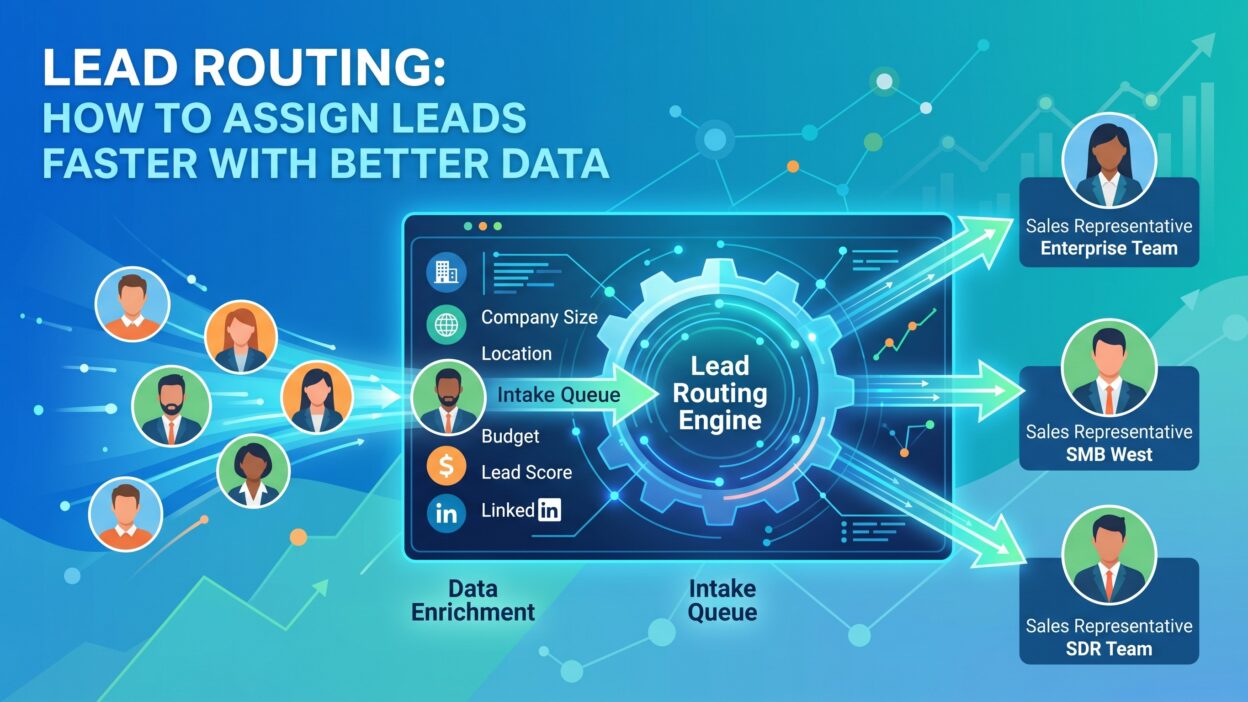
A smart lead routing system works differently. It evaluates incoming lead data in real time. It matches leads to reps based on predefined rules. Those rules can include territory, company size, industry, product interest, or lead score. The assignment happens in seconds.
Lead routing is not just a sales ops concept. It directly affects revenue. Research from Harvard Business Review found that companies responding to leads within one hour are seven times more likely to qualify that lead. Fast, accurate lead routing makes that speed possible.
Many sales teams confuse lead routing with lead management. Lead management is broader. It covers the full lifecycle of a lead from capture to close. Lead routing is the specific step that determines which rep receives which lead. It is one of the most critical steps in the entire lead management process.
Why Lead Routing Matters More Than Ever in 2026
Buyer expectations have shifted dramatically. Prospects research vendors independently. They engage when they are ready. When they do engage, they expect an immediate response. Delays signal disorganization and reduce trust in the brand.
Sales teams are also more specialized now. Enterprise reps handle different accounts than SMB reps. Product specialists focus on specific solutions. Overlay teams support complex technical deals. Without proper lead routing, leads land on the wrong desk. Reps work deals outside their expertise or territory.
Data quality has improved across most organizations. CRM enrichment tools fill in firmographic and technographic details automatically. This richer data makes smarter lead routing possible. Systems can now make routing decisions based on dozens of attributes, not just a zip code or a form field.
Competition has also intensified. The average B2B buyer evaluates three to five vendors simultaneously. If your team is slow to respond, a competitor already has that conversation. Effective lead routing removes the internal friction that costs deals before they even begin.
The shift to remote and hybrid sales teams adds another layer of complexity. Reps work across time zones. Shared offices no longer guarantee availability. Lead routing systems must account for rep availability, working hours, and capacity. Static assignment rules no longer cut it in a distributed sales environment.
Common Lead Routing Methods
Different teams use different approaches. The best method depends on team structure, deal complexity, and available data. Here are the most common lead routing methods in use today.
Round-Robin Lead Routing
Round-robin lead routing distributes leads evenly across a team. Rep A gets lead one, Rep B gets lead two, Rep C gets lead three, and the cycle repeats. This method is simple to set up. It works well for teams with similar skill sets and similar deal types.
Round-robin has limitations. It ignores rep availability, workload, and expertise. A rep on vacation still receives leads. A rep already managing 50 open opportunities gets the same volume as a rep with ten. Over time, this creates imbalance and slower response times. Many teams use weighted round-robin to account for rep capacity and seniority.
Territory-Based Lead Routing
Territory-based lead routing assigns leads based on geography. A lead from Texas goes to the rep covering the Southwest region. A lead from Germany goes to the EMEA team. This keeps account relationships clean and avoids rep overlap.
Territory-based systems require well-defined territory maps. They also need accurate location data on incoming leads. When location data is missing or wrong, routing breaks down. Many teams combine territory rules with data enrichment tools to keep routing accurate. Regular territory reviews also prevent outdated rules from sending leads to the wrong rep.
Account-Based Lead Routing
Account-based lead routing checks whether an incoming lead belongs to a known account. If the lead’s company already exists in the CRM, the lead routes to the rep who owns that account. This prevents duplicate outreach and keeps account context intact.
Account-based lead routing is essential for teams running account-based marketing programs. A prospect from a target account must reach the right rep immediately. A generic round-robin assignment undermines the entire ABM strategy. Lead-to-account matching is the technical step that powers this routing method.
Lead Score-Based Routing
Lead score-based routing prioritizes leads by their likelihood to convert. High-scoring leads route to senior reps or specialized closers. Lower-scoring leads go to junior reps or enter a nurture sequence. This approach maximizes the value of top-tier prospects.
Lead scoring models use behavioral and firmographic data. Page visits, content downloads, email engagement, company size, and job title all factor in. When scoring is accurate, lead routing decisions reflect actual buying intent. When scoring is poor, high-value leads get misrouted. Regular model reviews prevent scoring drift over time.
Skill-Based or Specialty Lead Routing
Some teams route leads based on rep expertise. A lead from a healthcare company goes to the healthcare specialist. A lead requesting a specific product demo goes to the rep certified on that product. Skill-based routing improves first-call quality and speeds up the sales cycle.
This method requires structured rep profiles inside the routing system. Each rep gets tagged with skills, product expertise, and industry focus. The routing engine matches incoming lead attributes to rep profiles. Setup takes more effort upfront but pays off in higher conversion rates. Teams that run complex multi-product portfolios benefit most from this approach.
The Role of Data Quality in Lead Routing
Accurate lead routing depends entirely on data quality. Bad data creates bad routing decisions. A lead with a missing company name skips account-based routing. A lead with a wrong country code routes to the wrong territory. Incomplete job titles prevent skill-based matching.
Data enrichment tools solve this problem. Platforms like Clearbit, ZoomInfo, and Apollo.io append missing fields automatically. When a lead submits a form with just a name and email, enrichment tools add company name, industry, revenue, employee count, and technology stack within seconds.
Real-time enrichment is critical. Enrichment must happen before the routing decision, not after. If routing fires before enrichment completes, the system works with incomplete data. The lead routes incorrectly. A rep wastes time on the wrong account.
CRM hygiene also matters. Duplicate records create routing conflicts. Two reps get assigned the same lead from the same company. Both reach out. The prospect feels confused and annoyed. Deduplication logic must run as part of the lead routing workflow. Clean data protects the integrity of every routing decision.
First-party data from website behavior adds another layer of accuracy. Which pages did the lead visit before submitting the form? How long did they spend on the pricing page? Did they return multiple times? This behavioral data sharpens lead scoring and improves routing decisions significantly. Teams that capture and use intent signals outperform those that rely on form data alone.
Standardized field values also reduce errors. Inconsistent country codes, mismatched industry labels, and inconsistent company name formats all break routing rules. A lead from the United States might enter the CRM as ‘US’, ‘USA’, ‘United States’, or ‘U.S.’ depending on the form or source. Normalization logic ensures these variations map to the same routing outcome.
How to Build a Lead Routing System That Works
Building an effective lead routing system requires planning. Jumping straight to tool selection without a clear process design leads to problems. Follow these steps to build a system that scales.
Define Your Routing Logic
Start with a clear routing map. Document which lead attributes trigger which routing rules. Decide the order of rules. Territory rules might take priority over round-robin. Account ownership rules might override territory. Write this logic out before touching any software.
Involve sales leadership in this process. Reps need to trust the routing system. If they feel it is unfair or inaccurate, they work around it. Getting buy-in early prevents adoption problems later. A routing design that sales leadership co-owns runs more smoothly from day one.
Audit Your Current Data Quality
Run a data audit before building routing rules. Identify which CRM fields are consistently filled in and which are empty. Look at lead source data, company information, and territory fields. Gaps in data quality will expose routing failures before they happen in production.
Use this audit to determine which enrichment tools you need. If 40% of inbound leads have no company name, enrichment is not optional. It is a prerequisite to accurate lead routing. Address data gaps before writing a single routing rule.
Set Up Lead Scoring
Lead routing and lead scoring work together. Define your ideal customer profile (ICP). Assign point values to firmographic attributes that match your ICP. Add behavioral scores for high-intent actions like pricing page visits or demo requests. Build a scoring model that reflects actual buying signals.
Review the scoring model regularly. Sales cycle data will reveal which attributes actually predict conversion. Adjust weights based on closed-won analysis. A scoring model that never updates loses accuracy over time. Stale scoring sends the wrong leads to the wrong reps.
Choose the Right Lead Routing Software
Many tools handle lead routing natively or through integrations. Salesforce has built-in assignment rules. HubSpot offers workflow-based routing. Dedicated tools like LeanData, Chili Piper, and Traction Complete offer more advanced capabilities.
Evaluate tools based on your CRM, deal complexity, and routing logic requirements. Simple round-robin needs only basic automation. Complex account-based routing with real-time enrichment needs a purpose-built solution. Match the tool to the complexity of your routing needs, not the size of the vendor.
Test Before Going Live
Test every routing scenario before launching. Create test leads that match each routing condition. Verify the correct rep receives each test lead. Check that enrichment fires at the right time. Confirm deduplication logic catches duplicate records.
Document the test results. Share them with sales leadership and operations teams. Fix every failure before going live. A routing error at scale affects every inbound lead. The cost of a broken lead routing system is high and often invisible until pipeline numbers start declining.
Monitor and Optimize Continuously
Lead routing is not a set-it-and-forget-it system. Territories change. Reps join and leave. Products evolve. ICP definitions shift. The routing rules must evolve with the business.
Set up a monthly review cadence. Check routing accuracy rates, average lead response time, and rep workload distribution. Identify patterns where leads fall through the cracks. Fix rules that consistently produce wrong assignments. A well-maintained lead routing system keeps improving over time. Neglected systems drift and degrade quietly.
Top Lead Routing Tools in 2026
The right tool makes lead routing faster and more accurate. Several platforms lead the market in 2026. Each has distinct strengths depending on team size and CRM preference.
LeanData
LeanData is one of the most widely used lead routing platforms in B2B sales. It sits on top of Salesforce and handles complex routing logic with a visual flow builder. Teams build territory-based, account-based, and score-based routing without writing code. LeanData also handles lead-to-account matching, which prevents duplicate outreach across a buying committee. It suits mid-market and enterprise teams with advanced routing requirements.
Chili Piper
Chili Piper focuses on speed. Its Concierge product instantly routes and books meetings from inbound form submissions. A lead fills out a form and immediately sees a calendar to book a meeting with the right rep. Chili Piper integrates with Salesforce, HubSpot, and Marketo. It suits teams that prioritize demo booking conversion rates and want to eliminate the back-and-forth of scheduling.
Traction Complete
Traction Complete handles lead-to-account matching and lead routing inside Salesforce. It cleans duplicate records and routes leads to the correct account owner automatically. Enterprise teams with large CRM databases use it to maintain routing accuracy at scale. Its deduplication engine is particularly strong and handles complex account hierarchies across parent and child companies.
HubSpot Workflows
HubSpot’s native workflow engine handles basic lead routing without additional tools. Teams build round-robin, territory, and score-based routing using workflow logic. For teams on HubSpot with moderate routing complexity, native workflows are a cost-effective solution. More complex needs require a dedicated tool layered on top. HubSpot workflows lack the visual routing canvas and advanced fallback logic that dedicated platforms offer.
Salesforce Assignment Rules
Salesforce includes native assignment rules for leads and cases. These rules handle straightforward territory and round-robin routing. They work well for simpler routing setups. Teams with complex multi-criteria routing quickly outgrow native rules and move to dedicated platforms. For straightforward use cases with limited rep count and simple territory structures, native Salesforce rules remain a practical starting point.
Lead Routing Best Practices for High-Performance Sales Teams
The best routing systems share common characteristics. These practices separate high-performing teams from average ones.
Prioritize Speed Above Everything
Speed is the single biggest variable in lead conversion. Every minute a lead sits uncontacted reduces the probability of connection. Build your lead routing rules to minimize assignment time. Set SLA alerts that notify managers when a lead goes uncontacted past a defined threshold. Speed protects revenue.
Use Real-Time Enrichment
Do not route leads with incomplete data. Enrich first, then route. Real-time enrichment tools add the data fields your routing rules depend on. Without this step, routing logic fails on leads with partial information. Most modern routing tools integrate directly with enrichment providers like Clearbit, ZoomInfo, or Apollo.io.
Build Fallback Rules
Every routing system needs fallback rules. What happens when the assigned rep is on leave? What happens when no rep matches the routing criteria? Define fallback assignments for every scenario. Leads must never fall into a routing dead end. A missed lead is a missed revenue opportunity that rarely comes back.
Align Routing Rules with Your Sales Motion
Lead routing rules must reflect how your sales team actually works. If you run a specialist model, build skill-based routing. If you run a territory model, build geographic routing. Misaligned routing rules create friction for reps and reduce system adoption. The routing system should support the team, not create extra work for them.
Track Routing Metrics Weekly
Monitor lead assignment accuracy, time-to-assignment, time-to-first-contact, and rep workload balance weekly. These metrics reveal routing problems early. A rep consistently receiving low-quality leads signals a scoring or routing error. Fast detection leads to fast fixes and better revenue outcomes.
Lead Routing and Revenue Operations: A Strategic Alignment
Revenue operations teams own lead routing in most modern B2B organizations. RevOps sits at the intersection of marketing, sales, and customer success. It has the systems access and cross-functional visibility to manage routing effectively.
Marketing generates leads and owns the top-of-funnel data. Sales owns rep capacity and territory definitions. RevOps translates both into routing logic. This alignment ensures routing rules reflect both marketing’s lead quality signals and sales’ operational realities.
When RevOps and sales leadership collaborate on lead routing design, adoption improves. Reps trust the system because they helped define the rules. Marketing trusts the system because they see their leads handled correctly. Alignment turns lead routing from a technical configuration into a shared revenue strategy.
Lead routing also connects to pipeline forecasting. When leads route accurately, pipeline data becomes more reliable. Each rep’s pipeline reflects their actual territory and segment. Forecast accuracy improves. Sales leadership makes better resourcing decisions based on trustworthy pipeline data.
SLA ownership is another dimension of this alignment. RevOps sets the response time standards. Sales leadership enforces them. Marketing monitors lead quality to ensure the leads entering the routing system deserve fast follow-up. All three functions rely on lead routing data to do their jobs well.
Frequently Asked Questions About Lead Routing
What is the difference between lead routing and lead assignment?
Lead routing is the process and logic behind distributing leads. Lead assignment is the action of assigning a specific lead to a specific rep. Routing defines the rules. Assignment is the output of those rules. The two terms often get used interchangeably, but routing is the broader system that makes consistent and fast assignment possible.
How does lead routing work in Salesforce?
Salesforce uses assignment rules to handle lead routing natively. Admins create rules with criteria based on lead fields like state, industry, or lead source. When a lead meets the criteria, Salesforce assigns it to the defined user or queue. For complex routing scenarios, most enterprise teams add a dedicated lead routing tool on top of Salesforce to handle advanced logic and lead-to-account matching.
What is lead-to-account matching and why does it matter for lead routing?
Lead-to-account matching checks whether an incoming lead belongs to a company already in your CRM. If the company exists, the lead routes to the rep who owns that account. This prevents two reps from contacting the same company independently. It keeps account history intact and avoids confusing prospects with duplicate outreach. It is especially important for ABM programs where one account may have multiple contacts engaging simultaneously.
Can lead routing work without a CRM?
Lead routing without a CRM is very difficult to scale. CRM data drives the routing logic. Without a CRM, there is no account ownership data, no territory mapping, and no scoring history. Most lead routing tools are built to work alongside a CRM. Set up a CRM before investing in a dedicated routing system. Routing without a CRM foundation produces inconsistent results at any volume above a handful of leads per day.
How do you measure lead routing effectiveness?
Track four core metrics: time-to-assignment, time-to-first-contact, routing accuracy rate, and lead-to-opportunity conversion rate by routing type. Time-to-assignment measures how fast the system works. Time-to-first-contact measures how fast reps act on routed leads. Routing accuracy checks whether leads land on the right rep. Conversion rate shows whether routing decisions correlate with revenue outcomes.
What happens when a routed rep does not respond to a lead?
Every lead routing system needs SLA rules and escalation paths. Set a response time SLA for each rep. If the SLA is missed, the system can reassign the lead, send a manager alert, or both. Without escalation rules, unresponsive reps create dead ends in the pipeline. Leads fall through the cracks and revenue disappears without anyone noticing until pipeline reviews surface the gap.
Is automated lead routing better than manual lead routing?
Automated lead routing is faster and more consistent than manual routing for most teams. Manual routing introduces human delay and personal bias. It does not scale as lead volume grows. Automation applies the same rules consistently across every lead, every time. Manual review still has a role in edge cases and high-value strategic accounts, but the core routing workflow should be fully automated for any team handling more than a handful of leads per week.
How does lead routing affect the customer experience?
Lead routing has a direct impact on how a prospect experiences your brand in those first critical minutes after engaging. A fast, accurate routing system means the prospect hears from a rep who knows their industry, speaks to their use case, and reaches out within minutes. A broken routing system means the prospect waits, gets the wrong rep, or hears from two reps at the same company simultaneously. The routing system a prospect never sees shapes the first impression they get of your team.
Read More:-Seven Privacy Predictions for 2026
Conclusion

Lead routing is one of the highest-leverage systems in B2B sales. It sits between marketing’s demand generation efforts and sales’ revenue execution. When it works well, leads reach the right rep in seconds. Conversations start faster. Deals close more often.
When lead routing breaks down, the damage spreads quietly. Leads wait too long. Reps work outside their expertise. Account ownership conflicts waste time. Revenue leaks out of a process that should be airtight. Most teams do not notice the problem until pipeline numbers start declining.
The companies winning in 2026 treat lead routing as a strategic asset. They invest in data quality, enrichment tools, and well-designed routing logic. They align marketing, sales, and RevOps around a shared set of rules. They measure routing performance weekly and fix problems fast.
Start with your data. Define your routing logic clearly. Choose tools that match your CRM and team structure. Test everything before launch. Monitor performance consistently and keep improving the system over time.
A well-built lead routing system pays for itself many times over. Speed, accuracy, and alignment define the best programs. Build for all three. The revenue results will follow.