Introduction
TL;DR Marketing teams face a data problem this year. Cookies keep disappearing. Privacy rules keep tightening. Teams still need a full picture of their customers to run smart campaigns. The answer sits in how a company blends First-Party and Third-Party Data inside a cloud data warehouse. This guide breaks down what these data types mean, why bridging them matters, and how to build the connection the right way in 2026.
Table of Contents
What Is First-Party and Third-Party Data
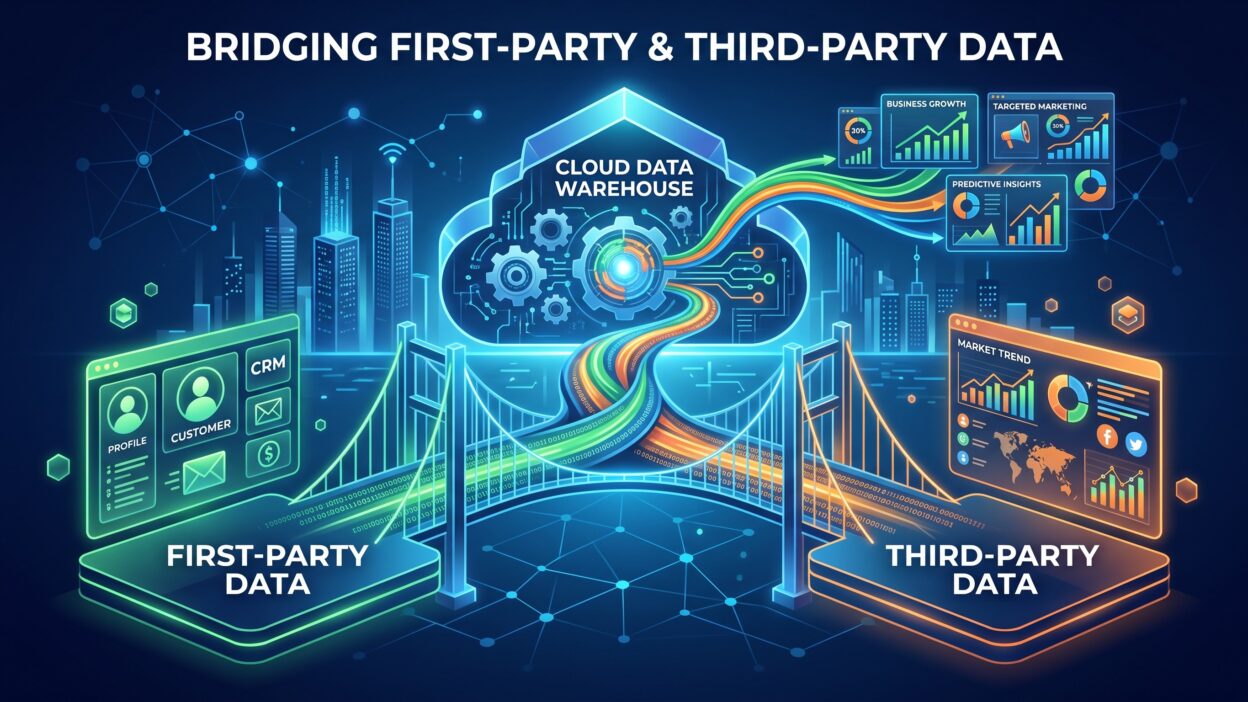
First-Party and Third-Party Data represent two different sources of customer information. First-party data comes directly from a company’s own channels. This includes website visits, purchase history, and email engagement. Third-party data comes from outside sources like data brokers or ad networks. It fills in gaps that a company’s own systems miss. Blending First-Party and Third-Party Data gives marketing teams a fuller view of each customer without relying on guesswork.
Why Bridging First-Party and Third-Party Data Matters in 2026
Privacy laws keep shrinking access to raw third-party signals. Cookie deprecation removes a major tracking method marketing teams once relied on heavily. Companies now lean harder on their own first-party data to stay compliant. Still, first-party data alone misses context about broader customer behavior outside a company’s own channels. Combining First-Party and Third-Party Data fills this gap safely. Teams that master this blend build sharper audience segments and run more accurate ad targeting than teams relying on just one data type.
Understanding the Cloud Data Warehouse Role
A cloud data warehouse acts as the central hub where First-Party and Third-Party Data come together. Platforms like Snowflake, BigQuery, and Redshift store massive volumes of structured data in one place. Marketing and sales teams query this warehouse instead of digging through scattered spreadsheets. A warehouse setup built correctly lets teams blend both data types without duplicating records or losing accuracy. This central hub becomes the backbone of every campaign built on unified customer data.
Key Differences Between First-Party and Third-Party Data
First-party data comes with higher accuracy since a company collects it directly from real customer interactions. Third-party data often includes broader reach but carries lower accuracy since it comes from indirect sources. First-Party and Third-Party Data also differ in compliance requirements. First-party data collection usually falls under a company’s own privacy policy. Third-party data requires extra scrutiny since it often involves data brokers with their own compliance standards. Understanding these differences helps teams set proper rules before blending the two inside a warehouse.
Steps to Bridge First-Party and Third-Party Data
Audit Existing Data Sources
Teams start by mapping every source holding customer information. This includes CRMs, website analytics, email platforms, and any third-party vendor feeds already in use. A clear audit shows gaps where First-Party and Third-Party Data might overlap or conflict. Skipping this step often leads to duplicate records once the blending process begins inside the warehouse.
Choose the Right Cloud Data Warehouse
Not every warehouse fits every team’s needs. Snowflake handles massive scale well. BigQuery integrates tightly with Google’s ad tools. Redshift fits teams already inside the AWS ecosystem. Choosing the right platform shapes how smoothly First-Party and Third-Party Data flow together later in the process.
Build Clean Data Pipelines
Pipelines move data from each source into the warehouse automatically. A pipeline pulling first-party website data needs to run alongside a separate pipeline pulling third-party vendor feeds. Both pipelines need consistent formatting before landing in the warehouse. Broken or inconsistent pipelines create messy blends of First-Party and Third-Party Data that hurt targeting accuracy down the line.
Match and Merge Customer Records
Matching links a first-party customer record to matching third-party signals using shared identifiers like email hashes or device IDs. This step requires careful privacy handling since matching sensitive identifiers carries compliance risk. Clean matching logic prevents duplicate profiles and keeps First-Party and Third-Party Data aligned around a single customer view.
Apply Governance and Privacy Rules
Governance rules control who accesses blended data and how teams use it. Consent management tools track which third-party sources a company has permission to use for each customer segment. Strong governance keeps First-Party and Third-Party Data blending compliant with laws like GDPR and CCPA. Skipping this step creates legal exposure that outweighs any marketing benefit gained from the blend.
Activate Blended Data Across Channels
Once blended, teams push unified profiles into marketing and ad platforms through reverse ETL tools. This activation step turns a static warehouse blend into real campaign targeting. Sales teams see enriched account profiles. Marketing teams build lookalike audiences using both first-party behavior and third-party context. This final step delivers the real business value behind bridging First-Party and Third-Party Data.
Common Challenges When Blending First-Party and Third-Party Data
Data quality issues top the list of challenges teams face. Third-party data often arrives with inconsistent formatting or outdated records. Matching accuracy suffers when identifiers don’t align cleanly between sources. Privacy compliance adds another layer of complexity, especially across regions with different data laws. Teams blending First-Party and Third-Party Data without strong governance often end up with messy, unreliable customer profiles that hurt campaign performance instead of helping it.
Best Practices for Managing First-Party and Third-Party Data
Strong practices start with clear data ownership across teams. Marketing, sales, and data engineering need shared visibility into how First-Party and Third-Party Data flows through the warehouse. Regular audits catch matching errors before they scale across campaigns. Consent tracking should stay updated as privacy laws shift throughout the year. Teams should also test blended segments on a small scale before rolling out full campaigns based on the combined data.
Tools That Support First-Party and Third-Party Data Integration
Several platforms help teams manage this blending process smoothly. Snowflake and BigQuery handle the core warehousing layer. LiveRamp and Neustar support identity resolution between First-Party and Third-Party Data sources. Segment and RudderStack unify customer events from first-party channels. Hightouch and Census push blended profiles back into ad and marketing platforms through reverse ETL. Choosing the right stack depends on team size, budget, and existing infrastructure.
The Future of First-Party and Third-Party Data Blending
Privacy regulations will keep tightening over the next few years. Cookie-based third-party data will keep shrinking as a reliable source. Companies that build strong first-party data collection now will stay ahead of this shift. Clean rooms are emerging as a safer way to blend First-Party and Third-Party Data without exposing raw customer identifiers between companies. Teams investing in this infrastructure today set themselves up for compliant, effective targeting well into the future.
Frequently Asked Questions
What is the difference between first-party and third-party data?
First-party data comes directly from a company’s own channels like websites and CRMs. Third-party data comes from outside sources like data brokers, offering broader reach but lower accuracy.
Why should companies blend First-Party and Third-Party Data?
Blending both data types gives marketing teams a fuller customer picture. First-party data alone misses broader context, while third-party data alone lacks the accuracy of direct customer interactions.
What role does a cloud data warehouse play in this process?
A cloud data warehouse acts as the central hub where First-Party and Third-Party Data come together, allowing teams to query unified customer profiles instead of scattered data sources.
What are the biggest risks when blending First-Party and Third-Party Data?
The biggest risks include privacy compliance issues, matching errors between data sources, and poor data quality from outdated third-party feeds.
What tools help manage First-Party and Third-Party Data blending?
Popular tools include Snowflake, BigQuery, LiveRamp, Segment, and Hightouch. Each tool supports a different layer of the blending and activation process.
How does privacy regulation affect First-Party and Third-Party Data strategy?
Privacy laws limit how companies collect and use third-party data, pushing teams toward stronger first-party collection and safer blending methods like clean rooms.
Read More:-Content Marketing Metrics B2B Teams Need to Prove Revenue Impact
Conclusion

Bridging First-Party and Third-Party Data inside a cloud data warehouse gives marketing teams the full customer picture they need in 2026. Clean pipelines, careful matching, and strong governance turn scattered data into a unified, actionable profile. Teams that invest in this process now build sharper targeting and stay ahead of shrinking third-party access. Getting the foundation right today protects every campaign a team runs on blended First-Party and Third-Party Data tomorrow.