Introduction
TL;DR GTM leaders face a new kind of pressure this year. Buyers expect faster responses. Sales teams expect smarter tools. None of that happens without the right foundation underneath it. Generative AI Data Infrastructure sits at the center of every successful AI rollout inside a go-to-market team. This guide breaks down what Generative AI Data Infrastructure means, why GTM leaders need it, and how to build it the right way in 2026.
Table of Contents
What Is Generative AI Data Infrastructure
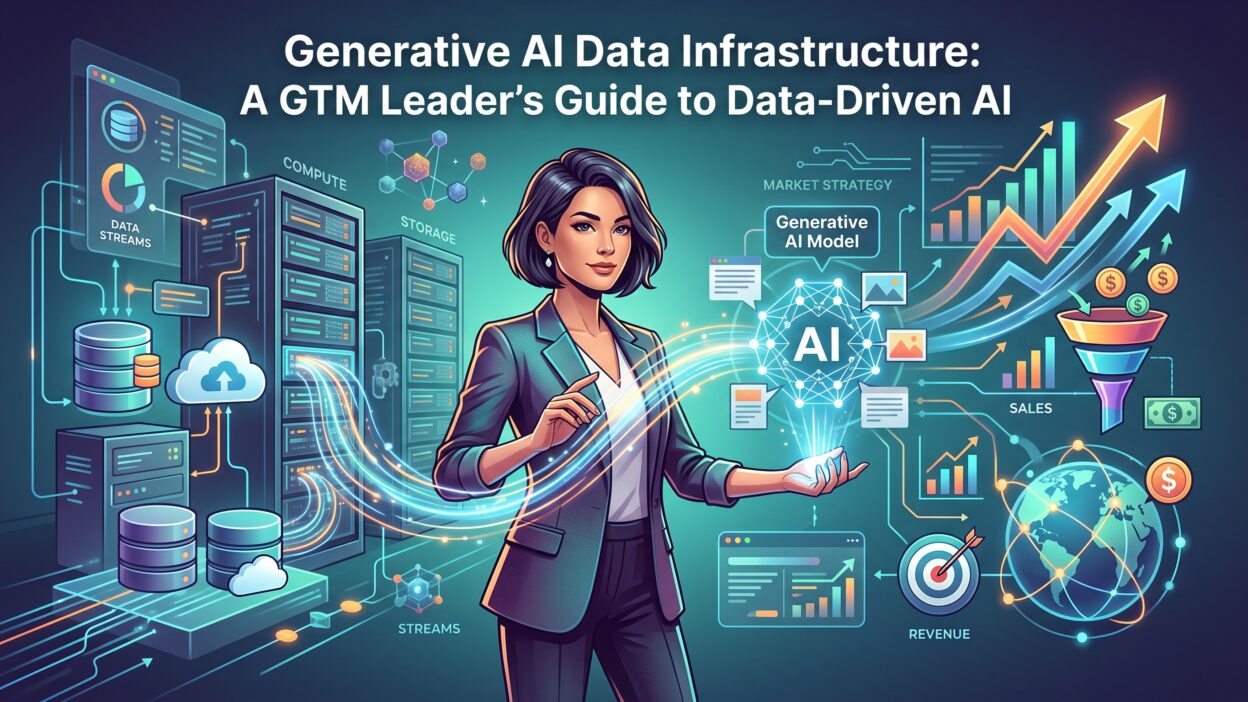
Generative AI Data Infrastructure describes the systems that feed clean, structured data into AI models. This includes data pipelines, storage layers, and integration tools that connect raw data to AI applications. Without strong Generative AI Data Infrastructure, AI tools produce weak or inaccurate outputs. Models need consistent, high-quality data to generate useful results. GTM teams depend on this infrastructure to power chatbots, sales assistants, and predictive scoring tools that shape daily revenue decisions.
Why GTM Leaders Need Generative AI Data Infrastructure
Sales and marketing teams generate massive amounts of data every day. Call transcripts, email threads, and CRM records pile up fast. None of that data helps without a system to organize and feed it into AI tools. Generative AI Data Infrastructure turns this raw data into something usable. GTM leaders who invest here see faster lead scoring and sharper messaging. Teams without this infrastructure struggle with slow, inconsistent AI outputs that frustrate reps and confuse buyers. Strong infrastructure separates teams that scale AI successfully from teams that stall out after a pilot project.
Core Components of Generative AI Data Infrastructure
Generative AI Data Infrastructure includes several connected layers. Each layer plays a specific role in getting clean data to AI models. Below, we break down the core pieces GTM leaders need to understand.
Data Pipelines
Data pipelines move information from one system to another automatically. A pipeline might pull call transcripts from a sales tool and push them into a data warehouse. Generative AI Data Infrastructure depends heavily on these pipelines staying reliable and fast. Broken pipelines create gaps in AI training data. GTM teams need pipelines that run continuously without manual fixes every week.
Data Storage and Warehousing
Storage layers hold data before AI models ever touch it. Cloud warehouses like Snowflake and BigQuery handle massive volumes of structured data. Generative AI Data Infrastructure relies on these warehouses to keep information organized and searchable. Poor storage design slows down AI training and increases costs. A well-structured warehouse gives AI models quick access to clean, labeled data.
Data Integration Tools
GTM teams pull data from dozens of sources. CRMs, marketing platforms, and support tools all hold pieces of the customer picture. Integration tools stitch this data together into one usable format. Generative AI Data Infrastructure needs strong integration to avoid siloed, incomplete datasets. Reverse ETL tools push AI insights back into the tools reps use daily, closing the loop between data and action.
Data Governance and Quality Controls
Messy data produces messy AI outputs. Generative AI Data Infrastructure includes governance rules that catch duplicate records, missing fields, and formatting errors before they reach a model. Clear ownership over data quality prevents small errors from spreading across every AI-generated output. GTM leaders who skip this step often see AI tools that hallucinate or misfire with customers.
Vector Databases and Embeddings
Generative AI models often rely on vector databases to store embeddings, which are numerical representations of text and data. These databases let AI tools search for relevant context quickly during a conversation or query. Generative AI Data Infrastructure that includes a solid vector database setup helps sales assistants pull the right customer history instantly. This speeds up personalized responses across chat and email.
Building Generative AI Data Infrastructure for a GTM Team
Building Generative AI Data Infrastructure starts with an audit of existing data sources. GTM leaders map out every tool holding customer or prospect data. Next, teams choose a central warehouse to consolidate this information. Integration tools connect each data source into the warehouse automatically. Governance rules get set up early to catch errors before they scale. Finally, teams layer AI tools on top of this clean foundation. Skipping any of these steps creates weak infrastructure that fails once usage scales beyond a small pilot.
Common Mistakes GTM Teams Make with Generative AI Data Infrastructure
Many teams rush straight to AI tools without building proper infrastructure first. This shortcut leads to inaccurate outputs and frustrated sales reps. Some teams skip data governance entirely, letting duplicate and outdated records flow straight into AI models. Others choose the wrong storage solution, creating slow queries that delay real-time AI responses. Generative AI Data Infrastructure built without a clear data strategy almost always requires a costly rebuild within a year. Planning ahead saves both time and budget.
Benefits of Strong Generative AI Data Infrastructure
GTM teams with solid Generative AI Data Infrastructure see faster lead scoring accuracy. Sales reps get sharper account summaries pulled straight from historical data. Marketing teams personalize campaigns using clean, unified customer profiles. Support teams resolve tickets faster with AI tools pulling accurate context in seconds. Revenue leaders make better forecasts because the underlying data stays consistent across every report. These benefits compound over time as more teams adopt AI tools built on the same reliable foundation.
Generative AI Data Infrastructure vs Traditional Data Infrastructure
Traditional data infrastructure focuses on reporting and static dashboards. Generative AI Data Infrastructure goes further by feeding live, structured data directly into AI models that generate responses in real time. Traditional systems often tolerate small data gaps since a human reviews the final report. Generative AI Data Infrastructure cannot tolerate the same gaps, since AI models generate outputs instantly without human review at each step. This difference makes data quality far more critical in an AI-driven setup.
Tools and Platforms Supporting Generative AI Data Infrastructure
Several platforms help GTM teams build strong Generative AI Data Infrastructure. Snowflake and BigQuery handle large-scale data warehousing. Fivetran and Hightouch manage data integration and reverse ETL. Pinecone and Weaviate power vector database needs for AI search and retrieval. Segment and RudderStack unify customer data across marketing and sales tools. Choosing the right combination depends on team size, data volume, and existing tech stack.
How GTM Leaders Should Approach AI Adoption
GTM leaders should treat Generative AI Data Infrastructure as a foundation, not an afterthought. Rushing into flashy AI tools without this foundation leads to disappointing results. Leaders should start with a small, well-governed dataset and expand gradually. Cross-functional collaboration between data teams and GTM teams speeds up this process significantly. Regular audits keep data quality high as usage scales across departments. Patience during setup pays off through stronger, more reliable AI performance later.
Frequently Asked Questions
What is Generative AI Data Infrastructure in simple terms?
Generative AI Data Infrastructure describes the systems that collect, clean, and organize data before feeding it into AI models. This includes pipelines, storage, and integration tools working together.
Why do GTM teams need Generative AI Data Infrastructure?
GTM teams need clean, structured data to power AI tools like sales assistants and lead scoring models. Without this infrastructure, AI outputs turn inaccurate and unreliable.
What are the core components of Generative AI Data Infrastructure?
Core components include data pipelines, storage and warehousing, integration tools, governance controls, and vector databases for AI search and retrieval.
How is Generative AI Data Infrastructure different from traditional data systems?
Traditional systems support static reports reviewed by humans. Generative AI Data Infrastructure feeds live data directly into AI models that generate responses instantly without human review.
What tools support Generative AI Data Infrastructure?
Popular tools include Snowflake, BigQuery, Fivetran, Hightouch, Pinecone, and Segment. Each tool handles a different layer of the infrastructure stack.
What happens without strong Generative AI Data Infrastructure?
AI tools built on weak infrastructure produce inconsistent or inaccurate outputs. Sales and marketing teams lose trust in the tools, and adoption usually stalls after a short pilot.
Read More:-
Conclusion

Generative AI Data Infrastructure gives GTM teams the foundation they need for reliable AI performance. Clean pipelines, strong governance, and the right storage tools separate teams that scale AI successfully from teams stuck in failed pilots. GTM leaders who invest in this infrastructure early set their teams up for faster, sharper decisions across sales and marketing. Building this foundation takes patience, but the payoff shows up in every AI-powered interaction that follows.