Introduction
TL;DR Companies collect data every single day. Numbers pile up in spreadsheets, databases, and dashboards. None of that data helps a business if it stays wrong or messy. This is where data quality steps in. This guide breaks down what data quality means, why it matters, and how teams improve it in 2026.
Table of Contents
What Is Data Quality
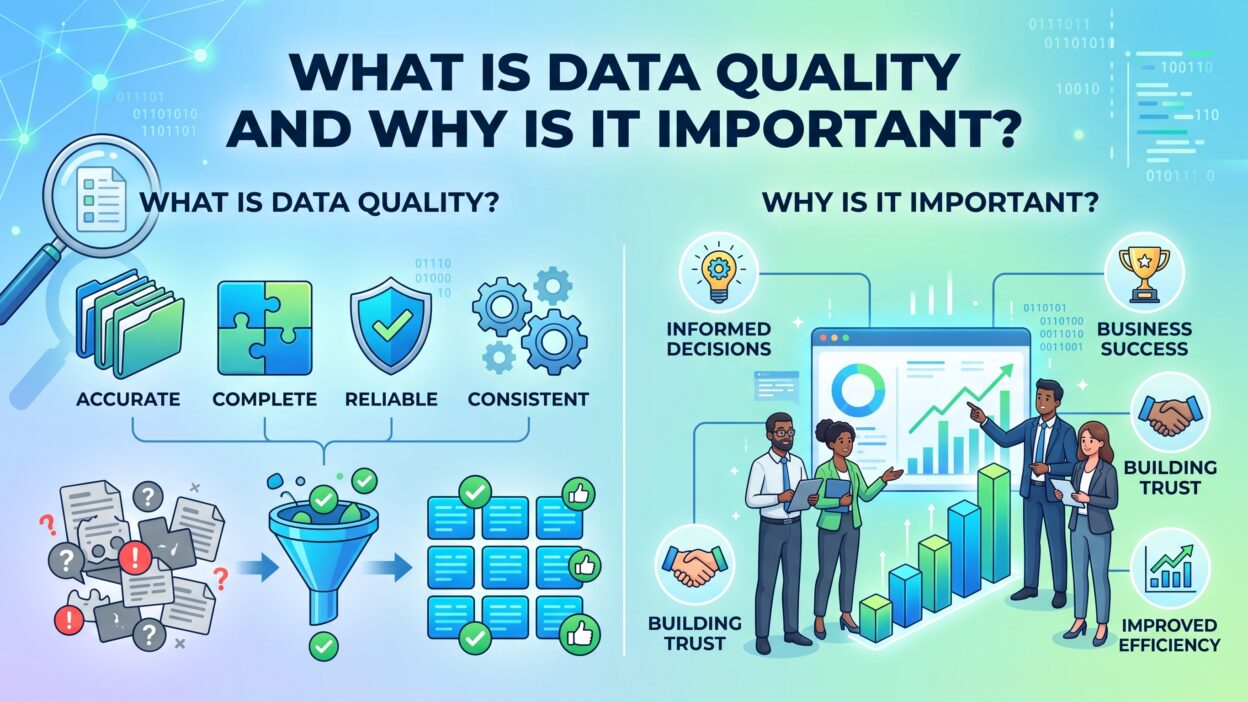
Data quality measures how well data serves its purpose. Clean data supports good decisions. Messy data leads teams astray. A single wrong customer address costs a company real money. A duplicate record confuses a sales team during outreach. Data quality checks for accuracy, completeness, and consistency across every record a business stores. Strong data quality gives teams confidence in every report they pull.
Why Data Quality Matters in 2026
Businesses run on data this year more than ever. Marketing teams target customers based on stored records. Finance teams build forecasts from historical numbers. A small error in either system creates a ripple effect. Bad data quality wastes staff time on fixes. It also damages trust between departments. A sales team stops trusting a report full of duplicate leads. Good data quality removes this friction. Teams move faster when they trust their numbers. Decisions get sharper. Customer experience improves because service teams work from correct records.
Core Dimensions of Data Quality
Data quality breaks down into several measurable parts. Each dimension checks a different angle of the same dataset. Together, they build a full picture of data health.
Accuracy
Accuracy checks whether data matches real-world facts. A customer’s phone number should match their actual number. A product price should match the real listed price. Accuracy sits at the center of data quality because wrong facts spread fast once stored. One wrong entry can travel across ten reports before anyone catches it.
Completeness
Completeness checks for missing fields. A customer record without an email address creates gaps in outreach. A sales record without a close date confuses forecasting. Data quality suffers heavily when records stay incomplete. Teams often build required fields into forms to fight this problem early.
Consistency
Consistency checks whether data matches across different systems. A customer name spelled one way in a CRM and another way in a billing system creates confusion. Data quality demands the same format across every platform a company uses. Inconsistent data slows down reporting and creates duplicate entries.
Timeliness
Timeliness checks how current a dataset stays. Old data misleads decisions. A customer address from three years ago might no longer apply. Data quality depends on regular updates. Teams schedule refresh cycles to keep records current and useful.
Uniqueness
Uniqueness checks for duplicate records. Two entries for the same customer waste storage and confuse teams. Sales reps might call the same lead twice from two different records. Data quality tools flag duplicates and merge them into a single clean entry.
Validity
Validity checks whether data follows the correct format. A phone number field should hold numbers, not text. An email field should follow a proper email structure. Data quality drops fast when systems accept invalid entries without any checks in place.
Common Data Quality Issues
Teams run into predictable problems with messy datasets. Duplicate records top the list across most companies. Missing fields follow close behind, especially in fast-growing sales pipelines. Outdated information causes marketing campaigns to reach the wrong audience. Formatting mismatches between systems slow down every integration project. Human error during manual entry remains one of the biggest data quality issues teams face today. Spotting these problems early saves hours of cleanup work later.
How to Measure Data Quality
Measuring data quality starts with clear metrics. Teams track error rates across key fields like email and phone number. They track duplicate counts within customer databases. They track how often fields sit empty across new records. Regular audits catch problems before they spread across departments. A strong data quality score gives leadership a clear view of dataset health. Without measurement, teams guess instead of knowing where problems hide.
Data Quality Tools and Software
Modern teams lean on dedicated software to manage data quality at scale. These tools scan databases for duplicates automatically. They flag missing fields and suggest fixes. Some platforms validate email addresses and phone numbers in real time during entry. Data quality tools save teams from manual cleanup projects that used to take weeks. Popular platforms integrate directly with CRMs and marketing systems, catching errors the moment new data enters the system.
Data Quality Best Practices
Strong data quality starts with clear rules at the point of entry. Teams should require key fields on every form. Regular audits should run monthly instead of once a year. Staff training reduces manual entry mistakes significantly. Automated validation catches format errors before they enter the system. Data quality improves fastest when teams treat it as an ongoing habit rather than a one-time project.
Data Quality vs Data Governance
Many teams confuse data quality with data governance. Data quality focuses on the actual condition of data itself. Data governance focuses on the rules and policies around how data gets collected, stored, and used. Governance sets the framework. Quality measures the result within that framework. A company needs both working together for a healthy data system. Strong governance policies naturally support better data quality over time.
Industries That Depend on Data Quality
Healthcare systems depend on accurate patient records for safe treatment decisions. Financial firms depend on clean transaction data for fraud detection. Retail companies depend on correct inventory numbers to avoid stockouts. Marketing teams depend on clean contact lists for effective outreach campaigns. Every industry handling large datasets feels the impact of data quality directly on daily operations.
Frequently Asked Questions
What is data quality in simple terms?
Data quality measures how accurate, complete, and consistent a dataset stays. Clean data supports good decisions across every department in a company.
Why does data quality matter for business decisions?
Bad data quality leads to wrong forecasts and wasted outreach. Good data quality builds trust in reports and speeds up decision making across teams.
What are the main dimensions of data quality?
The main dimensions include accuracy, completeness, consistency, timeliness, uniqueness, and validity. Each dimension checks a different part of dataset health.
How do companies improve data quality?
Companies improve data quality through regular audits, required form fields, staff training, and automated validation tools that catch errors during data entry.
What tools help manage data quality?
Dedicated data quality tools scan for duplicates, flag missing fields, and validate formats in real time. Many integrate directly with CRMs and marketing platforms.
Is data quality the same as data governance?
No. Data quality measures the actual condition of data. Data governance sets the rules and policies that shape how data gets collected and managed.
Read More:-
Conclusion

Data quality shapes every decision a business makes from stored records. Clean data builds trust across sales, marketing, and finance teams. Messy data wastes time and damages customer relationships. Strong data quality depends on regular audits, clear rules, and the right tools working together. Companies that treat data quality as an ongoing habit see faster decisions and fewer costly mistakes. Building this habit today protects every report a team pulls tomorrow.