Introduction
TL;DR Companies store massive amounts of information every day. Spreadsheets break under this load fast. Files scatter across folders and nobody finds the right version. Database Management Systems (DBMS) solve this exact problem. This guide breaks down the advantages of Database Management Systems (DBMS) and shows why businesses depend on them in 2026.
Table of Contents
What Is a Database Management System
A Database Management System (DBMS) organizes and stores data in a structured way. It sits between the user and the raw data files. Users request information through simple queries. The system fetches, updates, or deletes records behind the scenes. Database Management Systems (DBMS) handle everything from small business records to massive enterprise databases. Popular examples include MySQL, PostgreSQL, Oracle, and Microsoft SQL Server.
Why Businesses Need Database Management Systems (DBMS)
Manual data handling breaks down as a company grows. Spreadsheets crash under thousands of rows. Multiple people editing the same file create version chaos. Database Management Systems (DBMS) remove this chaos completely. They allow many users to access the same data at once without conflicts. They keep records accurate through built-in validation rules. Businesses running customer records, inventory, or financial data lean on these systems daily. Growth without a proper DBMS creates messy, unreliable data across every department.
Key Advantages of Database Management Systems (DBMS)
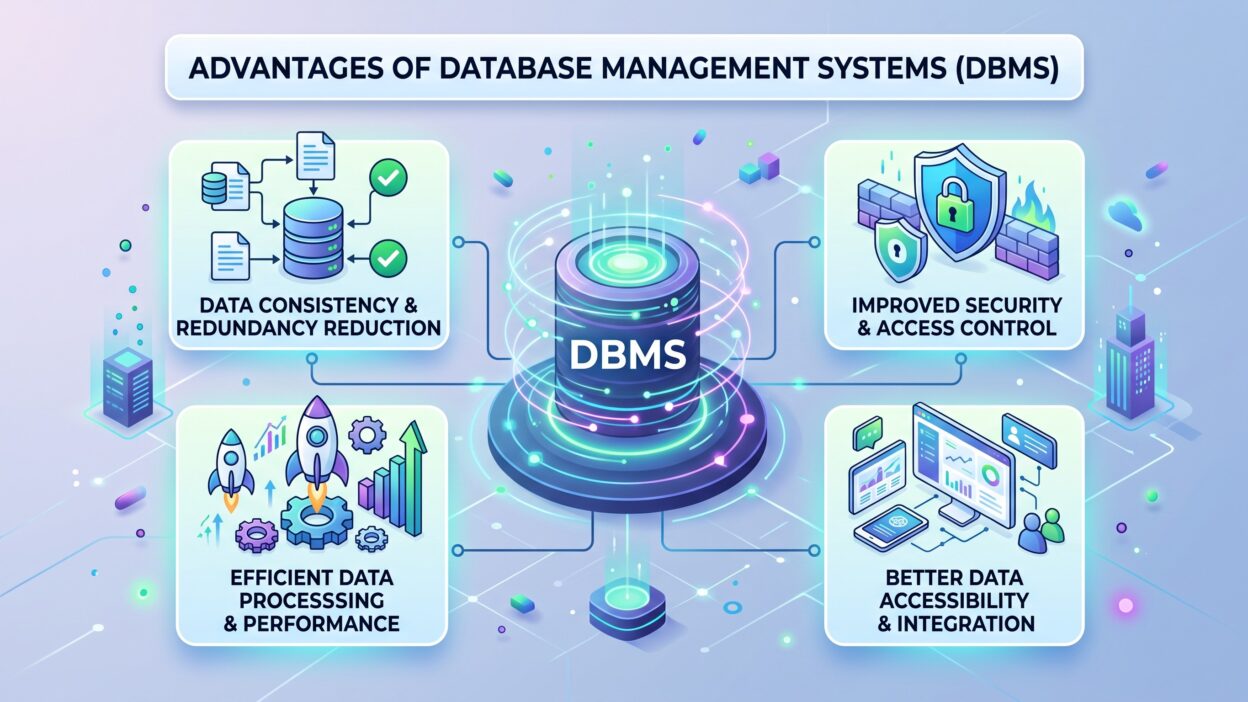
Database Management Systems (DBMS) offer a long list of benefits over traditional file storage. Each advantage solves a specific business problem. Below, we break down the most important ones.
Reduced Data Redundancy
Traditional file systems store the same information in multiple places. A customer address might exist in five different files. Database Management Systems (DBMS) centralize this information into one location. Every department pulls from the same source. This setup cuts storage waste and keeps records consistent across the entire company.
Improved Data Consistency
When data lives in one place, updates apply everywhere at once. A Database Management System (DBMS) updates a customer record once, and every connected report reflects that change instantly. This consistency prevents the confusion that comes from outdated copies sitting in different files. Teams trust the numbers because every screen shows the same version.
Stronger Data Security
Database Management Systems (DBMS) come with built-in security controls. Administrators set permissions for each user. A sales rep might view customer records but never touch financial data. Encryption protects sensitive fields from unauthorized access. Audit logs track who changed what and when. This layered security beats the open access common in shared spreadsheet files.
Efficient Data Access
Searching through thousands of spreadsheet rows takes forever. Database Management Systems (DBMS) use indexing to speed up searches dramatically. A query that once took minutes now finishes in seconds. Sales teams pull customer histories instantly during calls. Finance teams generate reports without waiting on slow manual searches. This speed advantage alone justifies the switch for most growing companies.
Better Data Integrity
Data integrity means information stays accurate and reliable over time. Database Management Systems (DBMS) enforce rules that block invalid entries. A phone number field rejects text input automatically. Required fields stop incomplete records from saving. These built-in checks catch errors before they spread across reports and dashboards.
Support for Multiple Users
Growing teams need shared access to the same information. Database Management Systems (DBMS) support hundreds of simultaneous users without data conflicts. Built-in locking mechanisms prevent two people from overwriting the same record at once. This multi-user support keeps large teams working smoothly without stepping on each other’s changes.
Backup and Recovery Options
Data loss can cripple a business overnight. Database Management Systems (DBMS) include automated backup features. Scheduled backups run daily or even hourly depending on the setup. Recovery tools restore data quickly after a crash or accidental deletion. This safety net gives businesses peace of mind that critical records stay protected.
Scalability for Growing Businesses
A small startup might store a few thousand records. A large enterprise might store billions. Database Management Systems (DBMS) scale to match this growth without a full system rebuild. Cloud-based database platforms add storage and processing power on demand. This flexibility supports businesses at every stage without forcing a painful migration later.
Cost Savings Over Time
Manual data management costs more than it looks like on paper. Staff spend hours fixing errors and searching for missing files. Database Management Systems (DBMS) automate much of this work. Fewer errors mean fewer costly mistakes. Faster searches mean less wasted staff time. Over time, the efficiency gains from a proper DBMS outweigh the setup and licensing costs.
Types of Database Management Systems (DBMS)
Several types of Database Management Systems (DBMS) exist for different business needs. Relational databases organize data into tables with rows and columns, and they remain the most common choice for structured business data. NoSQL databases handle unstructured data like documents and social media content. Hierarchical databases organize data in a tree structure, often used in older enterprise systems. Object-oriented databases store data as objects, matching modern programming needs closely. Choosing the right type depends on the structure and volume of data a business handles.
Real-World Applications of Database Management Systems (DBMS)
Banks use Database Management Systems (DBMS) to track millions of transactions securely every day. Hospitals use them to store patient records safely across departments. E-commerce platforms use them to manage product inventory and customer orders in real time. Airlines use them to handle booking systems across thousands of daily flights. Every industry handling large volumes of structured data relies on a solid DBMS behind the scenes.
Challenges Businesses Face Without a Proper DBMS
Companies relying on spreadsheets face constant data duplication issues. Version control becomes a nightmare once multiple people edit the same file. Security stays weak because anyone with file access can view sensitive data. Searching through large files slows down daily operations significantly. Without Database Management Systems (DBMS) in place, growing businesses hit a wall where manual processes simply cannot keep up with data volume.
How to Choose the Right Database Management System
Picking the right Database Management System (DBMS) depends on business size and data type. Small businesses often start with simple relational databases like MySQL. Larger enterprises might need Oracle or Microsoft SQL Server for advanced features. Companies handling unstructured data often turn to NoSQL options like MongoDB. Budget, technical support, and future scalability all factor into this decision. Testing a system with a small dataset first helps teams avoid costly migration mistakes later.
Frequently Asked Questions
What are the main advantages of Database Management Systems (DBMS)?
The main advantages include reduced data redundancy, stronger security, faster data access, and better backup options. Database Management Systems (DBMS) also support multiple users working at the same time.
Why do businesses choose a DBMS over spreadsheets?
Spreadsheets break down under large data volumes and multiple users. Database Management Systems (DBMS) handle these challenges through structured storage, indexing, and built-in security controls.
What industries benefit most from Database Management Systems (DBMS)?
Banking, healthcare, retail, and airline industries rely heavily on Database Management Systems (DBMS) to manage large volumes of sensitive and time-critical data.
Are Database Management Systems (DBMS) expensive to set up?
Setup costs vary based on the system chosen. Open-source options like MySQL keep costs low, while enterprise systems like Oracle carry higher licensing fees for advanced features.
Can small businesses use Database Management Systems (DBMS)?
Yes. Small businesses often start with lightweight relational databases and scale up as their data needs grow over time.
What is the difference between relational and NoSQL Database Management Systems (DBMS)?
Relational systems organize data into structured tables with defined relationships. NoSQL systems handle unstructured data like documents, making them better suited for flexible or rapidly changing datasets.
Read More:-
Conclusion

Database Management Systems (DBMS) solve the chaos that comes with manual data handling. They cut redundancy, strengthen security, and speed up daily operations across every department. Businesses of every size benefit from the structure and reliability these systems bring to their data. Choosing the right Database Management System (DBMS) today protects a company from costly data problems tomorrow. Growing businesses that invest in a solid DBMS set themselves up for smoother operations at every stage of growth.