Introduction
TL;DR Your CRM holds names, emails, and deal stages. That data alone tells half a story. Real growth comes from customer insights, not just contact records. A record with ten fields feels complete on the surface. It still hides the buyer’s real intent, budget, and timing. Enrichment fills that hole. This guide walks through the sources, tools, steps, and habits that turn a flat CRM into a system built around real customer data your whole team can trust and use daily. By the end, you will know how to enrich records, avoid common mistakes, and turn scattered fields into a genuine customer insights advantage over competitors who still work from guesswork.
Table of Contents
What Is CRM Enrichment?
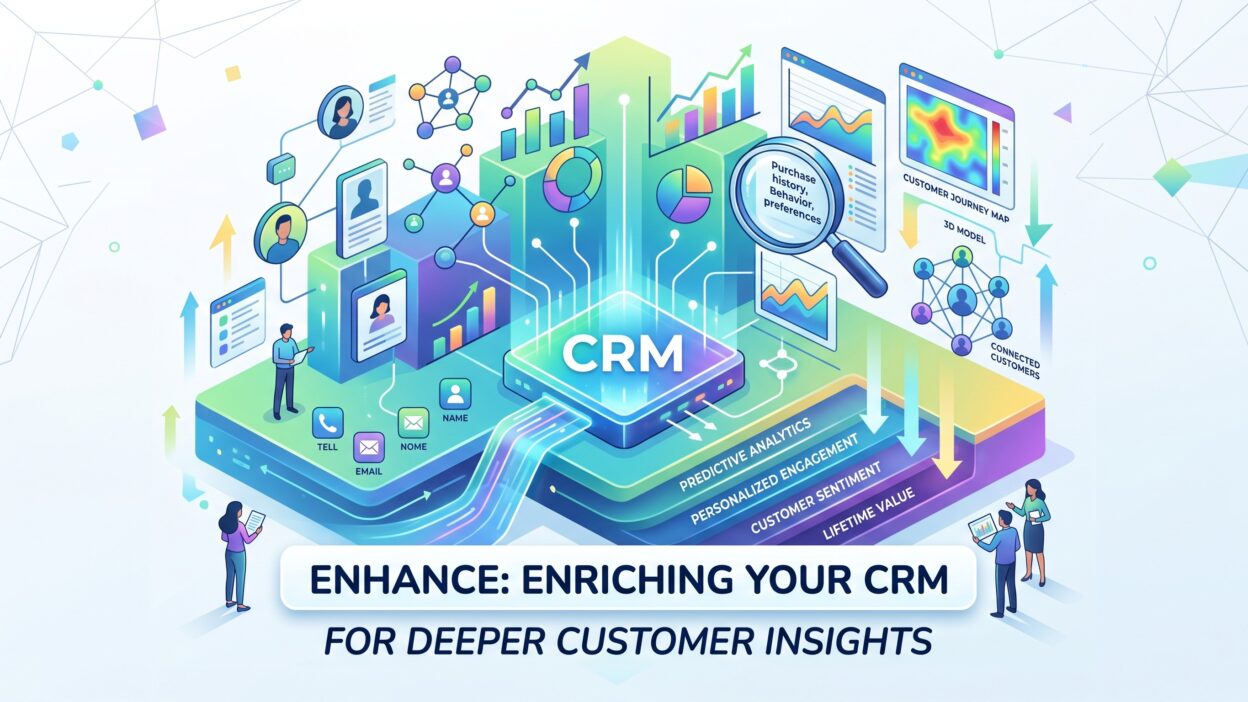
CRM enrichment means you add fresh, relevant details to existing customer records. A basic entry might show a name and a phone number. An enriched entry shows job title, company size, recent funding, and buying signals. This extra layer turns a plain contact card into a rich buyer profile for your whole revenue team.
Sales teams lose deals when they lack context on a buyer. A rep calls a lead with no sense of that lead’s role or daily pressure. Enrichment closes this gap fast. It pulls data from many sources and builds a fuller customer profile in minutes instead of hours. Marketing teams use this same profile to craft messages that match each stage of the buyer journey.
Why Businesses Need Better Customer Insights
Buyers expect personal attention now. A generic email lands in the trash within seconds. Companies with sharp customer data spot patterns early. They notice which accounts show real buying signals and which ones show none. They notice which customers face churn risk months before a cancellation call. Every one of these decisions rests on data that goes beyond a simple name and email field.
How Enrichment Differs From Basic CRM Data
Basic CRM data comes from forms, manual entry, and old imports. Enriched data comes from external sources, behavioral tracking, and automated feeds. Basic data goes stale within months and nobody notices until a campaign flops. Enriched data refreshes on a set schedule and stays sharp over time. This gap between stale fields and living data marks the real difference between a contact list and a true growth platform.
Why Customer Insights Matter for Growth
Growth depends on knowing your buyer at a deep level. Guesswork wastes budget, time, and goodwill with prospects. Strong customer insights guide product decisions, pricing tests, and outreach timing. Teams that build their process around rich buyer data close deals faster and keep clients around longer than teams working from thin data.
The Cost of Incomplete Customer Data
Sales reps waste hours chasing leads that never had real intent. Marketing sends offers that miss the mark by a wide margin. Support teams handle angry calls without knowing a customer’s full history with the product. Each small gap costs real money once you multiply it across a whole pipeline. Weak data leads to weak decisions across every department that touches the customer.
A missing job title field looks small on one record. Multiply that gap across fifty thousand contacts and the cost turns huge fast. Reps chase the wrong accounts while good leads sit untouched. Budgets flow toward campaigns that never land with the right audience. A richer profile on every account closes this gap and protects revenue that would otherwise leak away quietly.
Turning Raw Data Into Customer Insights
Raw data sits in spreadsheets and CRM fields without direction or story. A firmographic detail alone means little on its own. Combine it with purchase history, support tickets, and website behavior. That mix builds true customer insights your team can act on the same day instead of guessing.
People often compare data to oil. Oil needs refining before it powers anything useful. CRM data needs the same kind of treatment. Enrichment refines scattered records into sharp customer insights that drive every campaign, every call, and every product update your company ships this quarter.
Key Sources of Data for CRM Enrichment
Good customer insights need good data sources feeding them. Pick sources that match your industry, your budget, and your goals for the year. Blend internal and external feeds for the fullest possible picture of each buyer.
First Party Data Sources
First party data comes straight from your own customers and their direct actions. Website visits, email clicks, and purchase records fall into this bucket. This data carries high trust because the customer gave it directly through real behavior. Treat this layer as the foundation for every other data point you add later.
Support tickets count as first party data too. A pattern of complaints about one feature signals a real product gap worth fixing. Sales call notes reveal objections buyers raise again and again across different deals. Each source adds one more layer to a growing, living customer profile your whole team can reference. Together these layers build the raw material behind every customer insights report your leadership team reviews each month.
Third Party Data Providers
Third party providers sell firmographic and demographic data at scale across whole industries. These providers fill gaps your own systems cannot capture alone, like company revenue or total headcount. Pick providers with clean, verified records and clear refresh cycles. Bad third party data creates false signals and damages trust in your entire data program within weeks.
Popular providers offer APIs that connect straight into your CRM without manual work. This connection updates records automatically instead of through slow manual uploads. Automated feeds keep customer data fresh without adding extra staff hours to anyone’s plate.
Social Media and Public Signals
Public profiles on LinkedIn, industry forums, and news sites reveal job changes and shifting interests. A prospect who just earned a promotion may control new budget for the first time. A company that just closed a funding round may buy new tools within the next few months. These public signals add timely context that static CRM fields simply cannot provide.
Public signals move fast and expire fast as well. A signal from six months back carries little weight in today’s buying decision. Build a system that captures these signals close to real time through alerts or automated feeds. Fresh signals turn into sharp, current buyer intelligence instead of stale trivia nobody uses.
How to Enrich Your CRM Step by Step
A clear process turns enrichment from a one time project into a lasting company habit. Follow these steps to build data depth that lasts well beyond a single quarter.
Audit Your Existing CRM Data
Start by reviewing your current fields across every record type. Check for blank entries, duplicate contacts, and titles that changed years ago. This audit shows exactly where your data falls short right now, before you spend a dollar on new tools. Skip this step and you risk enriching records that were already wrong from the start.
Pull a sample of one hundred records from across your pipeline. Check each one against a public source like a company website or LinkedIn. Count how many fields sit blank or carry outdated details. This small test reveals the true state of your CRM before any bigger investment.
Choose the Right Enrichment Tools
Pick a tool that matches your CRM platform, your industry, and your budget. Some tools focus tightly on B2B firmographic data like industry and revenue. Others focus on behavioral tracking across your website and product. Match the tool to the gap your earlier audit revealed. The right choice builds a data set that fits your actual sales motion instead of generic features nobody uses.
Test any new tool on a small segment of records first. Check the match rate and data accuracy before a full company rollout. A tool with a low match rate will not improve anything, no matter how many features sit on the sales page.
Automate Data Updates
Manual updates fall behind within weeks no matter how careful your team stays. Set up automated syncs between your enrichment tool and your CRM platform. New signals should flow in daily or weekly, not once a quarter during a big cleanup push. Automation keeps records current without adding manual work to a busy team’s plate.
Build simple rules around these updates. A job title change should trigger a task for the account owner right away. A funding event should flag the account for fresh outreach that same week. Rules like these turn raw feeds into usable, actionable data fast.
Validate and Clean New Data
New data can introduce new errors of its own too. Run validation checks on every batch before it enters your live CRM. Remove duplicate entries and standardize formats like phone numbers and job titles across the board. Clean data protects the integrity of your whole system over months and years, not just one launch.
Schedule a monthly review of enriched fields across a sample of accounts. Spot check a handful of records for accuracy against a public source. This habit catches errors before they spread across your full customer base and quietly damage trust in the data.
Tools and Technologies for Better Customer Insights
The right tech stack makes enrichment sustainable for the long run. Pick tools that talk to each other and support your team’s daily workflow instead of adding friction.
AI Powered Enrichment Platforms
AI tools scan public and private sources at a scale no human team could match. They match records with strong accuracy and flag confidence scores for each field they touch. These platforms turn a slow manual task into a fast, ongoing process running in the background. AI driven feeds update in near real time instead of once a year during a big audit.
Look for platforms with clear confidence scoring on every match. A low confidence result needs human review before it enters your CRM as fact. This balance between speed and accuracy protects the overall quality of your data program over time.
Integration With Marketing and Sales Tools
Rich data means little if it stays trapped inside one isolated system. Connect your CRM to your email platform, ad tools, and support software wherever possible. Shared data across tools creates one unified view instead of scattered fragments nobody trusts fully. This unified view sharpens decisions across every department that touches a customer relationship.
A sales rep should see the same profile a marketer sees on any given account. A support agent should see recent purchase history without switching between three different screens. Integration removes these silos and builds real trust in the data itself across the company.
Data Privacy and Compliance Tools
Enrichment must respect privacy laws like GDPR and CCPA at every step. Use tools that track consent and data source for every single record you touch. Compliance protects your company from fines and protects trust with the customer at the same time. Responsible data practices come from information collected the right way, never scraped without consent behind the scenes. This kind of care builds a customer insights program that survives an audit and keeps regulators satisfied.
Build a simple audit trail for every enriched field in your system. Know where each data point came from and exactly when it entered your CRM. This record keeps your whole program defensible during any future compliance review.
Benefits of a Data Rich CRM
A CRM full of accurate, current data changes how every single team works day to day. The benefits touch marketing, sales, and customer success teams alike, often within the same quarter.
Personalized Marketing Campaigns
Marketers with sharp customer insights build campaigns around real buyer needs instead of broad guesses aimed at everyone. A campaign built for a small startup looks nothing like one aimed at an enterprise buyer with a large team. Enriched data makes this split possible at scale across thousands of contacts. Personalization built on solid data lifts open rates and conversion numbers within a few campaign cycles. Marketers who track these gains often present them as proof that their customer insights investment paid off within a single quarter.
Stronger Sales Conversations
Reps armed with full context ask sharper questions from the very first call. They know the buyer’s role, recent activity, and daily pain points before the phone even rings. This context comes straight from a well built data process running behind the scenes. Stronger conversations close deals faster and build genuine trust with prospects early in the cycle.
Better Customer Retention
Support and success teams spot churn risk earlier when they hold a full picture of each account. A drop in product usage or a spike in support tickets often signals real trouble ahead. Teams that catch these signals early save accounts before a cancellation email ever lands in an inbox. Retention improves once the right data flows to the right team at the right moment. Success managers who act on these signals often save an account weeks before a competitor even gets a chance to pitch.
Common Challenges in CRM Data Enrichment
Enrichment sounds simple on paper during a planning meeting. Real teams hit real obstacles once the project actually starts.
Data Silos Across Teams
Marketing, sales, and support often work from separate systems that rarely talk to each other. Each team collects its own version of customer data without sharing it across the company. This silo creates conflicting records and wasted effort during every reporting cycle. Break these silos down with one shared CRM acting as the single source of truth for everyone.
Outdated or Duplicate Records
Old job titles and duplicate contacts clutter many CRMs after just a year or two of growth. These errors weaken every report and confuse forecasting across the sales team. Set clear rules for merging duplicates and archiving stale records on a fixed schedule. A clean database supports accurate reporting across every dashboard your leadership team checks.
Balancing Automation With Accuracy
Full automation without any checks can introduce bad data at scale within a single afternoon. One wrong data source can pollute thousands of records overnight without anyone noticing right away. Balance automated feeds with regular human review built into the workflow. This balance protects data quality over the long run instead of chasing short term speed alone.
Best Practices to Maintain Rich Customer Insights
Enrichment is not a one time project you finish and forget about. Ongoing habits keep your customer insights sharp for years, not just for a single launch quarter.
Set a Regular Data Refresh Schedule
Pick a cadence that matches your sales cycle and your team’s capacity. A fast moving B2C business may need weekly refreshes to stay current. A slower B2B cycle may work fine on a monthly schedule instead. Whatever cadence you choose, stick to it through busy quarters and slow ones alike.
Train Your Team on Data Standards
Every team member who touches the CRM needs the same shared standards. Agree on formats for names, titles, and phone numbers across departments. Train new hires on these standards during onboarding, not months later. Consistent entry protects data quality long after any single enrichment project wraps up.
Measure the Impact of Enrichment
Track metrics like conversion rate, deal size, and churn before and after any enrichment push. These numbers prove the real value of your investment to leadership. Share these results during budget season to secure ongoing funding for the program. Measured results turn a data project into a proven revenue driver everyone respects.
Frequently Asked Questions
What does CRM enrichment mean in simple terms?
CRM enrichment means adding extra details to your existing contact and account records. This process builds customer insights that go far beyond a basic CRM entry from a signup form.
How often should a company refresh its CRM data?
Most companies refresh enriched fields monthly or quarterly depending on their sales cycle. Fast moving industries may need weekly updates to keep customer insights current and useful.
Which teams benefit most from better customer insights?
Sales, marketing, and customer success all gain from richer data across the board. Each team uses customer insights differently, but all three need accurate, current records to do their job well.
Is CRM enrichment expensive for small businesses?
Many enrichment tools offer tiered pricing built for smaller teams and tighter budgets. Small businesses can start with a few key fields and expand their customer insights program over time.
Can CRM enrichment hurt data privacy compliance?
Enrichment only creates risk when a company skips consent tracking during collection. Choose vendors that document data sources clearly to keep your program fully compliant.
What is the biggest mistake companies make with CRM data?
Many companies enrich records once and never refresh them again. Stale data hurts decisions just as much as missing data does, sometimes even more.
Read More:-How to Create an Ideal Customer Profile (ICP)
Conclusion

A CRM full of names and phone numbers only tells part of your story. Real growth comes from customer insights built on fresh, accurate, and complete data across every account. Start with an honest audit of your current records this month. Add the right sources, pick tools that fit your budget, and build habits that keep data fresh well beyond launch day.
Teams with strong customer insights close more deals, keep more customers, and spend budget where it actually counts. Enrichment is not a single project you finish and forget. It stands as an ongoing habit that turns your CRM into a true growth engine, quarter after quarter, year after year. The companies that treat data as a living asset will always outpace the ones that still work from a static contact list.