Introduction
TL;DR Sales teams chase leads every day. Marketing teams build campaigns every week. But most GTM teams miss one thing. They lack real context about their buyers. That gap has a name now. It’s called Context Data.
Context Data tells you who a buyer is. It tells you what they do. It tells you when they’re ready to buy. Without it, your outreach feels like a guess. With it, your outreach feels like a conversation.
This guide breaks down Context Data in plain terms. You’ll learn what it means. You’ll learn why GTM teams need it. You’ll learn how to collect it and use it well. Let’s get started.
Table of Contents
What Is Context Data?
Context Data is information that explains the situation around a buyer or account. It goes beyond a name and an email address. It includes company size, job role, recent activity, and buying signals. Context Data answers a simple question. Why does this person matter right now?
Think about a prospect who visits your pricing page three times in a week. That visit is a signal. Pair it with their job title and company revenue. Now you have Context Data. You know who they are. You know what they want. You know the right moment to reach out.
Context Data turns raw facts into useful insight. A phone number alone tells you nothing. A phone number tied to a VP at a growing company who just read your competitor’s blog tells you a lot. That combination is Context Data at work.
Most GTM teams already sit on piles of raw data. CRM records, website logs, and support tickets fill their systems every day. That raw data stays useless until someone connects the dots. Context Data is the process of connecting those dots. It links a data point to a real business moment.
Picture two sales reps working the same lead list. One rep sees a name and a title. The other rep sees the same name, the same title, plus a note showing the prospect attended a webinar last week. The second rep has Context Data. That rep starts the call with a real hook instead of a script.
Context Data isn’t a single database or a single field. It’s a layer of meaning built on top of your existing records. Any company can collect names and emails. Fewer companies build true Context Data around those names. That gap is exactly where GTM teams win or lose deals.
Context Data vs Traditional Data
Traditional data sits still. A spreadsheet of names and titles doesn’t change much over time. Context Data moves. It updates as buyer behavior changes.
Traditional data answers who someone is. Context Data answers why they matter today. A CRM full of static fields gives you a starting point. Context Data gives you a reason to act. GTM teams that rely only on traditional data miss timing. GTM teams that use Context Data catch the right moment.
Think of traditional data as a photo. It captures one moment and freezes it. Think of Context Data as a video. It shows movement, change, and direction. A photo can’t tell you where a buyer is headed. A video can.
This difference shapes how teams build their tech stack. Companies focused only on traditional data buy list-building tools. Companies focused on Context Data buy signal-tracking tools too. Both types of tools matter. Only one of them tells you when to act.
Why Context Data Matters for GTM Teams
GTM teams live and die by timing. Reach a buyer too early and they ignore you. Reach them too late and a competitor wins the deal. Context Data solves this timing problem. It shows you exactly when a buyer starts paying attention.
Revenue teams waste hours on leads that go nowhere. Context Data cuts that waste. It filters out noise and highlights accounts that show real buying signals. Sales reps stop cold-calling blind lists. They start calling accounts with clear intent.
Budgets shrink every year while quotas grow. Teams can’t afford to spray effort across every possible lead. Context Data forces focus. It points reps toward the twenty percent of accounts likely to close and away from the eighty percent likely to stall.
Leadership teams also gain something from Context Data. Pipeline reviews become clearer. A deal backed by strong Context Data feels more real than a deal based on a single form fill. Forecasts built on Context Data hold up better under pressure.
Context Data and Sales Teams
Sales reps need more than a name and a number. They need a reason to call. Context Data gives them that reason. A rep who knows a prospect just downloaded a competitor comparison guide can open the call differently. The conversation feels relevant instead of random.
Cold calls fail for one main reason. They ignore timing. A rep calling a prospect who isn’t ready sounds pushy. A rep calling a prospect who just researched a solution sounds helpful. Context Data draws that line clearly. It tells reps which calls to make first and which calls can wait.
Context Data and Marketing Teams
Marketing teams build campaigns for broad audiences. Context Data helps them narrow that focus. A campaign built around Context Data speaks to a buyer’s actual stage. It stops treating every visitor the same way.
A first-time visitor and a returning visitor deserve different messages. Context Data separates these two groups automatically. Marketing teams can then serve early-stage content to new visitors and product-focused content to buyers closer to a decision. This kind of targeting raises conversion rates without raising ad spend.
Context Data and Customer Success
Customer success teams use Context Data too. A drop in product usage is a signal. A support ticket spike is a signal. Context Data helps success teams catch churn risk before it becomes a lost account.
Renewal conversations go smoother with Context Data on hand. A success manager who sees declining logins can reach out before the renewal date, not after. That single move often saves an account that would otherwise walk away quietly.
Types of Context Data
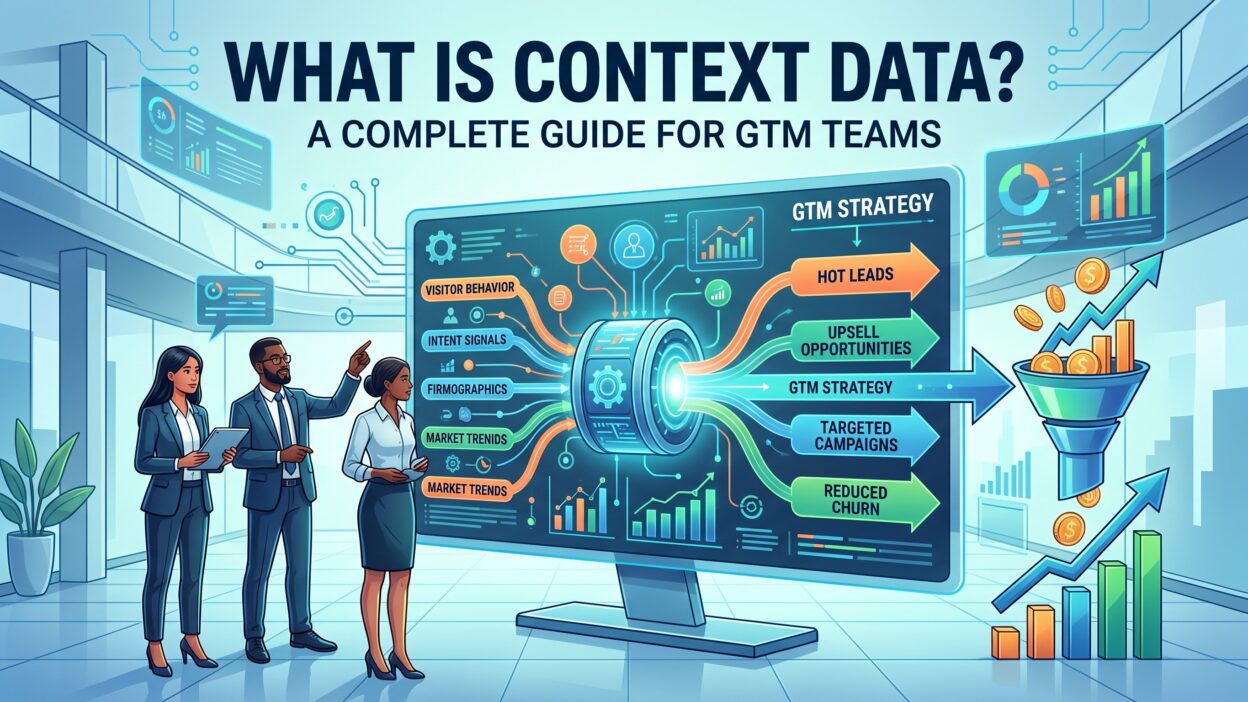
Context Data comes in several forms. Each type answers a different question about a buyer.
Firmographic Context Data
This type covers company facts. Industry, revenue, headcount, and location all fall here. Firmographic Context Data tells you if a company fits your ideal customer profile. A rep can skip a company outside the target revenue range and save time for accounts that actually match.
Behavioral Context Data
This type tracks actions. Website visits, email opens, and content downloads all count. Behavioral Context Data shows what a buyer actually does, not just who they are on paper. A prospect who reads three pricing pages behaves differently than one who reads a single blog post. Behavioral Context Data catches that difference.
Intent Context Data
This type tracks research activity outside your own website. It shows when a buyer searches for solutions like yours on third-party sites. Intent Context Data often signals a buyer earlier than your own website traffic does. By the time a prospect visits your site directly, they may have already compared five vendors using intent signals your team never saw.
Technographic Context Data
This type covers the tools a company already uses. Knowing a prospect’s tech stack helps you position your product correctly. Technographic Context Data prevents pitches that don’t fit the buyer’s setup. A rep pitching an integration that already exists in the prospect’s stack wastes the call. Technographic Context Data avoids that mistake before it happens.
How Context Data Is Collected
Collecting Context Data takes more than one source. Strong GTM teams combine several methods to build a full picture.
First-Party Sources
First-party sources include your own website, product, and CRM. Every click, form fill, and login builds Context Data over time. This data is often the most accurate because it comes straight from the buyer’s own actions. Teams that track product usage closely often spot upsell moments before a customer even asks.
Third-Party Sources
Third-party providers track behavior across the web. They watch searches, content consumption, and forum activity. This adds Context Data your own systems can’t see alone. A buyer might never visit your site directly while still showing strong buying signals elsewhere. Third-party sources catch that activity.
Intent Signal Platforms
Dedicated intent platforms specialize in one job. They collect Context Data from research activity across thousands of sites. Many GTM teams plug these platforms directly into their CRM. This setup lets reps see a fresh intent score next to every account without switching tools.
Context Data vs Contextual Data vs Contact Data
These three terms sound alike, but they mean different things.
Contact data is basic. It covers a name, an email, and a phone number. It tells you how to reach someone. It doesn’t tell you why to reach them.
Contextual data is a broader term. It often refers to the surrounding conditions of any data point, in any industry, not just GTM.
Context Data sits specifically inside sales and marketing. It combines contact details with behavior and timing. Context Data tells you who to contact, why now, and what to say. Confusing these terms leads teams to buy the wrong tools. A contact database gives you names. Context Data gives you strategy.
Vendors sometimes blur these terms on purpose. A tool that sells contact lists might market itself as a Context Data provider. Ask a simple question before buying any tool. Does this tool explain a buyer’s situation, or does it only supply a name and a number? That one question separates real Context Data providers from basic list vendors.
How GTM Teams Use Context Data
Understanding Context Data matters less than using it well. Here’s how top GTM teams put it to work.
Lead Scoring with Context Data
Lead scoring models rank prospects by fit and interest. Context Data feeds these models real signals instead of guesses. A lead who fits your ideal profile and shows recent buying signals scores higher. Sales reps then focus on leads most likely to convert.
Old scoring models relied on demographic guesses alone. A lead scored high just for having the right job title. Context Data adds a second layer to that score. It checks whether the lead is actually active right now. A high-fit lead with no recent activity waits. A high-fit lead with strong recent activity jumps to the top.
Personalized Outreach
Generic emails get ignored. Personalized emails get replies. Context Data gives reps the details needed for real personalization. A rep can reference a specific page a prospect viewed. A rep can mention a challenge tied to the prospect’s industry. This kind of outreach feels human, not automated.
Buyers can spot a mail-merge template instantly. They delete it without reading past the first line. An email built on Context Data reads differently. It references something real about the buyer’s world. That single detail earns a reply rate far higher than any generic template.
Account Prioritization
Not every account deserves equal attention. Context Data helps teams rank accounts by real buying signals. Sales and marketing then align around the same priority list. This alignment shortens sales cycles and improves close rates.
Account-based teams especially depend on this ranking. A named list of fifty target accounts means nothing without a way to sort them. Context Data sorts that list by real activity. Reps spend their limited time on the five accounts showing movement instead of guessing which ten to call first.
Benefits of Context Data for Revenue Teams
Revenue teams that adopt Context Data see clear gains. Sales cycles shorten because reps stop chasing cold leads. Win rates climb because outreach matches buyer intent. Marketing spend goes further because campaigns target accounts already showing interest.
Context Data also improves forecasting. Teams predict revenue more accurately when they see real buying signals instead of guesses. Customer retention improves too. Success teams catch warning signs early and step in before a customer churns.
The biggest benefit might be alignment. Sales, marketing, and success teams often work from different data sets. Context Data gives every team the same source of truth. That shared view reduces friction and speeds up decisions.
New reps ramp faster too when Context Data sits inside their tools already. A new hire doesn’t need months of tribal knowledge to know which accounts matter. The signals sit right in front of them from day one. This shortens ramp time and gets new revenue producing sooner.
Deal size often grows alongside Context Data adoption too. Reps who understand a buyer’s full situation ask better discovery questions. Better discovery questions uncover bigger problems. Bigger problems lead to bigger deals.
Challenges in Using Context Data
Context Data brings real value, but it also brings real challenges.
Data Quality Issues
Bad data ruins good strategy. Duplicate records, outdated titles, and incomplete profiles weaken Context Data. Teams need a process to clean and update records on a regular schedule. A rep who calls a prospect using an outdated title loses credibility in the first ten seconds. That small error undoes the value Context Data was supposed to add.
Many teams pull Context Data from multiple vendors at once. Each vendor formats fields a little differently. Without a clear matching process, duplicate records pile up fast. A messy database slows every team down and buries the useful signals under noise.
Data Privacy Concerns
Collecting behavior data raises privacy questions. Regulations like GDPR and CCPA set clear rules around consent and storage. GTM teams must collect Context Data in ways that respect these laws. Ignoring privacy rules creates legal risk and damages buyer trust.
Buyers today expect some tracking, but they still expect boundaries. A GTM team that respects those boundaries builds trust early in the relationship. A team that ignores them risks a damaged reputation before a deal even starts. Building Context Data responsibly protects both the buyer and the brand.
Best Practices for Managing Context Data
Good Context Data doesn’t happen by accident. It takes a clear process.
Centralize Your Data
Scattered data creates blind spots. Store Context Data in one central system your whole team can access. A single source of truth prevents sales and marketing from working off different information. When every team pulls from the same dashboard, handoffs between departments get smoother and faster.
Update Data Regularly
Context Data goes stale fast. A job title from six months ago might already be wrong. Set a regular schedule to refresh records and remove outdated signals. Weekly or monthly syncs work well for most teams, depending on deal velocity and team size.
Combine Context Data with Intent Data
Context Data works best alongside intent signals. Pairing firmographic details with real-time research activity gives teams a complete view of buyer readiness. This combination catches opportunities other teams miss. A firmographic match alone doesn’t guarantee interest. An intent signal alone doesn’t guarantee fit. Together, they build a much stronger case for outreach.
Train Your Team on Context Data
Tools alone don’t fix a broken process. Reps need training on how to read and use Context Data during calls and emails. A short weekly review of top signals keeps the whole team sharp and consistent in how they apply this information.
Tools for Context Data Collection and Management
Many platforms now specialize in Context Data. CRM systems capture first-party behavior. Intent platforms track third-party research activity. Data enrichment tools fill gaps in firmographic details. Reverse IP lookup tools identify anonymous website visitors and add them to your Context Data pool.
Choosing the right stack depends on team size and budget. Smaller teams often start with one enrichment tool paired with their CRM. Larger teams build a full stack that pulls Context Data from multiple sources into one dashboard. The goal stays the same across every size of team. Bring scattered signals into one clear picture.
Frequently Asked Questions
What is Context Data in simple terms?
Context Data is information that explains a buyer’s situation. It combines who someone is with what they’re doing right now. This combination helps GTM teams reach out at the right moment.
How is Context Data different from intent data?
Intent data is one piece of Context Data. Intent data tracks research activity. Context Data includes intent signals plus firmographic and behavioral details. Intent data is a subset. Context Data is the bigger picture.
Why do GTM teams need Context Data?
GTM teams need Context Data to prioritize the right accounts. Without it, teams treat every lead the same way. With it, teams focus effort on buyers showing real signals.
Is Context Data the same as contextual data?
No. Contextual data is a broad term used across many industries. Context Data refers specifically to buyer and account signals used in sales and marketing.
What tools help collect Context Data?
CRM platforms, intent data providers, and data enrichment tools all help collect Context Data. Most teams combine two or three tools to build a complete view.
Does Context Data raise privacy concerns?
Yes. Collecting behavior signals requires attention to privacy laws. GTM teams must follow consent rules and store data responsibly.
Read More:-A Guide to Identifying Your Target Market
Conclusion

Context Data changes how GTM teams work. It replaces guesswork with real signals. It tells sales reps who to call and when. It tells marketing teams which accounts deserve attention. It tells success teams when a customer needs help.
Teams that ignore Context Data waste time on the wrong leads. Teams that use it well close deals faster and keep customers longer. Start small. Pick one source of Context Data and add it to your CRM. Build from there.
Context Data isn’t a trend. It’s becoming the foundation of modern GTM strategy. The teams that adopt it now will outpace the teams that wait.