Introduction
TL;DR A CRM holds the heartbeat of any modern business. Sales reps live inside it daily. Marketing teams pull lists from it weekly. Leadership checks it for forecasts every month. CRM hygiene decides whether this system helps a business or quietly hurts it. Messy records slow down reps and mislead reports. This guide walks through CRM hygiene in full detail. You will learn what it means, why it matters, and a clear five-step process to clean and maintain your CRM data for the long run.
Table of Contents
What Is CRM Hygiene
CRM hygiene means keeping the data inside a CRM accurate, complete, and current. This includes contact details, company information, deal stages, and activity logs. Good CRM hygiene means every record reflects reality. A contact’s job title matches their current role. A deal stage matches the true status of that conversation. Poor CRM hygiene means duplicates pile up, fields sit empty, and outdated details linger for months.
Strong CRM hygiene supports every team that touches the system. Sales reps trust their pipeline numbers. Marketing teams trust their segments. Leadership trusts their forecasts. Without CRM hygiene, none of these teams can fully rely on the data in front of them.
Why CRM Hygiene Matters for Modern Business
Modern businesses run on data-driven decisions. A CRM sits at the center of sales and customer relationships, so its accuracy affects nearly every department. Poor CRM hygiene wastes rep time on dead leads and wrong contacts. It skews pipeline forecasts with duplicate or stale deals. It damages marketing campaigns sent to outdated or incorrect addresses.
CRM hygiene also affects customer experience directly. A support agent pulling up wrong account details frustrates a customer instantly. A sales rep referencing an outdated conversation looks careless during a call. Strong CRM hygiene protects revenue, protects reputation, and protects the daily productivity of every team relying on that system.
Common CRM Hygiene Problems Businesses Face
Duplicate records rank among the most common CRM hygiene issues. Two reps enter the same lead separately, and now two records exist for one person. Incomplete fields create another common problem, since reps often skip optional fields during busy weeks. Outdated information piles up too, as people change roles and companies shift without anyone updating the record.
Inconsistent formatting causes quiet damage as well. One rep enters a phone number with dashes, another enters it without any formatting at all. This inconsistency breaks automation rules and search filters. Left unchecked, these small problems combine into a serious CRM hygiene issue that slows down an entire organization over time.
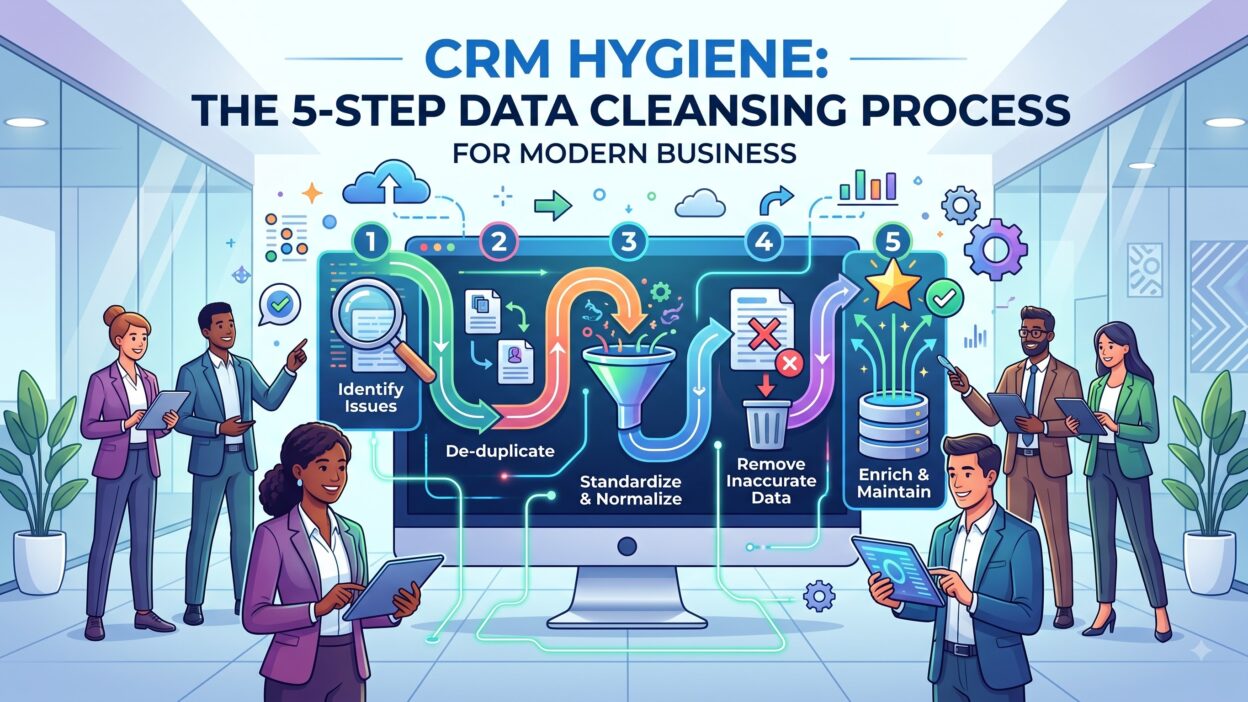
The 5-Step Data Cleansing Process for CRM Hygiene
Audit Your Current CRM Data
Every strong CRM hygiene effort starts with a full audit. Pull a report showing duplicate records, missing fields, and outdated entries across your database. Look for patterns, like which fields get skipped most often or which team creates the most duplicates. This audit gives you a clear starting point and helps you measure progress later.
An audit should also check data across connected systems, not just the CRM itself. Marketing platforms and support tools often hold copies of the same contact data. CRM hygiene efforts fail quickly if these connected systems stay messy while the core CRM gets cleaned alone.
Remove Duplicate and Dead Records
Duplicate records confuse reps and skew every report built from CRM data. Use deduplication tools to merge matching records automatically where confidence is high. Review uncertain matches manually before merging, since a wrong merge can combine two different people into one broken record.
Dead records need removal too. A contact who left their company two years ago with no updated information adds no value sitting in your CRM. Archiving or deleting these records keeps your database lean and keeps your CRM hygiene efforts focused on data that still matters.
Standardize Fields and Formatting
Consistent formatting keeps a CRM searchable and automation-friendly. Set clear rules for phone numbers, addresses, and job titles across the entire team. Dropdown menus work better than free text fields for categories like industry or company size, since dropdowns prevent typos and inconsistent entries from the start.
Standardizing fields also means deciding which fields stay mandatory during entry. A required field forces reps to enter accurate data instead of skipping it under time pressure. This step protects long-term CRM hygiene by stopping new mess from forming even after the initial cleanup finishes.
Enrich and Verify Missing Data
Once duplicates and formatting issues get sorted, gaps in the data become clear. Enrichment tools can fill missing fields like company size, industry, or job title using verified external sources. Verification tools can confirm email addresses and phone numbers are still active and correctly formatted.
This step turns a clean but thin database into a rich, reliable one. Strong CRM hygiene is not just about removing bad data. It also means adding the missing pieces that make each record genuinely useful for sales, marketing, and support teams alike.
Set Ongoing Maintenance Rules
A one-time cleanup fades quickly without ongoing maintenance. CRM hygiene needs scheduled reviews, ideally monthly or quarterly, to catch new duplicates and outdated fields before they spread. Assign clear ownership so someone tracks hygiene metrics and pushes fixes across the team consistently.
Automated workflows help maintain hygiene between manual reviews. A workflow can flag likely duplicates the moment they get created. Another can prompt reps to confirm contact details after a set period of inactivity. These small automated checks keep CRM hygiene strong long after the initial five-step process wraps up.
Tools That Support Strong CRM Hygiene
Deduplication software catches matching records automatically and flags uncertain matches for manual review. Data verification tools confirm emails and phone numbers stay valid over time. Enrichment platforms fill missing fields with accurate, current information pulled from trusted external sources.
Workflow automation tools inside most modern CRMs can enforce required fields and flag stale records automatically. Reporting dashboards track hygiene metrics like duplicate rate and field completion rate over time. Choosing the right combination of these tools depends on your team size, budget, and how much manual review your team can realistically handle each month.
How Often Should Teams Perform CRM Hygiene Checks
Frequency depends on how fast your business generates new data. A high-growth sales team adding hundreds of leads weekly needs more frequent checks than a smaller team with slower growth. Monthly checks work well for most mid-size teams, catching problems before they spread too far.
Quarterly deep audits complement these lighter monthly checks. A deep audit reviews the full database, checks connected systems, and measures progress against past audits. This layered approach keeps CRM hygiene strong without overwhelming a team with constant manual review work every single week.
The Cost of Ignoring CRM Hygiene
Ignoring CRM hygiene carries a real, measurable cost over time. Reps waste hours chasing duplicate or dead leads instead of closing real deals. Marketing campaigns bounce against outdated addresses, damaging sender reputation across the board. Forecasts built on messy pipeline data mislead leadership during critical planning periods.
The cost grows worse the longer a team waits to address it. A small mess today becomes a massive cleanup project a year later. Companies that treat CRM hygiene as an ongoing priority avoid this compounding cost entirely, protecting both revenue and team morale in the process.
Real World Examples of CRM Hygiene in Action
A growing SaaS company ran a full CRM hygiene audit after noticing reps complained about duplicate leads constantly. The audit found thousands of duplicate records built up over two years of rapid hiring. After the five-step cleansing process, rep productivity improved and pipeline forecasts became noticeably more accurate.
A financial services firm added mandatory fields and dropdown menus after discovering wildly inconsistent formatting across their contact database. This standardization step alone reduced data entry errors significantly within a few months. A retail company introduced quarterly hygiene audits after a major email campaign bounced against thousands of outdated addresses, protecting their sender reputation going forward.
Building CRM Hygiene Into Company Culture
Lasting CRM hygiene needs support beyond a single cleanup project. Leadership should treat data quality as a real priority, not an afterthought handled only when problems become obvious. Training new hires on proper data entry habits from day one prevents many hygiene issues before they start.
Recognizing teams or individuals who maintain clean data encourages good habits across the organization. Regular reporting on hygiene metrics keeps the topic visible to leadership and prevents it from slipping down the priority list. When CRM hygiene becomes part of daily habits rather than a yearly emergency project, the entire business benefits from more reliable data every single day.
Frequently Asked Questions
What does CRM hygiene actually involve? CRM hygiene involves removing duplicates, updating outdated records, standardizing formatting, and filling missing fields. It also includes ongoing maintenance to keep the database accurate as new data enters the system daily.
How long does a full CRM hygiene cleanup take? Timing depends on database size and how messy the data has become. Small teams might finish a cleanup in a few weeks, while larger organizations with years of buildup may need a few months for a thorough process.
Can CRM hygiene be automated completely? Not completely. Automation handles duplicate detection, verification, and formatting rules well, but human review still catches edge cases automation misses, especially for uncertain duplicate matches or ambiguous records.
How does poor CRM hygiene affect sales forecasting? Poor CRM hygiene inflates or distorts pipeline numbers through duplicate deals and stale records. This gives leadership an inaccurate view of real revenue potential, which can lead to flawed planning decisions.
Who should own CRM hygiene within a company? A dedicated owner, often in revenue operations or sales operations, should track metrics and coordinate cleanup efforts. Without clear ownership, CRM hygiene responsibilities often fall through the cracks between teams.
What is the easiest way to start improving CRM hygiene today? Start with a full audit to understand the scope of the problem. This first step reveals exactly where duplicates, missing fields, and outdated records live, guiding every step that follows in the cleansing process.
Read More:-What Is Enterprise CRM?
Conclusion

CRM hygiene protects the accuracy every team depends on daily. A messy CRM wastes rep time, damages marketing results, and misleads leadership decisions. The five-step process, covering audit, deduplication, standardization, enrichment, and ongoing maintenance, gives any business a clear path toward a cleaner and more reliable system. CRM hygiene is not a one-time project. It works best as an ongoing habit supported by clear ownership and regular reviews. Businesses that commit to strong CRM hygiene build a foundation of trust across sales, marketing, and leadership, turning their CRM into a genuine asset instead of a constant source of confusion.