Introduction
TL;DR Many B2B companies chase the lowest price when picking a data provider. Low cost feels smart on paper. Reality often tells a different story once campaigns launch. Data accuracy decides whether a provider actually helps a business grow. UnboundB2B has seen this pattern repeat across many client conversations. Teams switch away from cheap providers once poor data accuracy starts costing them real revenue. This guide explains why data accuracy matters more than price alone, and why so many companies eventually make the switch toward a provider built around accuracy first.
Table of Contents
Why Companies Chase Low-Cost Data Providers First
Budget pressure pushes many teams toward the cheapest data provider available. A lower price looks attractive during planning season, especially for smaller marketing or sales budgets. Leadership often approves the lowest bid without asking deeper questions about data accuracy behind that price.
Cheap providers can look identical to premium ones on the surface. Their websites promise similar coverage, similar volume, and similar features. The real difference only becomes clear once a team starts using the data in live campaigns and outreach sequences. This is where data accuracy problems begin to surface.
The Hidden Problems Behind Low-Cost Data
Outdated Contact Information
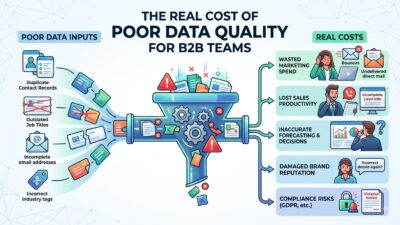
Cheap providers often rely on old databases that rarely get refreshed. A contact’s job title or company might sit unchanged for years inside these systems. Poor data accuracy here leads reps straight into dead ends during outreach, wasting valuable selling time on people who no longer hold the role.
High Bounce Rates and Wasted Sends
Low-cost data commonly comes with outdated or invalid email addresses. High bounce rates damage sender reputation quickly, hurting deliverability for every future campaign. Marketing teams often trace declining email performance back to weak data accuracy from an underlying cheap provider.
Missing or Incomplete Fields
Budget providers frequently skip verification steps to keep costs low. This leaves many records incomplete, missing key details like direct phone numbers or verified company size. Sales and marketing teams end up guessing or manually researching gaps that a stronger data accuracy standard would have already filled.
How Poor Data Accuracy Quietly Drains Revenue
Poor data accuracy rarely announces itself with one obvious failure. It shows up gradually through wasted rep hours, low campaign response rates, and missed renewal opportunities. A sales team calling wrong numbers all week loses real selling time that never comes back.
Marketing budgets shrink in value too, since ad spend and email campaigns lose effectiveness against outdated audiences. Forecasts built on inaccurate contact and company data mislead leadership during planning cycles. Over months, poor data accuracy compounds into a serious drag on growth, even though each individual error looks small in isolation.
What Makes UnboundB2B Different on Data Accuracy
UnboundB2B builds its process around verification at every stage, not just at data collection. Each record goes through multiple checks before it reaches a client’s system. This reduces the outdated and incomplete records that plague many budget providers in the market today.
Human review supports automated checks throughout the UnboundB2B process. Automated tools catch obvious errors quickly, while human reviewers catch subtle issues that automation often misses, like ambiguous job titles or duplicate entries across different formats. This layered approach keeps data accuracy high even as client databases scale into the hundreds of thousands of records.
Real Client Patterns Behind the Switch to UnboundB2B
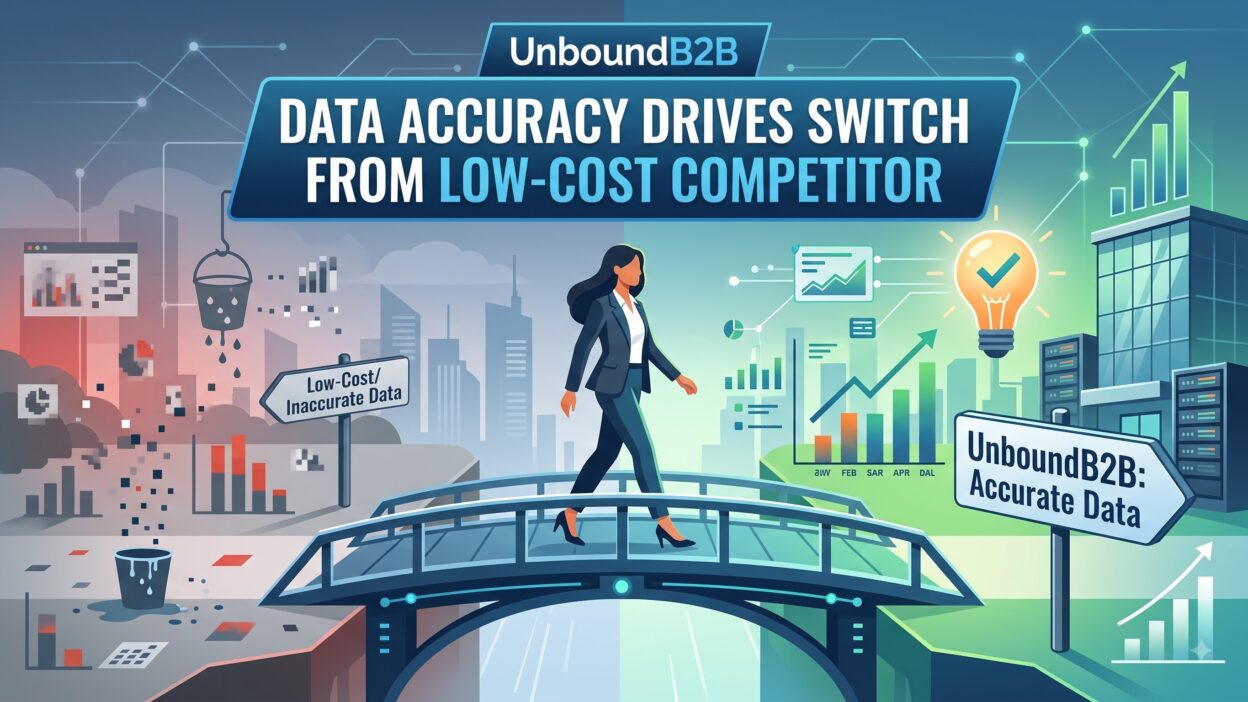
Client teams often start with a low-cost provider to control early costs during a new campaign launch. Within a few months, many notice rising bounce rates and reps complaining about bad contact information. This pattern repeats across different industries, from software companies to logistics firms.
Once a team calculates the true cost of wasted rep hours and damaged sender reputation, the price difference between providers starts to look much smaller. Teams switching to UnboundB2B often report smoother campaigns, more accurate lead scoring, and less time spent manually verifying data before outreach begins. Data accuracy becomes the deciding factor once the hidden costs of a cheaper provider become clear.
Measuring the True Value of Data Accuracy
Companies rarely calculate the full financial impact of data accuracy until they compare providers directly. Wasted rep hours carry a real cost per week. Bounced emails damage deliverability, which affects every future campaign, not just the one that triggered the bounce. Missed renewals from outdated contact records cost real revenue that rarely gets tracked back to its root cause.
When teams measure these hidden costs against the price difference between a cheap provider and a premium one, data accuracy usually wins on pure financial terms. A slightly higher upfront cost often pays for itself quickly through better response rates, fewer wasted hours, and stronger campaign performance across the board.
Data Accuracy and Its Effect on Sales Productivity
Sales reps depend heavily on accurate data to hit their targets consistently. A rep working from a list with strong data accuracy spends more time actually selling and less time verifying basic details. Call connect rates rise when phone numbers stay current. Response rates rise when job titles and company details match reality.
Poor data accuracy forces reps into a support role they never signed up for, constantly double-checking information before every call or email. This shift steals time away from actual selling activity. Teams that prioritize data accuracy consistently report stronger rep morale alongside better numbers, since reps spend their energy on real conversations instead of chasing dead leads.
Data Accuracy and Its Effect on Marketing Performance
Marketing performance depends on reaching the right person with the right message. Data accuracy determines whether a campaign lands in front of an active decision maker or bounces against an old, unused inbox. Segmentation also relies on accurate company and role data, since a wrong segment sends the wrong message entirely.
Strong data accuracy protects sender reputation over time, which keeps future campaigns landing in inboxes instead of spam folders. Marketing teams working with accurate data can trust their reporting too, since open rates and click rates reflect real engagement rather than noise from invalid addresses mixed into the list.
How to Evaluate a Data Provider Before Switching
Teams considering a switch should ask direct questions about verification methods before signing any contract. A provider should explain how often they refresh their database and what checks each record passes through. Requesting a small sample list helps a team test data accuracy firsthand before committing to a larger contract.
Comparing bounce rates and connect rates between a current provider and a new one over a trial period reveals real differences quickly. Teams should also ask about support responsiveness, since a provider willing to fix flagged errors quickly signals a genuine commitment to data accuracy rather than just marketing language on their website.
Common Objections to Switching Data Providers
Some teams hesitate to switch providers due to contract timing or fear of disruption during a transition. This concern makes sense, but a good provider supports a smooth migration without major downtime. Others worry about short-term cost increases without seeing the full picture of hidden savings from stronger data accuracy.
A useful approach involves running both providers briefly in parallel before fully switching, comparing results directly on the same campaigns. This side-by-side comparison often removes doubt quickly, since the difference in data accuracy becomes obvious within just a few weeks of real-world use.
Frequently Asked Questions
Why do companies eventually leave low-cost data providers? Companies leave once they notice rising bounce rates, wasted rep hours, and inaccurate contact details. These hidden costs often outweigh the initial savings from a cheaper provider over just a few months of use.
How does UnboundB2B ensure strong data accuracy? UnboundB2B combines automated verification with human review at multiple stages. This layered approach catches errors that automation alone often misses, keeping data accuracy high even as databases grow larger.
Is switching data providers difficult for an existing team? Not usually, with proper planning. A reliable provider supports a smooth transition, and many teams run both providers briefly in parallel to compare data accuracy before fully committing to the switch.
What is the real cost of poor data accuracy? The cost shows up through wasted sales hours, bounced marketing emails, damaged sender reputation, and missed renewals. These hidden costs often add up to far more than the savings from a cheap provider.
How can a team test data accuracy before switching providers? Requesting a sample list and comparing bounce rates and connect rates against a current provider offers a clear, practical way to test real data accuracy before signing a larger contract.
Does higher-priced data always mean better accuracy? Not automatically, but strong verification processes usually cost more to maintain. Teams should ask specific questions about a provider’s methods rather than assuming price alone reflects true data accuracy.
Read More:-Marketing Productivity: How GTM Teams Can Drive More Pipeline with Less Waste
Conclusion

Data accuracy shapes the real outcome of every sales and marketing effort. Low-cost providers look appealing at first, but hidden costs from outdated records and poor verification catch up quickly. UnboundB2B has watched many teams make this exact journey, starting cheap and switching once data accuracy problems start draining revenue and morale. Strong data accuracy protects rep productivity, campaign performance, and forecasting confidence across an entire organization. Companies weighing price against accuracy should calculate the full cost of getting it wrong, not just the sticker price of getting started. The switch usually pays for itself faster than most teams expect.